
Environment
FG Partners German Agency On Waste Battery Management

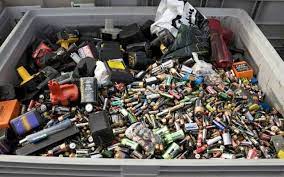
The Federal Government says it is collaborating with Deutsche Gesellschaft fur International Zunsammenbeit (GIZ) to develop National Policy and guidelines on Waste Battery Management to ensure safe and healthy environment in the country.
The Minister of Environment, Dr Mohammad Abubakar disclosed this at a workshop on the Draft National Policy on Waste Battery Management recently in Abuja.
The workshop was jointly organised by the ministry and the German Agency for International Cooperation or (GIZ) under the auspices of Nigeria Energy Support Programme (NESP)
He said that the ministry would work assiduously to ensure speedy approval of the document by the Federal Executive Council (FEC).
Abubakar said that Nigeria was a party to the Basel Convention on the Control of Trans-boundary Movements of Hazardous Waste and their Disposal.
He added that the convention controls the management hazardous wastes and other wastes which include used of batteries in the manner that would safeguard human health and environment.
“I am glad that the development of this policy is coming at a time of heightened global concerns on the dangers of improper handling of waste batteries.
“The government is deeply committed to its obligations under the Basel convention on the issues of managing hazardous and other wastes.
“In this regard, government has put in place a permitting scheme which allows hazardous waste that Nigeria does not have the local capacity to handle to be exported to country that have the technical capacity to manage them in an environmentally sound manner.
“The scheme covers a whole range of hazardous wastes including waste batteries, electronic wastes, used oil, spent catalysts, asbestos waste and used tyres among others,’’ he said.
Abubakar said that approval had been given for review of the guidelines on the environmentally sound management of Used Lead Acid Batteries (ULABs).
He said that the approval was offered between July 26 and July 30, at the joint online segment of conferences of the party to Basel, in Rotterdam and Stockholm Convention.
The minister explained that batteries contained heavy metals such as mercury, lead, cadmium, silver, and lithium among others which could cause anemia, kidney and brain damage leading to behavioral changes as well as death.
He commended the effort of GIZ-NESP for the collaboration and the European Union as well as German government for funding all the activities on the policy document.
The Minister of Labour and Employment, Sen. Chris Ngige said that batteries polluted the environment, soil, water, and plants, if not properly handled.
Ngige, who was represented by Mrs Lauretta Adogu, Director, Occupational Safety and Health in the ministry, said that recycling of waste batteries was part of the measures to solve environmental challenge.



-
Business2 days ago
PHICCIMA President Welcomes N60m BOI Micro, SMEs Initiatives
-
Business2 days ago
FG Commences N1.45trn Port Upgrade, Targets 20,000 Jobs
-
Politics2 days ago
Tinubu Hails Atiku For National Dev Efforts
-
Rivers2 days ago
Maritime Security: Expert Advocates Active Marine Surveillance, Coast Guard Agency Establishment …. Wants Presidential Endorsement for his group
-
News2 days ago
IG Suspends Wanted Declaration Against Obaigbena, Eight Others
-
Politics2 days ago
Political Killings: Consider Emergency Rule In Delta, Reps Tell Tinubu
-
Politics2 days ago
2027: 108 Rivers Groups Jostle To Work With Chinda’s Campaign
-
Business2 days ago
FAAN Reopens Owerri Airport … Limits Flight Operations To Daytime Services