
News
FG Mulls Outlaw Of Yoruba Nation Group

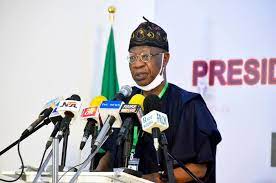
The Federal Government is considering all options against Yoruba Nation separatist group, including the proscription of the movement led by Prof Banji Akintoye and Sunday Adeyemo also known as Sunday Igboho.
According to the Office of the Attorney General of the Federation, Abubakar Malami (SAN), the Federal Government would explore all options within the context of the law to ensure a peaceful and united Nigeria.
Malami’s Special Assistant on Media and Public Relations, Umar Gwandu, stated this in an interview with newsmen, last Saturday.
The AGF’s aide also said it was not true that the government of President Muhammadu Buhari, had not been prosecuting terrorists and bandits.
Gwandu, however, did not give details of what the government has been doing on the planned extradition of Igboho, who has been in a detention facility in Cotonou, Benin Republic since he was arrested around 8pm on July 19, 2021, by the Interpol at the Cadjèhoun Airport.
It would be recalled that Federal Government was plotting the arrest of Akintoye, Igboho’s partner in the struggle for the secession of Yoruba from Nigeria.
The octogenarian professor of History, who has since left Nigeria for neighbouring Benin Republic, ostensibly, to escape plot for his arrest, had said he was not afraid of any arrest.
The 86-year-old scholar had said he was in Benin Republic to ensure the release of Igboho and would return to Nigeria as soon as the embattled 48-year-old agitator was freed.
Akintoye, the leader of the umbrella body of the Yoruba self-determination group known as Ilana Omo Oodua; and Igboho, have been seen together at press conferences and rallies championing the cause to secede from Nigeria and establish a Yoruba Nation.
The Department of State Services (DSS) had raided Igboho’s residence around 1 am on July 1, 2021.
The secret police had said it killed two of his associates and arrested about 12 others during the bloody raid.
Igboho, who narrowly escaped the bloody raid, was subsequently declared wanted for allegedly stockpiling arms to destabilise Nigeria under the pretext of Yoruba Nation.
The DSS had also alleged that it recovered seven AK-47 rifles, three pump-action rifles, one stun gun, 221 live rounds of 5.56mm ammunition, 1,295 live rounds of 7.62mm ammunition, one jackknife and a walkie-talkie during the raid of Igboho’s house on July 1, 2021.
Igboho had denied the allegations.
After going underground for 19 days, Igboho found his way to Benin Republic but luck ran out on him, and he was arrested around 8 pm on July 19, 2021, by the Interpol at the Cadjèhoun Airport in Cotonou, when he tried to board a flight to Germany.
Igboho was arrested after the Federal Government notified its West African neighbours — including Republic of Benin – that he should be captured.
He was arrested with his wife, Ropo, but the Cour De’appal De Cotonou ordered the release of the wife based in Germany, saying there were no allegations against her.
The Cour De’appal De Cotonou, however, ordered that Igboho be in prison custody in the country while further investigations would be carried out on the case against him.
Igboho, who is now seeking asylum in Benin Republic, is facing allegations bordering on trafficking in arms, inciting violence and causing disunity in Nigeria.
Some of the other offences said to have been committed by the activist bordered on entering the Benin Republic illegally, and alleged planned intent to cause social unrest in the West African country.
Though currently in detention, the court granted the 48-year-old agitator access to medical care while his lawyers continue to battle for his release and kick against his extradition to Nigeria.
Asked whether the AGF Office had abandoned the extradition of Igboho or otherwise, Malami’s aide said he could not make the “processes” known to the public.
Gwandu said, “There are certain things that may not require publicity but the important thing is having a peaceful Nigeria and not discussing all or making public some of the processes so far.”
The AGF Office is responsible for matters regarding extradition, repatriation and transfer of suspects or wanted persons.
Malami had on June 29, 2021, announced the “arrest” and “extradition” of the leader of the proscribed Indigenous People of Biafra, Nnamdi Kanu, from a foreign country.
The AGF Office has since re-arraigned the IPOB leader before Justice Binta Nyako for terrorism-related charges.
The trial of Kanu, remanded in DSS custody in Abuja, has since been adjourned till October 21, 2021.
In September, 2017, Malami and the then Solicitor General of the Federation and Permanent Secretary of the Federal Ministry of Justice, Mr Dayo Apata, had approached the Federal High Court in Abuja to give judicial backing to the Executive Order of Buhari, outlawing IPOB and its activities in every part of Nigeria.
The then Acting Chief Judge of the Federal High Court, Justice Abdu Kafarati, had granted the order proscribing the group.
Speaking with our correspondent on Saturday, the AGF Office said options were on the table to deal with Yoruba Nation groups to ensure a united and peaceful Nigeria.
“The Federal Government is interested in having a peaceful Nigeria, so, all options cannot be ruled out, all options in order to have a peaceful and serene atmosphere in the country can be explored by the Federal Government,” he said.
Asked specifically whether the Federal Government intended to proscribe Akintoye and Igboho-led Yoruba Nation groups, the AGF Office said, “Whatever thing that is doable and possible within the context of the law in accordance with extant provisions of the law will be pursued. All options are available at the Federal Government’s end.”
Some Nigerians including Benue State Governor, Samuel Ortom, had accused the Buhari government of allegedly pampering bandits and failing to prosecute arrested terrorists while being hard on separatists.
However, the AGF Office said it was not true, adding that the government was also prosecuting arrested bandits and terrorists.
“That is a lie. There is a department under the Attorney General that is pursuing all the issues. It doesn’t hold water; it is just a mere figment of the imagination of mischief-makers,” Malami’s aide said.
When contacted, Akintoye’s Communications Manager, Maxwell Adeleye, said that the Buhari government won’t want to descend low to outlaw the Yoruba Nation group led by his principal.
Adeleye said that Ilana Omo Oodua was not a terrorist group but a peaceful self-determination association with a belief in referendum and sensitisation through rallies.
He said, “There is no basis for the proscription of Ilana Omo Oodua. The government can only proscribe a terrorist group and not a peaceful group like Ilana Omo Oodua. All our members arrested in Ojota (area in Lagos), were charged with disturbance of public peace but later released. Why weren’t they charged with treasonable felony or murder?
“If the government proscribes us, we are going to challenge it in the court of law because we have committed no offence. It is an organisation that believes in peaceful agitation for self-determination. We even released a manual on peaceful agitation for self-determination as authored by our Leader, Emeritus Professor Banji Akintoye.
“I do not think the Nigerian government will descend so low to proscribe a peaceful organisation like Ilana Omo Oodua. Akintoye has released a formal statement that he is not afraid of arrest and that he is coming to Nigeria soon.”
The spokesman for Akintoye also said the group had no association with IPOB and does not believe in the sit-at-home order issued by the group in the South-East.
“Sit-at-home is never in our plan. Ilana Omo Oodua has no association with IPOB, so comparing IPOB methodology with ours is heretical. Our modus operandi is totally different. With all due respect to the members of IPOB, the only thing we have in common is that they want Biafra Nation and we want an independent Yoruba Nation.
“We are for peaceful self-determination; we believe in referendum, we don’t want war, we are not going to shoot a gun or carry a cutlass to attack anyone. We do not have any military wing. We are for peace and we believe the best way to achieve this is by NINAS (Nigerian Indigenous Nationalities Alliance for Self-Determination) strategy of referendum and that is why we have been holding rallies to sensitise our people,” he said.
Meanwhile, Coordinator, Legal Affairs for Igboho, Olasupo Ojo, said that self-determination was a right and the Federal Government can’t proscribe it.
“I dare them to do it. Boko Haram is out there killing people and they didn’t proscribe them, they kept quiet. Let them do their worst. They can’t scare anybody.
“How many groups do they know? Do they know how many groups are agitating for Yoruba Nation all over the globe? It is too late, they can’t proscribe a right. Until they remove the right from the law, they can’t do that. They should read Article 20 of the African Charter on Human and Peoples’ Rights,” he said.
Article 20 of the African Charter on Human and Peoples’ Rights read, “All peoples shall have the right to existence. They shall have the unquestionable and inalienable right to self-determination. They shall freely determine their political status and shall pursue their economic and social development according to the policy they have freely chosen.
“Colonised or oppressed peoples shall have the right to free themselves from the bonds of domination by resorting to any means recognised by the international community.
“All peoples shall have the right to the assistance of the State Parties to the present Charter in their liberation struggle against foreign domination, be it political, economic or cultural.”
Pan-Yoruba socio-political group, Afenifere, said the government had no right to proscribe any group.
The leader of the group, Pa Ayo Adebanjo, said that though Afenifere was not a member of Akintoye and Igboho’s group, he added that any attempt to proscribe the group was an act of dictatorship.
The 93-year-old Afenifere leader said, “We are not members of the group but the government has no right to proscribe any organisation in as much as the organisation is not involved in any criminal activity. What criminal activities are they involved in? They have a right to exist. Why has (British Prime Minister), Boris Johnson, not proscribed the Scottish Nationalist Party campaigning for Scottish independence from the United Kingdom?
“You may not agree with Igboho or Akintoye but they have a right to exist. It is an act of dictatorship for the AGF office to say it may proscribe an organisation in a democracy. Under what right? They have no right to do it.”
Adebanjo said it was the refusal of the Buhari government to restructure Nigeria to federalism that birthed the Akintoye and Igboho’s group.
“We have been saying it that Igboho is asking for secession because the government does not want to restructure back to federalism. We made that clear. It is the act of the government’s refusal that is encouraging the Igbohos and Nnamdi Kanus. And they (government) know it,” he said.
Another member of Igboho’s legal team, Pelumi Olajegbensi, said the Federal Government should focus on addressing the grievances of the people rather than chasing self-determination proponents.
He said, “Why are people demanding for a country of their own? It is because of the reckless injustice affecting the state. It is because people don’t feel comfortable and safe within the Nigerian nation. So, if people are safe and they believe their interest is secured within the political structure called Nigeria, there will be no need for self-determination and Yoruba Nation.
“Yoruba Nation is the feeling of the people that if this country cannot work, they deserve a country that can work.
“The Federal Government should channel its energy to give the people a country that they will be proud of rather than grandstanding and acting as if the country is all about some people. The Federal Government should channel its energy in addressing the challenges so that people can be willing to associate with Nigeria and call the country their own country because it will shock us one day that even some people from the North and Middle Belt, will begin to demand a country of their own when this government or any government is not doing what it should do. No nation can continue with this level of injustice, it is not possible. Instead of threatening people, the government should build a country that the people can happily associate with.”


News
Rivers DPOs Receive Awards For Outstanding Performance In Crime Prevention …As Students, Media Group Honour CSP Worgu, CSP Yusuf


The beneficiaries are the DPO of Afam Police Division, CSP Endurance Worgu and his counterpart at Oyigbo Police Division, CSP Bello Yusuf.
CSP Worgu was honoured by a group of students under the aegis of Rivers State Graduate Students Associations for what they described as his commitment and outstanding performance in the discharge of his duties.
The students, led by Chidi John Enyie, Esq. said CSP Worgu was selected based on his track record and status as one of the longest-serving young DPOs of Rivers State origin.
According to the group, CSP Worgu has made significant contributions to the protection of lives and property in the area since assuming office following the #EndSARS period.
The students said they were particularly impressed by the improvement in community-police relations under his leadership, noting that professionalism had remained a key feature of his service.
Enyie represented by Comrade Briggs Soku, said the students community was pleased to identify with a Rivers indigene who had distinguished himself in the police force.
He said the students considered it necessary to encourage and celebrate CSP Worgu because of his achievements as a young Rivers man excelling in a profession that many people from the state were often reluctant to join.
Receiving the award at his office in Afam, CSP Worgu expressed gratitude to God and the students for finding him worthy of the honour.
The DPO said the recognition had boosted his morale and encouraged him to sustain his efforts towards maintaining peace and security in the area.
He said he least expected the honour, particularly because it came from the students, adding that the recognition would further motivate him to serve the people better.
CSP Worgu assured residents of Afam that the police would sustain the existing peace in the area.
He appealed to members of the public to support the police by providing credible and timely information, stressing that useful information from residents would make the job of security personnel easier.
Meanwhile, the Ikwerre/Etche Media Association has also honoured the DPO of Oyigbo Police Division, CSP Bello Yusuf, for his efforts in tackling criminal activities in the area.
The media group presented the award following the swift tracking and arrest of five suspected kidnappers who had allegedly terrorised residents of the Kom-Kom axis and other parts of Oyigbo.
The group commended CSP Bello for what it described as his determined efforts to restore confidence and security in the affected communities, particularly Kom-Kom and Obeama.
According to the group, the arrest of the suspects demonstrated the DPO’s commitment to tackling criminality and safeguarding residents.
The media association said residents had received the development with relief, noting that the police action had sent a strong message to criminal elements operating in the area.
Responding, CSP Yusuf appreciated the group for the recognition and reaffirmed that there would be no room for criminality in Oyigbo.
He also commended the media for its role in disseminating credible information to the public, saying the media had remained supportive of the police in the fight against crime.
CSP Yusuf warned criminal elements operating in Oyigbo to leave the area or be prepared to face the full weight of the law.
He assured residents that the police would continue to pursue criminals and work to dismantle their hideouts, regardless of where they might be operating.
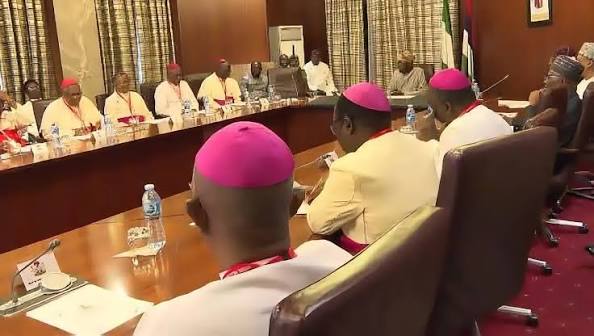
International President of the forum, Archbishop Lucky Aroh, disclosed this during the ordination and consecration of three new Bishops, as well as an award ceremony held in Port Harcourt.
Aroh said the performance of the APC-led Federal Government had endeared the party to the organisation, prompting the forum to declare its support for President Tinubu and other APC candidates in Rivers State.
He said the forum would support all APC candidates in the state during the 2027 elections and urged Nigerians to vote for the party.
Aroh, who is also the General Overseer of Caring Peoples Church, Port Harcourt, charged the newly consecrated Bishops to see their new positions as a great responsibility and dedicate themselves to the advancement of the kingdom of God.
He cautioned them against conduct capable of bringing their offices into disrepute, stressing that their activities would be closely watched by members of the public.
“As Bishops, the eyes of the public are on your activities. You must therefore conduct yourselves in a manner worthy of your calling,” he said.
Also speaking, the International Coordinator of the forum, Bishop Saint Robinson, urged the newly consecrated Bishops to work diligently towards winning souls for the kingdom of God.
Robinson, who was the guest speaker at the event, stressed that the activities of Bishops must at all times be guided by godly principles.
He also called on members of the church to support and cooperate with the newly consecrated Bishops in the discharge of their responsibilities.
The Secretary of the College, Apostle Elizabeth Ayadi Abaye, said the organisation was established to advance the kingdom of God and promote spiritual development.
According to her, the forum has organised several crusades, conferences, prayer meetings, ordinations, consecrations, enthronements, empowerment programmes and other spiritual development activities across the country as part of efforts to win souls for Christ.
Abaye said the organisation has members across the world and disclosed that more programmes had been scheduled to promote the spiritual development and wellbeing of humanity.
The three Bishops consecrated at the ceremony were Prince Alban Chike, Testimony Omenihu Shedrach and Prince Ifemena.
Among those honoured at the event were the Chairman of the Community Development Committee (CDC), Abali Community, Port Harcourt City Local Government Area, Manuchimso Prince Lemmy Wopara, and Clifford Oko Jaja, Coordinator of the 5,000 House-to-House for President Tinubu.
By: John Bibor
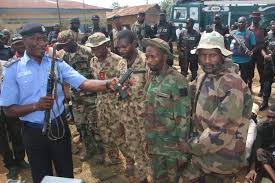
The State Commissioner of Police, CP Olugbenga Adepoju, disclosed this in Port Harcourt, recently during a press briefing at the Command Headquarters, where he said the arrests formed part of the operational achievements recorded by the Command between June and August 2026.
Adepoju said Atausi was arrested on August 10 by police operatives along Ada George, Port Harcourt, while dressed in military uniform and driving a Toyota Hilux painted in Army colours.
The Commissioner said investigation revealed that Atausi was not a member of the Armed Forces, adding that he was suspected to be a serial car snatcher, with three suspected stolen vehicles recovered from him.
He said the recovered vehicles included three Toyota Hilux vehicles without registration numbers and a Toyota Corona Premio with registration number BNY 380 ES, noting that the chassis and engine numbers of the vehicles had allegedly been tampered with.
Adepoju added that an axe and military accoutrements were also recovered from Atausi, as investigation continued into the circumstances surrounding the vehicles and other items recovered from him.
On the June 29 attack on police officers at Aluu Division, the Commissioner said three members of the gang allegedly responsible for the incident had been arrested by operatives of the Violent Crime Response Unit, VCRU-AKU.
The suspects, identified as Maduabuchi Emeka, 34, alleged gang leader; Doctor Chinedu Owhor, 42, and Kamachi Joe, 28, alleged armourer, reportedly led operatives to their hideout at Omagwa where two AK-47 rifles stolen during the attack were recovered.
Adepoju recalled that two police officers were killed during the Aluu attack, while others were wounded and one officer had his leg amputated, stressing that efforts were ongoing to apprehend the fourth suspect.
On kidnapping, the Commissioner said five members of a suspected kidnapping syndicate were arrested in Oyigbo Local Government Area, adding that they allegedly confessed to operations in Kom-Kom, Railway, Obeama and Afam communities.
He said two other suspects from the same network, Anele Ogbogu, 35, alleged to be the gang’s armourer, and Kenneth Eke, 38, were arrested on July 27, with one AK-47 rifle and one SMG rifle recovered.
The Commissioner further disclosed the arrest of suspects in connection with alleged firearm offences, armed robbery, cultism and one-chance robbery, with firearms, ammunition and other exhibits recovered during the operations.
Adepoju assured residents that the Command would sustain intelligence-led, proactive and community-oriented policing in collaboration with other security agencies, while urging members of the public to continue providing credible information that would assist the police in combating crime across Rivers State.
By; King Onunwor
-

 News4 days ago
RSG Targets Nine Million Residents in Mosquito Net Distribution Campaign
-

 Oil & Energy3 days ago
Aiyedatiwa Signs New Electricity Bill
-

 Maritime3 days ago
Marine Minister Commends President Tinubu On NPERA Bill Assent
-

 Oil & Energy3 days ago
NLNG Commissions Research And Innovation Centre In RSU
-

 News4 days ago
KenPoly Holds Eight Convocations, August 29
-

 News4 days ago
RSG Begins Another Phase of Projects Commissioning Today
-

 News4 days ago
RMAFC Completes Revenue Sharing Review, Proposes New Pay
-

 Maritime3 days ago
NAGAFF Petitions IGP Over Alleged Maritime Police Harassment