
Nation
Alleged N544m Fraud: Court Adjourns Babachir’s Case Until Oct 6

An FCT High Court in Jabi yesterday adjourned until October 6 and October 7 the trial of former Secretary to the Government of the Federation (SGF), Babachir Lawal.
Babachir is charged with 10 counts bordering on fraud, criminal conspiracy to diversion of over N544 million belonging to the Federal Government, in the award of contract in removal of evasive plant species in the North -East.
The EFCC also charged Hamidu, the former SGF’s younger brother, Suleiman Abubakar, Apeh Monday and two companies – Rholavision Engineering Limited and Josmon Technologies Limited.
At the resumed sitting on Thursday slated for cross-examination before Justice Charles Agbaza, the prosecution’s third witness, Fatima Umar, a Deputy Director, Head of Digital Forensic Laboratory, EFCC, took to the stand, to be cross examined by Babchir’s counsel, Akin Olujinmi, SAN.
During cross examination, Umar confirmed that as a digital expert, she knew that the internet offered various possibilities in terms of use.
In addition, she admitted being aware of the activities of hackers on the internet and their ability to take over a third party’s device without physically touching nor without the consent or authorisation of the owner.
Umar however said that before a device is hacked into and data get transferred using Bluetooth facility, pairing of devices must be done first before transfer of data can be enabled, which ultimately meant the owner of the device will have knowledge of the transfer.
Olujimi on his part asked Umar to confirm that there was a possibility that if the phone was in possession of another person apart from the owner, such pairing and subsequent transfer of data could be done without his knowledge.
In her response, she said yes, but she however said that was not the case in the extant suit.
According to Olujimi, he said that there was possibility that the phone which was taken from one Musa Bulani by one Ibrahim Ahmad, an EFCC’s operative in November 2017 did not get to Umar until March 9, 2018.
He therefore asked Umar to confirm the chain of custody within that period and the possibility that the phone was not tampered with and incriminating evidence planted in
She confirmed that the phone was in perfect working condition when it was brought for data to be extracted from it and analysed, accompanied by consent, specific analysis and chain of custody forms.
Umar said she had to interact with the owner of the phone as he needed to be brought to the laboratory because the phone had a pass code.
“ He was brought to the lab because in the consent form which was supposed to know the state and information of the device, whether it had a password or not and in this case.
“ In filling the form, he included a password that was wrong, so I requested for him to be brought to give the correct password,” she explained.
Olujimi in response to her answer stated that evidence from exhibit eight which was a letter sent to Umar to extract and analyse information from the phone was just the consent form.
He also pointed out that the evidence about the phone being password was not in any document before the court.
In concluding his evidence, he asked Umar if she could haçk into another person’s phone with her knowledge as a digital forensic expert. She answered in the affirmative, but added “not in this case”.
Justice Agbaza at the end of Olujimi’s cross examination adjourned the matter until October 6 and October 7 for the continuation of cross examination of the witness by the remaining four defence counsel.



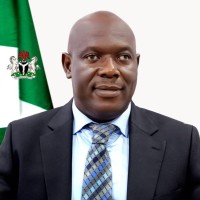
In a statement signed by the Project Coordinator, Prof Nenibarini Zabbey, to commemorate the anniversary, HYPREP described the anniversary as a significant milestone in Nigeria’s environmental restoration efforts, noting that the project has made remarkable progress in implementing the recommendations of the landmark UNEP report released on August 4, 2011.
The UNEP report had revealed extensive oil pollution across Ogoniland, severe environmental degradation, and serious public health risks resulting from decades of petroleum operations. It also recommended an initial $1 billion fund to commence the cleanup of the affected communities.
According to HYPREP, the Federal Government formally launched the Ogoni clean-up in 2016, while the Project Coordination Office was established in 2017 to drive the implementation of UNEP’s recommendations.
Zabbey said the current administration has continued to prioritise the project under the Renewed Hope Agenda.
Providing an update on the cleanup, the Project Coordinator disclosed that 30 of the 65 contaminated sites identified by UNEP have been fully remediated, while work is ongoing at several medium- and high-risk locations. It also stated that more than 1.5 million mangrove seedlings have been planted as part of what it described as the world’s largest restoration of oil-degraded mangroves, with over 1,000 hectares of shoreline already rehabilitated.
Zabbey further revealed that 49 Ogoni communities have been connected to potable water schemes through multiple water projects and booster stations aimed at providing safe drinking water across the region.
In the health sector, he said the 100-bed Ogoni Specialist Hospital in Kpite and the 43-bed Cottage Hospital in Buan are nearing completion, adding that several existing health facilities have been upgraded with modern medical equipment, while five ambulances have been donated to improve emergency healthcare services. The Project Coordinator also disclosed that a three-year human health biomonitoring study is being conducted in collaboration with the World Health Organization’s International Agency for Research on Cancer (IARC).
On economic empowerment, Zabbey stated that the Project has created more than 8,000 direct jobs and trained thousands of Ogoni youths and women in various vocational and technical skills, including software development, cybersecurity, aviation, commercial diving, seafaring, mechatronics, and creative arts. The project also reported awarding scholarships to more than 1,000 students, providing grants to small businesses, and supporting persons living with special needs through skills acquisition programmes.
The statement further highlighted ongoing legacy projects, including the Ogoni Power Project and the Centre of Excellence for Environmental Restoration, which it said is about 96 per cent complete. HYPREP also welcomed the recent designation of the Ogoni Wetland as a Ramsar Site of International Importance and pledged to continue promoting biodiversity conservation and sustainable management of the ecosystem.
Marking the anniversary, Zabbey said the progress achieved over the past 15 years demonstrates the collective commitment of government, development partners, stakeholders, and local communities to restoring Ogoniland. He called for renewed collaboration to sustain the cleanup effort, promote environmental sustainability, and support the long-term development of the region. 3
-

 News2 days ago
RSG Targets Nine Million Residents in Mosquito Net Distribution Campaign
-

 Oil & Energy2 days ago
Aiyedatiwa Signs New Electricity Bill
-

 Maritime2 days ago
Marine Minister Commends President Tinubu On NPERA Bill Assent
-

 Oil & Energy2 days ago
NLNG Commissions Research And Innovation Centre In RSU
-

 News2 days ago
KenPoly Holds Eight Convocations, August 29
-

 News2 days ago
RSG Begins Another Phase of Projects Commissioning Today
-

 News2 days ago
RMAFC Completes Revenue Sharing Review, Proposes New Pay
-

 Maritime2 days ago
NAGAFF Petitions IGP Over Alleged Maritime Police Harassment