Connect with us

Environment

Children Activists Champion Fight Against Climate Change In Nigeria

Published

on

Four children climate activists of the Royal Palm International College in Ilorin have inaugurated “Return the Green Club”, an initiative to bring awareness on the need to save the environment from depleting.
The Tide source reports that the Return the Green Club is part of the activities to mark the 2021 World Environment Day, themed: “Restoration of the ecosystem”.
The children are Aderinsola Adegboye, 10 years old; Adenrele Adegboye, 11; Mariam Abdulrazaq, 12; and Chibuzor Oseigbu, 16.
Adegboye, Founder of “Return the Green” initiative, observed that government from nations have agreed to limit global warming by reducing carbon emission in areas like energy and transportation.
She warned that globally, the world has started experiencing changes due to climate change.
Adegboye advised that to cope with the climate change that is taking its toll on the environment, drought resistant crops and trees should be planted.
She also advised Nigerians to build houses and roads above sea level and use of technology to be innovative about irrigation method.
Adegboye listed actions to reduce causes of climate change to include using renewable energy, cooking clean, and reduce re-use and recycle, among others.
Miss Chibuzor Oseigbu listed causes of climate change to include deforestation, burning of fossil fuel and agriculture as a major cause of source of greenhouse gases which contribute to the green house effect and climate change.
She also observed that sometimes natural climate change happened naturally through volcanic eruptions, ocean currents and earth orbital changes, among others.
Miss Mariam Abdulquadir, in her presentation, explained that World Environment Day is United Nation’s principal vehicle for encouraging children and adults, educated and uneducated, rural and urban dwellers, to be worldwide on the awareness and action for the environment.
On his part, Master Adenrele Adegboye, advised school children to fight climate change through provision of bird feeders to provide shelter for birds, use of snack paper bag, compost making and making short videos on climate change and posting.
Also speaking, Mr AbdulGaniyu Opeloyeru, the Executive Director of Ajike Foundation of the Kwara First Lady, Mrs Olufolake AbdulRazaq, commended the children for the initiative.
He observed that such initiative would promote awareness on dangers of ill treatment of the environment and the need to protect it.
Opeloyeru advocated taking such awareness to mosques, churches, opinion and community leaders so as to preach the importance of ecosystem.
Earlier in her address of welcome, Mrs Funmi Adefila-Osiegbu, founder of Bundies Care Support Initiative, noted that human relationship with nature is broken.
“These crises stemmed from the unhealthy practices we have adopted as occupants of our planet,” she said.
According to her, many have been lost to various diseases and infections, from the recent COVID-19 to Ebola, Lassa fever and Zika virus, among others.
Oseigbu expressed optimism that the Return the Green initiative would become national and global, adding that it is time to be action driven towards restoration and preservation of the environment.
On her part, Mrs Remilekun Bamigboye, the  state Commissioner for Environment, noted that climate change issues had been left unattended to and now threatening human existence.
She urged the younger generation to champion the cause of the environment so as to have a safe world to live in.


Continue Reading

Environment

FG Moves To Phase Out Lead-Based Paints By 2030

Published

on

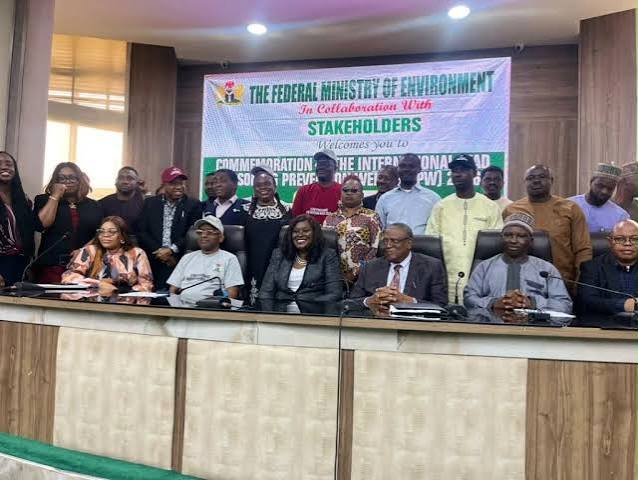
The Federal  Government says it is intensifying efforts to eliminate lead exposure and phase out lead-based paints in Nigeria by 2030.
The Permanent Secretary in the Federal Ministry of Environment, Dr Salihu Usman said this at the 2026 International Lead Poisoning Prevention Week in Abuja .
Usman who was represented by the Director, Department of Pollution Control and Environmental Health in the ministry Mrs Omotunde Adeola said lead poisoning was a preventable environmental and public-health problem, with no known safe exposure.
Usman warned that children, pregnant women and occupationally exposed workers faced significant risks.
He emphasised the need for coordinated action among  government agencies, industries, health professionals and civil society organisations to strengthen environmental monitoring, enforce product standards, promote safer alternatives and improve public awareness.
He also highlighted the National Inter-Agency Working Group on Lead Poisoning Elimination and the proposed five-year strategic plan.
Usman urged stakeholders to measure progress through reduced exposure, removal of unsafe products and responsible management of contaminated sites, rather than meetings and policies alone.
He reaffirmed the ministry’s commitment to stronger environmental regulation and called for sustained collaboration to protect Nigerians from preventable lead poisoning.
Dr Leslie Adogame, Executive Director, Sustainable Research and Action for Environment Development (SRADeV) cited studies on lead paint and used lead-acid battery recycling, and urged the need for stronger laboratory testing, environmental monitoring, enforcement of standards and safer alternatives.
The director commended stakeholders for supporting efforts to eliminate lead exposure and said that they commemorated the event annually since 2013, collaborating with government institutions, industry players and schools.
He further urged stakeholders to prioritise prevention, environmental remediation and community protection, particularly for children and workers vulnerable to lead poisoning.
Mrs Omotunde Adeola, the Director of Pollution Control and Environmental Health, in the ministry called for measures to prevent lead poisoning, stating that there was need to translate detection into effective action.
Adeola, who was represented by Mr Idris Abdullahi, Director, National Ozone Office, in the ministry, reaffirmed the ministry’s commitment to supporting Nigeria’s target of phasing out lead-based paints by 2030, stressing that success must be measured by reduced exposure and lives protected.
She highlighted key developments, including a November 2025 capacity-building workshop on portable X-ray fluorescence analysers, which equipped 35 participants with skills for screening lead in paints and consumer products.
She said that the ministry, with support from Resolve to Save Lives and other stakeholders, had validated a training toolkit for Environmental Health Officers to improve lead-poisoning prevention, detection and response.
Adeola urged manufacturers, importers, retailers, regulators and communities to comply with product standards, improve surveillance and promote safer waste-management practices.
She also cited the ministry’s April 2026 pilot programme for environmentally sound management of small-sized waste batteries in the Federal Capital Territory.
The Tide source reports that awards were presented to institutions, associations, paint manufacturers and raw material suppliers, acknowledging their contributions to Nigeria’s transition towards the production and use of lead-free paints.
The awardees are Balarabe Lawal, the Minister of Environment, Mrs Omotunde Adeola
Director of Pollution Control and Environmental Development and the Standards Organisation of Nigeria.
Others are the Paint Manufacturers Association; Paints and Coating Manufacturing Nigeria, Chemicals and Allied Products (CAP) Plc; Prestige Paint Nigeria Ltd.; and Parco Enterprise Nigeria Ltd.
Continue Reading

Environment

PANDEF Challenges Presidential Candidates to Commit to Niger Delta Environmental 

Published

on

The Pan Niger Delta Forum (PANDEF) has challenged presidential candidates of political parties to demonstrate a clear commitment to environmental justice in the Niger Delta, demanding practical and measurable plans to address decades of pollution, ecological damage and underdevelopment in the oil-producing region.
The organisation made the demand on Tuesday in a communiqué issued after a virtual meeting of its Board of Trustees (BoT) and National Executive Committee (NEC), held in Abuja.
The meeting urged presidential candidates to present practical, measurable and time-bound programmes for the cleanup, restoration and sustainable development of communities affected by oil and gas exploration and production.
Those at the meeting included PANDEF BoT Chairman, Obong Victor Attah; National Chairman of the NEC, Ambassador Godknows Igali; former governors and ministers; first-class traditional rulers; political leaders; opinion leaders and other stakeholders from the region.
PANDEF observed that more than six decades of oil and gas exploration had left communities across the Niger Delta grappling with environmental degradation, pollution and the destruction of ecosystems and livelihoods.
It specifically called for urgent attention to the environmental challenges in Nembe Creek, Bayelsa State; Odidi, Delta State; and Kula, Rivers State.
The forum reaffirmed its commitment to sustained advocacy and engagement with the Federal Government on environmental protection, remediation and the restoration of affected communities.
It also called for adequate, sustained and transparent funding of the Ogoni cleanup programme, urging the Federal Government to develop a comprehensive framework for extending similar remediation efforts to other parts of the Niger Delta.
On infrastructure, PANDEF commended President Bola Tinubu’s decision to modernise and upgrade the ports in Warri, Port Harcourt and Calabar. It also welcomed approvals for proposed deep seaport projects in Akwa Ibom, Rivers and Bayelsa states.
The projects include the Ibom Deep Sea Port in Akwa Ibom, Bonny Deep Sea Port in Rivers and Agge Deep Sea Port in Bayelsa.
According to the communiqué, the strategic location of the proposed ports could strengthen trade links with East, Central and Southern Africa and improve access to the Indian Ocean.
PANDEF, however, urged the Federal Government to establish a sustainable financing framework for the South South port projects, comparable to arrangements adopted for major port infrastructure development around the Lagos corridor.
The organisation also welcomed the Federal Government’s decision to retain the original broad alignment of the 750-kilometre Lagos-Calabar Coastal Highway as a distinct strategic infrastructure project, following reported reconsideration of an earlier proposal to integrate the route into the East-West Road.
Describing the coastal highway as a long-standing project that predates Nigeria’s independence, PANDEF said it had constituted a high-level technical committee to assist the Federal Ministry of Works on the project.
It declared the accelerated and successful completion of the highway non-negotiable, arguing that the road would improve connectivity among coastal states, stimulate trade and investment, strengthen national integration and unlock economic opportunities.
The forum also appealed to the Federal Government to take steps towards establishing an appropriate north-south rail connection that would link the Niger Delta with other parts of the country.
On revenue allocation, PANDEF called for an increase in the derivation fund from the current 13 per cent to a minimum of 50 per cent, citing the environmental and developmental burdens borne by oil-producing communities.
The forum noted that Section 162(2) of the 1999 Constitution, as amended, provides for the allocation of not less than 13 per cent of revenue accruing directly from natural resources to the states from which the resources are derived.
It argued that the provision had remained unchanged for more than two decades, despite the scale of environmental degradation, ecological challenges and developmental deficits in oil-producing communities.
PANDEF said increasing the derivation allocation would give the affected states greater resources to address environmental damage, health hazards, infrastructure gaps and the wider social and economic consequences of oil and gas operations.
The organisation further called on the Federal Government, the Revenue Mobilisation, Allocation and Fiscal Commission (RMAFC) and the National Assembly to urgently resolve the longstanding controversy surrounding the onshore/offshore dichotomy in revenue allocation.
The forum’s demands place environmental remediation, resource revenue allocation and major infrastructure development at the centre of its expectations from political parties and the next administration as the country approaches another election cycle.
Continue Reading

Environment

Dr Maigida Urges Action On Environmental Sustainability

Published

on

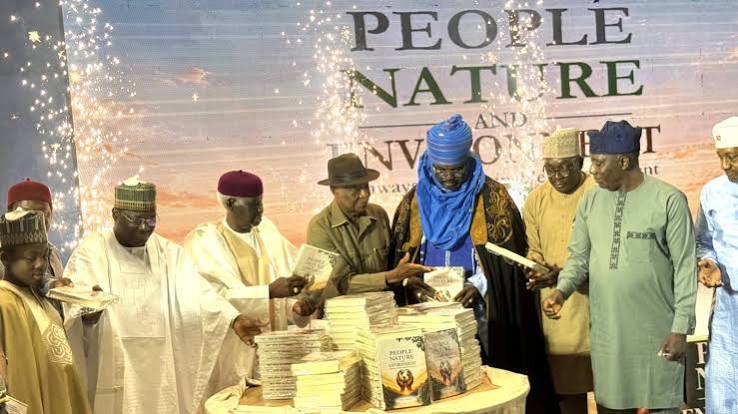
The author of People, Nature and Environment: Pathways to Sustainable Development, Dr Abba Maigida has urged Nigeria to make environmental sustainability a national priority in its development policies and decisions.
Maigida made the call at the public presentation of the  book in Abuja on Thursday, saying economic growth must go hand in hand with environmental protection and human welfare.
He said his experiences during more than two decades of public service exposed him to the effects of environmental degradation, including erosion, desert encroachment, flooding and pressure on housing and infrastructure.Go Green
“In parts of eastern Nigeria, I witnessed the destructive impact of rural erosion on homes, roads and farmlands. In the North, I observed how desert encroachment threatens agricultural activities and rural livelihoods,” he said.
He also cited flooding in the Middle Belt and rapid urbanisation in Abuja and Lagos as examples of environmental pressures affecting communities and development.
Maigida said these experiences inspired him to examine how Nigeria could pursue economic growth without destroying the natural resources on which livelihoods and future prosperity depend.
He said the book, which took more than seven years to complete, drew on research, field observations and discussions with farmers, fishermen, traditional rulers, environmental professionals and public servants.
According to him, environmental sustainability should inform decisions on infrastructure, housing, natural resource management and community development rather than be treated as a separate concern.
“Development should not be measured only by the number of roads, buildings and other physical structures we provide.
“We must also consider the quality of life of our people, the conditions of our communities and the environmental consequences of our decisions,” he said.
The author said the publication examined environmental sustainability, human development, housing, natural resource management, climate change, community development, public policy and institutional responsibility.
He expressed hope that the book would help policymakers, researchers, development practitioners and communities translate sustainability principles into policies, programmes and practical action.
Gen. Alwali Kazir, Chairman of the occasion, said environmental protection was also a national security concern, noting that competition over scarce resources could contribute to displacement, food insecurity and insecurity.
He urged governments to enforce environmental policies, educational institutions to promote environmental literacy and businesses to embrace sustainable production and responsible investment.
In her welcome address, FCT Head of Service, Nancy Sabanti, said climate change, deforestation, rapid urbanisation, inadequate housing and environmental degradation threatened livelihoods, public health and future development.
Sabanti, represented by Dr Andrew Zakari, said government, the private sector, educational and research institutions, communities and individuals shared responsibility for environmental protection and sustainable development.
She said the book launch provided an opportunity to promote informed discussions, strengthen commitment to responsible development and encourage practical action towards a better future.
The Minister of Agriculture and Food Security, Sen. Abubakar Kyari, has stressed the importance of environmental sustainability to food security and the preservation of natural resources for future generations.
Kyari, represented by Mr Taiwo Ojelabi, said sustainable management of water bodies, forests, vegetation and other natural resources was essential to food production.
He urged Nigerians to prevent environmental degradation and promote sustainable use of natural resources to ensure a healthy and productive environment for future generations.
Prof. Ishaya Sunday of the University of Abuja, the book reviewer, said the 21-chapter publication examined biodiversity, environmental health, water and food security, waste management, climate adaptation, disaster risk management and environmental governance.
Sunday commended the book’s interdisciplinary approach, while noting that the practical value of its proposed sustainability and climate resilience frameworks would depend on empirical application and independent assessment.
Goodwill messages were delivered by representatives of the Ghana High Commission, Baze University, Zenith Bank, the Federal Ministry of Agriculture and Food Security, Dr Onyema Ugochukwu, Wilson Inalegwu and others.
Continue Reading

Trending