
Nation
Push For N826bn Annual Fund To Combat Insecurity Angers Nigerians

Concerned Nigerians have reacted to a revelation from the Nigerian Defence Headquarters, last Monday, that, at least, $2billion (about N826billion), would be needed yearly, to tackle the worsening insecurity in the country.
The Director of Production, Defence Headquarters, Air Vice Marshall M. A. Yakubu, who revealed this during public hearing on the Armed Forces Support Trust Fund Bill, said even the sources of funding, which the bill prescribes, were insufficient to address the problem.
“If we are not able to raise a minimum of $2billion (about N826billion) per annum in the next three years for a start, subsequently maybe we can begin to taper down the percentages. But for a start, we need a bulk sum because of many of these manufacturers of equipment require 100 per cent down payment to even start production. So, you cannot sign a contract example with the US manufacturers and pay 15 per cent mobilization as required by the procurement act.
“Nobody would look at you. Their terms must be followed. Many times we are asked to pay 100 per cent. The example is the Super Tucano. This one is on government-to-government. They insisted on 100 per cent payment within 30 days. No budgetary allocation would fund that,” he said.
Reacting to this, some Nigerians kicked against it, sarcastically asking the government to ‘sell Nigeria’ and give the proceeds to military to combat insecurity or share the money (N826billion) to Nigerians and watch insecurity be put to a stop by citizens.
The Human Rights Writers Association of Nigeria (HURIWA), yesterday, cautioned the National Assembly against politicizing the anticipated Armed Forces Trust Fund.
HURIWA said the multi-billion dollars worth of statutory Armed Forces Trust fund being contemplated by the National Assembly is a constructive idea that will inevitably transform the Nigeria military into an enviable fighting force if prudently applied.
Speaking on the proposed Armed Forces Trust Fund, HURIWA’s National Coordinator, Comrade Emmanuel Onwubiko; and the National Media Affairs Director, Miss Zainab Yusuf; described the initiative as a creative idea whose time has come.
A statement by the group reads partly, “The National Assembly should not politicize the initiative but expeditiously set up the trust fund by way of a national law as a legacy to be bequeathed to generations unborn.
“We read the Speaker of the House of Representatives, Hon Femi Gbajabiamila, saying that the military needs more funding because Nigeria is at war.
“Gbajabiamila, who stated this at a public hearing on a bill seeking to establish a special trust fund for the Armed Forces, said insecurity in the country has made extra funding for the military necessary.
“He spoke as the Defence Headquarters said at the hearing that the military will need not less than $2billion annually for the next three years, making $6billion, to effectively tackle the growing security crises across the country. We are happy with this proposal and we call for its expeditious passage”.
Besides, the Rights group has described as campaign of character assassination the allegation by some soldiers that their allowances for the past four years have been either unpaid or underpaid by the Army authority without any explanation especially in the tenure of the immediate past Chief of Army Staff, Lt-Gen Yusuf Tukur Buratai (rtd).
HURIWA specifically recalled that in a media publication, the soldiers stated that their allowances for the past four years have been either unpaid or underpaid by the army authorities without any explanation, urging the president to order the Economic and Financial Crimes Commission(EFCC) as well as the Independent Corrupt Practices and Other Related Offences Commission (ICPC) to probe what happened to the monies just as the aggrieved soldiers of the Nigerian Army are calling for a probe of how their Uniform and Boots Allowance and Scarce Skills Allowance approved by President Muhammadu Buhari since November, 2017, have not been paid by the army authorities, then under the former Chief of the Army Staff, Lt-Gen Tukur Buratai (rtd).
HURIWA, however, stated that authoritative information made available to it from the Nigerian Army High Command shows that contrary to the claims, that category of allowances was even introduced by the immediate past Army chief.



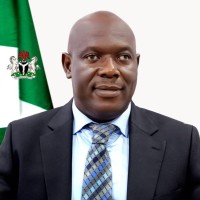
The Hydrocarbon Pollution Remediation Project (HYPREP) has commemorated the 15th anniversary of the release of the United Nations Environment Programme (UNEP) Environmental Assessment Report on Ogoniland, reaffirming its commitment to restoring the environment and improving the livelihoods of affected communities.
In a statement signed by the Project Coordinator, Prof Nenibarini Zabbey, to commemorate the anniversary, HYPREP described the anniversary as a significant milestone in Nigeria’s environmental restoration efforts, noting that the project has made remarkable progress in implementing the recommendations of the landmark UNEP report released on August 4, 2011.
The UNEP report had revealed extensive oil pollution across Ogoniland, severe environmental degradation, and serious public health risks resulting from decades of petroleum operations. It also recommended an initial $1 billion fund to commence the cleanup of the affected communities.
According to HYPREP, the Federal Government formally launched the Ogoni clean-up in 2016, while the Project Coordination Office was established in 2017 to drive the implementation of UNEP’s recommendations.
Zabbey said the current administration has continued to prioritise the project under the Renewed Hope Agenda.
Providing an update on the cleanup, the Project Coordinator disclosed that 30 of the 65 contaminated sites identified by UNEP have been fully remediated, while work is ongoing at several medium- and high-risk locations. It also stated that more than 1.5 million mangrove seedlings have been planted as part of what it described as the world’s largest restoration of oil-degraded mangroves, with over 1,000 hectares of shoreline already rehabilitated.
Zabbey further revealed that 49 Ogoni communities have been connected to potable water schemes through multiple water projects and booster stations aimed at providing safe drinking water across the region.
In the health sector, he said the 100-bed Ogoni Specialist Hospital in Kpite and the 43-bed Cottage Hospital in Buan are nearing completion, adding that several existing health facilities have been upgraded with modern medical equipment, while five ambulances have been donated to improve emergency healthcare services. The Project Coordinator also disclosed that a three-year human health biomonitoring study is being conducted in collaboration with the World Health Organization’s International Agency for Research on Cancer (IARC).
On economic empowerment, Zabbey stated that the Project has created more than 8,000 direct jobs and trained thousands of Ogoni youths and women in various vocational and technical skills, including software development, cybersecurity, aviation, commercial diving, seafaring, mechatronics, and creative arts. The project also reported awarding scholarships to more than 1,000 students, providing grants to small businesses, and supporting persons living with special needs through skills acquisition programmes.
The statement further highlighted ongoing legacy projects, including the Ogoni Power Project and the Centre of Excellence for Environmental Restoration, which it said is about 96 per cent complete. HYPREP also welcomed the recent designation of the Ogoni Wetland as a Ramsar Site of International Importance and pledged to continue promoting biodiversity conservation and sustainable management of the ecosystem.
Marking the anniversary, Zabbey said the progress achieved over the past 15 years demonstrates the collective commitment of government, development partners, stakeholders, and local communities to restoring Ogoniland. He called for renewed collaboration to sustain the cleanup effort, promote environmental sustainability, and support the long-term development of the region. 3
-

 News2 days ago
RSG Targets Nine Million Residents in Mosquito Net Distribution Campaign
-

 Oil & Energy2 days ago
Aiyedatiwa Signs New Electricity Bill
-

 Maritime2 days ago
Marine Minister Commends President Tinubu On NPERA Bill Assent
-

 Oil & Energy2 days ago
NLNG Commissions Research And Innovation Centre In RSU
-

 News2 days ago
KenPoly Holds Eight Convocations, August 29
-

 News2 days ago
RSG Begins Another Phase of Projects Commissioning Today
-

 News2 days ago
RMAFC Completes Revenue Sharing Review, Proposes New Pay
-

 Maritime2 days ago
NAGAFF Petitions IGP Over Alleged Maritime Police Harassment