
Editorial
Task Before New IGP

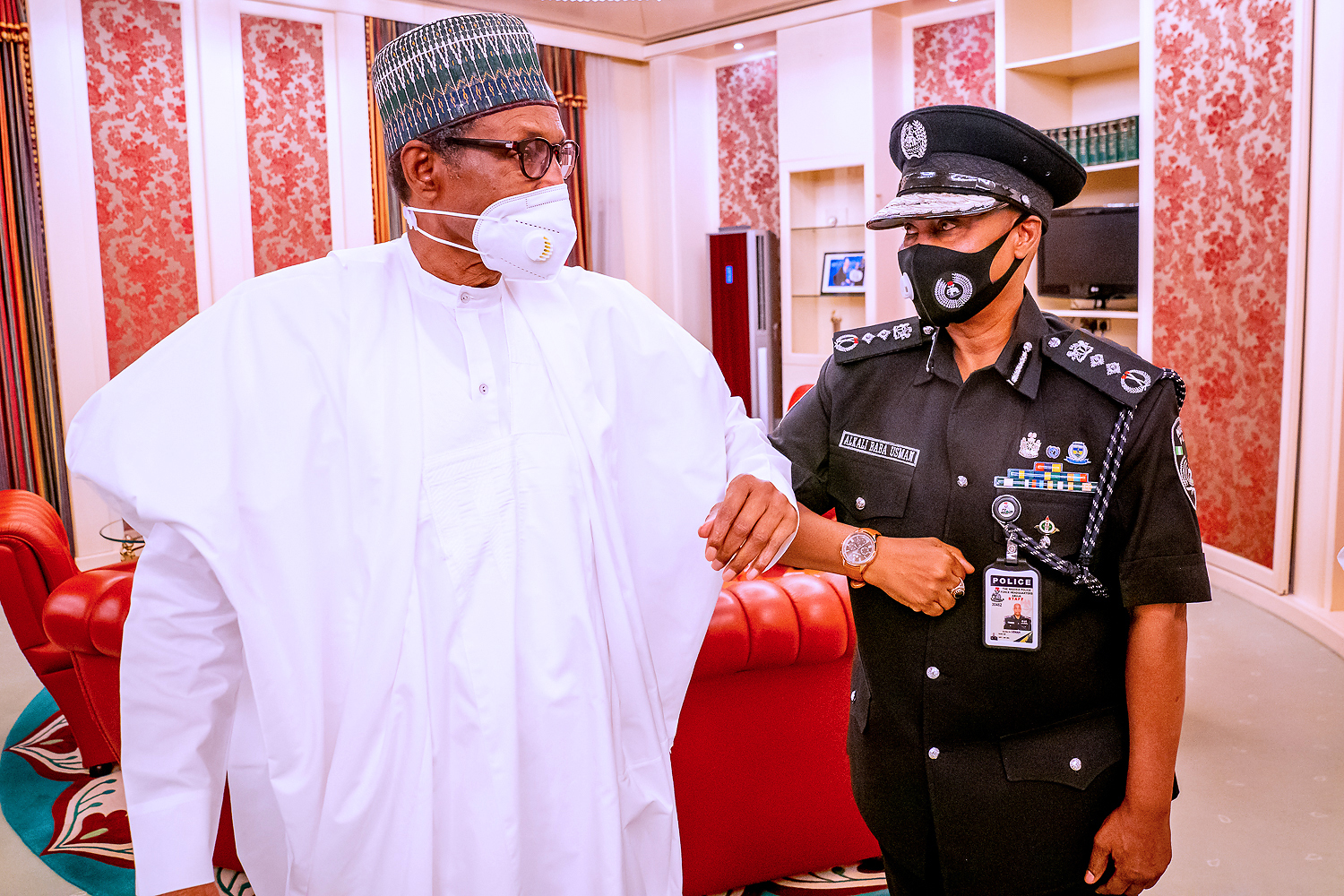
As Nigerians eagerly awaited judicial pronouncement that would have sealed the constitutionality or otherwise of the extention of service period for former Inspector General of Police (IGP), Mohammed Adamu, by the court on April 16, 2021, President Muhammadu Buhari, acting through his Minister of Police Affairs, Maigari Dingyadi, aborted that expectation when he announced the appointment of Usman Alkali Baba, as the 21st indigenous IGP to replace Adamu in acting capacity on April 6, 2021.
Until that appointment, Usman Baba who holds a Master’s Degree in Public Administration, was the Deputy Inspector General (DIG) in charge of Force Criminal Intelligence and Investigation Department (FCIID) at Force Headquarters, Abuja. He had also served as Force Secretary, Commissioner of Police in Delta State, the Federal Capital Territory, as well as being the Assistant Inspector General (AIG) in charge of Zones 4, 5 and 7, respectively.
Being the third in a row of Northern Muslims appointed into that position by President Buhari, there are many who see the President’s action as not only insensitive but a brazen disregard for the increasing tension in the land occasioned by heightening clamour against perceived sense of exclusion and frustration, given vent in violent rage against the state.
There are other Nigerians who think that the president acted without due process in the appointment of the new IGP without recourse to the Police Council as required by law. The argument is that it is erroneous for the president to rely only on Section 171 of the Constitution without taking due regard to the Third Schedule Section 215 (2)) of the same 1999 Constitution in the discharge of his function as touching the subject matter.
Created by Section 153 of the Constitution, the Police Council which has the President as chairman and the 36 state governors as members is saddled with the responsibility of appointing the IGP based on the recommendation of the Police Service Commission. As things stand, there is no indication that even the Police Service Commission was involved in the appointment of Usman Baba. For many, this is a disservice to the nation and an apparent breaking of the law by the President himself.
While The Tide agrees that the President ought to have exercised better discretion, sensitivity, circumspection and adherence to the rule of law in his choice of a new helmsman for the Nigerian Police Force at this time, the fact cannot be denied that the task before IGP Baba is very huge and challenging and requires uncommon bravery, courage, ingenuity, resourcefulness, patriotism and sincerity of purpose to surmount.
It is not for nothing that Usman Baba’s appointment was announced while his predecessor was on an on-the-spot assessment of one of the most massive destructions ever visited upon the headquarters of a police command and a correctional facility in the country. It is also instructional that barely 48 hours upon his assumption of duty, five state governors, acting in concert, proclaimed the establishment of a regional security outfit, following the footsteps of some others who had gone before.
The truth of the matter is that Nigeria at the moment faces an existential threat, not from without but from within its borders. With festering insurgency in the North East, banditry in the North West, farmers-herder’s deadly confrontations in the South West, North Central and South’ South, and a fledging insurrection in the South East, a general sense of insecurity pervades the entire landscape of Nigeria.
In the last three months, bandits have attacked and kidnapped students from four different schools in the North West region with some students of the Federal College of Forestry Mechanisation in Kaduna State still being held by their captors. Attack on police formations and killing of law enforcement personnel is almost becoming a daily occurrence. Separatist voices are getting louder while ethnic war lords are springing up in their numbers. Kidnapping, cultism and sundry violent and deadly crimes are spinning out of control. In fact, there is an intolerable level of breakdown of law and order while overall safety and security of lives and property have reached an all-time low in the country.
To say the least, lack of security and effective and efficient enforcement of law and order fueled by uncontrolled influx of small arms and light weapons is the unfortunate reality in Nigeria. There are indeed, those who describe the country as a failing state because of the level of lawlessness and the security agencies’ seeming lack of capacity and capability to stem the overwhelming tide. Perhaps, the job of maintenance of law and order in Nigeria has never been this challenging and it is now the unenviable lot of IGP Usman Baba to put a lead on the spiraling ugly situation and give his compatriots a new hope of a safe and secure environment for their lives and property.
However, for the police to be able to undertake this task effectively, it must itself attain certain basic standard requirements. To begin with, the police are ill-equipped and understaffed. Clearly, adequate equipment of the police in the light of the equality and calibre of weapons in the hands of the criminals is a fundamental requirement if they are to make any impact at all.
The new IGP must also work with relevant authorities to ensure that the personnel strength of the force is significantly increased in order to have enough manpower for the work. The situation where you have less than one million officers to police about 200 million people is no longer sustainable.
Deliberate purposeful efforts must be made to earn the people’s trust and confidence for the police to achieve results. The police cannot continue to be in confrontation with the same people they’re paid to protect. The need for a properly trained, highly professional and truly civil police force cannot be overemphasized.
IGP Usman Baba must also work to ensure that the police does not find itself working at cross purposes with sister security agencies but always endeavour to fashion out workable synergy and partnerships for the overall good of the country. The Nigeria Police Force needs to reform itself, motivate its officers and men through adequate remuneration and the provision of welfare packages that will boost their morale and reduce their tendency to be compromised without much ado.
Of course, IGP Usman Baba has already made public his new policing vision to include: Deploying cutting-edge policing technology; integrating intelligence-led policing practices to core policing functions with a view to strengthening police capacity to stabilize the internal security order; and restoring public confidence in the force.
Of course, IGP Usman Baba will require the support, assistance and cooperation of the Federal Government as well all Nigerians to succeed but he must work to justify the confidence reposed in him by the president and prove himself worthy to be taken seriously by the people.




The Independent National Electoral Commission’s (INEC) disclosure of an alleged plot to target its ad hoc personnel ahead of the 2027 general elections demand urgent national attention. The reported arrest of suspects, with intelligence support from the Department of State Services (DSS), is encouraging, but must not breed complacency. Any attack on electoral workers threatens not only human lives but also Nigerians’ constitutional right to choose their leaders through credible elections. The alleged conspiracy must be thoroughly investigated, its sponsors identified and all those found culpable prosecuted.
Particularly troubling is the reported targeting of National Youth Service Corps (NYSC) members, who play a vital role in Nigeria’s electoral process. Many serve far from home and undertake sensitive assignments at polling units and other electoral locations. As civilians, they should not be exposed to intimidation, abduction or violence without adequate protection. If election workers are vulnerable, the safety of other officials, observers and voters cannot be guaranteed.
Nigeria’s electoral history offers painful lessons. Human Rights Watch reported in Nigeria’s Post-Election Violence, published in May 2011, that more than 800 people died in the violence following the 2011 general elections. NYSC members serving as electoral officials were among the victims. This tragedy underscores the deadly consequences of political tension, incitement and disputed outcomes. Nigeria must act on the latest warning before another preventable disaster occurs.
INEC deserves recognition for uncovering the alleged plot, while the DSS and other security agencies merit commendation for their reported assistance. However, arrests are only the beginning. Investigators must establish the suspects’ identities, motives, networks and intended targets, ensuring that evidence is admissible in court. The process must remain impartial and free from political interference. Credible public updates are also necessary, provided they do not compromise investigations or operational security.
The authorities must adopt a comprehensive, intelligence-led security strategy for 2027. INEC’s proposed security conference should produce practical measures developed in collaboration with the Inter-Agency Consultative Committee on Election Security (ICCES), the police, the DSS and other relevant agencies. Threat assessments should guide personnel deployment, secure transportation, emergency communications, evacuation procedures and rapid response. Protection must extend beyond polling day to the distribution of sensitive materials, collation centres and the safe return of ad hoc personnel.
Those who provide intelligence must also be protected from retaliation. Confidential reporting channels and appropriate safeguards should be established for informants and others assisting investigations. Equally, security deployments must not intimidate voters or facilitate political repression. Personnel should act professionally, impartially and proportionately, within the law. Clear mechanisms for reporting misconduct and investigating abuses are essential to maintaining public confidence.
The threat also highlights broader concerns about trust in the electoral system. The European Union Election Observation Mission’s June 2023 final report identified shortcomings in transparency and operational implementation during Nigeria’s 2023 general elections, alongside concerns about the legal framework and electoral dispute resolution. Credible elections require more than security; they depend on transparent procedures, accountable officials and consistent enforcement of electoral laws. INEC must demonstrate measurable progress in addressing previously identified weaknesses.
Voter apathy presents another challenge. INEC’s published figures indicate that approximately 25 million people voted in the 2023 presidential election, out of about 93.5 million registered voters, a turnout of roughly 26.7 per cent. Although insecurity is not the sole cause of low participation, threats against electoral personnel can heighten public anxiety and discourage voters from exercising their franchise. INEC should strengthen civic education, improve polling accessibility and communicate procedures clearly. Political parties, civil society and the media must promote peaceful participation and reject electoral intimidation.
Misinformation and manipulated digital content pose additional risks. False reports, fabricated announcements and deepfake videos can inflame tensions, impersonate officials and mislead voters. INEC should establish a well-resourced, rapid-response communication system supported by verified digital channels and timely public statements. Collaboration with credible media organisations and fact-checkers would help counter falsehoods without suppressing legitimate criticism. Clear, consistent communication is indispensable, as administrative confusion and delayed explanations often allow rumours to spread.
Electoral integrity must also begin within INEC itself. The chairman’s warning against partisanship, negligence, extortion and ethical misconduct deserves serious attention. Security measures cannot compensate for officials who abuse their positions or disregard established procedures. INEC should strengthen staff training, ensure transparent recruitment and deployment, provide secure channels for reporting misconduct and enforce disciplinary rules consistently. Allegations of bribery and political interference must be investigated regardless of rank, while ad hoc personnel should receive adequate briefing, support and prompt payment.
The legal framework also requires clarity and consistent enforcement. INEC should explain the precise provisions and applicability of Section 26 of the Electoral Act 2026, including the obligations of electoral officials and security personnel, and publish authoritative guidance on neutrality and professional conduct. Complaints by opposition parties that they have been prevented from campaigning in certain states must likewise be investigated impartially. Any established violations should attract appropriate corrective action. Electoral fairness requires not only impartial polling officials but also lawful campaigning, access to competing viewpoints and freedom from intimidation.
The alleged plot against INEC’s ad hoc personnel is a warning against complacency ahead of the 2027 general election. Governments, security agencies, INEC, political parties and civil society must work together to prevent violence, punish misconduct and protect citizens’ participation. The commission should communicate its security priorities, maintain accessible threat-reporting channels and provide periodic updates on preparedness. Nigeria’s democracy cannot be safeguarded by assurances alone; it requires demonstrable preparation, impartial law enforcement and an unwavering commitment to free, fair and credible elections.
-
 Politics3 days ago
LG CITY BOY COORDINATOR HAILS WIKE’S SUPPORT FOR ONYESOH, TINUBU
-
Politics3 days ago
DIRI INAUGURATES APC CAMPAIGN COUNCIL, SETS MILLION VOTES TARGET FOR TINUBU
-
 Politics3 days ago
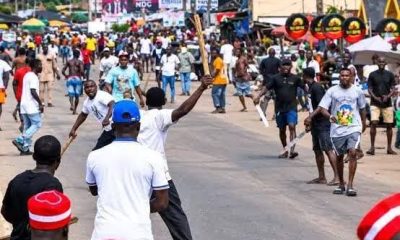
NDC Candidate Urges Oborevwori To Probe Asaba Political Violence
-

 News4 days ago
Army Recovers X Account After Hack Attempt
-
 Business3 days ago
Nigeria Loses N17tr Yearly To Abandoned Projects
-
Politics3 days ago
2027: Oborevwori Tasks Media On Fair, Accurate Reporting
-
Politics3 days ago
2027: AKPABIO ENVISAGES TINUBU’S VICTORY IN SOUTH SOUTH REGION
-
Politics3 days ago
Asaba Political Violence: Police Confirm One Dead, Delta Govt Urges Probe