
Nation
‘Sex-For-Marks’: Don Urges Review Of Sexual Harassment Bill

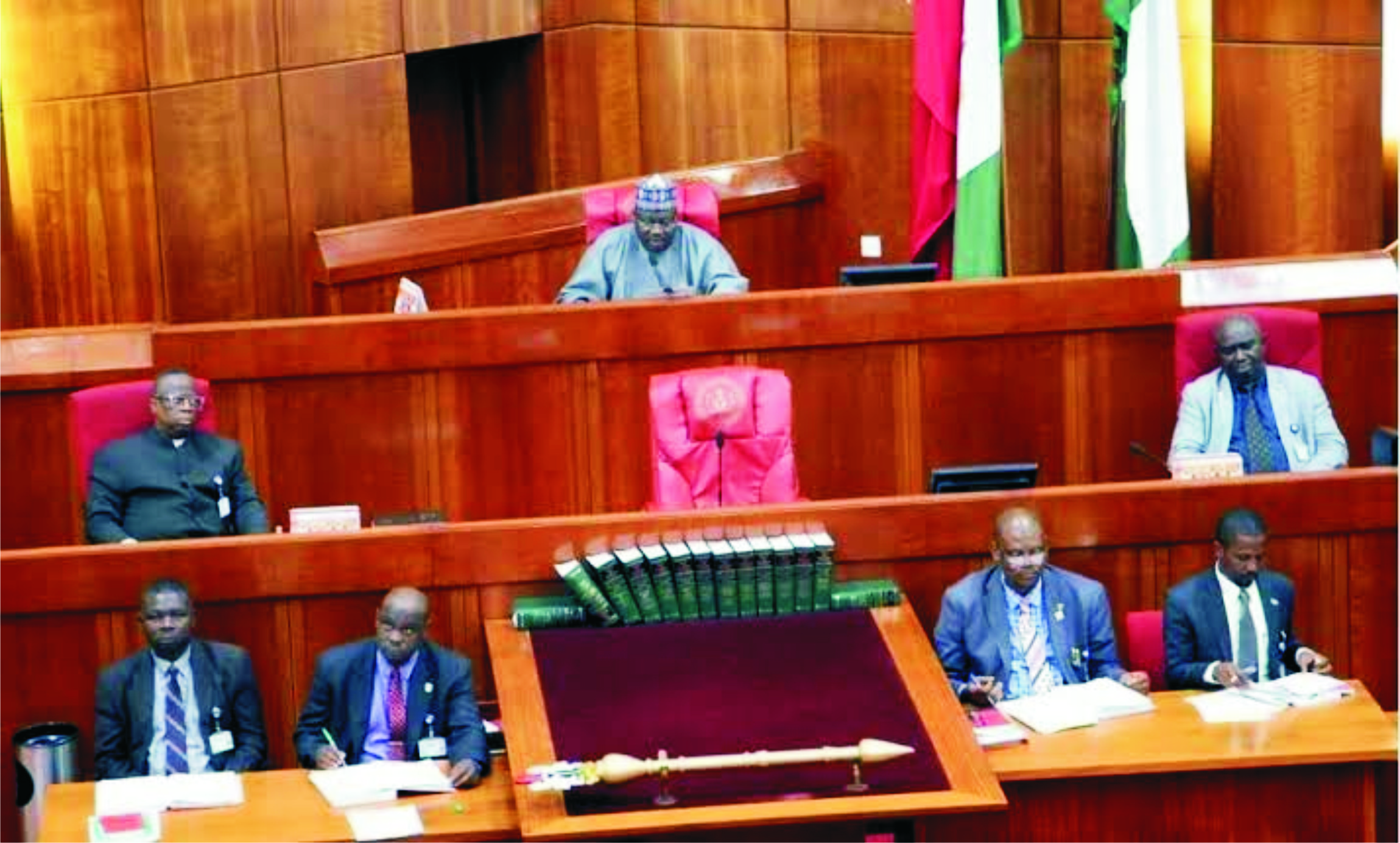
A Professor of Jurisprudence and International Law, has advised the Federal Government to review the Sexual Harassment Bill to prevent the possibility of false allegations.
Prof. Wahab Egbewole of the Department of Jurisprudence and International Law, University of Ilorin, gave the advice yesterday in Ilorin.
He spoke at a sensitisation workshop organised by the Faculty of Social Sciences of the university.
His paper was entitled: “Ethical Issues Arising from the Sexual Harassment Bill (SHB) and Career Vulnerability among Lecturers in Nigerian Universities”.
He said that the bill, which is currently receiving the attention of the House of Representatives after being passed by the Senate, needed to be reviewed to correct some conspicuous loopholes.
Egbewole, who is also Senior Advocate of Nigeria (SAN), stressed the need for “something more fundamental” to be injected into the proposed law in order to prevent the possibility of false allegations.
“If not checked, this will turn lecturers to endangered species in the ivory tower as an unscrupulous female student may find it easy to level allegations against a given teacher for any reason,’’ he said.
The Law lecturer noted that the bill appeared not to take into cognisance the basic rules of punishment such as the need for reformation.
“Since armed robbers have been treated to capital punishment, has the punishment stopped the crime?’’ Egbewole asked.
He also observed that the Bill, when assented to by the President, would not only push lecturers to precarious situations but also erode the university autonomy.
He, therefore, urged the nation’s universities to evolve a means to make the commission of crimes difficult.
He advocated for a sexual harassment policy, which would spell out in clear terms, the rules of engagement between lecturers and students.
Egbewole also called for more consciousness on the part of society to ensure that educational institutions are not polluted by enacting a more pragmatic measure.
“The leadership of the Academic Staff Union of Universities (ASUU) has a lot of work to do to prevent the realisation of the clear and present danger, which the bill would constitute to lecturers when passed.
“The appearance of the National President of ASUU at the Senate, when the bill was being processed, was not good enough.’’
He said that he had expected the union to put together a committee of professionals, who would put serious and verifiable argument before the legislators.
According to him, the union should have also created a court of public opinion to let stakeholders know that the bill, when it becomes law, would create more problems than those it was targeted at reducing or exterminating.
He described the phenomenon of ‘Sex-for-Mark’ in the nation’s higher institutions as a disgrace, not only to such institutions but also to humanity.
The don urged academics to be more meticulous, circumspect and professional in their relationships with their students, especially those of the opposite sex, to avoid finding themselves in ugly situations.
He insisted that sexual harassment had the tendency of damaging society.



Eight states across Nigeria have converged in Port Harcourt for the 2026 edition of the President’s Inter-Senior Secondary Schools Debate Championship, hosted by Rivers State Government.
The three_days championship, themed “27th Democracy & 3rd Year Anniversary of President Ahmed Tinubu Inter-Senior Schools Debate Championship,” opened on Monday at Government Girls Secondary School, Rumueme, Port Harcourt.
The participating states are Ebonyi, Abia, Delta, Sokoto, Yobe, Kwara, Enugu, and host state Rivers. Each state is represented by its top debaters selected through state-level contests.
Declaring the event open, the Rivers State Commissioner for Education, Dr. Peters Nwagor, said the championship goes beyond winning trophies. He described it as a national investment in the next generation of leaders.
“This platform is for nurturing young minds,” Nwagor said. “It builds critical thinking, research skills, confidence, effective communication, and the ability to engage constructively with views different from one’s own. These are the very qualities upon which responsible leadership and nation-building are founded.”
The Commissioner commended the organizers, participating schools, teachers, and coordinators for their commitment to promoting intellectual excellence among Nigerian youths.
He urged the students to compete with confidence, discipline, and respect. “Debate is not merely about winning an argument,” he noted. “It is about listening carefully, reasoning with clarity, presenting your evidence with honesty, and having the grace to learn from others. Let the quality of your ideas and the strength of your character define your participation here.”
Nwagor assured the participants that Rivers State is proud to play its part in raising a generation that will bring bold and innovative solutions to the country’s challenges. He wished all teams a rewarding, memorable, and successful championship.
Earlier in his welcome address, the National Coordinator of the President’s Schools Debate Nigeria, PSDN, Elder Dare Oritu, called the event a “gathering of minds” drawn from different parts of the country.
According to Oritu, debate is about three things. “It is about _unity_. It brings us together from different schools and backgrounds to learn from one another. It is about _broadening the mind_. It teaches you to think deeply, to listen well, to ask ‘why,’ and to defend your ideas with facts and respect. It is about _preparing you for leadership_. The problem-solvers and decision-makers of tomorrow are in this hall today.”
He reminded the students that debate is not a contest of aggression. “Debate is _not a fight_. We challenge ideas, not people. It is _not about who is better_. And it is _not do-or-die_. We win with grace, and we learn with humility,” Oritu said.
The PSDN National Coordinator encouraged all participants to compete with integrity, speak with clarity, and leave wiser than they came. He wished them the very best throughout the competition.
Highlights of the opening ceremony included the official draw for debate matches, administered by PSDN officials. The pairings will determine which states face each other in the preliminary rounds as the battle for the 2026 national title begins.
Amadi Akujobi

The National Institute of Information Technology (NIIT), Port Harcourt, has graduated 61 students from its six-month Cybersecurity training programme. The institute also inducted 48 new students for the new academic session during a brief ceremony held at its Port Harcourt centre on Monday.
Centre Manager of NIIT Port Harcourt, Mr. Precious Ogulu Tom, said the institute is always excited to induct students into cybersecurity because it is one of its flagship courses with strong international recognition. He noted that the centre’s performance has earned it high ratings from ICSS, adding that in the past academic year, more than 20 students passed ICSS certification exams.
According to him, beyond the NIIT certificate, which is globally recognized, students also proceed to ICSS and complete their courses without difficulty. He credited the faculty for maintaining standards and said NIIT remains the leading ICT training institute in Port Harcourt and Rivers State.
Tom said NIIT has a presence in all major cities in Nigeria and its headquarters in India, with training covering all areas of ICT. He added that every year the institute produces at least one first-class graduate in Software Engineering from partner universities such as Middlesex University and the University of Sunderland. He described the institute’s approach as practical and hands-on.
On fees, he addressed comments about cost online, saying quality training requires investment. “Does anything good come easy? Nothing good comes easy,” he stated. He explained that students receive industry-standard books and globally recognized certificates, and invited parents and prospective students to register with NIIT for value-driven training.
Also speaking, Principal Instructor for Cybersecurity and Ethical Hacking, Mr. Nyekwere TamunoTonye, said the cohort began in February with high expectations and completed the programme in six months. He said one notable achievement was that the class remained largely intact despite challenges, including system breakdowns and family issues. “At the end of this six months, we never lost anybody. That is the greatest. So, we give God the glory,” he said.
Nyekwere said students were exposed to multiple domains in cybersecurity and received strong practical training. He told the graduands that their real learning starts now and urged them not to relent. “This is no longer the time you go back to play,” he added.
He emphasized that the institute equipped them not only with technical and practical skills but also with character and a mindset for continuous learning. He noted that no institution, including Harvard or Yale, can teach everything, but good schools set the path, which NIIT has done.
He charged them to deploy their skills positively. “I don’t want to see any of you being arrested by the EFCC tomorrow. I don’t want to see any of you being arrested by the police. I don’t want to see any of you being arrested,” he said.
Senior IT Counselor and Head of Sales and Marketing, Mrs. Igbigbari Vincent-Eretoru, congratulated the graduands for completing the programme and defending their presentations according to NIIT academic standards. She said certificates are awarded in character and learning, and urged them to be good ambassadors of NIIT Port Harcourt by applying what they learned.
Responding on behalf of the graduates, Class Section Head Tamunotonyesia Epelle said many came in with questions and uncertainty about specializations but left with clarity, confidence, and technical competence gained through practical assignments, teamwork, and the instructor’s push to avoid mediocrity.
The Hydrocarbon Pollution Remediation Project (HYPREP) has commemorated the 15th anniversary of the release of the United Nations Environment Programme (UNEP) Environmental Assessment Report on Ogoniland, reaffirming its commitment to restoring the environment and improving the livelihoods of affected communities.
In a statement signed by the Project Coordinator, Prof Nenibarini Zabbey, to commemorate the anniversary, HYPREP described the anniversary as a significant milestone in Nigeria’s environmental restoration efforts, noting that the project has made remarkable progress in implementing the recommendations of the landmark UNEP report released on August 4, 2011.
The UNEP report had revealed extensive oil pollution across Ogoniland, severe environmental degradation, and serious public health risks resulting from decades of petroleum operations. It also recommended an initial $1 billion fund to commence the cleanup of the affected communities.
According to HYPREP, the Federal Government formally launched the Ogoni clean-up in 2016, while the Project Coordination Office was established in 2017 to drive the implementation of UNEP’s recommendations.
Zabbey said the current administration has continued to prioritise the project under the Renewed Hope Agenda.
Providing an update on the cleanup, the Project Coordinator disclosed that 30 of the 65 contaminated sites identified by UNEP have been fully remediated, while work is ongoing at several medium- and high-risk locations. It also stated that more than 1.5 million mangrove seedlings have been planted as part of what it described as the world’s largest restoration of oil-degraded mangroves, with over 1,000 hectares of shoreline already rehabilitated.
Zabbey further revealed that 49 Ogoni communities have been connected to potable water schemes through multiple water projects and booster stations aimed at providing safe drinking water across the region.
In the health sector, he said the 100-bed Ogoni Specialist Hospital in Kpite and the 43-bed Cottage Hospital in Buan are nearing completion, adding that several existing health facilities have been upgraded with modern medical equipment, while five ambulances have been donated to improve emergency healthcare services. The Project Coordinator also disclosed that a three-year human health biomonitoring study is being conducted in collaboration with the World Health Organization’s International Agency for Research on Cancer (IARC).
On economic empowerment, Zabbey stated that the Project has created more than 8,000 direct jobs and trained thousands of Ogoni youths and women in various vocational and technical skills, including software development, cybersecurity, aviation, commercial diving, seafaring, mechatronics, and creative arts. The project also reported awarding scholarships to more than 1,000 students, providing grants to small businesses, and supporting persons living with special needs through skills acquisition programmes.
The statement further highlighted ongoing legacy projects, including the Ogoni Power Project and the Centre of Excellence for Environmental Restoration, which it said is about 96 per cent complete. HYPREP also welcomed the recent designation of the Ogoni Wetland as a Ramsar Site of International Importance and pledged to continue promoting biodiversity conservation and sustainable management of the ecosystem.
Marking the anniversary, Zabbey said the progress achieved over the past 15 years demonstrates the collective commitment of government, development partners, stakeholders, and local communities to restoring Ogoniland. He called for renewed collaboration to sustain the cleanup effort, promote environmental sustainability, and support the long-term development of the region. 3
-

 News3 days ago
RSG Targets Nine Million Residents in Mosquito Net Distribution Campaign
-

 Oil & Energy3 days ago
Aiyedatiwa Signs New Electricity Bill
-

 Oil & Energy3 days ago
NLNG Commissions Research And Innovation Centre In RSU
-

 Maritime3 days ago
Marine Minister Commends President Tinubu On NPERA Bill Assent
-

 News3 days ago
KenPoly Holds Eight Convocations, August 29
-

 News3 days ago
RSG Begins Another Phase of Projects Commissioning Today
-

 News3 days ago
RMAFC Completes Revenue Sharing Review, Proposes New Pay
-

 Maritime3 days ago
NAGAFF Petitions IGP Over Alleged Maritime Police Harassment