
Education
Delta Ranks Highest With State Universities In Nigeria

Delta State may have emerged the state with the highest number of universities in Nigeria, with the recent approval of three more universities by the National Universities Commission (NUC).
The National Universities Commission (NUC) recently approved the upgrade of three institutions in Delta State to universities.
The newly approved universities are the Delta State University, Agbor; Dennis Osadebe University, Asaba; and the Delta State University of Science and Technology, Ozoro.
The state, with the three approved universities in addition to the one already in existence, now has four universities.
It also has two federal universities, namely; Nigerian Maritime University, Okerenkoko; and Petroleum Training Institute, Effurun, making the total number of universities in the state six.
The approval was given by the Executive Secretary of NUC, Prof. Abubakar Rasheed, when the Delta State Governor, Dr Ifeanyi Okowa, led top state government officials to present strategic documents of the universities at the commission’s headquarters in Abuja, last Friday.
Rasheed, at the presentation of letter of recognition, charged the governor to provide sustainable financial resources for the survival of the universities.
“Today, Delta State with this three will have four state universities and making it the state with the largest number of public universities in the country.
“It is something worth celebrating, we advise the governor to kindly make the universities to serve the purpose they are created for by providing sustainable funding.
“The Delta State University, Agbor, is the 54th university in the country, while the Delta State University of Science and Technology is the 52nd university in the country.
“With this, we now have 197 universities in the country, 98 of them are public universities, and 99 of them are private.
“The total enrolment in the 99 private universities is slightly over five per cent of the total enrolment in the university system.
“We have only 2.1 million university students and only five per cent are accounted for in the 99 private universities.
“So, we need governors who are education friendly to come up with this initiative and to follow it up with concrete plans and arrangements for the success of the universities so established.
“No doubt you will do something to ensure the universities do not become beggars,” he said.
Rasheed, however, said that the commission would continue to work with the state to ensure the universities took their place among other universities.
Responding, the Delta State Goverrnor, Senator Ifeanyi Okowa, said the sharp increase in demand for degree programmes necessitated the upgrade of the institutions.
By: Albert Ograka, Asaba


Continue Reading

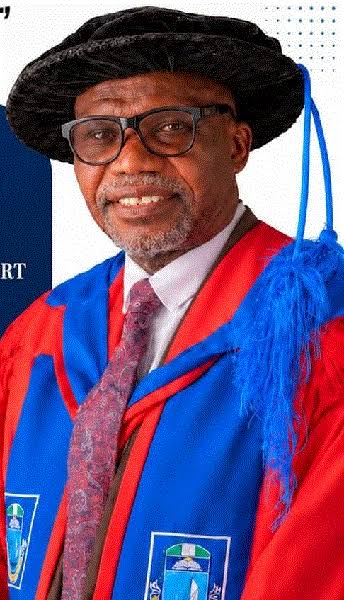
Professor Aniefiok Jackson Udoudo of the University of Port Harcourt has called on Nigerians and government at all levels to treat journalists with the dignity, care and recognition they deserve as watchdogs of society, and not as hunter-dogs to be praised when needed and dumped after use.
Udoudo made the call on Thursday, 19th November, 2026, at the CBN Centre of Excellence Auditorium, while delivering the 217th Inaugural Lecture of the University of Port Harcourt, titled: “Newshound: A Watchdog or An African Hunter-Dog?”
The Professor of Journalism and Media Studies said journalists have remained at the forefront of nation-building, environmental surveillance, information dissemination and the defence of the ordinary citizen against injustice and corruption by leaders, yet they continue to suffer without corresponding regard and recognition from the people and government they serve.
He explained that like the watchdog, the journalist barks to alert society to danger, bites when necessary to protect the vulnerable, and stays loyal to the public interest. But unlike the watchdog that is fed, sheltered and cared for by its owner, the Nigerian journalist, he lamented, is often left hungry, attacked, harassed and abandoned after his usefulness has been exploited.
“The journalist is a watchdog. But in Nigeria and some other parts of the world, he is treated like the African hunter-dog: praised when he catches the game, and dumped when the hunt is over,” Udoudo said.
He recommended that journalists be treated like the watchdogs they truly are: protected, respected, adequately remunerated and given a conducive environment to perform their constitutional role without fear or intimidation.
Earlier, the Dean of the Faculty of Communication and Media Studies, Prof. Christie Omego, read the citation of Prof. Udoudo, chronicling his academic journey, scholarship and contributions to journalism education and the establishment of the Faculty of Communication and Media Studies in the University of Port Harcourt.
In his remarks, the Vice-Chancellor of the University of Port Harcourt, Prof. Chike R. Princewill, commended Prof. Udoudo for a well-researched and thought-provoking lecture, but challenged lecturers in Communication and Media Studies, as producers of future journalists, to teach their students to also recognise the university authorities as their owners, just as watchdogs recognise their owners.
According to the Vice-Chancellor, a good watchdog knows its owner; while it barks and bites invaders, it does not turn against the owner who feeds it. He stressed that in many cases, what is needed to get the right thing done is alerting, not barking or biting, which he noted has become the approach of some journalists in their reportage, adding that if journalists learn to alert responsibly, they will achieve more reforms and earn more respect, while still performing their watchdog role effectively. The lecture was graced by principal officers of the university, including the Deputy Vice-Chancellors of Administration, Academic, and Research and Development, the Registrar, the University Librarian, former Vice-Chancellors, professors and senior lecturers, representatives of security agencies, the leadership of the Rivers State Council of the Nigeria Union of Journalists (NUJ), and media executives from various media establishments in Rivers State, and ended with a call for mutual respect and collaboration between the media, government, security agencies and institutions for the sake of national development.
By: Amadi Akujobi
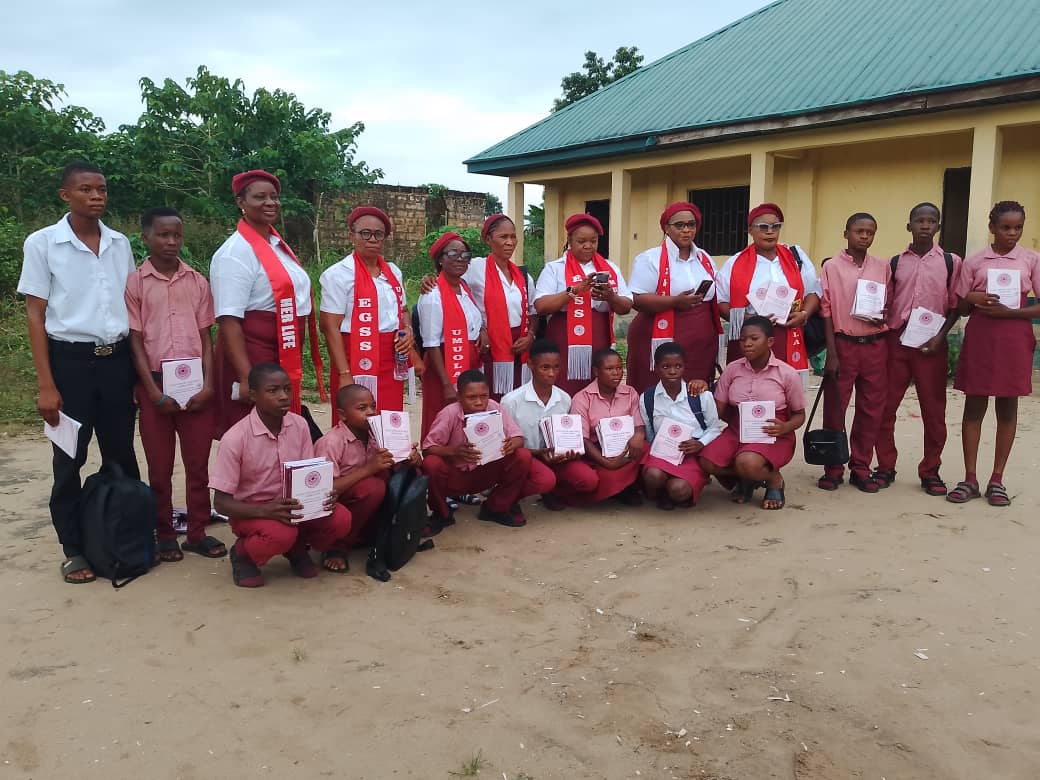
The Old Girls’ Association of Etche Girls’ Secondary School, Umuola, Etche LGA Rivers State, has donated educational materials to students of the school to boost access to quality education in the institution.
The donation was made when the old girls’ association of EGSS, visited the school at Umuola, in Etche Local Government Area, Friday.
The President of the Old Girls’ Association of the school, Mrs Adaku Bridget Nwosu, while distributing educational materials said the aim of donating the books was to enhance teaching and learning in the school.
She maintained that the donation would inspire the students to aim for greatness as well as encourage them to concentrate more on their academic work.
In her words: “This is our Alma mater, we agreed that it was nice we visit the school, at least to give a little bit back to the society. So we came up with the idea of printing some educational materials to distribute to the students. That’s why we are here today”.
According to her, again to see what is left of the school, the great institution where we were all moulded some good years back.
While lamenting the dilapidated structure of the school, she called on all old girls of the school to give back to their alma mater.
She called on both state and local governments to rehabilitate the school for effective teaching and learning.
“The state of the school is very poor. This is a government school, we want to use this opportunity to first of all call on all old girls that passed through Etche Girls’ Secondary School, Umuola, this school needs our attention, it needs our attention seriously. Even though we don’t have the finances, we can all put our together to call on the government to come back to this place to see what they can do.
“This visit has also opened our eyes to see that this school does not have a laboratory, the school does not have a library, this school does not have classrooms, this school does not have enough teachers. In fact, this school is becoming a forest”, she lamented.
Responding during the visit, the Chairman, Community Development Committee (CDC) of Umuola community, Mr George Michael Chidiadi, while thanking the Old Girls’ Association of EGSS Umuola, for the gesture also called for government intervention over the deplorable state of the school.
According to the CDC chairman, over a period of years, I asked questions: Are there no old girls of the school? As a person who has an alma mater, I know the contributions we make. So when I saw them, when they called that they were coming to my community, I was so happy. And I’m glad the appearance they came out with, it will go a long way to boost the students and have seen the same people that went through the same school that they are today.
While calling on the government, the CDC chairman said the EGSS of then does not have anything left and stressed that it is not supposed to be a school.
As he puts it: “The school does not have any facility, no laboratory, no library, no functional computer centre”.
Also speaking, the Principal, Senior Secondary School, Mr Kingsley Nwobiri and Principal of Junior Secondary School, Mr. Christian Nwankwo, thanked the old girls’ association for the donation.
The duo said that the donation would boost the morale of the students in the school.
By: Akujobi Amadi
The Honourable Commissioner for Education, Rivers State, Dr. Peters Nwagor, and the Permanent Secretary of the Ministry, Her Excellency, Dr. Mina Tele Ikuru, have inspected eight blocks class room constituency projects being executed by the member representing Etche Constituency 1 in the Rivers State House of Assembly, Hon. Ignatius Onwuka.
The projects comprise eight blocks of six classrooms each, with toilet facilities, spread across the eight wards of Etche Constituency 1. The classroom blocks, which are at various stages of completion, are aimed at improving access to quality education and providing a more conducive learning environment for pupils and students in the area.
Speaking during the inspection tour, the Permanent Secretary,Dr Minna Tele Ikuru who represented the Commissioner, commended Hon. Ignatius Onwuka for the initiative, describing the projects as a clear demonstration of his commitment to community development and to the educational advancement of his constituents and Rivers State at large.
The Commissioner noted that the lawmaker’s intervention is a worthy example of how constituency projects can directly impact the lives of the people, especially in the critical sector of education, which remains a top priority of the present administration.
Dr Nwagor observed that contributions from public-spirited individuals and political office holders could significantly accelerate the achievement of basic literacy and numeracy in the state, if replicated across all constituencies.
According to him ,if every well-meaning individual provided a child with a book and a pen, and adopted and supported a child through school, Rivers State would make tremendous progress in ensuring that every child acquires the fundamental skills of reading, writing and working with numbers.
He reiterated the position of His Excellency, the Governor of Rivers State, Sir Siminalayi Fubara, , that “Education is Everything,” stressing that every child deserves access to quality education and that no child should be left behind under the administration’s policy.
The state commissioner for education further appealed to the people of Etche, particularly the host communities, to take ownership of the facilities and protect them against vandalism, theft and other acts of destruction, expressing concern over the practice where educational facilities provided through the goodwill of public-spirited individuals are later looted.
The schools inspected included High School, Obite; Government Secondary School, Isu; Community Secondary School, Ozuzu; and Community Secondary School, Akwu-Obuo, among others.
By: Akujobi Amadi
-
News3 days ago
Bayelsa Boat Mishap: Tinubu Donates N250m As Death Toll Hits 29
-
News3 days ago
Odu Pays Tribute To Late Chinwah, Describes Him As Courageous, Selfless Academic
-
 Maritime3 days ago
Nigeria, Russia Customs Sign MOU To Trade Facilitations
-

 Sports3 days ago
World marathon champion gets three-year doping ban
-
 Maritime3 days ago
South-South Governors Urges To Shake Off Collective Lethargic To Embrace Blue Economy
-
 Maritime3 days ago
Oyetola Woos Investors With Nigeria’s Seabed Resources, Marine Biotechnology
-
 Business3 days ago
Moniepoint MfB transaction volume hits 1trn daily — CEO
-

 Oil & Energy2 days ago
Global Oil Market May Witness Supply Surplus Before The End Of 2026 …… Report