
Nation
Buhari Salutes Elumelu At 58, Sympathises With Katsina Market Traders Over Inferno

President Muhammadu Buhari has sent felicitations to renowned economist and philanthropist, Tony Onyemaechi Elumelu, on his 58th birthday.
In a statement by his spokesman, Mr Femi Adesina, in Abuja on Monday, Buhari joined family and friends to rejoice with the entrepreneur, whose interests had continued to create opportunities for growth and development in the country.
President Buhari commended the economist for his foresight and large-heartedness in setting up the Tony Elumelu Foundation (TEF).
He said the foundation had consistently inspired highly talented African youths into entrepreneurship, helped many to acquire business skills, enhanced positive social networks and provided start-up funds, within the larger goal of reducing poverty.
According to him, Elumelu, who is the Chairman of Heirs Holdings, United Bank for Africa and Transcorp, demonstrates resilience and relentlessness in dream realization, following his antecedents as a young banker.
He noted that Elumelu saw opportunities in the economy and worked hard to climb the ladder of success, receiving Nigeria’s National Productivity Order of Merit in 2019.
The president prayed for more wisdom, good health and longer life for the investor as he spreads investments into energy, real estate, agribusiness, health care and hospitality, creating more opportunities in the real sector.
Meanwhile, President Muhammadu Buhari has sympathised with traders at the Katsina Central Market and the entire people of Katsina State over the fire disaster that occurred at the market on Monday.
Buhari was represented by the Attorney-General of the Federation and Minister of Justice, Mr Abubakar Malami, who led a delegation of top government officials to pay a sympathy visit to the traders in Katsina yesterday.
The fire destroyed property worth billions of naira.
The president urged the traders to be strong and consider what happened as an act of God.
He said that he was saddened by the news of the fire incident.
Buhari commended the Katsina State Government and people for efforts at controlling the fire.
According to him, the Federal Government will see how it can assist those who lost their property to the fire.
Responding, the Chairman of the Katsina Traders/Marketers Association, Alhaji Abbas Alobaba, thanked the president for sending the delegation.
The chairman pledged the association’s support for Katsina State Government and Buhari’s administration.
In the delegation were the Minister of Internal Affairs, Rauf Aregbosola; his Police Affairs counterpart, Maigari Dingyadi; the Minister of Humanitarian and Disaster Management, Sadiya Umar-Farouk, and that of Aviation, Hadi Sirika.
A Senior Special Assistant to the President, Malam Garba Shehu, was among the dignitaries.



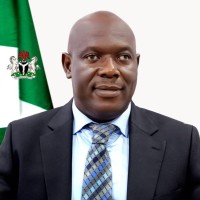
The Hydrocarbon Pollution Remediation Project (HYPREP) has commemorated the 15th anniversary of the release of the United Nations Environment Programme (UNEP) Environmental Assessment Report on Ogoniland, reaffirming its commitment to restoring the environment and improving the livelihoods of affected communities.
In a statement signed by the Project Coordinator, Prof Nenibarini Zabbey, to commemorate the anniversary, HYPREP described the anniversary as a significant milestone in Nigeria’s environmental restoration efforts, noting that the project has made remarkable progress in implementing the recommendations of the landmark UNEP report released on August 4, 2011.
The UNEP report had revealed extensive oil pollution across Ogoniland, severe environmental degradation, and serious public health risks resulting from decades of petroleum operations. It also recommended an initial $1 billion fund to commence the cleanup of the affected communities.
According to HYPREP, the Federal Government formally launched the Ogoni clean-up in 2016, while the Project Coordination Office was established in 2017 to drive the implementation of UNEP’s recommendations.
Zabbey said the current administration has continued to prioritise the project under the Renewed Hope Agenda.
Providing an update on the cleanup, the Project Coordinator disclosed that 30 of the 65 contaminated sites identified by UNEP have been fully remediated, while work is ongoing at several medium- and high-risk locations. It also stated that more than 1.5 million mangrove seedlings have been planted as part of what it described as the world’s largest restoration of oil-degraded mangroves, with over 1,000 hectares of shoreline already rehabilitated.
Zabbey further revealed that 49 Ogoni communities have been connected to potable water schemes through multiple water projects and booster stations aimed at providing safe drinking water across the region.
In the health sector, he said the 100-bed Ogoni Specialist Hospital in Kpite and the 43-bed Cottage Hospital in Buan are nearing completion, adding that several existing health facilities have been upgraded with modern medical equipment, while five ambulances have been donated to improve emergency healthcare services. The Project Coordinator also disclosed that a three-year human health biomonitoring study is being conducted in collaboration with the World Health Organization’s International Agency for Research on Cancer (IARC).
On economic empowerment, Zabbey stated that the Project has created more than 8,000 direct jobs and trained thousands of Ogoni youths and women in various vocational and technical skills, including software development, cybersecurity, aviation, commercial diving, seafaring, mechatronics, and creative arts. The project also reported awarding scholarships to more than 1,000 students, providing grants to small businesses, and supporting persons living with special needs through skills acquisition programmes.
The statement further highlighted ongoing legacy projects, including the Ogoni Power Project and the Centre of Excellence for Environmental Restoration, which it said is about 96 per cent complete. HYPREP also welcomed the recent designation of the Ogoni Wetland as a Ramsar Site of International Importance and pledged to continue promoting biodiversity conservation and sustainable management of the ecosystem.
Marking the anniversary, Zabbey said the progress achieved over the past 15 years demonstrates the collective commitment of government, development partners, stakeholders, and local communities to restoring Ogoniland. He called for renewed collaboration to sustain the cleanup effort, promote environmental sustainability, and support the long-term development of the region. 3
-

 News2 days ago
RSG Targets Nine Million Residents in Mosquito Net Distribution Campaign
-

 Oil & Energy2 days ago
Aiyedatiwa Signs New Electricity Bill
-

 Oil & Energy2 days ago
NLNG Commissions Research And Innovation Centre In RSU
-

 Maritime2 days ago
Marine Minister Commends President Tinubu On NPERA Bill Assent
-

 News2 days ago
KenPoly Holds Eight Convocations, August 29
-

 News2 days ago
RSG Begins Another Phase of Projects Commissioning Today
-

 News2 days ago
RMAFC Completes Revenue Sharing Review, Proposes New Pay
-

 Maritime2 days ago
NAGAFF Petitions IGP Over Alleged Maritime Police Harassment