
Health
World Cancer Day: Three Get Referral For Pap, VIA

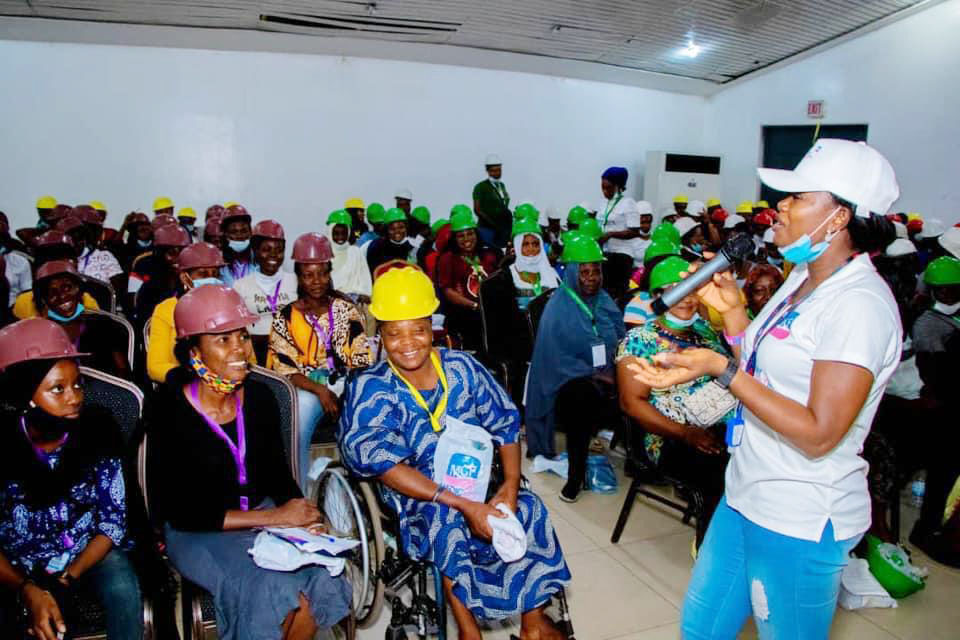
Following events marking this year’s World Cancer Day (WCD) commemoration last Thursday, three women have been referred to various hospitals for further diagnosis to determine their cancer status.
Disclosing this in an exclusive interview, the State President of Medical Women’s Association of Nigeria (MWAN), Rivers State, Dr Vetty Agala, said two of the women had abnormal Papanicolou (Pap) smear results and were referred to the Rivers State University Teaching Hospital (RSUTH) for further investigations.
The other person was positive for Visual Inspection with Acetic Acid (VIA) and was also referred to Orogbum Health Centre for treatment for precancerous lesions, also called Thermal Ablation (TA).
TA is one of the ways a lesion discovered during screening, but has not yet developed into a cervical cancer, can be treated to prevent it from progressing to a cancer.
It would be recalled that as part of events marking the 2021 WCD in Rivers State, the State Chapter of the MWAN embarked on massive awareness campaign on various electronic and social media platforms.
The Association had earlier flagged off screening for breast and cervical cancer at their “Every Woman’s Centre” in Marine Base Estate, where routine screening is still ongoing, even after the WCD.
As at the time of filing this report, Dr Agala said, about 85 women had benefitted from VIA, 52 women from Pap smear, and 86 had had clinical breast examinations.
Also, 280 students from two secondary schools had health education on cervical cancer, personal hygiene, HIV Self-testing, and Gender based violence.
She stated that “in line with the World Cancer Day 2021 theme: ‘I am, I will’, we encourage everyone to take action to reduce their risk of getting cancer by being screened and adopting healthy lifestyles”.
By: Sogbeba Dokubo



The Federal Government has begun a scheme to battle malnutrition in children.
Tagged, “Nutrition 774 Initiative”, the programme was unveiled by Vice President Kashim Shettima as it falls within a framework for the Federal Government’s comprehensive vision for a nationwide nutrition programme to address malnutrition and food insecurity in Nigeria.
The proposed programme, “Nutrition 774 Initiative,” aims to improve nutritional outcomes across all 774 local government areas (LGAs) in the country.
Speaking yesterday during a roundtable with development partners at the Presidential Villa, Abuja, VP Shettima said the initiative aligns with President Bola Ahmed Tinubu’s broader focus on food security and availability across Nigeria.”The priority with which His Excellency, President Bola Ahmed Tinubu, has pursued food availability has gone hand-in-hand with our commitment to eradicating malnutrition.
“Our aspiration as a nation goes beyond the mere abundance of food in our barns and warehouses. We cannot claim victory unless there is certainty that each household across Nigeria has access to the preferred and prescribed diets essential for a healthy life,” the vice president stated.
It would be recalled that the 144th meeting of the National Economic Council (NEC) had in September endorsed the Nutrition 774 programme as a primary platform for combating malnutrition within Nigerian communities.
The council encouraged development partners to provide financial and technical assistance to support this initiative.
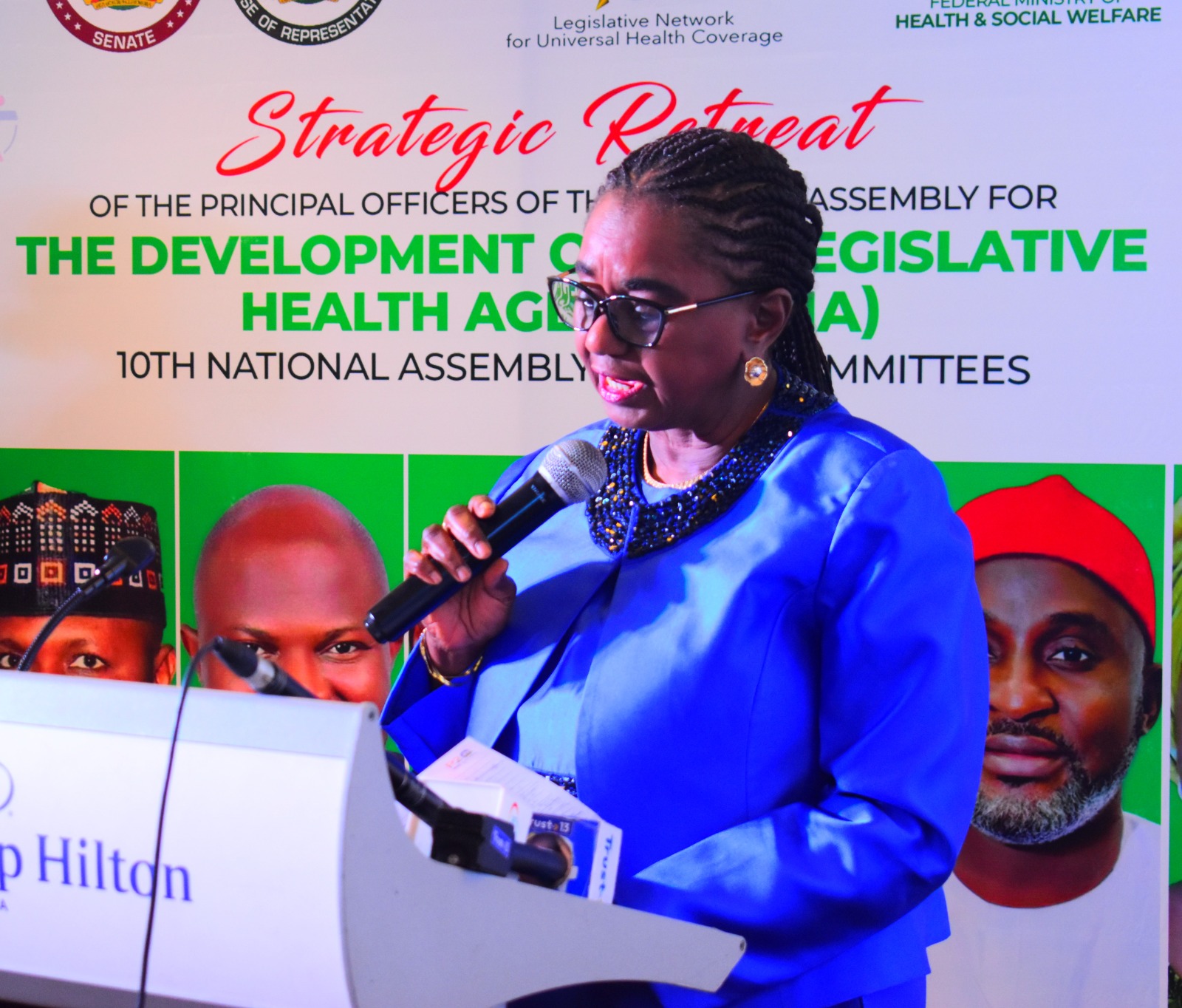
The importance of e-Health devices and digital health solutions in improving Nigeria’s healthcare system has been emphasised by Senator Ipalibo Harry Banigo, Chairman of the Senate Committee on Health, Secondary and Tertiary.
She also stressed that health is a multilayered activity and a multisectoral collaboration that requires legislators to work together to provide legislation, implement policies, and track funds effectively.
Banigo, who represents Rivers West Senatorial District in the National Assembly, made these remarks at the 5th Annual Legislative Summit on Health in Abuja, themed “Improving Legislative Stewardship and Accountability for Universal Health Coverage.”
She highlighted the potential of eHealth devices, especially given Nigeria’s large population and limited healthcare professionals.
“We can develop platforms that can be accessed through simple phones, even in remote villages, to provide health education and interventions,” she said.
“We are not talking about highfalutin things; we are talking about what will impact communities at the grassroots level, particularly pro-poor initiatives that will benefit vulnerable populations.”
Banigo also emphasized the importance of accountability and effective care, encouraging legislators to share knowledge, engage in peer reviews, and exchange information to achieve better health outcomes.
She recalled the cholera outbreak, where basic health education and interventions could have been delivered via mobile phones, preventing preventable deaths.
The 5th Annual Legislative Summit on Health brought together federal and state legislators, the Coordinating Minister of Health and Social Welfare, Prof. Muhammad Pate, the World Health Organisation’s representative in Nigeria, Dr. Walter Mulombo, and other dignitaries.
-

 News2 days ago
RSG Targets Nine Million Residents in Mosquito Net Distribution Campaign
-

 Oil & Energy2 days ago
Aiyedatiwa Signs New Electricity Bill
-

 Oil & Energy2 days ago
NLNG Commissions Research And Innovation Centre In RSU
-

 Maritime2 days ago
Marine Minister Commends President Tinubu On NPERA Bill Assent
-

 News2 days ago
KenPoly Holds Eight Convocations, August 29
-

 News2 days ago
RSG Begins Another Phase of Projects Commissioning Today
-

 News2 days ago
RMAFC Completes Revenue Sharing Review, Proposes New Pay
-

 Maritime2 days ago
NAGAFF Petitions IGP Over Alleged Maritime Police Harassment