
Nation
Sanwo-Olu, NUJ, Others Mourn Jakande

Lagos State Governor, Mr Babajide Sanwo-Olu, yesterday formally announced the death of the state’s first Civilian Governor, Alhaji Lateef Kayode Jakande (LKJ).
Sanwo-Olu made the announcement through his verified Twitter handle.
He said that the remarkable achievements of Jakande as Governor in Lagos State would remain indelible for generations to come.
“With gratitude to God for a worthy life well spent in the service of Lagos State, Nigeria and humanity, I announce the death of a venerable statesman, outstanding politician, public administrator and the first Civilian Governor of Lagos State, Alhaji Lateef Kayode Jakande.
“Baba Jakande’s record of service as a journalist of repute and a leader of remarkable achievements as governor of Lagos State will remain indelible for generations to come.
“His death is a collosal loss and he will be missed.
“’On behalf of the Government and people of Lagos State, I want to express my sincere and heartfelt condolences to the family, friends and comrades of Baba Jakande.
“May Allah grant him Aljanat Firdaus, Aamin,” he said.
Also, the Nigeria Union of Journalists (NUJ), Lagos State Council, mourned the demise of Jakande, a veteran journalist.
NUJ, in a statement by, Chairman, Adeleye Ajayi and Secretary, Tunde Olalere, said: “We mourn the demise of the first Civilian Governor of Lagos State, Alhaji Lateef Kayode Jakande (LKJ) at the age of 91.
“He recorded massive infrastructure development during his tenure, especially in the areas of housing and education (building of schools).
“A former Minister of Works and Housing. It is on record that he made it possible for people to attend schools and had shelters.
“He was an erudite journalist, publisher, administrator par excellence and a political giant.
“He made indelible marks in Nigeria’s political history dated back to his days in Action Group and UPN. Nigeria’s political history cannot be written without a mention of Jakande (Baba Kekere).’’
Fondly called Baba Kekere, Jakande was the governor of Lagos State from 1979 to 1983 on the platform of the defunct Unity Party of Nigeria (UPN).
He later became Minister of Works during the Sani Abacha military regime between 1993 and 1998.
Jakande, who was also a veteran journalist, was born in Epetedo Area of Lagos State on July 23, 1923, to parents from Omun-Aran in Kwara.
He studied at Lagos Public School at Enu-Owa, Lagos Island, then at Bunham Memorial Methodist School, Port Harcourt from 1934 to 1943.
He also studied at Kings College, Lagos in 1943 and then went to Ilesha Grammar School in 1945 where he edited a Literary Paper called the ‘Quarterly Mirror’.
Baba Kekere is known for his visionary leadership and for bringing development to Lagos State during his tenure between October 1, 1979, and December 31, 1983.
He keyed into the five cardinal programmes of the Unity Party of Nigeria, founded by a former Premier of the Western Region, Chief Obafemi Awolowo.
Jakande first worked with the Daily Service and then in 1953, joined the Nigerian Tribune where he rose to become the Editor-in-Chief.
He left Tribune in 1975 and established John West Publications on whose platform he published The Lagos News.
Jakande was the first President of the Newspaper Proprietors Association of Nigeria (NPAN).
On the political scene, Jakande ran for election as the Executive Governor of Lagos State in 1979 on the UPN platform and defeated Adeniran Ogusanya of NPP and Sultan Ladega Adeniji Adele of National Party of Nigeria.
Under his administration, Lagos state was open and full of developmental strides, especially in the education and housing sectors.
He built primary and secondary schools and provided free education.
Baba Kekere established the Lagos State University and constructed over 30,000 Housing Units in Lagos State especially in the low-cost category.
Some of the housing units include low-cost estates in Abesan, Abule Nla, Amuwo-Odofin, Anikantamo, Badagry, Dolphin, Epe, Iba, Ijaiye, Ije, Ikorodu, Ipaja, Iponri, Oke-Afa, and Surulere among others.
In the Health sector, Jakande made an impact by building about 20 health centres. He also completed the construction of the General Hospitals in Gbagada and Ikorodu, thereby improving on the health sector in the state.
Baba Kekere also encouraged the development of traditional medicine and its application for the treatment of patients when his government established the Traditional Medicine Board.
This initiative helped to make people have wider choice on the type of medical services to decide on and seek.
He also established 23 local government councils, which were later disbanded by the military.
In the transportation sector, Jakande started the Metro Line project to facilitate mass transit in the state. However, the project never saw the light of the day, following the military take-over of the government in 1983.
To tackle transportation problem coming up in the state, Jakande government was responsible for the introduction of Odd/Even Traffic System and established the first State Traffic Management Authority (Road Marshals) under the headship of Chief S. O. Ige a distinguished Lagos Lawyer).
His administration also enhanced Water Transportation by establishing the State Ferry Services Corporation.
Some other laudable achievements attributable to late Jakande also include the establishment of Asphalt Plant for the Department of Public Works as well as Electricity Board for Rural Electrification.
The Lateef Jakande government also built the Lagos State House of Assembly complex, the Lagos State Television and the Lagos Radio among others.
The tenure was halted when the military took over in 1983, headed by Muhammadu Buhari and Tunde Idiagbon.
Jakande was without airs and had no interest in public coffers and this exhibited when he refused to move into the comforts of the governor’s official residence.
He lived in his private residence located at Ilupeju and commuted to work in his private car.
Jakande also ensured that members of his household attended state-owned schools and accessed healthcare from state-run hospitals.



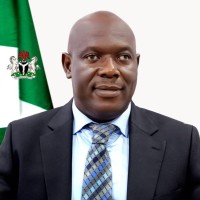
The Hydrocarbon Pollution Remediation Project (HYPREP) has commemorated the 15th anniversary of the release of the United Nations Environment Programme (UNEP) Environmental Assessment Report on Ogoniland, reaffirming its commitment to restoring the environment and improving the livelihoods of affected communities.
In a statement signed by the Project Coordinator, Prof Nenibarini Zabbey, to commemorate the anniversary, HYPREP described the anniversary as a significant milestone in Nigeria’s environmental restoration efforts, noting that the project has made remarkable progress in implementing the recommendations of the landmark UNEP report released on August 4, 2011.
The UNEP report had revealed extensive oil pollution across Ogoniland, severe environmental degradation, and serious public health risks resulting from decades of petroleum operations. It also recommended an initial $1 billion fund to commence the cleanup of the affected communities.
According to HYPREP, the Federal Government formally launched the Ogoni clean-up in 2016, while the Project Coordination Office was established in 2017 to drive the implementation of UNEP’s recommendations.
Zabbey said the current administration has continued to prioritise the project under the Renewed Hope Agenda.
Providing an update on the cleanup, the Project Coordinator disclosed that 30 of the 65 contaminated sites identified by UNEP have been fully remediated, while work is ongoing at several medium- and high-risk locations. It also stated that more than 1.5 million mangrove seedlings have been planted as part of what it described as the world’s largest restoration of oil-degraded mangroves, with over 1,000 hectares of shoreline already rehabilitated.
Zabbey further revealed that 49 Ogoni communities have been connected to potable water schemes through multiple water projects and booster stations aimed at providing safe drinking water across the region.
In the health sector, he said the 100-bed Ogoni Specialist Hospital in Kpite and the 43-bed Cottage Hospital in Buan are nearing completion, adding that several existing health facilities have been upgraded with modern medical equipment, while five ambulances have been donated to improve emergency healthcare services. The Project Coordinator also disclosed that a three-year human health biomonitoring study is being conducted in collaboration with the World Health Organization’s International Agency for Research on Cancer (IARC).
On economic empowerment, Zabbey stated that the Project has created more than 8,000 direct jobs and trained thousands of Ogoni youths and women in various vocational and technical skills, including software development, cybersecurity, aviation, commercial diving, seafaring, mechatronics, and creative arts. The project also reported awarding scholarships to more than 1,000 students, providing grants to small businesses, and supporting persons living with special needs through skills acquisition programmes.
The statement further highlighted ongoing legacy projects, including the Ogoni Power Project and the Centre of Excellence for Environmental Restoration, which it said is about 96 per cent complete. HYPREP also welcomed the recent designation of the Ogoni Wetland as a Ramsar Site of International Importance and pledged to continue promoting biodiversity conservation and sustainable management of the ecosystem.
Marking the anniversary, Zabbey said the progress achieved over the past 15 years demonstrates the collective commitment of government, development partners, stakeholders, and local communities to restoring Ogoniland. He called for renewed collaboration to sustain the cleanup effort, promote environmental sustainability, and support the long-term development of the region. 3
-

 News2 days ago
RSG Targets Nine Million Residents in Mosquito Net Distribution Campaign
-

 Oil & Energy2 days ago
Aiyedatiwa Signs New Electricity Bill
-

 Oil & Energy2 days ago
NLNG Commissions Research And Innovation Centre In RSU
-

 Maritime2 days ago
Marine Minister Commends President Tinubu On NPERA Bill Assent
-

 News2 days ago
KenPoly Holds Eight Convocations, August 29
-

 News2 days ago
RSG Begins Another Phase of Projects Commissioning Today
-

 News2 days ago
RMAFC Completes Revenue Sharing Review, Proposes New Pay
-

 Maritime2 days ago
NAGAFF Petitions IGP Over Alleged Maritime Police Harassment