
News
PIB: Host Communities In Free-For-All Over 10% Fund


Room 028, the venue of the public hearing on the Petroleum Industry Bill (PIB) was thrown into pandemonium, yesterday, following a fight by some members of the host communities of crude oil reserves in the Niger Delta.
The people had gathered from the different parts of the oil-producing communities with a greater number from the core Niger Delta states to make presentations on the bill.
The public hearing began, last Wednesday, with major stakeholders making their presentations.
However, the fight broke out exactly 12:10 pm when the Chairman of the Ad-hoc Committee on PIB, Hon. Mohammed Monguno, who had been moderating the proceedings, called the host communities to make their inputs.
Monguno had earlier given a notice of a harmonized leadership of the host communities that would make presentations through one person.
But apparently, the announcement didn’t go down well among the people who appeared to have struggled amongst themselves over who would represent them.
To this end, they resorted to fighting themselves, disrupting the proceedings.
The unhealthy development left lawmakers and other participants scampering for safety.
However, calm was restored within minutes after the security agents from the Nigerian police on sight intervened in the matter.
With this, the committee chairman announced that henceforth, members of the communities would only adopt their memoranda and exit the podium, assuring that the panel would visit various communities in the coast region to properly engage them.
While one of the men involved in the fight could not speak to journalists because he sustained injuries on his mouth, the other party who gave his name as High Chief Benjamin Style Tamaranebi, said the fight was all about the demand for 10 per cent equity shares by the host communities.
He further identified himself as the National President of the Host Communities of Nigeria’s oil-producing communities.
It would be recalled that the government had in the PIB proposed 2.5 per cent as royalty for the host communities.
But Tamaranebi said it was not enough for the people, and therefore, demanded an upward increase of 10 per cent.
“We are here for the public hearing on behalf of Host Communities of Nigeria Producing Oil and Gas. I am the president of the host communities. And all that we are asking for and all that we are here for is nothing more than 10% equity shareholding. We vehemently go against 2.5% operating cost. That’s a trick.
“So, we want to be part and parcel of it. Let us be a shareholder in the industry. That will guarantee security in our local community that are producing oil and gas. If they give us 10% shareholding on all operating, that equity will guarantee, no one will spill any oil or vandalize any pipeline. But whatever thing that gets missing, communities will be missing as well. I want to agree on the 10% equity shareholding for the host communities. That will guarantee security in the region as well as the oil and gas industry in Nigeria.
“I think it is not necessary for me to talk about whether we fought or not. You know all about the Niger Delta region. There is no king. All are comrades. You know about us. When Niger Deltans gather together, everything is bound to happen. All we are agitating for 10% equity. The fight is because of 10% equity. The fight is because of 10% equity. We all agreed in terms of 10% equity. So, we are not fighting because of any other thing. All the fight you saw there was in agreement with 10% equity.”
Also speaking on the development, Barrister Gouha Ukhorumah, who represented the Offshore Gbaramatu and Coastal Host Communities in Warri South Local Government of Delta State, said the quarrel was basically between two factions of the group who referred to themselves as host communities without a specific kingdom or local government as an area of coverage.
“They are paper tigers and racketeers who represent nobody but themselves. They are what we call political host communities because our group has been having MoUs with oil companies and have been managing their Corporate Social Responsibility (CSR) policies over the years.
“That’s why we said they don’t represent anyone because they can’t be identified with any kingdom or ethnic group in the region. But as God will disgrace them, they are now fighting amongst themselves because they are more about what they can get as individuals.”
A representative of the oil-bearing communities and a coalition of Civil Society Organisations (CSOs) in the Niger Delta, yesterday, also kicked against the Petroleum Industry Bill, 2020.
The spokesman for the group of CSOs and Programme Manager, Democracy and Good Governance, Social Action, Prince Edegbuo, accused the House of Representatives Committee on PIB, conducting the public hearings, that ended yesterday, of ignoring the interest of host communities.
“We consider the manner the House has handled host communities and civil society contributions in these hearings, as deliberately aimed at ensuring that those critical voices are not heard. As the Petroleum Industry Bill is critical to the functionality of the oil and gas sector and the Nigerian economy, it is of utmost importance that all stakeholders are treated equally and accorded the same opportunity to discuss its contents and proposal, he argued.
He recalled that “On Tuesday, January 26, 2021, representatives of oil-bearing communities and civil society organizations from Niger Delta, were denied the right to participate in the so-called public hearings, organised by the Senate”, adding that “Again, we noted a similar display at the House of Representatives hearing on January 27, where members of oil host communities, were denied access to the public hearing”.
According to him, “while we support a speedy passage of the Bill, we are more interested in such Bill’s contents and quality. As currently proposed, the PIB 2020, is inadequate to address the environmental, human rights, and livelihoods concerns of host communities. The proposal for a host communities’ development trust fund does not support the participation of the communities in decision making.
“The governance structures proposed for the host communities’ trust fund, deliberately deny any meaningful level of community participation, while covertly promoting oil companies’ control and prominence”, he said.
The coalition also rejected a provision in the Bill emphasizing control of resources by oil companies, warning of conflicts in the future.
“Oil companies described as settlers in the Bill, are empowered to set up the Board of Trustees of the Trusts and conduct needs assessment and produce development plans on behalf of the host communities. We believe that that level of emphasis on oil companies, could fuel oil industry divide-and-rule tactics and stoke communal conflicts”, he emphasisied.
Earlier, the Paramount Ruler of Idjerhe Kingdom in Ethiope Local Government Area of Delta State, Ovie Monday Obukuhwo Whiskey, had also kicked against the contents of the Bill.
He reiterated that his kingdom and others in the region were not carried along in the drafting and processing of the PIB.
Whiskey also demanded compensation for the death of over 100 persons from a pipeline explosion by the Petroleum Products Marketing Company (PPMC).
The monarch, who opposed calls for the scrapping of the Niger Delta Development Commission (NDDC), also urged the National Assembly to include leaders of the region in every decision-making process on issues affecting their communities.
Whiskey described the fight as the hand of Esau, the voice of Jacob.
“I would not want to make a comment on that because that has always been what we have in the Niger Delta. When we are to make presentations that will better a lot of our people, some undesirable elements will be sponsored to go against the will of the people. What you saw is the hand of Esau and the voice of Jacob. From the aggressiveness he displayed there, you will know that he intentionally did what he did. A man was seated and you went to fight him. As a traditional ruler, I will not want to make a comment on that”, he said.
Another participant, Ken Henshaw, who said he was leading the Civil Society and Host Communities in Niger Delta, however, attributed the fight to an announcement made earlier by Monguno that only one person will speak for the host communities.
He said: “It is a very unfortunate incident. It is one which we do not accept in any way. What you saw is not what the Niger Delta is but sometimes, some situations lead to such conflagrations. When you say that only one person will speak on behalf of the entire communities of the Niger Delta, that’s what you get. And immediately, conflict was created. I stand to be corrected but the conflict you saw in there today was a conflict created by the manner this public hearing was managed. If every person who had an intention to speak was called to speak, this crisis would not have happened.”
Speaking further, Henshaw picked holes with some clauses in the PIB, saying they the document did not meet the expectations of the people of the host communities.
He said “The host communities and civil society organizations in the Niger Delta were not allowed to speak and we consider this an abnormality and we simply state that this is not a public hearing because there are serious issues in the PIB that we need to be discussed.
“One: the governance structure of the PIB gives too much emphasis to the oil companies. It says that the oil company has the responsibility of setting up an oil company board of trustees. The board also sets up the management committee. And the very little role is given to the oil communities themselves. Even in the definition of host communities, the PIB is silent and it seems to simply say that the oil company has got the right to define who a host community is. This is a recipe for crisis.
“If you look at the PIB also, you find out that there is no structure for dispute resolution. And we came here to state clearly that there is a need for us to have a forum created by law that allows people who feel aggrieved to air those grievances. But that was not mentioned. And if you look also at the PIB, it states clearly that oil-producing communities have the responsibility of first-line protection of oil facilities.
“And the question is simple. The protection of oil facilities and oil theft has been a major problem. The civil defence has failed. The Nigerian Army has failed. The JTF has tried and failed. Everybody has tried and failed. And they have not been held accountable or punished. But they say that oil-producing communities have the responsibility of protecting oil pipelines and facilities.
“How do you expect unarmed community members to protect facilities against armed criminals who steal oil? It is impossible. It’s double jeopardy. It is an abuse to ask the host communities to take over the responsibility of the police, army or JTF to protect an oil pipeline. It doesn’t happen anywhere.
“Take a look at the Provision for gas flaring. The PIB simply states that fines can be paid for gas flaring, even the minister can give waive for gas flaring and we think that is wrong. The fine for gas flaring is paid to the federal government. Host communities are the ones who suffer the environmental effects, the health effects of gas flaring and they get absolutely nothing from gas flaring fines. That’s absolutely wrong.”
Asked if they were officially invited to make a presentation, Henshaw said, “I don’t need to be invited. This is a public hearing and by definition, a public hearing is a public forum. We don’t need to be invited. We came as stakeholders and we submitted our memoir on time and our names were listed to speak.”
Similarly, the leader of Niger Delta Dialogue, the think tank of the Pan-Niger Delta Elders Forum (PANDEF), Barrister Inibehe Effiong fumed, saying that the PIB did not clearly define “host communities”.
He said: “What this committee has done today is a tragic injustice. It is a slap on the people of the region. You can’t have one set of rules for the multinationals and officials of government on how to articulate their positions and have totally different rules and regulations for host communities and organizations like ours that articulate the interests of the Niger Delta.
“So, we feel that this is a further demonstration of the contemptible manner that the Nigerian State has regarded the people of the region. This is unacceptable and we will continue to demand that if this so-called host fund that they want to provide for is going to translate into anything, there has to be a significant conversation with the people of the region.
“As I speak today, we left this public hearing without an understanding of what host communities are. As far as I am concerned, this public hearing may be defeated as far as the host communities are concerned.
“We took time to x-ray the provisions of the Bill and as far as I’m concerned, when the Group Managing Director of NNPC spoke, he made a comment that he was the chairman of the Technical Committee that came out with this Bill. So, this is a Bill that was drafted by the executive arm of government, handed over to the lawmakers to pass without necessary taking into consideration the input of the people.
“When you have a regime like the one led by the current President that has clearly shown total disregard for the diversity of this country you can’t trust that governments to come up with a PIB that reflects the yearnings and aspirations of the people.
“This is the PIB that was born in the bedroom of the President handed over to the Speaker of House of Representatives and to the Senate President to be passed expeditiously and that is why you can see this Bill replete with errors, it is fundamentally defective.”
Making its presentation at the hearing, the Chairman, Revenue Mobilisation, Allocation and Fiscal Commission (RMAFC), Chief Elias Mbam, told the lawmakers that the bill may cut the flow of revenue to the Federal Government.
“The commission supports fully the aims and objectives of this Bill. However, there are some areas we are concerned strongly with.
“The Bill did not make reasonable provision on the inflow of revenue to the federation. If we have NNPC Limited that is talking about dividends which may come once a year, how do we guarantee a continuous inflow of revenue monthly into the Federation Account?
“Secondly, we are aware that all revenue from hydrocarbons is a revenue item of the Federation Account but where taxes are deducted from hydrocarbon revenue, it is the same thing as encroaching on the Federation Account.
“So, we expect that the Bill should not be to the disadvantage of monthly revenue to the Federation Account.
“On the host community funds, the commission is totally in support of the establishment of community funds. Our concern is the source of the fund. There is subsisting law which has provided 13% to address issues that are related to community funding. We feel that a source of the fund should be from that 13%.”
Mbam’s position was also corroborated by the Minister of State for Finance, Budget and National Planning, Clement Agba, who warned against losing tomorrow’s future for today’s gains.
“From the Minister of Finance, Budget and National Planning, we are currently engaging our colleagues from the petroleum sector to harmonize the government views on certain areas where we see some rooms for improvement. So, as one government when we are through, Honourable Chair, we will be giving you our memorandum.
“We are moving the right direction with the PIB but it is important that as much as we want to protect today’s revenue, we should look at sustainability. We should look at how revenue streams will continue to flow over the years and these are areas that from the Ministry of Finance, that we are looking at because we don’t want to get all the money today and lose tomorrow’s money”, he said.
Titled, “A Bill for an act to provide legal, governance, regulatory and fiscal framework for the Nigerian petroleum industry, the development of host community and for related matters”, the proposed piece of legislation is chiefly seeking to scrap the Petroleum Equalisation Fund (PEF) and Petroleum Products Pricing Regulatory Agency (PPPRA) and replace them with a new agency to be called Nigerian Midstream and Downstream Regulatory Authority (NMDRA) which shall be responsible for the technical and commercial regulation of midstream and upstream petroleum operations in the industry.
It is also seeking to establish the Nigerian Upstream Regulatory Commission to be responsible for the technical and commercial regulation of upstream petroleum operations, while also seeking the commercialisation of the Nigerian National Petroleum Corporation (NNPC) to become Nigerian National Petroleum Company to be incorporated under the Companies and Allied Matters Act by the Minister of Petroleum.
The PIB is about the oldest bill with over 20 years stay in the National Assembly.
Because of its importance, President Muhammadu Buhari retransmitted it to the parliament on September 20, 2020, a development which necessitated the public hearing of the House.


News
Rivers DPOs Receive Awards For Outstanding Performance In Crime Prevention …As Students, Media Group Honour CSP Worgu, CSP Yusuf

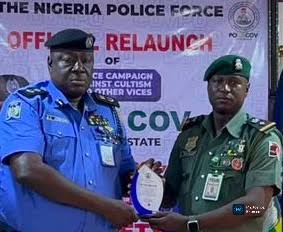
Two Divisional Police Officers (DPOs) in Rivers State have been honoured by separate groups for their contributions to security, crime prevention and improved community-police relations in their respective areas of responsibility.
The beneficiaries are the DPO of Afam Police Division, CSP Endurance Worgu and his counterpart at Oyigbo Police Division, CSP Bello Yusuf.
CSP Worgu was honoured by a group of students under the aegis of Rivers State Graduate Students Associations for what they described as his commitment and outstanding performance in the discharge of his duties.
The students, led by Chidi John Enyie, Esq. said CSP Worgu was selected based on his track record and status as one of the longest-serving young DPOs of Rivers State origin.
According to the group, CSP Worgu has made significant contributions to the protection of lives and property in the area since assuming office following the #EndSARS period.
The students said they were particularly impressed by the improvement in community-police relations under his leadership, noting that professionalism had remained a key feature of his service.
Enyie represented by Comrade Briggs Soku, said the students community was pleased to identify with a Rivers indigene who had distinguished himself in the police force.
He said the students considered it necessary to encourage and celebrate CSP Worgu because of his achievements as a young Rivers man excelling in a profession that many people from the state were often reluctant to join.
Receiving the award at his office in Afam, CSP Worgu expressed gratitude to God and the students for finding him worthy of the honour.
The DPO said the recognition had boosted his morale and encouraged him to sustain his efforts towards maintaining peace and security in the area.
He said he least expected the honour, particularly because it came from the students, adding that the recognition would further motivate him to serve the people better.
CSP Worgu assured residents of Afam that the police would sustain the existing peace in the area.
He appealed to members of the public to support the police by providing credible and timely information, stressing that useful information from residents would make the job of security personnel easier.
Meanwhile, the Ikwerre/Etche Media Association has also honoured the DPO of Oyigbo Police Division, CSP Bello Yusuf, for his efforts in tackling criminal activities in the area.
The media group presented the award following the swift tracking and arrest of five suspected kidnappers who had allegedly terrorised residents of the Kom-Kom axis and other parts of Oyigbo.
The group commended CSP Bello for what it described as his determined efforts to restore confidence and security in the affected communities, particularly Kom-Kom and Obeama.
According to the group, the arrest of the suspects demonstrated the DPO’s commitment to tackling criminality and safeguarding residents.
The media association said residents had received the development with relief, noting that the police action had sent a strong message to criminal elements operating in the area.
Responding, CSP Yusuf appreciated the group for the recognition and reaffirmed that there would be no room for criminality in Oyigbo.
He also commended the media for its role in disseminating credible information to the public, saying the media had remained supportive of the police in the fight against crime.
CSP Yusuf warned criminal elements operating in Oyigbo to leave the area or be prepared to face the full weight of the law.
He assured residents that the police would continue to pursue criminals and work to dismantle their hideouts, regardless of where they might be operating.
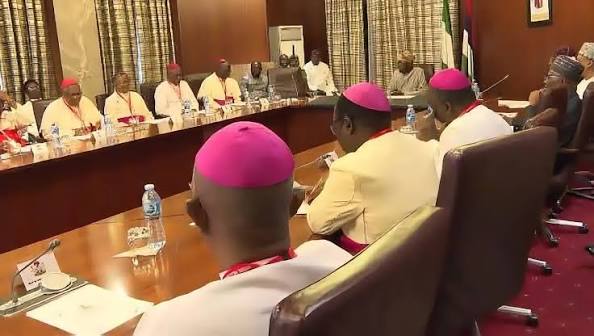
The 5000 Achievers Christian Forum and Colleges of Bishops, Archbishops and Apostles, a Christian interdenominational organisation, has endorsed President Bola Ahmed Tinubu and all candidates of the All Progressives Congress (APC) in Rivers State for the 2027 general elections.
International President of the forum, Archbishop Lucky Aroh, disclosed this during the ordination and consecration of three new Bishops, as well as an award ceremony held in Port Harcourt.
Aroh said the performance of the APC-led Federal Government had endeared the party to the organisation, prompting the forum to declare its support for President Tinubu and other APC candidates in Rivers State.
He said the forum would support all APC candidates in the state during the 2027 elections and urged Nigerians to vote for the party.
Aroh, who is also the General Overseer of Caring Peoples Church, Port Harcourt, charged the newly consecrated Bishops to see their new positions as a great responsibility and dedicate themselves to the advancement of the kingdom of God.
He cautioned them against conduct capable of bringing their offices into disrepute, stressing that their activities would be closely watched by members of the public.
“As Bishops, the eyes of the public are on your activities. You must therefore conduct yourselves in a manner worthy of your calling,” he said.
Also speaking, the International Coordinator of the forum, Bishop Saint Robinson, urged the newly consecrated Bishops to work diligently towards winning souls for the kingdom of God.
Robinson, who was the guest speaker at the event, stressed that the activities of Bishops must at all times be guided by godly principles.
He also called on members of the church to support and cooperate with the newly consecrated Bishops in the discharge of their responsibilities.
The Secretary of the College, Apostle Elizabeth Ayadi Abaye, said the organisation was established to advance the kingdom of God and promote spiritual development.
According to her, the forum has organised several crusades, conferences, prayer meetings, ordinations, consecrations, enthronements, empowerment programmes and other spiritual development activities across the country as part of efforts to win souls for Christ.
Abaye said the organisation has members across the world and disclosed that more programmes had been scheduled to promote the spiritual development and wellbeing of humanity.
The three Bishops consecrated at the ceremony were Prince Alban Chike, Testimony Omenihu Shedrach and Prince Ifemena.
Among those honoured at the event were the Chairman of the Community Development Committee (CDC), Abali Community, Port Harcourt City Local Government Area, Manuchimso Prince Lemmy Wopara, and Clifford Oko Jaja, Coordinator of the 5,000 House-to-House for President Tinubu.
By: John Bibor
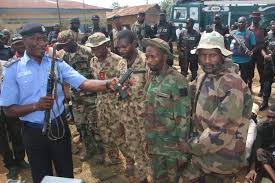
The Rivers State Police Command has arrested a 49-year-old suspected fake soldier, Andrew Atausi, and several other suspects in connection with various criminal activities, including kidnapping, armed robbery, cultism, one-chance robbery and the alleged murder of police officers.
The State Commissioner of Police, CP Olugbenga Adepoju, disclosed this in Port Harcourt, recently during a press briefing at the Command Headquarters, where he said the arrests formed part of the operational achievements recorded by the Command between June and August 2026.
Adepoju said Atausi was arrested on August 10 by police operatives along Ada George, Port Harcourt, while dressed in military uniform and driving a Toyota Hilux painted in Army colours.
The Commissioner said investigation revealed that Atausi was not a member of the Armed Forces, adding that he was suspected to be a serial car snatcher, with three suspected stolen vehicles recovered from him.
He said the recovered vehicles included three Toyota Hilux vehicles without registration numbers and a Toyota Corona Premio with registration number BNY 380 ES, noting that the chassis and engine numbers of the vehicles had allegedly been tampered with.
Adepoju added that an axe and military accoutrements were also recovered from Atausi, as investigation continued into the circumstances surrounding the vehicles and other items recovered from him.
On the June 29 attack on police officers at Aluu Division, the Commissioner said three members of the gang allegedly responsible for the incident had been arrested by operatives of the Violent Crime Response Unit, VCRU-AKU.
The suspects, identified as Maduabuchi Emeka, 34, alleged gang leader; Doctor Chinedu Owhor, 42, and Kamachi Joe, 28, alleged armourer, reportedly led operatives to their hideout at Omagwa where two AK-47 rifles stolen during the attack were recovered.
Adepoju recalled that two police officers were killed during the Aluu attack, while others were wounded and one officer had his leg amputated, stressing that efforts were ongoing to apprehend the fourth suspect.
On kidnapping, the Commissioner said five members of a suspected kidnapping syndicate were arrested in Oyigbo Local Government Area, adding that they allegedly confessed to operations in Kom-Kom, Railway, Obeama and Afam communities.
He said two other suspects from the same network, Anele Ogbogu, 35, alleged to be the gang’s armourer, and Kenneth Eke, 38, were arrested on July 27, with one AK-47 rifle and one SMG rifle recovered.
The Commissioner further disclosed the arrest of suspects in connection with alleged firearm offences, armed robbery, cultism and one-chance robbery, with firearms, ammunition and other exhibits recovered during the operations.
Adepoju assured residents that the Command would sustain intelligence-led, proactive and community-oriented policing in collaboration with other security agencies, while urging members of the public to continue providing credible information that would assist the police in combating crime across Rivers State.
By; King Onunwor
-

 News1 day ago
RSG Targets Nine Million Residents in Mosquito Net Distribution Campaign
-

 Oil & Energy1 day ago
Aiyedatiwa Signs New Electricity Bill
-

 Oil & Energy1 day ago
NLNG Commissions Research And Innovation Centre In RSU
-

 Maritime1 day ago
Marine Minister Commends President Tinubu On NPERA Bill Assent
-

 News1 day ago
KenPoly Holds Eight Convocations, August 29
-

 News1 day ago
RSG Begins Another Phase of Projects Commissioning Today
-

 News1 day ago
RMAFC Completes Revenue Sharing Review, Proposes New Pay
-

 Maritime1 day ago
NAGAFF Petitions IGP Over Alleged Maritime Police Harassment