Connect with us

Politics

Periscoping 2020 (5)

Published

on

The Petroleum Industry Bill, PIB 2020 (SB.510) was read for the first time on the floor of the Ninth Senate on Wednesday, September 30, 2020. As part of the business of the day, presentation of the bill was number two on the day’s Order Paper.
The leader of the Senate, Senator Yahaya Abdullahi, presented the proposed legislation and the President of the Senate, Dr Ahmad Lawan, read the bill for the first time.
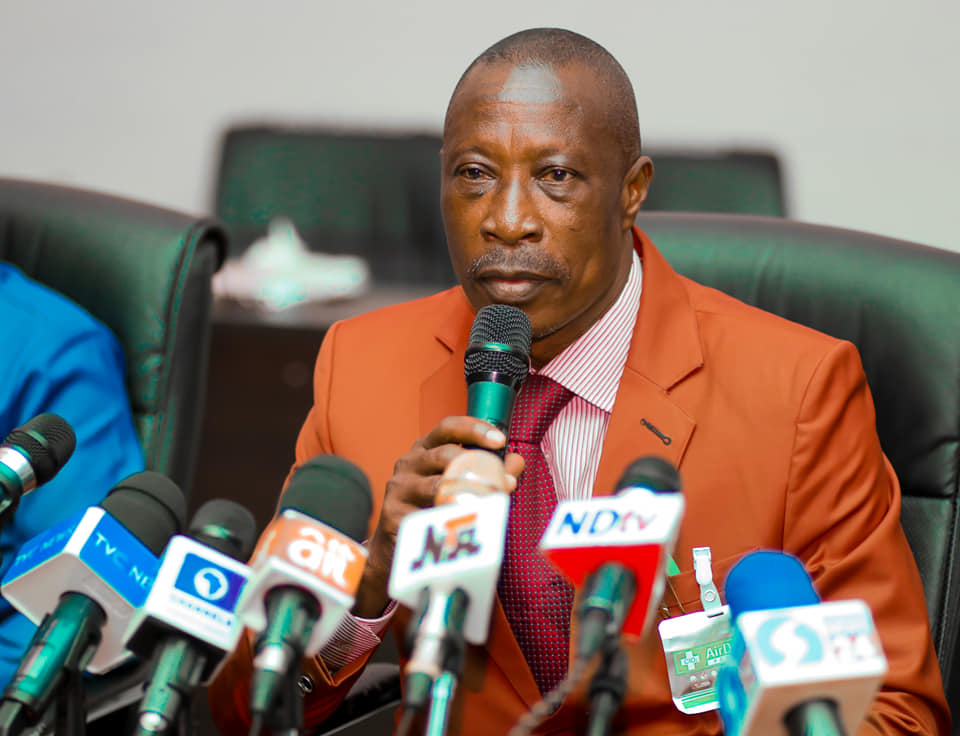
The Independent National Electoral Commission (INEC) National Commissioner and Chairman, Information and Voter Education Festus  Okoye, disclosed in a release issued in Abuja on Wednesday, September 30, that over 40 companies had indicated interest and had been invited for a live presentation for a virtual or practical demonstration of electronic voting machines that may be used for the Ondo governorship election on October 10.
The Peoples Democratic Party (PDP) Governors’ forum insisted that a national dialogue was needed as a way forward for the country.
The Forum stated that a national dialogue had become imperative for the various interest groups and leaders in Nigeria to brainstorm and chart a new course for the benefit of all.
The PDP Governors; in an Independence Day Message to Nigerians by its chairman, Governor Aminu Tambuwal of Sokoto State, on Thursday, October 1, said the country cannot continue to remain helpless in the face of the challenges confronting citizens.
Members of the # RevolutionNow   Group, on Thursday,  October 1, protested  at the United States Embassy in Abuja, over the security and socio-economic situation in the country. They demanded the resignation of President Muhammadu Buhari over insecurity, hunger and corruption in the country.
An NGO, Yiaga Africa, on Sunday, October 4, said it would deploy the Paralle2 Vote Tabulation (PVT) methodology to verify results during the October 10 governorship election in Ondo State.
The Executive Director of Yiaga Africa, Mr Sampson Itodo, said in a statement in Abuja that the group would also deploy 646 observers under its “Watching the Vote (WTV)” project to monitor the election.
Candidates of political parties participating in the Ondo State governorship election signed a peace accord in Akure, the Ondo State Captial on Tuesday, October 6.
Sultan of Sokoto, Abubakar Saa’d; Bishop of Sokoto Diocese, Hasan Kukah; former Bishop of Abuja Diocese, John Onaiyekan and traditional rulers were among others that witnessed the signing.
On Thursday, October 8, President Muhammadu Buhari presented an Appropriation Bill of N13.08 trillion to the joint session of the National Assembly in Abuja, predicting further hardship for Nigerians as he said the nation may face another recession before the end of the year, if serious and effective measures were not taken to ensure the nation’s financial security.
The Independent National Electoral Commission (INEC), on Sunday, October 11, declared Governor Rotimi Akeredolu of the All Progressives Congress (APC) winner of Saturday, October 10, governorship election.
Declaring the result, the Returning Officer, Prof. Idowu Olayinka said Akeredolu polled 292,914 votes to defeat his closest rival, Eyitayo jegede of the Peoples Democratic Party (PDP), who garnered 195,791 votes.
In a memorandum to the National Assembly Committee on the Review of the 1999 constitution, northern elders who described themselves as Friends of Democracy, on Tuesday, October 13, advocated the return of the country to the 12-state structure of 1967 to be known as regions with full devolution of powers and 100 percent resource control.
Describing the proposal as “the most viable option for Nigeria at the moment and in the foreseeable future”, the memorandum was signed by Alhaji Othman Tofa, Amb. Fatimah Balla, Alhaji Sule Yahaya Hamma, Dr Abubakar Saddique Mohammed, Mr Sarn Nda-Isaiah, Bashir Yusuf Ibrahim, Mai Bilya Bala, Mr Hubert Shaiyen, Dr Kabir Az-Zubair, Prof. Jibrin Ibahim, and Dr Usman Bugaje.
On Tuesday, October 13, the Senate received a request from President Muhammadu Buhari for the confirmation of four nominees as commissioners for the  Independent National Electoral Commission (INEC).
The request which was contained in a letter dated October 12, 2020, was read at plenary by president of the Senate, Dr Ahmad Lawan.
The nominees listed by the president were: Prof. Muhammad Sani Kallah (National Electoral Commissioner), Katsina; Lauretta Onochie (National Electoral Commissioner), Delta; Prof. Kunle Cornelius Ajayi (National Electoral Commissioner), Ekiti and Saidu Babura Ahmad (National Electoral Commissioner), Jigawa.
The Senate, on Tuesday, October 13, ordered the police to arrest officers who fatally shot #EndSARS protesters. Senate President, Ahmad Lawan declared that the conduct of the Special Anti-Robbery Squad (SARS) was not acceptable.
Senator Buhari Abdulfatai, presented a motion on the death of a member of his constituency, Jimoh Isiaka and attack on the palace of Soun of Ogbomoso, Oba Oladunni Oyewumi. The lawmakers observed a minute silence in honour of Isiaka and other Nigerians that lost their lives to police brutality.
Speaker of the House of Representatives, Femi Gbajabiamila, on Tuesday, October 13, at plenary, disclosed that the lower legislative chamber will be compensating families of Nigerians who died while protesting against police brutality.
Gbajabiamila, while addressing the House stated that the House was committed to reform of the police, adding that as part of the process, the leadership of the House would meet with the leadership of the Nigerian Bar Association (NBA) and other Civil Society Organisations.
The 2023 presidential election would hold on February 18,2023, the chairman of the Independent National Electoral Commission (INEC), Prof. Mahmood Yakubu disclosed on Thursday, October 15.
In a goodwill message at the inauguration of the Special adhoc committee on the review of the 1999 constitution, the INEC chairman told members of the House of Representatives that there were about 855 days left for the next general election.
On Thursday, October 15, the House of Representatives inaugurated a special committee to be chaired by the Deputy Speaker, Rep. Ahmed Wase, to review  the 1999 constitution of the Federal Republic of Nigeria.
Speaking at the ceremony, Vice President, Prof. Yemi Osinbajo, said that the 9th House of Representatives had continued to prove to be a catalyst for positive change and development in the country.
President Muhammadu Buhari and the leadership of the National Assembly met behind closed doors at the Presidential Villa, Abuja over the #EndSARS protests on Sunday, October 18.
Speaking to State House correspondents at the end of the meeting the Senate President, Dr Ahmad Lawan said the meeting specifically deliberated on how best to address the #EndSARS demonstrations in some parts of the country.
The Petroleum Industry Bill (PIB) 2020, on Tuesday, October 20, scaled second reading at the Senate after exhaustive debate by senators across party divides and was subsequently referred to the Senate Committee on Petroleum Downstrean, Petroleum Upstream and Gas for further legislative action.
The committee was mandated to report back to the senate after eight weeks as the upper legislative chamber also adjourned plenary for five weeks to give its committees time for consideration of the N13.08 trillion 2021 budget.
The Rivers State House Assembly, during its plenary on Tuesday, October 20, passed a total of 18 bills into law. The bills included those to Amend the Rivers State University Teaching Hospital Bill 2017 and other related matters, and the renaming of Liberation Stadium to Gen. Yakubu Gowon Stadium; Bill seeking to rename Old Aba Road to Yakubu Gowon Road; and the renaming of the newly built judges quarters to Emmanuel Aguma Judges Quarters.
Senate, at plenary, on Tuesday, October 20, urged President Muhammadu Buhari to as soon as possible, address the nation on issues of the EndSARS protest in the country while asking the protesting youths to stop the protest to enable the Federal Government address their demands.
The resolutions were sequel to a point of order motion on “Matters of Urgent National Importance” brought by Sen. Biodum Olujimi (Ekiti PDP).
On Thursday, October 22, the Independent National Electoral Commission (INEC), announced the postponement of 15 by-elections earlier slated for October 31 in the aftermath of the #EndSARS protests which had seen hoodlums hijacking the agitations to wreak havoc across the nation.
The National Commissioner and Chairman of INEC’s Information and Voter Education Committee, Barr Festus Okoye disclosed this in a statement.
The United States Government, on Thursday, October 22, condemned the excessive use of force by the President Muhammadu Buhari-led Federal Government in quelling peaceful #EndSARs protests in parts of the country.
A statement by the US Secretary of State, Mike Pompeo, in Washington D.C. said that the action by the government security agencies failed to meet global best practices of respect for peaceful assembly and the fundamental rights of citizens to freely express their discontent over any anti-people policies of the government.
In a nationwide broadcast, President Muhammadu Buhari, on Thursday, October 22, vowed not to allow anybody to disrupt the peace of the nation amidst violent protests in the country.
He said that his government respected and would continue to respect all the democratic rights and civil liberties of the people, but that it would not allow anybody or groups to disrupt the peace of the nation. “I must warn those who have hijacked and misdirected the initial genuine and well-intended protest of some of our youths in parts of the country, against the excesses of some members of the now disbanded Special Anti-Robbery Squad (SARS)”, he stressed.
Presidential spokesman, Femi Adesina, told the BBC on Saturday, October 24, that, at least, 69 people were killed in the protests against police brutality that rocked the country Adesina said President Muhammadu Buhari announced the toll in an emergency meeting with former Nigerian leaders aimed at finding ways to end the unrest, adding that the deaths were mainly civilians but included police-officers and soldiers.
The Rivers State Government, in line with the proscription order of the Federal Government announced a reinforcement of the ban on activities of Indigenous Peoples of Biafra (IPOB) in the state.
The State governor, Chief Nyesom Wike, in a statewide broadcast reinforcing the proscription of IPOB in the state on Friday, October 23, said no form of procession or agitation by the group or any of its affiliates was allowed to take place in the state henceforth.
He explained that the state government reached the firm conclusion,  having observed that the activities of the banned IPOB were not just dangerous to lives and property, but also constitute clear and present threat to the existential interest and aspirations of Rivers State and her people.
By: Opaka Dokubo
Continue Reading

Politics

Senate Defends Passage Of State Police Bill

Published

on

The Senate has defended the passage of the Constitution of the Federal Republic of Nigeria (Alteration) (State Police) Bill, 2026, saying the proposed creation of state police is driven by national consensus and the country’s security needs rather than political considerations.

The Red Chamber passed the bill last Wednesday after more than two-thirds of senators voted in support.

In a statement issued yesterday by the Directorate of Media and Public Affairs, Office of the Senate Leader, Senator Opeyemi Bamidele described the bill as “a child of necessity and not of political expediency as well as a product of national consensus and not of cynicism.”


The senate leader said the proposal to establish state police was a matter of urgent public importance that could not be delayed because of political interests, given the country’s security challenges.

He explained that the proposal did not originate recently but emerged from memoranda submitted to the Senate Ad-hoc Committee on the Review of the 1999 Constitution.

According to him, the proposal underwent extensive consultations and rigorous scrutiny because of its sensitive nature.

Bamidele said the National Assembly consulted widely with the Executive, the Nigeria Governors’ Forum, the Conference of Speakers of State Legislatures of Nigeria, the leadership of the Nigeria Police and other stakeholders before passing the bill.

He added that during the public hearings conducted across the six geopolitical zones in July 2025, participants overwhelmingly supported the creation of state police.

“At each level of our consultation, nearly all stakeholders embraced the State Police Bill in the light of stark realities we are facing today,” he said.

The Senate leader noted that recommendations from the Nigeria Police contributed to the bill, particularly on accountability and oversight mechanisms aimed at preventing abuse of state police by political actors.

According to him, the police’s support for the proposal underscores its national significance in tackling insecurity at the state and local levels.

Bamidele also said the bill received broad bipartisan backing in both chambers of the National Assembly.

“Even though the APC is the majority, there are members of opposition parties — PDP, ADC, NDC and Labour Party — that exercised their discretion in favour of the Bill, mainly in the national interest and not on parochial basis.

“In the Senate, for instance, 84 out of 109 members voted clause by clause in support of the Bill. This accounted for 77.06 per cent approval at the Senate alone,” he said.

He argued that national security should transcend political affiliations, saying political actors in other countries often set aside partisan interests to support initiatives that strengthen security.

Bamidele called on opposition parties to contribute constructive ideas that would promote peace and stability, adding that they have a responsibility to offer alternatives that would strengthen the country.

“Even when they disagree on some grounds, they are under obligations to provide credible and useful ideas that can make our nation better and greater. Unfortunately, they have not passed this critical test of opposition democracy,” he said.


Continue Reading

News

Probe N6.3bn Constituency Funds Or Face Legal Action, SERAP Tells Akpabio, Abbas

Published

on

The Socio-Economic Rights and Accountability Project (SERAP) has called on Senate President, Godswill Akpabio, and Speaker of the House of Representatives, Tajudeen Abbas, to refer allegations of the diversion or non-accounting of over ?6.3 billion in constituency project funds to anti-corruption agencies for investigation and possible prosecution.


The group also urged the National Assembly leadership to ensure that anyone found culpable is prosecuted where sufficient admissible evidence exists, while all diverted or unaccounted public funds are recovered and paid into the treasury.


In a letter dated June 27, 2026, and signed by its Deputy Director, Kolawole Oluwadare, SERAP said the allegations were contained in the Auditor-General of the Federation’s 2022 Annual Report, published on September 9, 2025.


The organisation disclosed this in a statement signed and released by Oluwadare, yesterday.


SERAP also asked Akpabio and Abbas to disclose the identities of contractors and companies, including their shareholders and beneficial owners, that allegedly received constituency project funds but failed to execute the projects.


It gave the National Assembly seven days to act on its recommendations, warning that it would institute legal proceedings should the legislature fail to respond.


“We would be grateful if the recommended measures are taken within seven days of the receipt and/or publication of this letter. If we have not heard from you by then, SERAP shall take all appropriate legal actions to compel you and the National Assembly to comply with our request in the public interest,” the letter stated.


It said, “The allegations involve several federal ministries, departments and agencies, including the Environmental Health Registration Council of Nigeria (EHORECON); the Federal College of Animal Health and Production Technology, Volm; the Federal Polytechnic, Udana; the National Agency for the Prohibition of Trafficking in Persons (NAPTIP); and the National Institute of Legislative and Democratic Studies (NILDS).


“The Auditor-General identified numerous cases of payments into private bank accounts, contracts awarded without due process, payments for contracts not executed or services not rendered, undocumented expenditures, inflated contracts, procurement irregularities and failures to account for public funds, recommending in each case that the funds be recovered and remitted to the treasury.


“According to the 2022 audited report, contained in pages 367 to 396, the Environmental Health Registration Council of Nigeria (EHORECON or Council) Abuja paid over ‘N22 million [N22,944,565.16] into the private account of some members of staff of the Council from the Constituency Projects Fund Account.


“There ‘was no evidence of the utilization of the funds and no explanations on the purpose for the payment of such amount into the individual accounts.”


SERAP added, “The Council (EHORECON) also in 2021 ‘awarded suspicious consultancy contracts of over N12 million [N12,030,818.29] for the development of Modern Abattoirs in Kebbi State and the supervision of 7 projects in Kebbi, Jigawa, and Headquarters Abuja.

“The money was to ‘produce bills of quantity, architectural design, structural design, mechanical design, and electrical designs for the contracts and supervision.’ But ‘the ‘items could not be found.’”


Altogether, SERAP said the Auditor-General’s 2022 report alleged EHORECON paid more than ?1.8 billion in constituency project funds through questionable transactions.


For the Federal College of Animal Health and Production Technology, Vom, SERAP said the institution “in 2022 reportedly ‘paid over N279 million [N279,700,500.00] to 3 contractors to empower and train youths in selected vocational areas in Borgu and Kontagora, Niger State, train women and youths in entrepreneurship in Niger East Senatorial District and to train youths and women in agro production and self-reliance in Barki Ladi/Riyom Federal Constituency, Plateau State.


“But the money was paid to the contractors without any document.’”


Other irregularities involving the college include another ?279.7 million in mobilisation fees allegedly paid without documentation, and more than ?629.4 million paid to unqualified contractors for various constituency projects without evidence of due process, contract advertisements or details of the contractors.


SERAP further alleged that the Auditor-General’s report identified multiple financial irregularities involving the Federal Polytechnic, Ukana, Akwa Ibom State, including over ?407 million allegedly paid as mobilisation fees without supporting documents, more than ?399 million paid to unqualified contractors, contracts allegedly inflated by over ?192 million, over ?279 million paid for projects not fully executed, ?50 million allegedly paid for an unexecuted borehole project, and more than ?83 million disbursed without the required documentation or approvals.


It also alleged that NAPTIP reportedly irregularly awarded contracts worth over ?21.8 million, paid more than ?176.8 million for logistics and consultancy services without supporting documents, and disbursed over ?89.6 million and ?4.4 million for projects that were allegedly not executed.


The report also alleged that NILDS failed to submit audited financial statements for 2012 to 2022, did not remit over ?15 million in stamp duties, and spent ?1.6 million without authorisation from the Office of the Accountant-General of the Federation.


SERAP said the report recommended the recovery of the affected funds and their remittance to the treasury.


It argued that corruption in constituency projects disproportionately affects poor and vulnerable Nigerians by diverting resources meant for public services and development.


It added that the National Assembly, in exercising its oversight responsibilities, should demonstrate leadership by ensuring accountability in the management of constituency project funds.


The organisation further argued that the allegations, if established, would amount to breaches of the Constitution, the Fiscal Responsibility Act 2007 and the Public Procurement Act 2007, which require transparency, accountability and due process in the management of public resources.

Continue Reading

Politics

Parties’ Deregistration: How Justice Lifu Overruled Appeal Court Justices

Published

on

Justice Peter Lifu of the Federal High Court in Abuja on Monday brushed aside the order of the Court of Appeal in Abuja which ordered him to stay proceedings in a suit that sought deregistration of the African Democratic Party (ADC), Accord Party and three others.
The Court of Appeal in a unanimous decision of a panel of three Justices had on May 22, 2026 directed the Federal High Court Judge not to proceed with the suit until an appeal pending before them and filed by Accord Party is resolved.
In a Certified True Copy Enrol Order of the Superior Court, Justices Mohammed Danjuma, Adebukola Banjoko and Oyejoju Oyewumi asked the lower Court Judge to stay proceedings until all issues on the appeal filed by the Accord Party were resolved
Governor Ademola Adeleke of Osun State had, through the Accord Party, applied to justice Lifu to join him as a defendant in the deregistration legal battle instituted by a group of former legislators.
The contention of the Osun State governor was that he had a stake in the Accord Party, being the platform he was seeking re-election in the August 15 gubernatorial poll in the state.
In his ruling, Justice Lifu on April 27 ruled against the Osun State governor, rejecting his request to be joined in the suit to defend his own position and interest.
Not satisfied with the Federal High Court decision, the Osun State governor, through his lawyer, Musibau Adetunbi (SAN), moved to the Court of Appeal in Abuja where he challenged the Justice Lifu decision to refuse to allow him join the suit.
After listening to the argument canvassed, especially that he has interest to protect as Accord Party gubernatorial candidate for Osun State governorship election, the three Justices of the Court of Appeal, unanimously directed Justice Lifu to allow them look into the grievances of the governor.
In specific terms, the Court of Appeal Justices directed Justice Lifu not to proceed further with the matter and fixed October 27 to determine the interlocutory appeal of the appellant.
However, when the certified enroll order and notice of appeal were served on Justice Peter Lifu by Mr Adetunbi (SAN), the judge rejected it on the ground that it was a ploy to arrest his judgment in the matter.
Although the judge had adjourned his judgment delivery in the matter indefinitely, he finally made a dramatic turn around on Monday and proceeded to deliver the judgment that has now proscribed the five political parties.


Continue Reading

Trending