
Nation
Arresting Igboho’ll Escalate Tensions, Middle Belt Tells FG

Threats by the Inspector-General of Police, Mohammed Adamu, to arrest Sunday Adeyemo popularly known as Igboho, over his alleged involvement in the violence that took place in Oyo State, received serious knocks from the Middle Belt Forum, yesterday.
The organisation also supported the quit notice handed by the Ondo State Governor, Barrister Rotimi Akeredolu on Fulani terrorists to leave the forest reserves in the state.
The MBF specifically warned the Federal Government against any action that would escalate the ongoing tension as demonstrated by the arrest order on Igboho.
The National President of MBF, DR. Pogu Bitrus, expressed these views in a statement in Abuja.
According to him, Akeredolu’s quit order was meant for unregistered herders occupying the forests and involved in kidnappings and banditry.
He said, “We call on the Federal Government, especially the police, to desist from escalating the crisis. What the Presidency and the police ought to do now is to assist various states to flush out these criminals. Arresting Igboho at this moment can only escalate the growing tension into a raging fury that may further lead to dreadful uncertainties for our nation’s future.
“We are also worried at the turn of events in the South-West and the order issued by the Inspector-General of Police, Mohammed Adamu, for the arrest of Sunday Adeyemo aka Igboho, over his alleged role in the violence that took place at the weekend in Oyo State.
“While we welcome the bold decision by the governor to protect lives and property of citizens threatened by the activities of bandits that have now found safe havens in forests, we are completely opposed to any action by the Federal Government to escalate the ongoing tension as demonstrated by the arrest order on Igboho.”
The MBF supported Akeredolu’s quit notice, describing it as a bold decision by him to protect lives and property of citizens threatened by the activities of bandits who have found safe havens in forests.
Bitrus said, “We are completely opposed to any action by the Federal Government to escalate the ongoing tension as demonstrated by the arrest order on Igboho.
“As the umbrella organisation representing ethnic nationalities in the Middle Belt region, the MBF is in total support of ridding Ondo State of bandits and criminal elements as contained in the ultimatum handed down on criminal herders by the governor.
“As the Chief Security Officer of Ondo State, Governor Akeredolu is rightly entitled to protect citizens that are now under constant siege by criminal elements. For those who insist that the quit order on criminal herders amounts to infringing the citizenship rights of Fulani, the MBF wishes to reiterate that Akeredolu’s quit order is to unregistered herders occupying the forests and involved in kidnappings and banditry.
“The MBF wishes to state that it is unacceptable for the Federal Government to interfere in the genuine efforts deployed by Governor Akeredolu to end the ceaseless abductions of peaceful citizens for ransom. We find it inscrutable for the President Muhammadu Buhari-led administration to insist on defending criminals whose major preoccupation is unleashing violence and terror on peaceful communities.
“What the Federal Government should do now is to assist Akeredolu and other state governors to flush out these criminals and end the culture of lawlessness ripping across not only Ondo but also other states where these outlaws have turned our nation’s forest reserves into safe harbours for their crimes.
“The MBF recalls that in the height of grisly killings and devastations that trailed many communities in Benue State, President Buhari had called on the people to return home and learn to live with their neighbours in peace. When neighbours decide to turn themselves into agents of terror on their fellow neighbours who are peace-loving, then, such neighbours are no longer neighbours but outlaws that must be arrested and be made to face the law.
“The MBF wishes to state that the only way to end these vicious assaults by these bandits is to completely flush them out of our nation’s forest reserves. We cannot continue to play the ostrich as Nigerian communities continue to suffer bloodshed due to increasing waves of vicious and unprovoked attacks on defenceless citizens by these vicious brigands.
“With many states, especially in the Middle Belt region, now under the menace of these outlaws, we call for both the Federal Government and the states to adopt the policy of ranching as means of ending the security challenges posed by these criminal herders.
“We call on state governors to emulate Akeredolu’s quit order in order to cleanse Nigeria’s forest reserves of vicious brigands. In this modern age noted for global best practices, the adoption of the policy of ranching has become an urgent and irrevocable option.
“We stand in solidarity with Governor Akeredolu on his resolve to rid the forest reserves of bandits engaged in kidnappings and other crimes. We call on the Federal Government and other state governors to work in partnership and end the terror perpetrated by these bandits whose occupation of the country’s forest reserves have become present and future dangers to Nigeria as a nation.”
Also speaking, the Muslim Rights Concern urged South-West leaders to consider many Yorubas living in the northern region of the country in issuing quit notices to northerners.
This was contained in a statement by the Director of the organisation, Prof. Ishaq Akintola, yesterday, titled, ‘Herdsmen versus Yoruba: MURIC calls for dialogue’.
Akintola also challenged security agencies to arrest criminal herdsmen in the South-West.
He called for dialogue and wider consultation, advising the Federal Government to apply caution in handling the “fragile situation”.
The statement read in part, “The Igangan incident must be condemned by all lovers of peace. But at the same time, we cannot close our eyes to the pain and suffering of farmers and indigenes of the area, who criminals see as soft targets for kidnapping, armed robbery, etc.
“It is, however, crystal clear that it is not a religious matter, though some have been misled into labelling it a Hausa-Fulani affair. Our focus must be the criminals, not any tribe.
“While we do not endorse violence, we opine that people whose farms have been destroyed have the right to express indignation. In the same manner, those whose relations or friends have fallen victims to criminal activities like kidnapping and armed robbery are justified to speak up. The only difference here is that no single tribe should be held responsible for all the crimes.
“This is because criminals abound in all faiths and tribes everywhere in the world, not only in Nigeria. We should therefore address crime and criminals. We should target kidnappers and armed robbers, not any particular ethnicity. Those who make the mistake of profiling people of certain tribes will end up hurting decent elements within that tribe and this is against the law of natural justice.
“With particular reference to the Oyo and Ondo states’ incidents and the quit notices, MURIC reminds people of the South-West that the crisis cuts across ethnicities. The same herdsmen are involved in several states. Benue, Kaduna, Adamawa, Taraba, Enugu, Onitsha, Port Harcourt, etc, are facing the same problem of herdsmen versus farmers. In essence, the phenomenon is general and not targeted at the Yoruba per se.
“Almost all the northern states face the herdsmen versus farmers’ conflict, banditry, and kidnapping. People of the South-West must consider the fate of thousands of their kinsmen from Ogbomosho, Offa, Iwo, Ibadan, etc who have resided in the North for more than a hundred years before insisting on a general expulsion of Northerners.
“Truth is bitter, but the earlier we say it the better. Herdsmen have no right to destroy crops. This is where people have genuine grievances against herdsmen. But indigenes should not label all herdsmen as kidnappers because there are law-abiding citizens among them. Yet the most disturbing thing is that many of the criminals are foreigners. Our suggestion is that it is these criminals and foreigners that the security agencies (including Amotekun) should go after.
“Instead of applying the big stick, MURIC advises the Federal Government to consult widely with elders from all the states of the federation concerning the issue of herdsmen versus farmers with a view to finding a comprehensive solution. Federal Government should also seek advice from other African countries where the same crisis has been on the front burner at one time or the other since this conflict is not restricted to Nigeria alone. It is national, continental and universal in dimension.
“To douse tension immediately, both Federal Government and the Oyo State Government should undertake to speedily and adequately compensate victims of the latest conflict in Igangan, Oyo State. Federal Government in particular should take greater responsibility because it is the nationwide lacuna in security matters that has been responsible for the breakdown in law and order.
“Instead of issuing threats and counter-threats, we appeal to the various ethnicities in the country to understand the nature of the conflict. Herders and farmers crisis is not a Nigerian problem alone, it is universal. Nigeria needs to seek an enduring panacea to its own peculiar problems instead of aggravating the conflict. We must learn from the war in Rwanda, Liberia, Sierra Leone, Sudan, etc and the attendant humanitarian disasters. This is still avoidable in Nigeria.
“We, therefore, advocate wide-scale dialogue in the present circumstances. MURIC advises the Federal Government to apply caution in handling the fragile situation. Federal Government should take responsibility, compensate victims of the attack in Oyo State and engage all stakeholders in dialogue. We call on governors in affected states to consult traditional rulers on the best solution to the crisis. All forms of confrontation and muscle-flexing should stop in the interest of peace.”
Meanwhile, the Commissioner of Police in Oyo State, Ngozi Onadeko, has appealed to youths in the state to remain calm as the police probe the crisis that happened in Igangan, Ibarapa North Local Government Area, last Friday.
The Commissioner of Police also vowed that those responsible for the arson and other criminal activities in the town would be apprehended and brought to justice.
She said this, yesterday, in a statement issued by the Police Public Relations Officer in the state, Mr Olugbenga Fadeyi.
The statement read partly, “Sadly, the relative peace and calmness, being enjoyed, due to the visibility patrols of the security agencies were truncated by the visit of Sunday Igboho to Igangan, at about 1630hrs on January 22, 2021.
“The visit had culminated in a mob action by some youths in the town, who, armed with different types of weapons, embarked on arson and a breach of peace. In the process, grievous hurt was committed against one of the police officers, while discharging his statutory duties.
“The commissioner of police will like to reiterate that the security agencies will not watch while some criminal elements take laws into their hands.
“Investigation into the arson and the breach of the peace, which occurred at Igangan will be investigated to logical conclusion and culprits shall be brought to justice.”



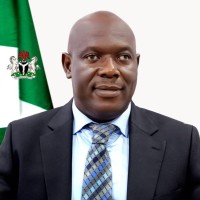
The Hydrocarbon Pollution Remediation Project (HYPREP) has commemorated the 15th anniversary of the release of the United Nations Environment Programme (UNEP) Environmental Assessment Report on Ogoniland, reaffirming its commitment to restoring the environment and improving the livelihoods of affected communities.
In a statement signed by the Project Coordinator, Prof Nenibarini Zabbey, to commemorate the anniversary, HYPREP described the anniversary as a significant milestone in Nigeria’s environmental restoration efforts, noting that the project has made remarkable progress in implementing the recommendations of the landmark UNEP report released on August 4, 2011.
The UNEP report had revealed extensive oil pollution across Ogoniland, severe environmental degradation, and serious public health risks resulting from decades of petroleum operations. It also recommended an initial $1 billion fund to commence the cleanup of the affected communities.
According to HYPREP, the Federal Government formally launched the Ogoni clean-up in 2016, while the Project Coordination Office was established in 2017 to drive the implementation of UNEP’s recommendations.
Zabbey said the current administration has continued to prioritise the project under the Renewed Hope Agenda.
Providing an update on the cleanup, the Project Coordinator disclosed that 30 of the 65 contaminated sites identified by UNEP have been fully remediated, while work is ongoing at several medium- and high-risk locations. It also stated that more than 1.5 million mangrove seedlings have been planted as part of what it described as the world’s largest restoration of oil-degraded mangroves, with over 1,000 hectares of shoreline already rehabilitated.
Zabbey further revealed that 49 Ogoni communities have been connected to potable water schemes through multiple water projects and booster stations aimed at providing safe drinking water across the region.
In the health sector, he said the 100-bed Ogoni Specialist Hospital in Kpite and the 43-bed Cottage Hospital in Buan are nearing completion, adding that several existing health facilities have been upgraded with modern medical equipment, while five ambulances have been donated to improve emergency healthcare services. The Project Coordinator also disclosed that a three-year human health biomonitoring study is being conducted in collaboration with the World Health Organization’s International Agency for Research on Cancer (IARC).
On economic empowerment, Zabbey stated that the Project has created more than 8,000 direct jobs and trained thousands of Ogoni youths and women in various vocational and technical skills, including software development, cybersecurity, aviation, commercial diving, seafaring, mechatronics, and creative arts. The project also reported awarding scholarships to more than 1,000 students, providing grants to small businesses, and supporting persons living with special needs through skills acquisition programmes.
The statement further highlighted ongoing legacy projects, including the Ogoni Power Project and the Centre of Excellence for Environmental Restoration, which it said is about 96 per cent complete. HYPREP also welcomed the recent designation of the Ogoni Wetland as a Ramsar Site of International Importance and pledged to continue promoting biodiversity conservation and sustainable management of the ecosystem.
Marking the anniversary, Zabbey said the progress achieved over the past 15 years demonstrates the collective commitment of government, development partners, stakeholders, and local communities to restoring Ogoniland. He called for renewed collaboration to sustain the cleanup effort, promote environmental sustainability, and support the long-term development of the region. 3
-

 News2 days ago
RSG Targets Nine Million Residents in Mosquito Net Distribution Campaign
-

 Oil & Energy2 days ago
Aiyedatiwa Signs New Electricity Bill
-

 Maritime2 days ago
Marine Minister Commends President Tinubu On NPERA Bill Assent
-

 Oil & Energy2 days ago
NLNG Commissions Research And Innovation Centre In RSU
-

 News2 days ago
KenPoly Holds Eight Convocations, August 29
-

 News2 days ago
RMAFC Completes Revenue Sharing Review, Proposes New Pay
-

 News2 days ago
RSG Begins Another Phase of Projects Commissioning Today
-

 Maritime2 days ago
NAGAFF Petitions IGP Over Alleged Maritime Police Harassment