
Sports
Why FIFA Banned CAF President

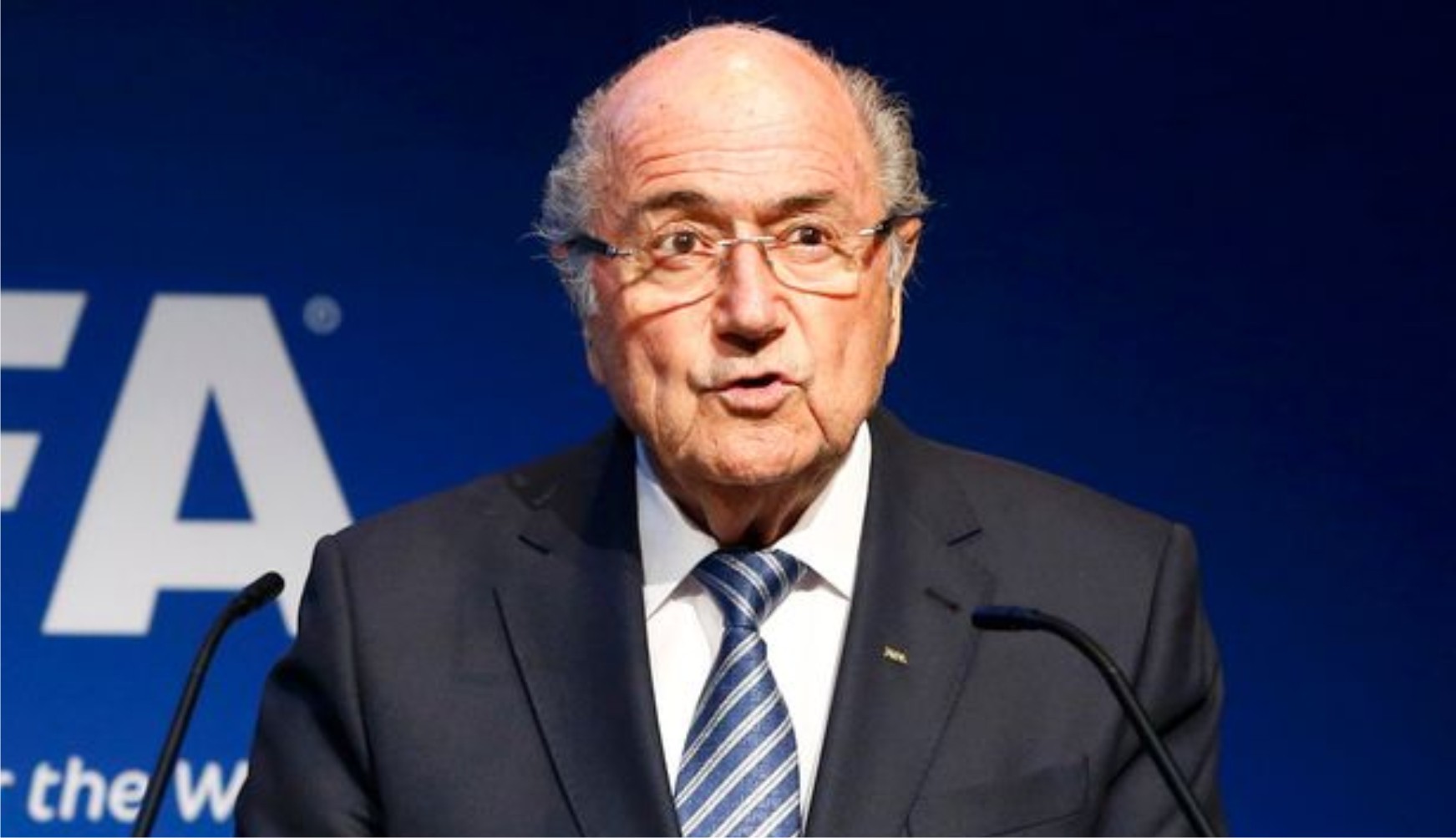
Last month, FIFA banned Confederation of African Football (CAF) President Ahmad, for five years after ruling that he had breached various codes of ethics. Reasons for the FIFA Vice-President’s sanction and why a second FIFA investigation is already under way have come to light.
Just minutes after being re-elected FIFA president for a second term in Paris in June 2019, Gianni Infantino made a triumphant declaration before the world’s assembled football leaders.
“Nobody talks about crisis at FIFA any more,” he said, referring to how FIFA’s corruption scan-dal had dominated when he took charge in 2016.
“Nobody talks about scandals or corruption. We talk about football [FIFA] is now synonymous with transparency and integrity.”
But even as he spoke, serious accusations had already surfaced against one of FIFA’s vice-presidents, albeit not in relation to his role with world football’s governing body.
That Vice-President was Ahmad, the head of African football’s ruling body CAF.
Only a day was needed for the comments to come back to haunt Infantino.
Twenty-four hours later, Ahmad was being questioned by anti-corruption authorities in the French capital “as part of a probe into corruption, breach of trust and forgery.”
The 60-year-old from Madagascar has always denied any wrongdoing.
But on 23 November, 20 months on from a complaint being raised by former CAF secretary general Amr Fahmy, the CAF president was banned and fined $220,000 by FIFA.
FIFA, which had worked alongside CAF in its Egyptian headquarters between August 2019 and February 2020 in a bid to improve governance , had adjudged Ahmad to have broken various codes of its ethics. These included abuse of position; misappropriation of funds; and offering gifts.
Ahmad has since said he will appeal to sport’s highest legal body, the Court of Arbitration for Sport, labelling FIFA’s decision “incomprehensible and shocking” and saying it had been made with “haste” , in order, he contended , to prevent him from being “re-elected to the presidency of CAF.”
Nonetheless, Ahmad had asked FIFA if it could wrap up his ethics case by 12 November, the deadline for presidential candidates to formally declare ahead of March’s elections, which the Malagasy had been hoping to contest.
Indeed, only six weeks ago, he had received the public backing of 46 of Africa’s 54 football associations.
As a result, this first investigation was narrowed down in a bid to meet the deadline – even if it fell short by nearly two weeks, after Ahmad’s bout of corona-virus delayed matters.
For FIFA’s ethics chamber has made the rare step of splitting its investigation into Ahmad into two parts.
The second of these probes, focusing on an amendment made last year to the billion-dollar media and marketing TV deal CAF made with French company Lagardere in 2015, is already under way.
Explaining last month’s sanctions, FIFA said its investigation into Ahmad “concerned various CAF-related governance issues, including the organisation and financing of an Umrah pilgrimage to Mecca, his involvement in CAF’s dealings with Tactical Steel, and other activities.”
Few further details were given. But following its own investigation, Tidesports source can explain some of the reasons and circumstances that brought down a sitting CAF president for the first time.
These include unexplained payments, questions surrounding potential kick-back arrangements and possible tax evasion, as well as a religious trip that resulted in an unholy mess.
Between 2017 and 2019, FIFA ruled that there were unaccounted payments from CAF to Ahmad’s private bank account. These came to a total of around $230,000.
During the course of two audits conducted by PriceWaterhouse Coopers (PwC) in late 2019 and early 2020 on behalf of FIFA, neither Ahmad, nor CAF itself, could account for the nature of the payments, a source who has seen the FIFA ethics report explained.
Neither Ahmad nor CAF made any comment when contacted by our source.
The payments are not believed to be related to his salary of $40,000 per month, nor the $80,000 he received in bonuses every year.
A key tenet of Ahmad’s presidential campaign in 2017 was his stated desire for financial transparency, with his manifesto claiming that all contracts signed by CAF would be officially published.
“Nothing will be hidden or covered during my mandate,” Ahmad’s manifesto had proclaimed.
But this did not materialise, to the point where annual financial reports, which could be found on CAF’s website in the final years of the three-decade reign of Ahmad’s predecessor Issa Hayatou, have not been published online.
A further lack of financial transparency came during CAF’s dealings with a French company, called Tactical Steel, that specialises in manufacturing gym equipment but which became a key supplier to FIFA’s second largest confederation in late 2017.
In October 2018, a company called ES Pro Consulting Limited sent a bill to CAF for $738,670.
This was in relation to shipping costs involved in the distribution of 60,000 footballs to Africa.
A month later, in November 2018, CAF transferred its payment to a bank account nominated by ES Pro Consulting Limited.
There was, though, one fundamental issue. ES Pro Consulting Limited did not exist in 2018.
Records show that the company, based in the United Arab Emirates, was only incorporated nine months later, in July 2019. So how could a company that did not exist be sending invoices?
What was also of note was that a Dubai-based company was invoicing for a business deal agreed between CAF and Tactical Steel, a once-obscure gym manufacturer located in Toulon in southern France.
The deal related to an order made by Ahmad for the delivery of 60,000 footballs, with one thousand going to every one of Africa’s 54 member associations.
This order was never discussed by CAF’s decision-making Executive Committee (ExCo), BBC Sport Africa understands, nor was it cheap, amounting to $2.5 million in total, of which $1.77m was for the footballs with the rest for shipping.
This deal was mentioned as early as 9 February 2018 in an email from CAF’s then deputy general secretary, who said the order was ‘on the instruction of the president’, to Tactical Steel owner Romuald Seillier.
Seillier is an old friend of Ahmad’s former attaché Loic Gerand, who has twice been declared bankrupt in France where he is currently serving a 15-year ban from running a company.
The pair, both of whom have had offices on the same road in Toulon – served for five years together in the French army, BBC Sport Africa understands.
In March 2018, a month after CAF’s email discussing the balls deal, Seillier set up ES Pro Consulting in his home town of Toulon, along with a former rugby player called Laurent Emmanuelli.
Over a year later, the pair also established ES Pro Consulting Limited (emphasis added) in a free zone, which offers tax concessions and customs duty benefits to expatriate investors, in Dubai.
When it came to making payment for the footballs, both ES Pro Consulting companies and Tactical Steel all received money, a significant chunk of which was sent back to CAF with different instructions.
Even though Tactical Steel had been paid half the costs for the balls ($885,060) and shipping ($369,335) in May 2018, invoices for the full order ($2.5 million) came, on the same day in October 2018, from ES Pro Consulting (France) for the balls and ES Pro Consulting Limited (Dubai) for the shipping.
“Why issue the balls invoice and the shipping invoice from different entities?” CAF’s then finance director Mohamed El Sherei asked FIFA as he also sent them a dossier of evidence prior to Infantino’s speech. “Why transfer the money to two different bank accounts for one same operation?”
Days after receiving the invoices, CAF transferred its outstanding dues, totalling $1.25 million, to Tactical Steel themselves but this money was returned in November, stating “this account is not the destined account” and asking for the funds to be sent to banks nominated by both ES Pro Consulting’s instead.
In early November, $1.25m was paid to ES Pro Consulting Limited in Dubai who then returned the funds relating to the footballs ($885,060) a month later. In late December, CAF then transferred $889,412 to ES Pro Consulting in France, so ending a confusing merry-go-round of transactions.
By the time it had all shaken out, both ES Pro Consulting companies and Tactical Steel had received in excess of $4.6 million for the balls deal – $2.1 million of which had been sent back to CAF with different instructions as to where the money should be sent.
“The refunds from Tactical Steel and ES Pro Consulting … are highly suspicious which could potentially indicate a kick-back arrangement between parties involved or a case of tax evasion through off-shore payments,” PwC said in their audit dated November 2019.
Edwards is a football analyst.
Caf’s dealings with Tactical Steel raised other questions.
These originated after Fahmy informed Fifa of Caf’s decision, taken in December 2017, to cancel an order with sportswear company Puma worth just under $250,000 – which came with a 60% discount – to take up a slightly larger one with Tactical Steel.
The order may have increased from 22,000 items to 35,000, with a demand for Caf branding also added, but the bill of $1,015,313 was disproportionately higher – over four times as big – and excluded shipping (unlike Puma’s).
The costs related to shipping and packaging added at least $225,000 to the Tactical Steel deal, on top of the original equipment quote of just over $1m.
To put this into context, Caf’s previous sportswear equipment deal – which had expired a few months before Ahmad was elected president in March 2017, had seen the African body receive, rather than spend, money, with Adidas agreeing a deal from 2008-2016 that paid Caf at least $13m.
In December 2017, a series of Caf emails indicated that Ahmad was across both the Puma cancellation and the Tactical Steel order as Caf tried to secure kit for the next month’s African Nations Championship (Chan) in Morocco.
§ 18 December: Caf’s then deputy general secretary notifies secretary general Fahmy of the Puma order’s cancellation – upon ‘the president’s request’.
§ 19 December: Caf’s then financial director thanks Seillier, copying in Ahmad’s private email, for Tactical Steel’s quote – “which has been approved by the President of Caf.”
Nonetheless, Ahmad told the media last year that any accusations of his involvement in cancelling the Puma deal and approving the Tactical Steel one were ‘totally false, malicious and defamatory’ – blaming the allegations on a vendetta on the part of Fahmy, who died of cancer earlier this year.
Between December 2017 and January 2019, Caf made net payments totalling some $4.4m to Tactical Steel, with deals having also been arranged for the 2018 Beach Soccer tournament and the 2018 Women’s Africa Cup of Nations.
The investigation by French anti-corruption authorities, whose assistance Fifa has sought in the past, into the matter is ongoing.
Umrah trip
In February 2018, the Union of Arab Football Associations (UAFA) invited Ahmad and Africa’s FA presidents to undertake a pilgrimage to Mecca called the Umrah – which can take place at any time of the year (unlike the Hajj).
Despite the invitation by the UAFA, internal Caf emails state that the trip to Saudi Arabia was a “personalised invitation” by Ahmad himself to the Muslim presidents of Africa’s football associations.
After 15 such presidents joined Ahmad, his attaché Gerand and another presidential advisor on the May 2018 trip, the question remained at Caf as to who was to settle the bill of just over $100,000.
When then finance director El Sherei asked Caf’s compliance director in July, in an email entitled “Omra Trip expenses”, who would pay for accommodation and travel relating to the trip, the response was not what he expected.
In his own reply, the compliance director , Abdoulah Moustapha , retitled the email, crossing out Omra Trip expenses and replacing it with “Mission: Meeting request at Caf HQ in Cairo”.
He then wrote that Caf would “take charge of accommodations and travel” to and from Cairo from the presidents’ respective home nations while the person who gave the order – i.e. Ahmad, would cover the Egypt-Saudi Arabia return legs owing to the “private” nature of the trip.
“This is not a matter of compliance but purely of payment,” Mustapha added.
“What is the role of compliance?” El Sherei told our source. “It’s to make regulation and supervise working and implementing regulations, not giving approval of payment to a finance director or general secretary or similar.
“On the next visit of the Caf President, he was furious with me. How could I ask this question (regarding payment for the trip)?”
Mustapha said he was unable to give any comment to our source at this time given Ahmad’s appeal to the Court of Arbitration for Sport.
In the end, Caf paid just over $90,000 for a trip that cost $101,314, with Ahmad himself contributing the remaining $10,000, but no more.
As the trip was religious in nature and not football-related, Fifa deemed it a misuse of funds as well as an offering of gifts.
In July 2019, a few weeks after joining Fahmy in making allegations of corruption within Caf to Fifa, El Sherei, who had worked for Caf since 1999, was dismissed by the organization, just as Fahmy himself had been, less than a fortnight after his email to Fifa’s ethics chamber.
As stated, Ahmad is appealing his ban.
He faces a race against time and several legal hurdles if he is to stand for re-election next March, but the possibility remains that he could face another sanction if Fifa’s second investigation finds against him.
It is unclear whether the fact that Ahmad received two sets of expenses, as he claimed to be in two different countries (Russia and Egypt) for the same nine-day period during the 2018 World Cup, forms part of this second investigation.
What is known is that the former Madagascar FA president is also being investigated about his role in a decision by Caf to amend a billion-dollar TV contract, signed in 2015, early last year.
Fifa is keen to understand why Caf apparently agreed to buy around $20m of debt owed by a Beninois sports agency called LC2 GROUP to Lagardere Sports, the French company that had been handling Caf’s marketing and media sales until the contract was abruptly cancelled last year.
Under an amendment, signed in early 2019, to the original 2015 deal between Lagardere and Caf, the latter agreed to pay Lagardere $6.7m for the debt, all of which relates to outstanding TV rights payments, owed by LC2 GROUP.
This latest Fifa investigation is not only probing Ahmad’s part in the LC2 GROUP decision but also that of the Malagasy’s stand-in as president, DR Congo’s Constant Omari, Caf’s first vice-president who headed up the delegation dealing with Lagardere.
Neither Ahmad, Omari, Caf nor Lagardere responded to questions when contacted by our source.
Given Fifa’s second investigation, the turmoil shows no signs of abating for Caf whose winner of March’s presidential elections will face a mountainous task in terms of restoring both trust and credibility in the organisation.
.Morgan writes for BBC Sport
banned Confederation of African Football (Caf) president Ahmad for five years after ruling that he had breached various codes of ethics. Reasons for the Fifa vice-president’s sanction and why a second Fifa investigation is already under way have come to light.
Just minutes after being re-elected Fifa president for a second term in Paris in June 2019, Gianni Infantino made a triumphant declaration before the world’s assembled football leaders.
“Nobody talks about crisis at Fifa any more,” he said, referring to how Fifa’s corruption scandal had dominated when he took charge in 2016.
“Nobody talks about scandals or corruption. We talk about football… [Fifa] is now synonymous with transparency and integrity.”
But even as he spoke, serious accusations had already surfaced against one of Fifa’s vice-presidents, albeit not in relation to his role with world football’s governing body.
That vice-president was Ahmad, the head of African football’s ruling body Caf.
Only a day was needed for the comments to come back to haunt Infantino.
Twenty-four hours later, Ahmad was being questioned by anti-corruption authorities in the French capital “as part of a probe into corruption, breach of trust and forgery.”
The 60-year-old from Madagascar has always denied any wrongdoing.
But on 23 November, 20 months on from a complaint being raised by former Caf secretary general Amr Fahmy, the Caf president was banned and fined $220,000 by Fifa.
Fifa – which had worked alongside Caf in its Egyptian headquarters between August 2019 and February 2020 in a bid to improve governance , had adjudged Ahmad to have broken various codes of its ethics. These included abuse of position; misappropriation of funds; and offering gifts.
Ahmad has since said he will appeal to sport’s highest legal body, the Court of Arbitration for Sport, labelling Fifa’s decision “incomprehensible and shocking” and saying it had been made with “haste” , in order, he contended , to prevent him from being “re-elected to the presidency of Caf.”
Nonetheless, Ahmad had asked Fifa if it could wrap up his ethics case by 12 November, the deadline for presidential candidates to formally declare ahead of March’s elections, which the Malagasy had been hoping to contest.
Indeed, only six weeks ago, he had received the public backing of 46 of Africa’s 54 football associations.
As a result, this first investigation was narrowed down in a bid to meet the deadline – even if it fell short by nearly two weeks, after Ahmad’s bout of coronavirus delayed matters.
For Fifa’s ethics chamber has made the rare step of splitting its investigation into Ahmad into two parts.
The second of these probes – focusing on an amendment made last year to the billion-dollar media and marketing TV deal Caf made with French company Lagardere in 2015, is already under way.
Explaining last month’s sanctions, Fifa said its investigation into Ahmad “concerned various Caf-related governance issues, including the organisation and financing of an Umrah pilgrimage to Mecca, his involvement in Caf’s dealings with Tactical Steel, and other activities.”
Few further details were given. But following its own investigation, Tidesports source can explain some of the reasons and circumstances that brought down a sitting Caf president for the first time.
These include unexplained payments, questions surrounding potential kick-back arrangements and possible tax evasion, as well as a religious trip that resulted in an unholy mess.
Between 2017 and 2019, Fifa ruled that there were unaccounted payments from Caf to Ahmad’s private bank account. These came to a total of around $230,000.
During the course of two audits conducted by PriceWaterhouse Coopers (PwC) in late 2019 and early 2020 on behalf of Fifa, neither Ahmad, nor Caf itself, could account for the nature of the payments, a source who has seen the Fifa ethics report explained.
Neither Ahmad nor Caf made any comment when contacted by our source.
The payments are not believed to be related to his salary of $40,000 per month, nor the $80,000 he received in bonuses every year.
A key tenet of Ahmad’s presidential campaign in 2017 was his stated desire for financial transparency, with his manifesto claiming that all contracts signed by Caf would be officially published.
“Nothing will be hidden or covered during my mandate,” Ahmad’s manifesto had proclaimed.
But this did not materialize, to the point where annual financial reports, which could be found on Caf’s website in the final years of the three-decade reign of Ahmad’s predecessor Issa Hayatou, have not been published online.
A further lack of financial transparency came during Caf’s dealings with a French company, called Tactical Steel, that specialises in manufacturing gym equipment but which became a key supplier to Fifa’s second largest confederation in late 2017.
In October 2018, a company called ES Pro Consulting Limited sent a bill to Caf for $738,670.
This was in relation to shipping costs involved in the distribution of 60,000 footballs to Africa.
A month later, in November 2018, Caf transferred its payment to a bank account nominated by ES Pro Consulting Limited.
There was, though, one fundamental issue. ES Pro Consulting Limited did not exist in 2018.
Records show that the company, based in the United Arab Emirates, was only incorporated nine months later, in July 2019. So how could a company that did not exist be sending invoices?
What was also of note was that a Dubai-based company was invoicing for a business deal agreed between Caf and Tactical Steel, a once-obscure gym manufacturer located in Toulon in southern France.
The deal related to an order made by Ahmad for the delivery of 60,000 footballs, with one thousand going to every one of Africa’s 54 member associations.
This order was never discussed by Caf’s decision-making Executive Committee (ExCo), BBC Sport Africa understands, nor was it cheap – amounting to $2.5m in total, of which $1.77m was for the footballs with the rest for shipping.
This deal was mentioned as early as 9 February 2018 in an email from Caf’s then deputy general secretary, who said the order was ‘on the instruction of the president’, to Tactical Steel owner Romuald Seillier.
Seillier is an old friend of Ahmad’s former attaché Loic Gerand, who has twice been declared bankrupt in France where he is currently serving a 15-year ban from running a company.
The pair – both of whom have had offices on the same road in Toulon – served for five years together in the French army, BBC Sport Africa understands.
In March 2018, a month after Caf’s email discussing the balls deal, Seillier set up ES Pro Consulting in his home town of Toulon, along with a former rugby player called Laurent Emmanuelli.
Over a year later, the pair also established ES Pro Consulting Limited (emphasis added) in a free zone, which offers tax concessions and customs duty benefits to expatriate investors, in Dubai.
When it came to making payment for the footballs, both ES Pro Consulting companies and Tactical Steel all received money, a significant chunk of which was sent back to Caf with different instructions.
Even though Tactical Steel had been paid half the costs for the balls ($885,060) and shipping ($369,335) in May 2018, invoices for the full order ($2.5m) came – on the same day in October 2018 – from ES Pro Consulting (France) for the balls and ES Pro Consulting Limited (Dubai) for the shipping.
“Why issue the balls invoice and the shipping invoice from different entities?” Caf’s then finance director Mohamed El Sherei asked Fifa as he also sent them a dossier of evidence prior to Infantino’s speech. “Why transfer the money to two different bank accounts for one same operation?”
Days after receiving the invoices, Caf transferred its outstanding dues, totalling $1.25m – to Tactical Steel themselves but this money was returned in November, stating “this account is not the destined account” and asking for the funds to be sent to banks nominated by both ES Pro Consulting’s instead.
In early November, $1.25m was paid to ES Pro Consulting Limited in Dubai who then returned the funds relating to the footballs ($885,060) a month later. In late December, Caf then transferred $889,412 to ES Pro Consulting in France, so ending a confusing merry-go-round of transactions.
By the time it had all shaken out, both ES Pro Consulting companies and Tactical Steel had received in excess of $4.6m for the balls deal – $2.1m of which had been sent back to Caf with different instructions as to where the money should be sent.
“The refunds from Tactical Steel and ES Pro Consulting … are highly suspicious which could potentially indicate a kick-back arrangement between parties involved or a case of tax evasion through off-shore payments,” PwC said in their audit dated November 2019.
Caf’s dealings with Tactical Steel raised other questions.
These originated after Fahmy informed Fifa of Caf’s decision, taken in December 2017, to cancel an order with sportswear company Puma worth just under $250,000 – which came with a 60% discount – to take up a slightly larger one with Tactical Steel.
The order may have increased from 22,000 items to 35,000, with a demand for Caf branding also added, but the bill of $1,015,313 was disproportionately higher – over four times as big – and excluded shipping (unlike Puma’s).
The costs related to shipping and packaging added at least $225,000 to the Tactical Steel deal, on top of the original equipment quote of just over $1m.
To put this into context, Caf’s previous sportswear equipment deal – which had expired a few months before Ahmad was elected president in March 2017, had seen the African body receive, rather than spend, money, with Adidas agreeing a deal from 2008-2016 that paid Caf at least $13m.
In December 2017, a series of Caf emails indicated that Ahmad was across both the Puma cancellation and the Tactical Steel order as Caf tried to secure kit for the next month’s African Nations Championship (Chan) in Morocco.
§ 18 December: Caf’s then deputy general secretary notifies secretary general Fahmy of the Puma order’s cancellation – upon ‘the president’s request’.
§ 19 December: Caf’s then financial director thanks Seillier, copying in Ahmad’s private email, for Tactical Steel’s quote – “which has been approved by the President of Caf.”
Nonetheless, Ahmad told the media last year that any accusations of his involvement in cancelling the Puma deal and approving the Tactical Steel one were ‘totally false, malicious and defamatory’ – blaming the allegations on a vendetta on the part of Fahmy, who died of cancer earlier this year.
Between December 2017 and January 2019, Caf made net payments totalling some $4.4m to Tactical Steel, with deals having also been arranged for the 2018 Beach Soccer tournament and the 2018 Women’s Africa Cup of Nations.
The investigation by French anti-corruption authorities, whose assistance Fifa has sought in the past, into the matter is ongoing.
Umrah trip
In February 2018, the Union of Arab Football Associations (UAFA) invited Ahmad and Africa’s FA presidents to undertake a pilgrimage to Mecca called the Umrah – which can take place at any time of the year (unlike the Hajj).
Despite the invitation by the UAFA, internal Caf emails state that the trip to Saudi Arabia was a “personalised invitation” by Ahmad himself to the Muslim presidents of Africa’s football associations.
After 15 such presidents joined Ahmad, his attaché Gerand and another presidential advisor on the May 2018 trip, the question remained at Caf as to who was to settle the bill of just over $100,000.
When then finance director El Sherei asked Caf’s compliance director in July, in an email entitled “Omra Trip expenses”, who would pay for accommodation and travel relating to the trip, the response was not what he expected.
In his own reply, the compliance director , Abdoulah Moustapha , retitled the email, crossing out Omra Trip expenses and replacing it with “Mission: Meeting request at Caf HQ in Cairo”.
He then wrote that Caf would “take charge of accommodations and travel” to and from Cairo from the presidents’ respective home nations while the person who gave the order – i.e. Ahmad, would cover the Egypt-Saudi Arabia return legs owing to the “private” nature of the trip.
“This is not a matter of compliance but purely of payment,” Mustapha added.
“What is the role of compliance?” El Sherei told our source. “It’s to make regulation and supervise working and implementing regulations, not giving approval of payment to a finance director or general secretary or similar.
“On the next visit of the Caf President, he was furious with me. How could I ask this question (regarding payment for the trip)?”
Mustapha said he was unable to give any comment to our source at this time given Ahmad’s appeal to the Court of Arbitration for Sport.
In the end, Caf paid just over $90,000 for a trip that cost $101,314, with Ahmad himself contributing the remaining $10,000, but no more.
As the trip was religious in nature and not football-related, Fifa deemed it a misuse of funds as well as an offering of gifts.
In July 2019, a few weeks after joining Fahmy in making allegations of corruption within Caf to Fifa, El Sherei, who had worked for Caf since 1999, was dismissed by the organization, just as Fahmy himself had been, less than a fortnight after his email to Fifa’s ethics chamber.
As stated, Ahmad is appealing his ban.
He faces a race against time and several legal hurdles if he is to stand for re-election next March, but the possibility remains that he could face another sanction if Fifa’s second investigation finds against him.
It is unclear whether the fact that Ahmad received two sets of expenses, as he claimed to be in two different countries (Russia and Egypt) for the same nine-day period during the 2018 World Cup, forms part of this second investigation.
What is known is that the former Madagascar FA president is also being investigated about his role in a decision by Caf to amend a billion-dollar TV contract, signed in 2015, early last year.
Fifa is keen to understand why Caf apparently agreed to buy around $20m of debt owed by a Beninois sports agency called LC2 GROUP to Lagardere Sports, the French company that had been handling Caf’s marketing and media sales until the contract was abruptly cancelled last year.
Under an amendment, signed in early 2019, to the original 2015 deal between Lagardere and Caf, the latter agreed to pay Lagardere $6.7m for the debt, all of which relates to outstanding TV rights payments, owed by LC2 GROUP.
This latest Fifa investigation is not only probing Ahmad’s part in the LC2 GROUP decision but also that of the Malagasy’s stand-in as president, DR Congo’s Constant Omari, Caf’s first vice-president who headed up the delegation dealing with Lagardere.
Neither Ahmad, Omari, Caf nor Lagardere responded to questions when contacted by our source.
Given Fifa’s second investigation, the turmoil shows no signs of abating for Caf whose winner of March’s presidential elections will face a mountainous task in terms of restoring both trust and credibility in the organisation.
.Morgan writes for BBC Sport
By: Piers Edwards



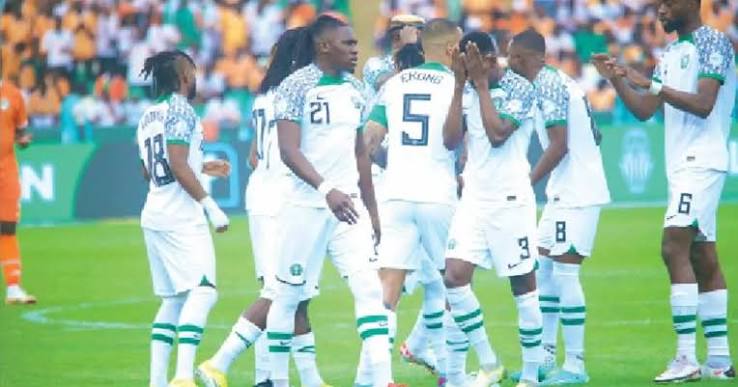
Nigerian football fans and former internationals may have finally joined the call on President Bola Ahmed Tinubu to save Nigerian football from the grip of the Nigeria Football Federation (NFF), demanding a complete overhaul and the resignation of the board following a series of national-team heartbreaks, including the Super Eagles’ failure to qualify for the 2026 FIFA World Cup, their second consecutive absence and the Super Falcons’ recent loss of an automatic qualification spot for the 2027 FIFA Women’s World Cup in Brazil.
Until now, football legend Segun Odegbami has been a lone voice in the vanguard of those calling on the Ibrahim Gusau-led NFF board to step aside. However, many ex-internationals, angered that the national embarrassment has now spilled over to the women’s team, have joined the call to “save our football.”
“We are demanding a total systemic clear-out and consequences at every tier of Nigerian football,” one of the former players said yesterday, pleading to remain anonymous to avoid “arrows” from what he described as desperate officials holding Nigerian football by the jugular.
Ahead of the September 27, 2026 elective congress of the NFF, scheduled to hold in Lafia, Nasarawa State, Chairman of the Advocacy for Nigeria Football Reforms Initiative, Prince Harrison Jalla, has also painted a gloomy picture of the future of Nigerian football.
Jalla’s position is in tandem with that of some aspirants who are also crying blue murder, alleging that the electoral procedure is skewed in favour of incumbent NFF President Ibrahim Musa Gusau to secure a smooth passage to a second term unopposed.
Jalla insisted that “all indicators are pointing to a gloomy picture for the future of Nigerian football, mainly due to administrative ineptitude, while the gladiators remain engrossed and fixated on the election.”
“The major crux of the election is the guidelines, which make it very difficult for other candidates to secure endorsements from across the six geopolitical zones to challenge Gusau.
“The NFF elective congress creates a skewed voting structure because [certain blocs] hold an overwhelming majority of the voting power, which critics argue marginalises key football stakeholders such as club owners, players, coaches, referees and sports writers.
“Out of the total delegates and voting structure, the 37 State FA chairmen form the primary voting bloc, making it difficult for independent candidates to win.
“This is so because of the marriage between the FA chairmen and the NFF. Most FA chairmen depend solely on the Federation for favours. Over time, during national and international engagements, the NFF uses such opportunities to reward the FA chairmen with trips and estacodes.
“They have been so compromised that no Jupiter would make them see reasons for a change. The system, therefore, heavily favours the incumbent leadership seeking re-election. That explains why they were in a hurry to pass a vote of confidence in the NFF leadership even when Nigerian football became topsy-turvy.
“As desperation has beclouded their reasoning, they have forgotten how low they have dragged Nigerian football.”
A cursory look at the catalogue of failures by Nigeria’s national teams will reveal this;
Super Eagles (Senior Men): Failed to qualify for the 2026 FIFA World Cup. Their campaign ended in agonising fashion in November 2025 during the CAF playoff final, when they lost 4–3 on penalties to DR Congo. This marked the second consecutive World Cup missed by the senior national team. Earlier, in January 2026, they were also eliminated from the 2025 AFCON via a penalty shootout.
Super Falcons (Senior Women): Suffered an early continental exit by losing 1–0 to Cameroon in the 2026 WAFCON quarter-finals. The defeat stripped them of an automatic ticket to the 2027 FIFA Women’s World Cup in Brazil, forcing them into an inter-confederation playoff route. Worse still, Banyana Banyana of South Africa stopped the Super Falcons with a 2-1 defeat in Morocco, marking Nigeria’s worst outing in the history of WAFCON.
Golden Eaglets (Men’s U-17): Failed to qualify for the U-17 AFCON and subsequently missed out on three consecutive FIFA U-17 World Cups — 2023, 2025 and 2026.
Flying Eagles (Men’s U-20): Missed both the 2026 U-20 AFCON and the FIFA U-20 World Cup.
Olympic Team (Men’s U-23): Failed to qualify for the 2023 U-23 AFCON, which directly resulted in their failure to qualify for the 2024 Paris Olympic Games.
An official NFF apology to the government and Nigerians was met with backlash, with fans dismissing it as “too little, too late” and “one apology too many”, while demanding actual resignations.
The current frustration among fans stems from what they regard as an unprecedented catalogue of systemic failures across all tiers of Nigeria’s national teams.
Segun Odegbami said the failures had become one too many.
“If you fail to take your team to the World Cup, you find out that more often than not, they vote you out or sack you.
“That’s the measure. If you have a coach who doesn’t do well, they sack him. If you have a player who is doing badly, you remove him.”
“These guys have not succeeded. They’re our friends; that’s the painful thing. We know ourselves. We are all in the business and, when we champion the fact that they should go, they make you an enemy.
“It’s not a personalised thing. They have failed and, if we go back to that route, we are going to fail as we have failed before,” he said.
The financial damage from missing recent major tournaments is equally devastating, with total losses estimated at between ?150 billion and ?300 billion in direct payouts and broader economic partnerships.
This continuous string of qualification failures has effectively choked off the federation’s primary revenue pipelines and left its local development initiatives starved of funds.
The economic wreckage breaks down across several critical areas. By failing to reach the expanded World Cup, the NFF forfeited a guaranteed baseline participation fee of $10.5 million, reportedly worth roughly ?15.5 billion.
This single tournament loss wiped out an amount equivalent to roughly 87 per cent of the NFF’s projected annual operational budget. Had the Super Eagles advanced beyond the group stage, the rewards would have risen above $12 million, while reaching the quarter-finals could have yielded up to $20 million in performance-related payments.
Early exits by the Super Falcons and the qualification failures of the youth teams, U-17, U-20 and U-23, mean the NFF has also missed out on vital developmental subsidies and travel grants normally provided by continental governing bodies.
Corporate organisations and major sports betting companies are scaling back their sponsorship valuations. Without global television exposure, the NFF cannot command premium rates for brand placement.
The federation also misses out on potential revenue from global jersey sales, training gear and licensed supporter memorabilia that normally spike around major tournaments.
By missing out on tournament participation, Nigeria also loses leverage to draw heavily from FIFA’s financial programmes aimed at upgrading domestic training academies and pitches.
Consecutive missed World Cups have further lowered the market value of the national team brand, making future broadcast and marketing rights significantly harder to sell at a premium.
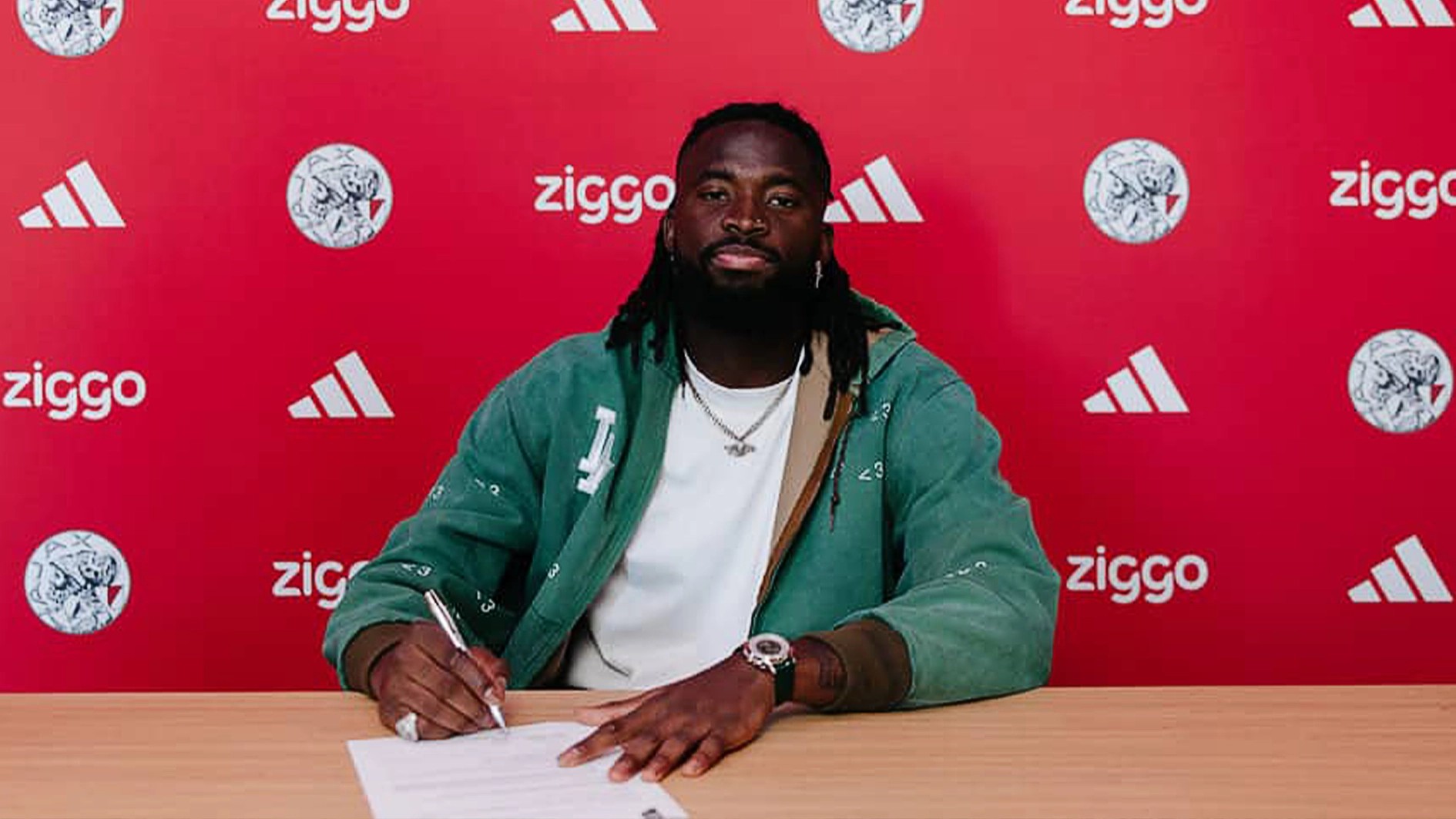
Former Ajax midfielder Hedwiges Maduro has praised Nigerian striker Tolu Arokodare, highlighting the forward’s strength and power and suggesting that he could prove valuable to Ajax in the Eredivisie.
Arokodare joined Ajax from Wolverhampton Wanderers on a season-long loan in July, with the Dutch club holding an option to make the move permanent.
He has already made an impact for his new side, providing an assist in Ajax’s 2-0 victory over PEC Zwolle in their opening Eredivisie fixture.
Maduro discussed Arokodare’s qualities during an appearance on ESPN’s Voetbalpraat, where he assessed how the Nigerian could complement Ajax’s attacking options.
He sees Arokodare as offering a different profile to Marcos Leonardo, particularly against opponents who defend deep and limit the space available for attacking runs.
Speaking about the Nigerian striker, Maduro highlighted his physical qualities and explained why he believes they could make him a valuable option for Ajax in the Dutch top flight.
“I think Tolu has something special, in terms of strength and power. I think he can be of real value in the Eredivisie,” Maduro said, as quoted by Ajax Showtime.
According to Maduro, the tactical demands of certain matches could make Arokodare’s physical presence an important option for Ajax, especially when opponents retreat towards their own penalty area.
He contrasted the situation with Leonardo, who he believes benefits from having space to make attacking runs. Maduro explained that when teams defend deep, those spaces become more difficult to find.
“Leonardo needs space. If teams drop back completely, where are you going to make those runs?
Then you get more use out of Tolu as a focal point to drop the ball,” he added.
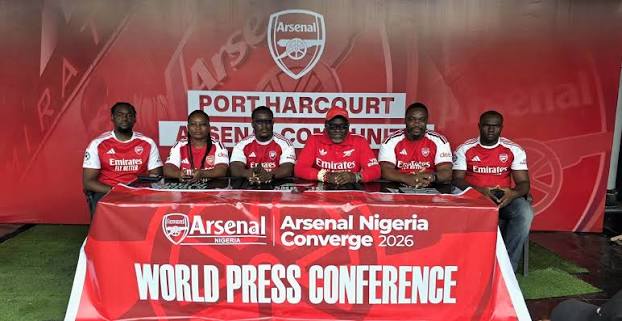
The Chairman of the Local Organizing Committee, LOC, of the Arsenal Nigeria Converge 2026, Ugochukwu Oputa, has said that over 25 states across Nigeria were involved in the second edition of the Arsenal Converge scheduled for Port Harcourt from August 14 to 16, 2026.
Oputa disclosed this on Sunday after the Converge meeting at the Ediz Wine Bar in Port Harcourt, Rivers State.
According to him, Arsenal’s popularity cuts across the nation, and the Converge is organized to provide a period for supporters to network, interact, and harmonize.
“Knowing how Arsenal’s popularity is spread across the nation, it became necessary that all the different supporters of Arsenal club across the country harmonize and create a particular period where we can meet, network and interact,” Oputa said.
He outlined the five-day schedule of activities to include
Press conference,
Environmental sanitation and community service at Mile 1 Market, Diobu, involving both visitors and residents, arrival, welcome and cocktail party. Others included Games Day, football competition and other fun activities at the Rivers State University football pitch, Community Shield watch party yesterday, where all Arsenal supporters’ groups met, interacted, and discussed the future of Arsenal, including plans for the 2027 hosting rights of the Converge.
Oputa added that this year’s Converge which was in Port Harcourt, had over 3,000 fans registered.
“Port Harcourt Arsenal Community is a recognized supporters’ club of Arsenal in London and we have over 25 states that participated in the Arsenal Nigeria Converge 2026,” he said.
Also speaking, a member of the Nigeria Arsenal Supporters Working Committee, Nsikak Ntia, said that what distinguishes Arsenal supporters is their offline community impact.
“What we are doing here in Port Harcourt is beyond football. It’s a family that is growing. We had over 3,000 to 4,000 people on Saturday at the Rivers State University that shared the confidence that Arsenal represents,” Ntia said.
He noted that the club’s motto, ‘Victoria Concordia Crescit’ – ‘Victory Through Harmony’ – is the bedrock of the group.
“The work that we do at Mile 1 Market is to help with environmental protection and increase what we do in society.
“We also have future plans to promote environmental protection and better ways to handle waste.
“These are things that are germane for our future, the future of our young people and generations unborn.
” It goes beyond football, it goes beyond banter, it goes beyond yapping at each other.
“That is what Arsenal Football Club is all about. Arsenal has the most well-organized supporters’ club in Nigeria and Africa’ he sated.
-

 News2 days ago
RSG Targets Nine Million Residents in Mosquito Net Distribution Campaign
-

 Oil & Energy1 day ago
Aiyedatiwa Signs New Electricity Bill
-

 Oil & Energy1 day ago
NLNG Commissions Research And Innovation Centre In RSU
-

 Maritime1 day ago
Marine Minister Commends President Tinubu On NPERA Bill Assent
-

 News2 days ago
KenPoly Holds Eight Convocations, August 29
-

 News2 days ago
RSG Begins Another Phase of Projects Commissioning Today
-

 News2 days ago
RMAFC Completes Revenue Sharing Review, Proposes New Pay
-

 Maritime1 day ago
NAGAFF Petitions IGP Over Alleged Maritime Police Harassment