
Nation
Presidency Says Military Rescued Kankara Schoolboys

The Senior Special Assistant to the President on Media and Publicity, Garba Shehu, yesterday, confirmed the involvement of men of the Nigerian Army in the rescue of the students abducted from their school in Kankara, Katsina State.
Shehu made the confirmation in an opinion article titled “Five takeaways from the safe return of 344 Kankara schoolboys.”
The defence headquarters had earlier said the troops’ Operation Hadarin Daji successfully rescued the abducted students.
That position was contrary to the statement of the Katsina State Governor, Bello Masari, who said the Miyetti Allah Cattle Breeders Association played a major role in the release of the schoolboys.
But Shehu confirmed the involvement of the military in the rescue mission.
He said under enormous pressure from local and international sources, those charged with coordinating the boys’ safe return stayed focused and they eventually got the job done.
He said, “Our security forces often do not get the accolades they deserve. Once more, the Nigerian military has delivered on the big stage. They had a plan, kept to it, and got the job done without firing a single shot.
“This is important because one casualty, one dead schoolboy, could have traumatised President Buhari and the parents. One dead student would have tainted the rescue mission. The President wanted the boys back alive and delivered to their parents. As a compassionate father figure, he would have been pained if one life had been lost in the rescue process.
“Bravo to the Nigerian military and our security agencies for a well-coordinated and professionally executed mission to the President’s order reuniting the boys with their parents.
“There are not enough words to thank our gallant men and women in uniform, the military that continues to make sacrifices for many of us to enjoy and express our freedoms in its various forms and shapes. Millions of appreciative citizens applaud the success of the Army in bringing back the Kankara Schoolboys. Well done, boys!”
Shehu added that terrorists have lost the lead narrative with the military and other security personnel’s performance in rescuing the boys without any incident.
He said with the momentum now with security forces, the nation should expect a new push against violent forces and their sponsors.
The presidential aide knocked those, whom he said, opted to profiteer from other people’s misfortune.
He added, “The lack of patriotism shown by few unnecessary elements in a moment of national distress was crass, shameful and despicable. If they are not directly affected by a tragedy or no immediate family member involved, it is fair game for them and time to gloat or even make a few fast bucks.
“Indeed, emergency activists thought they could cash in on these schoolboys and their parents’ misfortune devoid of their conscience. While patriotic Nigerians prayed for the boys’ quick return, these merchants of fortune were renting crowds, creating certain suspicious hashtags, opening bank accounts for the sole aim of soliciting funds for a cause they thought would linger”, he said.
“What will they do now with the one million T-Shirts they have produced? This is hugely shameful. These scavengers should now be honourable enough to refund the monies they have so far collected for the now futile campaign to discredit their fatherland.”



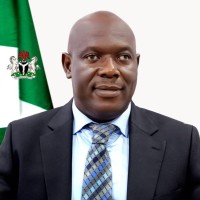
The Hydrocarbon Pollution Remediation Project (HYPREP) has commemorated the 15th anniversary of the release of the United Nations Environment Programme (UNEP) Environmental Assessment Report on Ogoniland, reaffirming its commitment to restoring the environment and improving the livelihoods of affected communities.
In a statement signed by the Project Coordinator, Prof Nenibarini Zabbey, to commemorate the anniversary, HYPREP described the anniversary as a significant milestone in Nigeria’s environmental restoration efforts, noting that the project has made remarkable progress in implementing the recommendations of the landmark UNEP report released on August 4, 2011.
The UNEP report had revealed extensive oil pollution across Ogoniland, severe environmental degradation, and serious public health risks resulting from decades of petroleum operations. It also recommended an initial $1 billion fund to commence the cleanup of the affected communities.
According to HYPREP, the Federal Government formally launched the Ogoni clean-up in 2016, while the Project Coordination Office was established in 2017 to drive the implementation of UNEP’s recommendations.
Zabbey said the current administration has continued to prioritise the project under the Renewed Hope Agenda.
Providing an update on the cleanup, the Project Coordinator disclosed that 30 of the 65 contaminated sites identified by UNEP have been fully remediated, while work is ongoing at several medium- and high-risk locations. It also stated that more than 1.5 million mangrove seedlings have been planted as part of what it described as the world’s largest restoration of oil-degraded mangroves, with over 1,000 hectares of shoreline already rehabilitated.
Zabbey further revealed that 49 Ogoni communities have been connected to potable water schemes through multiple water projects and booster stations aimed at providing safe drinking water across the region.
In the health sector, he said the 100-bed Ogoni Specialist Hospital in Kpite and the 43-bed Cottage Hospital in Buan are nearing completion, adding that several existing health facilities have been upgraded with modern medical equipment, while five ambulances have been donated to improve emergency healthcare services. The Project Coordinator also disclosed that a three-year human health biomonitoring study is being conducted in collaboration with the World Health Organization’s International Agency for Research on Cancer (IARC).
On economic empowerment, Zabbey stated that the Project has created more than 8,000 direct jobs and trained thousands of Ogoni youths and women in various vocational and technical skills, including software development, cybersecurity, aviation, commercial diving, seafaring, mechatronics, and creative arts. The project also reported awarding scholarships to more than 1,000 students, providing grants to small businesses, and supporting persons living with special needs through skills acquisition programmes.
The statement further highlighted ongoing legacy projects, including the Ogoni Power Project and the Centre of Excellence for Environmental Restoration, which it said is about 96 per cent complete. HYPREP also welcomed the recent designation of the Ogoni Wetland as a Ramsar Site of International Importance and pledged to continue promoting biodiversity conservation and sustainable management of the ecosystem.
Marking the anniversary, Zabbey said the progress achieved over the past 15 years demonstrates the collective commitment of government, development partners, stakeholders, and local communities to restoring Ogoniland. He called for renewed collaboration to sustain the cleanup effort, promote environmental sustainability, and support the long-term development of the region. 3
-

 News2 days ago
RSG Targets Nine Million Residents in Mosquito Net Distribution Campaign
-

 Oil & Energy2 days ago
Aiyedatiwa Signs New Electricity Bill
-

 Oil & Energy2 days ago
NLNG Commissions Research And Innovation Centre In RSU
-

 Maritime2 days ago
Marine Minister Commends President Tinubu On NPERA Bill Assent
-

 News2 days ago
KenPoly Holds Eight Convocations, August 29
-

 News2 days ago
RSG Begins Another Phase of Projects Commissioning Today
-

 News2 days ago
RMAFC Completes Revenue Sharing Review, Proposes New Pay
-

 Maritime2 days ago
NAGAFF Petitions IGP Over Alleged Maritime Police Harassment