
Business
National Assembly Jerks Up Budget, Passes N13.5trn 2021 Appropriation Bill

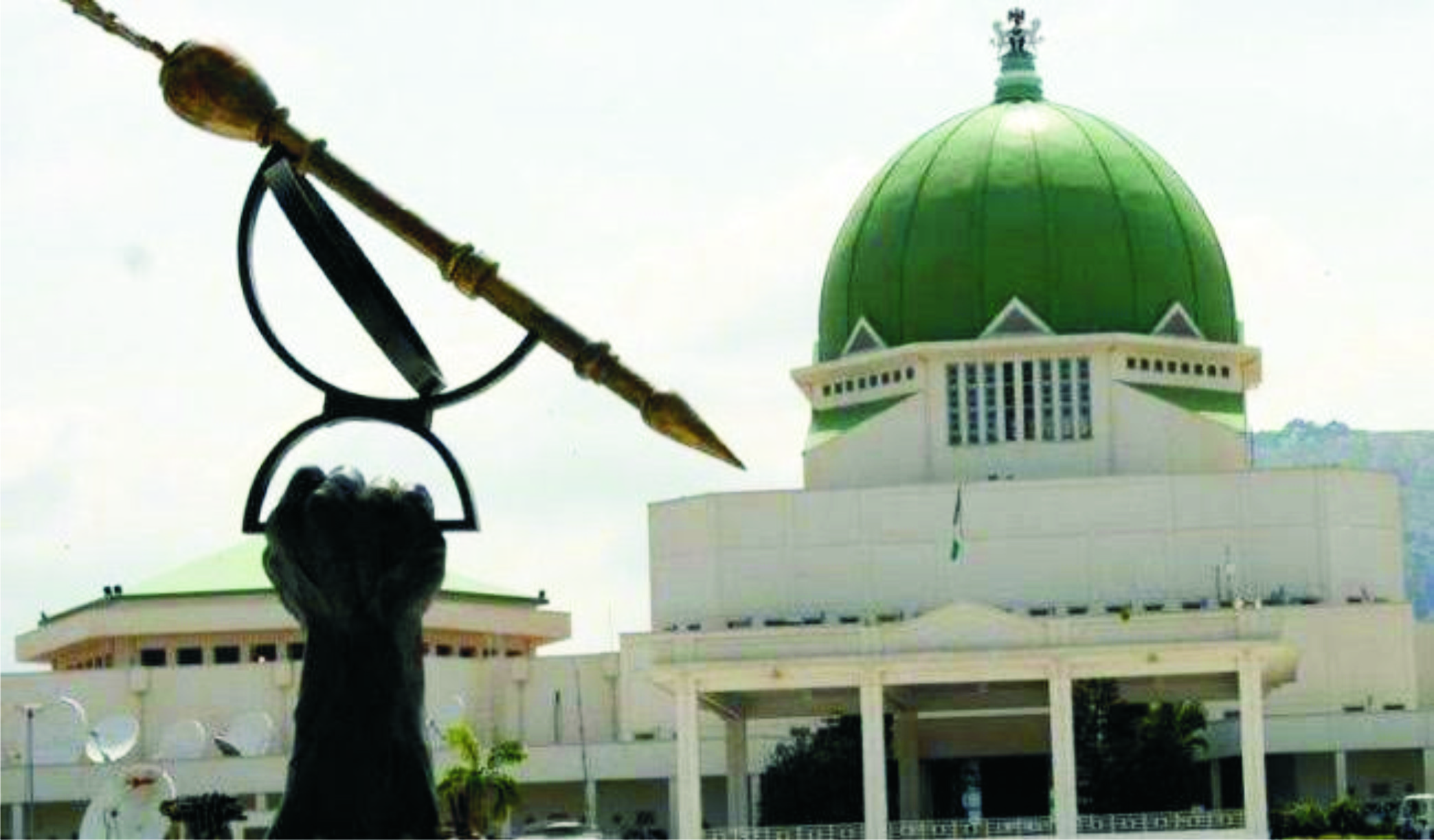
The National Assembly has passed the 2021 Appropriation Bill, raising the total estimates from the proposed N13.08tn to N13,588,027,886,175, an increase of over N500bn.
President Muhammadu Buhari had on October 8, 2020, laid the Appropriation Bill before a joint session of the National Assembly.
Both the Senate and the House of Representatives Committees on Appropriations had laid a harmonised report in the respective chambers as the National Assembly held special sessions mainly to pass the national budget ahead of the Christmas and New Year break.
Out of the total sum of N13.59tn for 2021, N496.53bn is for statutory transfers; N3.32tn for debt service; N5.64tn is for recurrent (non-debt) expenditure; while the sum of N4.13tn is for capital expenditure.
While statutory transfers totalling N496.53bn were approved, it was observed that the N125bn proposed for the National Assembly and its affiliates had been raised by N8.99bn, putting the new total estimates at N133.99bn.
A breakdown of the parliament’s budget shows that the National Assembly management has N15.97bn; Senate, N33.27bn; House of Representatives, N51.99bn; National Assembly Service Commission, N5.73bn; legislative aides, N9.6bn; Public Accounts Committee – Senate, N118.97m; PAC – House, N142.76m; general service, N9.13bn; National Institute for Legislative and Democratic Studies, N7.37bn; Service Wide Vote, N389.35m; and Office of the Retired Clerks and Permanent Secretaries, N275.24m.
Others under statutory transfers are the National Judicial Council, N110bn; Niger Delta Development Commission, N63.51bn; Universal Basic Education, N70.05bn; Public Complaints Commission, N8.69bn; Independent National Electoral Commission, N40bn; National Human Rights Commission, N3.92bn; North East Development Commission, N31.33bn; and Basic Health Care Fund, N35.02bn.
The National Assembly also authorised the Economic and Financial Crimes Commission (EFCC) and the Nigerian Financial Intelligent Unit to “charge and defray from all monies standing in credit to the units as revenues or penalties or sanctions at 10 per cent for technical setup and operational cost at the units in this financial year.”
The Chairman of the Senate Committee on Appropriations, Jibrin Barau; and his House counterpart, Aliyu Betara, in the report they separately read, said the budget deficit was N5.19tn; Gross Domestic Product growth rate, three per cent; oil benchmark, $40 per barrel; crude oil production, 1.86 million barrels per day; and exchange rate, N379 to $1.
The report also said the committee, while processing the 2021 Appropriation Bill, noted that, “The impact of COVID-19 pandemic has negatively affected virtually every aspect of life, businesses, individuals and government, especially the revenue accruals to the government.
“There is remarkable increase in Nigeria’s oil price, which is hovering between $47 and $50 per barrel in the international market. This is above the benchmark price of $40 per barrel approved by the National Assembly.”
The committee said in view of the increasing global oil prices beyond the benchmark of $40, the executive might wish to submit a supplementary appropriation bill in order to fund critical areas that would accelerate movement of the economy out of its current recession.



Business
Jonathan, Diri, Others Laud Firm’s Milestone in Bayelsa …Says Project Will Drive Industrialisation, Create Jobs



-

 News2 days ago
RSG Targets Nine Million Residents in Mosquito Net Distribution Campaign
-

 Oil & Energy2 days ago
Aiyedatiwa Signs New Electricity Bill
-

 Oil & Energy2 days ago
NLNG Commissions Research And Innovation Centre In RSU
-

 Maritime2 days ago
Marine Minister Commends President Tinubu On NPERA Bill Assent
-

 News2 days ago
KenPoly Holds Eight Convocations, August 29
-

 News2 days ago
RSG Begins Another Phase of Projects Commissioning Today
-

 News2 days ago
RMAFC Completes Revenue Sharing Review, Proposes New Pay
-

 Maritime2 days ago
NAGAFF Petitions IGP Over Alleged Maritime Police Harassment