
Nation
Boko Haram: We’ll Not Assist Nigeria Again, Mercenaries Lament …FG’ll Determine Those To Offer Help, DHQ Clarifies

Days after North-East Governors urged President Muhammadu Buhari to use mercenaries to fight Boko Haram, the foreign military contractors earlier engaged by the Federal Government have vowed never to return.
The fighters took the battle to terrorists in Sambisa forest and other enclaves during the administration of President Goodluck Jonathan.
Then, Nigeria covertly brought in ‘military-technical advisers’ regarded as mercenaries from South Africa and the former Soviet Union.
Ahead of the 2015 general election, the hit men day and night dealt Boko Haram severe blows.
Regional security, defence and diplomatic sources were aware of the development.
There was also a tacit confirmation by Jonathan that two companies were providing “trainers and technicians” to help Nigerian forces.
Now, calls for the warriors to return after the upsurge in attacks by Boko Haram and ISWAP are being made.
Last Saturday, more than 43 farmers were slaughtered at Koshobe village.
The gruesome murder sparked global outrage.
Speaking to PRNigeria, one of the facilitators of “soldiers of fortune” decried the persecution and prosecution of foreigners and Nigerian counterparts who participated in the war after President Muhammadu Buhari assumed office.
He said: “In fact, some of our covert operations and activities of operatives in Nigeria, including incurred casualties were exposed as working for mercenaries. Imagine that even highly classified and coded transactions for operational purposes were exposed as corruption.”
The source disclosed that some payments for operations executed are still outstanding.
“It’s easier to confirm what we did because we were able to recover dozens of towns from Boko Haram from, at least, three states in the North-East at the time. This is an open secret.”
He expressed disappointment that some Nigerian military and intelligence officers who participated in the 2014/2015 operation were retired, prosecuted and convicted.
The senior contractor stated that the mercenaries find it difficult to work in a country where their operations, strategy and thinking are exposed to the media and judicial processes.
The secret agent hinted that top government officials at federal and state levels are reaching out to them, but reiterated their resolve not to come back.
The founder of Specialized Tasks, Training, Equipment and Protection (STTEP), Eeben Barlow, revealed that Buhari stopped their raids against insurgents.
Barlow said their proposal was antagonised and politicised by Buhari and his team “even before they assumed office.
“The initial 3-phase campaign strategy (known as ‘Operational Anvil’) to degrade and destroy Boko Haram in Borno State, was rejected by his advisors,” Barlow added.
Barlow recalled that the company was willing to stay back in the North-East but the President “made it known that the company’s presence would not be tolerated under his administration.”
Meanwhile, the Defence Headquarters says the decision to engage mercenaries to assist the military in defeating the Boko Haram insurgency was squarely for the Federal Government to take.
It noted that the security forces cannot challenge the initiative, stressing that it was up to Nigerians and the government to contract the private army.
Following the killing of over 43 rice farmers in Zabarmari, Borno State, by Boko Haram insurgents, last Saturday, Governor Babagana Zulum had demanded the engagement of foreign mercenaries to tackle the militants.
Endorsing Zulum’s demand, the governors of North-East states said the thought of hiring mercenaries to fight Boko Haram should be taken seriously.
But responding to a question during the weekly briefing on the security operations across the country in Abuja, yesterday, the Coordinator, Defence Media Operations, Maj-Gen John Enenche said the military had no business debating the proposal, adding that it was diligently prosecuting the war, and focused on victory.
He stated, “Request or proposal to engage mercenaries, that is at a very high level. The kind of armed forces and security agencies you have now is normally determined by the people.
”It (engagement of mercenaries) is not in our powers. It is a kind of force package; it is what the government wants. It is not for the military to begin to contend.
“No armed forces anywhere will tell the people, ‘this is how we want to operate.’ The legislators, National Security Council, will decide on it,” he added.
When asked if the military was overstretched and overwhelmed as stated by the Chairman, Nigerian Governors’ Forum, Governor Kayode Fayemi, last Wednesday, Enenche said it was for the authorities to decide if this was true.
“It is not for the military to say, we are overstretched; I am not overstretched. If I say, I am overstretched, that means, I don’t want to work. And if I say, I am not overstretched, that means, I am under-utilised”, the general noted.
The media coordinator said the armed forces and other security agencies have continued to deal deadly blows to insurgents and bandits in the North-East and North-West regions.



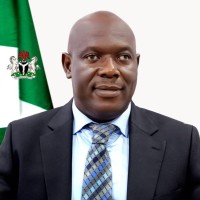
The Hydrocarbon Pollution Remediation Project (HYPREP) has commemorated the 15th anniversary of the release of the United Nations Environment Programme (UNEP) Environmental Assessment Report on Ogoniland, reaffirming its commitment to restoring the environment and improving the livelihoods of affected communities.
In a statement signed by the Project Coordinator, Prof Nenibarini Zabbey, to commemorate the anniversary, HYPREP described the anniversary as a significant milestone in Nigeria’s environmental restoration efforts, noting that the project has made remarkable progress in implementing the recommendations of the landmark UNEP report released on August 4, 2011.
The UNEP report had revealed extensive oil pollution across Ogoniland, severe environmental degradation, and serious public health risks resulting from decades of petroleum operations. It also recommended an initial $1 billion fund to commence the cleanup of the affected communities.
According to HYPREP, the Federal Government formally launched the Ogoni clean-up in 2016, while the Project Coordination Office was established in 2017 to drive the implementation of UNEP’s recommendations.
Zabbey said the current administration has continued to prioritise the project under the Renewed Hope Agenda.
Providing an update on the cleanup, the Project Coordinator disclosed that 30 of the 65 contaminated sites identified by UNEP have been fully remediated, while work is ongoing at several medium- and high-risk locations. It also stated that more than 1.5 million mangrove seedlings have been planted as part of what it described as the world’s largest restoration of oil-degraded mangroves, with over 1,000 hectares of shoreline already rehabilitated.
Zabbey further revealed that 49 Ogoni communities have been connected to potable water schemes through multiple water projects and booster stations aimed at providing safe drinking water across the region.
In the health sector, he said the 100-bed Ogoni Specialist Hospital in Kpite and the 43-bed Cottage Hospital in Buan are nearing completion, adding that several existing health facilities have been upgraded with modern medical equipment, while five ambulances have been donated to improve emergency healthcare services. The Project Coordinator also disclosed that a three-year human health biomonitoring study is being conducted in collaboration with the World Health Organization’s International Agency for Research on Cancer (IARC).
On economic empowerment, Zabbey stated that the Project has created more than 8,000 direct jobs and trained thousands of Ogoni youths and women in various vocational and technical skills, including software development, cybersecurity, aviation, commercial diving, seafaring, mechatronics, and creative arts. The project also reported awarding scholarships to more than 1,000 students, providing grants to small businesses, and supporting persons living with special needs through skills acquisition programmes.
The statement further highlighted ongoing legacy projects, including the Ogoni Power Project and the Centre of Excellence for Environmental Restoration, which it said is about 96 per cent complete. HYPREP also welcomed the recent designation of the Ogoni Wetland as a Ramsar Site of International Importance and pledged to continue promoting biodiversity conservation and sustainable management of the ecosystem.
Marking the anniversary, Zabbey said the progress achieved over the past 15 years demonstrates the collective commitment of government, development partners, stakeholders, and local communities to restoring Ogoniland. He called for renewed collaboration to sustain the cleanup effort, promote environmental sustainability, and support the long-term development of the region. 3
-

 News2 days ago
RSG Targets Nine Million Residents in Mosquito Net Distribution Campaign
-

 Oil & Energy2 days ago
Aiyedatiwa Signs New Electricity Bill
-

 Oil & Energy2 days ago
NLNG Commissions Research And Innovation Centre In RSU
-

 Maritime2 days ago
Marine Minister Commends President Tinubu On NPERA Bill Assent
-

 News2 days ago
KenPoly Holds Eight Convocations, August 29
-

 News2 days ago
RSG Begins Another Phase of Projects Commissioning Today
-

 News2 days ago
RMAFC Completes Revenue Sharing Review, Proposes New Pay
-

 Maritime2 days ago
NAGAFF Petitions IGP Over Alleged Maritime Police Harassment