Connect with us

Nation

Medical Directors Charge NASS On Modern Equipment

Published

on

The Association of Chief
Medical Directors (ACMDs), has urged the National Assembly to help facilitate procurement of modern medical equipment to stop brain drain.
The Chairman of the association, Dr Jeff Momoh, made the appeal during a budget defence before the House Committee on Health Institutions yesterday day in Abuja.
He said the request if acceded would also stop medical tourism in the country.
All the CMDs of federal government-owned hospitals were at the budget defence and were represented by their chairman, Momoh, the CMD of National Hospital Abuja (NHA).
He said, acquiring state of the art medical equipment was germane to retaining manpower, and stressed the need to curb medical tourism to help in the growth of the country’s health sector.
Momoh said that money released in the 2020 appropriation could not purchase some of the modern medical equipment, adding that it could leverage on a Private Partnership Projects to help.
He said that 2020 had been a challenging year in the battle against COVID-19, while paying tribute to all health workers for outstanding performance in the face of COVID-19 pandemic across the country.
Momoh commended the increase on Outsource Service from N3 billion to N5 billion in the 2021 budget proposal, while expressing hope that the committee would further mark it up.
He decried lack of hospital maintenance culture across government-owned hospitals in the country, adding that most public tertiary hospitals were now dilapidated with little or no infrastructure.
“An average hospital should have 700 bed space but we have those with 400, our personnel have moved out of the country to a greener pasture, so we need a replacement via recruitment.
“This lacuna is not good for us, we cannot afford not to engage others and there is need to bridge gap in manpower,” he said.
The CMD of the National Hospital said that an average hospital spent N30 million to N40 million on electricity, adding that its internal generated revenue could not support such outrageous bill, while calling on the committee to intervene.
Chairman, House Committee on Health Institutions, Rep Pascal Obi, said that the committee was aware of the challenges occasioned by COVID-19 pandemic and how it had affected the country’s economy.
He commended health workers across the country for the sacrifice and dedication to caring for patients since the outbreak of COVID-19 pandemic.
According to him, we recently embarked on oversight function across our health institutions and we are aware of the challenges, but to whom much is given, much is expected.
He said that it was expedient for teaching hospitals across the country to improve on their internally generated revenue.
Obi commended government owned hospitals in the North West, Lagos University Teaching Hospital, University of Benin Teaching Hospital, Abakaliki Teaching Hospital among others.
He said the committee on oversight function was yet to complete its job in North East and North Central, adding that as soon as it was completed it would give its verdict on the best hospital.


Continue Reading

Nation

REAN, SON synergise to curb fake renewable energy product

Published

on

The Renewable Energy Association of Nigeria (REAN) says it has strengthened collaboration with the Standards Organisation of Nigeria (SON) to enhance quality control and enforcement frameworks.
Mr Oisereime Lloyd-Dietake, the Head of Communications, REAN, in a statement on Tuesday in Abuja, said the collaboration would also involve stakeholder engagement on testing, certification and capacity building in Nigeria.
He said the synergy would strengthen quality control and enforcement frameworks, promote policy alignment, and ensure stronger regulation across the renewable energy value chain.
“REAN reaffirms its commitment to standardisation and quality assurance; tighter collaboration with SON is critical to eliminating fake and substandard renewable energy products from the Nigerian market.
“Enforcement and gaps in existing standards have continued to allow inferior products to circulate, undermining consumer confidence and slowing sector growth.”
Lloyd-Dietake said that at high-level discussions, REAN also highlighted the need for stronger regulatory coordination to address emerging challenges in the renewable energy space.
According to him, the issues include inconsistencies in standards, affordability issues linked to certification processes; and the increasing presence of substandard solar and renewable energy equipment in the country.
“The association further raised concerns about delays in product testing and approval, calling for the establishment of more testing laboratories and certification facilities to improve efficiency and reduce bottlenecks in the system,’’ he said.
Lloyd-Dietake urged closer collaboration among key regulatory bodies, including the Nigerian Electricity Management Services Agency, the Nigerian Electricity Regulatory Commission, and the Rural Electrification Agency.
He said such team work would ensure harmonised standards and more effective enforcement against fake renewable energy products in the Nigerian market.
In response, SON acknowledged the important role REAN continued to play in supporting standardisation within Nigeria’s renewable energy industry and reaffirmed its willingness to deepen collaboration with the association.
SON further confirmed that REAN would be actively involved in future standard review processes and upcoming stakeholder engagements related to renewable energy and electric mobility standards development.
Lloyd-Dietake said REAN affirmed its willingness to formalise the partnership through a Memorandum of Understanding (MoU).
He said the MoU is aimed at deepening cooperation, promoting quality assurance, and accelerating Nigeria’s transition towards reliable and standardised renewable energy solutions.
Continue Reading

Nation

Self Help Africa programme expands water access for 320,000 Nigerians

Published

on

The WASH Systems for Health (WS4H) Programme, implemented by Self Help Africa, has expanded access to safe water and sanitation services for more than 320,000 people in Kano and Cross River States.
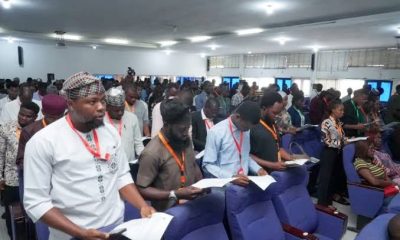
The organisation disclosed this on Tuesday at the WS4H National Results and Learning Workshop in Abuja, where stakeholders reviewed achievements and lessons from the intervention.
Speaking at the event, Self Help Africa Country Director, Joy Aderele, said the programme demonstrated that sustainable WASH improvements require strong institutions, effective governance, adequate financing and collaboration.
Aderele said the UK-funded programme was designed to strengthen systems that support sustainable access to water, sanitation and hygiene services.
According to her, the intervention focused on improving governance, planning, financing, accountability and sector coordination to ensure resilient service delivery.
“More than 320,000 people now have improved or restored access to water services through programme-supported interventions,” she said.
She added that more than 5,520 household toilets were constructed in Yala and Makoda Local Government Areas, boosting sanitation, public health and efforts to end open defecation.
Aderele said the programme also strengthened public investment in WASH, with Cross River increasing its sector budget by 211 per cent in 2026 and Kano by 169.07 per cent.
She added that dedicated WASH budget lines had been established across 40 Ministries, Departments and Agencies in both states, strengthening accountability and institutional commitment.
According to her, both states reviewed and adopted updated WASH policies, while key planning documents were developed to guide future investments and service delivery.
She said Cross River also recorded a major legislative milestone through the passage of the Water Law and Open Defecation Prohibition Bill.
Aderele added that lessons from interventions in Yala LGA were already informing expansion efforts in Obubra Local Government Area.
While commending the achievements, she noted that capacity gaps, resource constraints and climate-related pressures remained challenges to sustainable WASH services.
“The sustainability of these gains will depend on continued government leadership, adequate financing, strong partnerships and investment in institutional capacity,” she said.
Also speaking, the Programme Manager of WS4H, Mr Timothy Ibeawuchi, said the intervention focused on strengthening systems needed to sustain gains and attract future investments.
According to him, the programme engages stakeholders in developing strategies that preserve achievements and support long-term service delivery.
“System strengthening work takes time because it addresses the fundamental issues responsible for sustainable and resilient service delivery,” he said.
Ibeawuchi said the programme strengthened policy development, planning, financing, monitoring and evaluation systems across the WASH sector.
He said two pilot local government areas were supported to develop WASH strategic plans outlining sector goals, targets and activities between 2026 and 2030.
According to him, the plans will guide future interventions and improve service delivery in the affected councils.
Earlier, the representative of the UK Foreign, Commonwealth and Development Office (FCDO), Chidera Chukwu, reaffirmed support for Nigeria’s development efforts in spite of the programme nearing completion.
Chukwu commended the Self Help Africa-led consortium for delivering the programme with professionalism and a strong focus on systems strengthening.
He said the consortium contributed greatly to strengthening Nigeria’s WASH sector through policy reforms, improved coordination and enhanced accountability.
“Together, we have advanced key policy and legislative reforms, including open defecation-free laws and strengthened state WASH frameworks,” he said.
According to him, the reforms represent enduring system-level changes that will continue delivering benefits beyond the programme’s lifespan.
In his remarks, Mr Jamilu Habu, Director of Water Quality Control and Sanitation, Federal Ministry of Water Resources and Sanitation, commended the programme’s achievements.
Habu, who represented the Permanent Secretary, said the intervention strengthened governance, coordination, evidence-based planning and institutional capacity in the WASH sector.
He described the workshop as an opportunity to review achievements, share lessons and identify pathways for sustaining and scaling successful interventions.
According to him, the programme’s innovations and best practices will guide future policies and investments aimed at expanding access to safe WASH services.
Habu stressed the need for continued collaboration among governments, development partners, civil society organisations, the private sector and communities.
He said stronger partnerships remained essential to achieving universal access to water, sanitation and hygiene services and meeting Sustainable Development Goal 6.
Continue Reading

Nation

Lagos Residents Stranded As Floods Cut Off Ajah, Mafoluku Communities

Published

on

Residents of Ajah, Mafoluku and other flood-prone communities in Lagos have recounted how Thursday’s torrential rainfall left them stranded, submerged homes and cut off access to major roads.
The residents, who spoke with Tide source, on Friday called for urgent government intervention to tackle the recurring flooding blamed on poor drainage infrastructure.
Along Mobil Road in Ajah, Mrs Rukayat said floodwaters submerged about 200 metres of the road, forcing commuters to wade through waist-deep water.
“The water level was almost up to my lap. People literally had to wade through it to get home,” she said.
According to her, many motorists turned back, while others abandoned their vehicles and continued their journeys on foot.
“The only way to pass through the water was by walking or using a tricycle. Even then, the tricycles broke down and had to be pushed,” she said.
Rukayat said some youths assisted stranded tricycle operators by pushing their vehicles through flooded sections for a fee.
She said residents had repeatedly alerted authorities to the flooding but little had changed.
“We reported this when the rains started, but apparently nothing has been done about the problem,” she said.
She attributed the flooding to poor drainage and possible blockage of a major canal serving the area.
“There is a big canal here, but I don’t know what is preventing water from flowing through it properly,” she said.
According to her, overgrown vegetation and sand deposits might have obstructed the canal, reducing its capacity to discharge stormwater.
She added that although floodwaters usually receded after a few hours, sections of the road remained waterlogged.
In Mafoluku, residents said several streets, homes and access roads were submerged, leaving many unable to return home after going about their daily activities.
Mrs Iriagbonse Okunkpolor, a resident of Agboola Street, said what began as a short trip to buy household items became an hours-long ordeal.
“I left my house to buy a few items nearby, but the rain started suddenly and flooded the entire street.
“I was stranded for hours because there was no safe way back home,” she said.
Another resident, Mr Mukaila Idris, described the flooding as both dangerous and distressing.
“The current was very strong. I watched people pay young men to carry them across the water because they were afraid of being swept away or falling,” he said.
According to him, only physically fit residents could navigate the floodwaters safely, while many others waited several hours for the water level to subside.
Mr Williams Ekpo, who lives in the Eyinogun area, said the flood extended beyond the roads and entered residential compounds.
“The floodwater entered our compound and damaged some household items.
“This happens almost every rainy season, yet nothing seems to be done to address the drainage problem,” he said.
The residents urged the relevant authorities to investigate the persistent flooding and improve drainage infrastructure to prevent a recurrence during the rainy season.
Continue Reading

Trending