
Oil & Energy
FG Aggressively Developing Gas-To-Power Infrastructure – Kyari

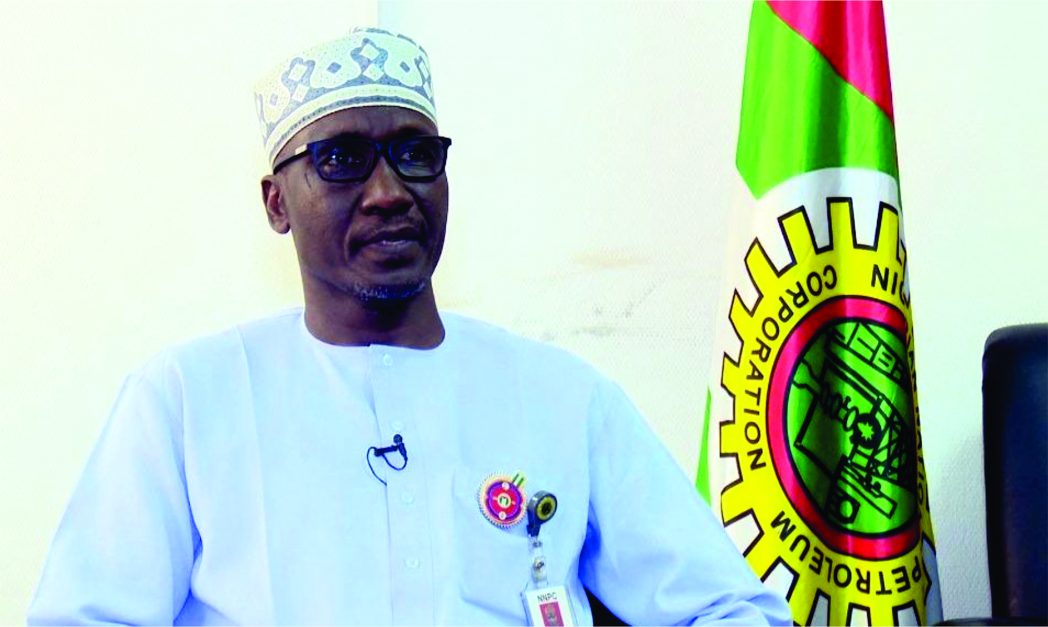
The Group Managing Director, Nigeria National Petroleum Corporation (NNPC), Mele Kyari, says the Federal Government is aggressively pursuing other gas development initiatives to improve Nigeria’s current utilization of alternative fuels as well as stimulating gas demand and power generation in the country.
Kyari, who made this remark at the virtual Businessday Future of Energy Summit, also said the NNPC was making concrete efforts to expand natural gas resource exploration.
He assured that the NNPC would capitalise on its experience on key players in the industry to grow production efficiently, leveraging technology acquisition, and project financing across the value chain.
This is as the Minister of State for Petroleum Resources, Timipre Sylva, hinted that the abundance of natural gas resources in Nigeria has made the gas transition initiative a low hanging fruit waiting to be harnessed.
Sylva said the transformation initiative clearly indicated that natural gas has come to play a significant role in the dominant future energy source for use in Nigeria from the medium to the long term.
“The summit has been so aptly themed harnessing Nigeria’s energy potentials for the future. Energy encourages national economic growth and there is no gainsaying that Nigeria remains one of the most blessed countries on the face of the earth with a plethora of mineral and energy resources waiting to be harnessed,” Sylva said.
He added: “In this regard, the Buhari-led administration carved out some strategic priorities for the Ministry of Petroleum Resources in order to foster the sustainability of the Nigerian economy, enhance energy availability, create well paid jobs and take millions of Nigerians out of poverty.”
According to him, to drive and stimulate investment in the natural gas sector, the NNPC is focusing on the implementation of the Nigerian Gas Master Plan (NGMP), which covers infrastructure, sectoral development, and requires framework.
Kyari noted that collaboration was key in all of these efforts, adding that NNPC has a succession planning in place to provide adequate energy infrastructure in tandem with the expanding population growth and also in alignment with the objectives of the government to encourage economic growth.
“NNPC is committed to supporting sustainable legislation that would bring about a transformation to the industry, promote transparency and accountability across the value chain. We remain committed to driving Nigeria’s gas sector development.
The Managing Director, Nigeria LNG Limited, Bayo Ojulari, stressed the need for the Federal Government to prioritize development towards gas, since the country has ridden on the back of oil for more than 50 years, but added that the country must now fly on the wings of gas in its quest to leapfrog to the next level.
“We cannot achieve much without infrastructure. We are also very glad to hear some of the infrastructure development the Federal Government is embarking on to harness the natural resources we have in the country,” he said.



By Felicity Bradstock for Oilprice.com 16
The State Commissioner for Works (Rural Roads) and Public Information, Charles Aniagwu, disclosed this at a press conference in Asaba, weekend, noting that the initiative was part of wider reforms aimed at opening up the power sector to private investors.
Aniagwu, who was accompanied by the Executive Assistant to the Governor on New Media, Felix Ofou, said the state was exploring alternative sources of electricity to support businesses, households and communities while reducing pressure on the national grid.
He said the government was particularly interested in exploiting Delta’s abundant natural gas resources for power generation, pointing to the Kwale Free Trade Zone, which is part of the state’s special economic zone, as a major opportunity for investors.
According to him, prospective investors were taken to the zone during the state’s recent economic summit to enable them to assess the availability of gas as a key raw material for electricity generation. ComparePower Rates
The commissioner explained that generating more electricity locally would not only increase supply in Delta but also free up power on the national grid for use by other consumers.
Aniagwu cited the 8.5MW Independent Power Plant located behind the state secretariat in Asaba as an example of what could be achieved through alternative power sources.
He said the facility had enabled the secretariat complex to operate independently of the national grid, thereby making the electricity that would otherwise have been consumed there available to other users.
He added that the planned 120MW partnership with Supply Power would further strengthen the state’s electricity supply capacity and provide a more reliable power base for small and medium-sized enterprises.
Aniagwu said the state government was also intervening in areas traditionally regarded as the responsibility of electricity distribution companies because inadequate power supply could no longer be allowed to constrain economic development. LearnQuantum Physics
He identified the extension of the electricity grid from Abraka towards the Ndokwa axis as one of the interventions being undertaken to connect more communities to electricity.
The commissioner, however, raised concerns over the burden placed on communities that are often required to provide transformers and other electricity infrastructure, only for distribution companies to take over the facilities and subsequently collect electricity bills without adequately accounting for the investments made by the communities.
He said the state would continue to support efforts aimed at energising communities, noting that improved electricity supply would stimulate businesses, create jobs and help tackle social problems associated with unemployment and idleness.
On regulation, Aniagwu said the government was working with the Ministry of Energy and a committee set up to develop an appropriate regulatory framework for the state’s emerging power sector. SwitchEnergy Plans
He said the proposed energy commission would be responsible for regulating new electricity producers, determining appropriate tariffs and overseeing distribution networks.
The commissioner stressed that liberalising the sector required effective regulation to protect consumers and investors, adding that decisions on power distribution infrastructure, including the use of overhead or underground lines, must take into account the peculiarities and safety requirements of each location.
He warned that power expansion without adequate regulation could expose residents to electrocution and other hazards, stressing the need to protect electricity infrastructure while ensuring consumers were not subjected to unfair pricing.
Aniagwu said the state government’s broader objective was to build an efficient and sustainable electricity market driven by private investment and capable of powering businesses, households and communities across Delta State.
-
News4 days ago
Bayelsa Boat Mishap: Tinubu Donates N250m As Death Toll Hits 29
-
News4 days ago
Odu Pays Tribute To Late Chinwah, Describes Him As Courageous, Selfless Academic
-
 Maritime4 days ago
Nigeria, Russia Customs Sign MOU To Trade Facilitations
-

 Sports4 days ago
World marathon champion gets three-year doping ban
-
 Maritime4 days ago
South-South Governors Urges To Shake Off Collective Lethargic To Embrace Blue Economy
-
 Maritime4 days ago
Oyetola Woos Investors With Nigeria’s Seabed Resources, Marine Biotechnology
-

 Business4 days ago
Moniepoint MfB transaction volume hits 1trn daily — CEO
-

 Oil & Energy4 days ago
Global Oil Market May Witness Supply Surplus Before The End Of 2026 …… Report