
News
60 Years In The Tinderbox?

As Nigeria marks its Diamond Jubilee Independence Anniversary, The Tide takes a look at various sectors of the nation’s economy. Since the outbreak of the Covid-19 pandemic, the nation’s economy has nose-dived more than ever before and masses subjected to abject poverty, hunger, deprivation and hyperinflation. The manufacturing sector seems to be the worst hit as stakeholders say they have been set back 60 years to pre-Independence level. Excerpts.
The Chairman, Manufacturers Association of Nigeria (MAN), Rivers State, Senator Adawari Michael Pepple, noted that in the past there were manufacturing concerns in almost all the major cities in their multiple numbers in the country.
Pepple lamented that those manufacturing concerns have either gone moribund or no longer in existence.
According to him, ’’Trans-Amadi used to be a bubbling hub for manufacturing, there were so many companies doing one thing or the other, but at the moment, we really do not have such a presence, all the companies have folded up, so effectively we have set ourselves back to pre-Independence level, it is unfortunate”.
He attributed the development to the lack of will on the part of government to place priority on manufacturing as a major source of employment.
The senator observed that the cost of power, which is 75 per cent of the cost of manufacturing has never been made available, saying that the situation had placed the manufacturing sector at a disadvantage.
He regretted that the future is bleak stating that Nigeria is at a loss as to what to do in post Covid-19 era, since government was still coming up with policies that were taking a way the capacity of local buyers to buy what little that was being manufactured through the increase of petrol pump price and electricity tariff.
On her part, a financial expert, Mrs Ekimini Gbole-Nwikina, said the aspiration of Nigeria using the Central Bank of Nigeria (CBN), was for Nigeria to attain financial independence.
Gbole-Nwikina recalled that prior to this time, the financial sector suffered so much as a result of failed banks due to poor governance, management style and cash based transactions.
She said these structures became the rallying point of the nation’s economy, “and the outcome was a strong and stable banking system where we now raised 25 solid banks from existing 89 banks, single digit inflation rate, debt reduction and exit from Paris Club, capital market explosion, liberation of foreign exchange market, among others”.
Gbole-Nwikina, lamented, however, that the country was yet to attain financial independence due to the many challenges that still plague the sector.
According to her, “poor governance, poor state of infrastructure, poor human capital development, low interest rate on savings and difficulty in accessing credit facility for SMEs remain the bane of Nigeria’s quest for financial independence”.
On the security architecture of the nation since 1960 when Nigeria gained independence, a peace building practitioner in Rivers State, Mr Cosmas Ndinee, noted that Nigeria has been challenged security wise, saying that a child born at independence would already be a grandparent by now and that in it is self goes with a lot of responsibility.
Ndinee, who is also the coordinator, Search for Common Ground, a non-governmental organisation in Rivers State, stated that Nigeria had not taken on much of this responsibility, particularly as it concerns corruption, pointing out that, “whenever corruption is so strong in a nation, you never can expect anything fine because the players would not handle things in the desired manner”.
He maintained that corruption remain the bane of peace, security and development in the nation stressing, “it is this corruption that has arisen to series of insurgencies, militancy, affecting the security architecture of the country”.
Sadly, he said, this development has resulted in the exit of investors and liquidation of some businesses, thereby creating unemployment, loss of jobs with an increased level of hardship and poverty in the country.
On the way forward, he said security was pivotal in the development of any nation, which he stated must be addressed by calling to the drawing table all the players especially those who feel excluded from the scheme of things and bring the nation to a peaceful position free from violence.
The Chairman of Inter-Party Advisory Council (IPAC), Nsirim Emmanuel Chima said Nigeria is yet to have true Independence and Democratic system that will work in accordance with our cultures.
According to him, Nigeria is still under neo- colonialism of the Western countries, where the nation system is being detected and determined by the influence of the Western countries.
“This Nigeria as country is yet to be a true independence nation, as Independence country, we are still going to abroad for Medical trip, we are also going to abroad for quality education, we are blessed with natural resources and human resources yet we still importing fuels, we supply electricity to other countries, yet Nigeria always have black out every moment, at 60th since Independence our refineries are not in perfect order.
“Nigeria at 60 is a failure and major factors responsible are corruption and bad leadership, if only we will be honest to ourselves and shunned corruption in our system we will move the nation to an enviable height”, Chima said.
Also speaking, former Auditor General in Rivers State and former State House of Assembly member, Chief Bob Frederick, said the only way Nigeria will achieved it desire development is to erased corruption from the governing system.
He said though Nigeria is a negotiated country that needs restructuring but that restructuring with corruption ravaging almost every sector, cannot move Nigeria to any level.
Those who also blamed corruption and bad leadership for the woes of the country were the Special Adviser to Rivers State Governor on NDDC, Barrister Erastus Awortu, and a Medical Doctor and National Chairman of Medical and Health Workers Association of Nigeria, Dr Biobelemoye J. Josiah.
Awortu said Nigeria need practical rule of law and not academic one.
Awortu, who is also a lawyer, said Nigeria must move higher, if the government at the centre would shun party politics and tackle corruption irrespective of party affiliation.
On his part, Josiah said the entire nation system needs to be restructuring, arguing that true democracy is the solution to the nation’s problems.
An Electrical Engineer, Mr Godwin Ekanem said, “Nigeria is a blessed country, and nobody in Nigeria should be suffering because everyone is in a good position to make wealth. Tourists should be happy to come and invest in the country and not the reverse. Those countries our big men and leaders travel to for pleasures and medical treatments are not as rich as our country Nigeria.
He said this Africans are not coming to invest, rather to tie the embezzled fund and keep in the bank there: Too bad for our leaders and for our dear country.”
A retired public servant, Mr Olali Seigha said, “This country can never be better so long as there is nepotism, tribalism, among others.
“This country is so divided in a way that there is no way that we can improve, except there is a division.
“If we can divide without a war, then its better, so the northerners and Southerners go their separate ways that is the only thing that can improve this country, otherwise there is no way somebody is 60 years like our country, Nigeria and is still very backward”.
Lecturer and author, Dr. Priye Elechi Amadi said, Nigeria needs to create new values.
“We are always learning and where we are now is a total conglomeration of what we have been” she said.
She challenged leaders to begin to set right priorities and such could make the country come out from the rot it’s now.
“So, we should be growing at this point with technology wise by improving our digital skills and move with the world”, she added.
Amadi, who is also the chairperson of the Reading Association of Nigeria, expressed optimism about Nigeria’s future, “Yes, we are 60 good and fine, and life can begin at 60. I am not losing hope in this country.”
For former Caretaker Committee Chairman of Opobo/Nkoro Local Government Area, Sir Boma Brown, the creation of Nigeria was the beginning of the woes for the people.
He submitted that Nigeria was a creation of British commercial and Colonial interest, recalling that even Sir James Roberston, the last Governor General of Nigeria admitted that the South and North had no similarities.
In the light of this, Brown called for deconstruction and restructuring, “If we restructure then we can move ahead.”
The Opobo-born politician maintained that unless there is a total reorganisation of the polity, Nigeria will remain stagnant.
“Our current political ideology is defective because it’s driven by ethnic and religious bias making it difficult to grow.”
Brown also recommended the need to see all groups as equal, “a system that views other ethnic group as superior to others cannot move forward.”
An activist and social critic, Mr. Ethelbert Agam, has stated that at 60, Nigeria is no longer a child, because a man at that age would have done who is expected of him or be regarded as a failure.
Agam averred that the county has come a long way and could have performed better than she does at the moment.
He observed that the country has fared too badly though, but blamed our snail-pace progress on most of nation’s greedy leaders (past and present) who cornered the wealth of the county to themselves.
According to him, “We need a social analysis to ascertain how we manage to fine ourselves in this unjustifiable socio-economic malady. We need to ask ourselves some questions.”
Also speaking, a trader at Watt market, Calabar, Mrs. Jennet Azu, said that Nigeria has come of age, but quickly note our politician dampened the spirit of Nigerians with their failed promises.
“We do not want anything from them rather than good road network to enable us carry our products from rural area to urban cities, may be water and electricity.
“They will come with their sweet talk during campaigns, as soon as they get into office, they forget the masses,” she lamented.
On his part, a road side mechanic, Mr. Dominic Etim, noted that Nigeria could have been better than it is now if some of our leaders have human feelings and stop the capital flight, but rather use our God given wealth to develop the country for the overall benefit of all.
The Coordinator, Western Zone, National Association of Government Approved Freight Forwarders (NAGAFF), Dr Fred Ajuzie: “Government need to support customs to drive the revenue profile. We want to see a situation whereby scanners are available to boost trade facilitation and encourage import and export.
“Lack of scanners has affected their operations. The maritime sector since the nation’s Independence. Firstly, port concession has failed because when Nigerian ports Authority was in charge of the ports, you will agree with me that things were a bit okay.
“However, since the ports were concessions to private investors things have been static”.
Market woman, Rose Afolabi said, “The government should show us human face. We are suffering so much in this country. The cost of living is high. Our government should provide us with good roads, electricity, and drinking water, nothing we need than that. If they like, let them pocket our money”.
By: Tonye Nria-Dappa, Enoch Epelle, John Bibor, Susan Serekara-Nwikhana, Kevin Nengia (Port Harcourt), Friday Nwagbara (Calabar), Canice Amadi (Enugu), Nkpemenyie Mcdominic (Lagos) & Nneka Amaechi-Nnadi (Abuja).


News
Rivers DPOs Receive Awards For Outstanding Performance In Crime Prevention …As Students, Media Group Honour CSP Worgu, CSP Yusuf

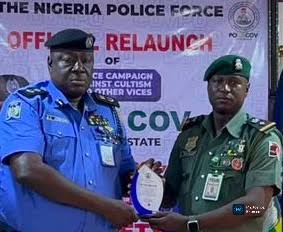
Two Divisional Police Officers (DPOs) in Rivers State have been honoured by separate groups for their contributions to security, crime prevention and improved community-police relations in their respective areas of responsibility.
The beneficiaries are the DPO of Afam Police Division, CSP Endurance Worgu and his counterpart at Oyigbo Police Division, CSP Bello Yusuf.
CSP Worgu was honoured by a group of students under the aegis of Rivers State Graduate Students Associations for what they described as his commitment and outstanding performance in the discharge of his duties.
The students, led by Chidi John Enyie, Esq. said CSP Worgu was selected based on his track record and status as one of the longest-serving young DPOs of Rivers State origin.
According to the group, CSP Worgu has made significant contributions to the protection of lives and property in the area since assuming office following the #EndSARS period.
The students said they were particularly impressed by the improvement in community-police relations under his leadership, noting that professionalism had remained a key feature of his service.
Enyie represented by Comrade Briggs Soku, said the students community was pleased to identify with a Rivers indigene who had distinguished himself in the police force.
He said the students considered it necessary to encourage and celebrate CSP Worgu because of his achievements as a young Rivers man excelling in a profession that many people from the state were often reluctant to join.
Receiving the award at his office in Afam, CSP Worgu expressed gratitude to God and the students for finding him worthy of the honour.
The DPO said the recognition had boosted his morale and encouraged him to sustain his efforts towards maintaining peace and security in the area.
He said he least expected the honour, particularly because it came from the students, adding that the recognition would further motivate him to serve the people better.
CSP Worgu assured residents of Afam that the police would sustain the existing peace in the area.
He appealed to members of the public to support the police by providing credible and timely information, stressing that useful information from residents would make the job of security personnel easier.
Meanwhile, the Ikwerre/Etche Media Association has also honoured the DPO of Oyigbo Police Division, CSP Bello Yusuf, for his efforts in tackling criminal activities in the area.
The media group presented the award following the swift tracking and arrest of five suspected kidnappers who had allegedly terrorised residents of the Kom-Kom axis and other parts of Oyigbo.
The group commended CSP Bello for what it described as his determined efforts to restore confidence and security in the affected communities, particularly Kom-Kom and Obeama.
According to the group, the arrest of the suspects demonstrated the DPO’s commitment to tackling criminality and safeguarding residents.
The media association said residents had received the development with relief, noting that the police action had sent a strong message to criminal elements operating in the area.
Responding, CSP Yusuf appreciated the group for the recognition and reaffirmed that there would be no room for criminality in Oyigbo.
He also commended the media for its role in disseminating credible information to the public, saying the media had remained supportive of the police in the fight against crime.
CSP Yusuf warned criminal elements operating in Oyigbo to leave the area or be prepared to face the full weight of the law.
He assured residents that the police would continue to pursue criminals and work to dismantle their hideouts, regardless of where they might be operating.
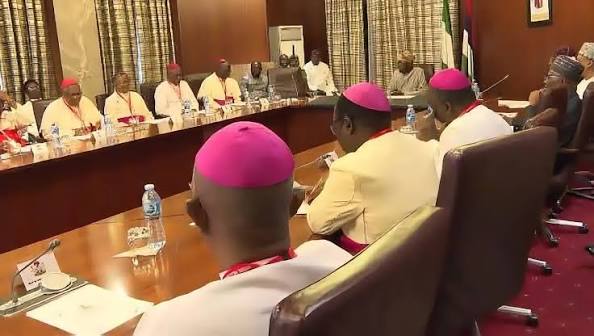
The 5000 Achievers Christian Forum and Colleges of Bishops, Archbishops and Apostles, a Christian interdenominational organisation, has endorsed President Bola Ahmed Tinubu and all candidates of the All Progressives Congress (APC) in Rivers State for the 2027 general elections.
International President of the forum, Archbishop Lucky Aroh, disclosed this during the ordination and consecration of three new Bishops, as well as an award ceremony held in Port Harcourt.
Aroh said the performance of the APC-led Federal Government had endeared the party to the organisation, prompting the forum to declare its support for President Tinubu and other APC candidates in Rivers State.
He said the forum would support all APC candidates in the state during the 2027 elections and urged Nigerians to vote for the party.
Aroh, who is also the General Overseer of Caring Peoples Church, Port Harcourt, charged the newly consecrated Bishops to see their new positions as a great responsibility and dedicate themselves to the advancement of the kingdom of God.
He cautioned them against conduct capable of bringing their offices into disrepute, stressing that their activities would be closely watched by members of the public.
“As Bishops, the eyes of the public are on your activities. You must therefore conduct yourselves in a manner worthy of your calling,” he said.
Also speaking, the International Coordinator of the forum, Bishop Saint Robinson, urged the newly consecrated Bishops to work diligently towards winning souls for the kingdom of God.
Robinson, who was the guest speaker at the event, stressed that the activities of Bishops must at all times be guided by godly principles.
He also called on members of the church to support and cooperate with the newly consecrated Bishops in the discharge of their responsibilities.
The Secretary of the College, Apostle Elizabeth Ayadi Abaye, said the organisation was established to advance the kingdom of God and promote spiritual development.
According to her, the forum has organised several crusades, conferences, prayer meetings, ordinations, consecrations, enthronements, empowerment programmes and other spiritual development activities across the country as part of efforts to win souls for Christ.
Abaye said the organisation has members across the world and disclosed that more programmes had been scheduled to promote the spiritual development and wellbeing of humanity.
The three Bishops consecrated at the ceremony were Prince Alban Chike, Testimony Omenihu Shedrach and Prince Ifemena.
Among those honoured at the event were the Chairman of the Community Development Committee (CDC), Abali Community, Port Harcourt City Local Government Area, Manuchimso Prince Lemmy Wopara, and Clifford Oko Jaja, Coordinator of the 5,000 House-to-House for President Tinubu.
By: John Bibor
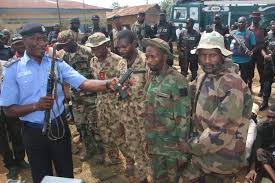
The Rivers State Police Command has arrested a 49-year-old suspected fake soldier, Andrew Atausi, and several other suspects in connection with various criminal activities, including kidnapping, armed robbery, cultism, one-chance robbery and the alleged murder of police officers.
The State Commissioner of Police, CP Olugbenga Adepoju, disclosed this in Port Harcourt, recently during a press briefing at the Command Headquarters, where he said the arrests formed part of the operational achievements recorded by the Command between June and August 2026.
Adepoju said Atausi was arrested on August 10 by police operatives along Ada George, Port Harcourt, while dressed in military uniform and driving a Toyota Hilux painted in Army colours.
The Commissioner said investigation revealed that Atausi was not a member of the Armed Forces, adding that he was suspected to be a serial car snatcher, with three suspected stolen vehicles recovered from him.
He said the recovered vehicles included three Toyota Hilux vehicles without registration numbers and a Toyota Corona Premio with registration number BNY 380 ES, noting that the chassis and engine numbers of the vehicles had allegedly been tampered with.
Adepoju added that an axe and military accoutrements were also recovered from Atausi, as investigation continued into the circumstances surrounding the vehicles and other items recovered from him.
On the June 29 attack on police officers at Aluu Division, the Commissioner said three members of the gang allegedly responsible for the incident had been arrested by operatives of the Violent Crime Response Unit, VCRU-AKU.
The suspects, identified as Maduabuchi Emeka, 34, alleged gang leader; Doctor Chinedu Owhor, 42, and Kamachi Joe, 28, alleged armourer, reportedly led operatives to their hideout at Omagwa where two AK-47 rifles stolen during the attack were recovered.
Adepoju recalled that two police officers were killed during the Aluu attack, while others were wounded and one officer had his leg amputated, stressing that efforts were ongoing to apprehend the fourth suspect.
On kidnapping, the Commissioner said five members of a suspected kidnapping syndicate were arrested in Oyigbo Local Government Area, adding that they allegedly confessed to operations in Kom-Kom, Railway, Obeama and Afam communities.
He said two other suspects from the same network, Anele Ogbogu, 35, alleged to be the gang’s armourer, and Kenneth Eke, 38, were arrested on July 27, with one AK-47 rifle and one SMG rifle recovered.
The Commissioner further disclosed the arrest of suspects in connection with alleged firearm offences, armed robbery, cultism and one-chance robbery, with firearms, ammunition and other exhibits recovered during the operations.
Adepoju assured residents that the Command would sustain intelligence-led, proactive and community-oriented policing in collaboration with other security agencies, while urging members of the public to continue providing credible information that would assist the police in combating crime across Rivers State.
By; King Onunwor
-

 News2 days ago
RSG Targets Nine Million Residents in Mosquito Net Distribution Campaign
-

 Oil & Energy1 day ago
Aiyedatiwa Signs New Electricity Bill
-

 Oil & Energy1 day ago
NLNG Commissions Research And Innovation Centre In RSU
-

 Maritime1 day ago
Marine Minister Commends President Tinubu On NPERA Bill Assent
-

 News2 days ago
KenPoly Holds Eight Convocations, August 29
-

 News2 days ago
RSG Begins Another Phase of Projects Commissioning Today
-

 News2 days ago
RMAFC Completes Revenue Sharing Review, Proposes New Pay
-

 Maritime1 day ago
NAGAFF Petitions IGP Over Alleged Maritime Police Harassment