
News
Rivers Residents Reject Petrol Pump Price Hike …Stop Killing The Dead, TUC Tells FG

The official increase in the Pump Price of Premium Motor Spirit (PMS) popularly called petrol to N151.56 from N138.62, by the Federal Government as directed by the Petroleum Products Marketing Company (PPMC) has continued to generate reactions among stakeholders, who completely reject the move as draconian and wicked.
While petroleum marketers jubilate over the increase, the product’s consumers are angry that the government has refused to show compassion and appreciation of the sufferings of millions of Nigerians following the harsh economic conditions unleashed by weak development indices and the vagaries of the Covid-19 pandemic.
The new pump price was announced on Wednesday by the Petroleum Pricing Regulatory Agency (PPRA) and confirmed by the PPMC.
Our correspondents, who went round town, yesterday, discovered that almost all the marketers agree with government’s position, saying that it was a step taken to accommodate business concerns such as the cost of operations which makes the new pump price of N151.56 feasible.
The IPMAN Chairman, Port Harcourt Depot, Dr Obele Ngechu in his reaction, said by the new policy, an accruing N12,00, was added which implies that marketers would be selling at between N163 to N165 rather than N151,00.per litre of PMS.
The Rivers IPMAN boss, who described the increase in pump price as “arbitrary”, said the policy would have a devastating effect on the economy, with the resultant hardship on the people.
He pointed out that several overtures by the marketers to the government to reverse the hike fell on deaf ears, noting that the marketers had to implement the policy based on “realistic economic parameters”.
In his reaction, a public affairs analyst and social crusader, Dr. Andy Akpotive, said the sudden increase in the pump price of petrol without proper briefing and “motive clarification to Nigerians is embarrassing and shows that the government is inconsiderate to the plight of the people.”
The President of Nigerian Delta Coalition Against Violence (NDCAV),Comrade Christian Lekia, who spoke with The Tide, said the interest of the masses was not given any due consideration in the increase of petrol pump price.
Christian said: “Nigerians are barely picking the scraps of their lives from the negative economic infringements of the Coronavirus pandemic, and any additional financial stress will amount to more suffering on the part of the people.”
Most residents of Port Harcourt also described the petrol pump price increase as unacceptable, saying it would exacerbate the economic hardship being currently experienced by ordinary Nigerians.
A Port Harcourt-based economic analyst, Dr. Frank Ele, in his reaction, challenged the Federal Government to revamp the nation’s ailing refineries instead of increasing the price of petrol at the detriment of Nigerians.
Another resident, Loveday Jama, who is a spokesperson of Marine Transport Operators, Abuloma Jetty, demanded an immediate reversal of the price increase, saying it was capable of triggering a national crisis.
He described the increase as callous and inhumane to the plight of the poor masses, calling on the Federal Government to reverse the increment with immediate effect to avoid inflicting more hardships on the masses.
According to him, small businesses that depend on petrol to power their power generating sets would suffer more while prices of food stuff would skyrocket due to high transportation costs. Some commuters who spoke with The Tide, said they were buying PMS at the rate of N154 and N160 from filling stations.
A commercial motorist, Akanimo Udosen, said the new pump price increase was affecting his business as he now buys fuel at the cost of N160.00 per litre.
He said that if the policy was not reversed, it would lead to hike in transport fares.
“I was surprised to get to filling station to buy fuel two days ago, only to be told that fuel prices had increased to N160,00. I thought it was a joke but they are already selling, and people are buying. This is not good, government should do something about this”.
Another motorist, Ifoyu Haddy, said the increase has already caused panic among the people.
He said government should consider the masses and reduce the pimp price.
A visit to some of the filling stations revealed that the pump price increase has been fully implemented even beyond the official margin.
IPMAN and other petroleum products marketers are already selling at between N156 and N160 per litre as the case may be.
The sudden hike in the pump price of PMS has also triggered reactions from across all sectors of the nation’s economy.
The Trade Union Congress of Nigeria (TUC) condemned the increase in petrol price and electricity tariff in the country.
The TUC expressed its disappointment, yesterday, in a statement titled, ‘Killing the dead,’ and signed by its President, Quadri Olaleye, and Secretary-General, Musa-Lawal Ozigi.
It said, “For the umpteenth time, we have complained about the gradual and steady annihilation of Nigeria in the light of government action.
“Like the book by George Orwell, titled ‘1884’, the government and its agencies have resorted to doing the opposite of what they were set up to do. Government, instead of providing welfare, is killing the people systematically.”
The TUC said increasing petrol prices and electricity tariffs, among others, “at a time people are losing jobs, businesses are not moving in the light of Covid-19, is, to say the least, wicked.”
It said from all indications, it appeared the government had lost touch with Nigerians, adding the government of the day has implemented all the policies Nigerians have kicked against in the past.
The union added, “They have developed a thick skin that our pleas and cries no longer mean anything to them. No government has raped this country like the present one; ironically it has enjoyed our understanding the most.
“They beat us and when we cry, they send security operatives after us or force us to pay a fine of N5million for ‘’hate speech’’. Our patience has run out.
“In droves, Nigerians flee the shores of this country. Just two days ago, we protested the hike in electricity tariff and sadly, yesterday, they slammed us with fuel [price] hike at a time countries like Ghana and Canada are giving out palliatives to cushion the effects of Coronavirus pandemic. It is difficult to cope in this circumstance.
“Do we still wonder why unemployment and insecurity have increased? This is disgustingly shameful. We urge government to listen to the voice of reason and reverse the [petrol] price immediately.
“Stop pushing Nigerians to the wall. This is too daring.
Nigerians out of job; increase in the fuel price becomes an additional burden on an average Nigerians.
According to her, “We are not out of Covid-19, a lot of citizens are losing their jobs, people are getting poorer, more responsibility with school closure, young people roaming the streets unemployed and fuel hike at this time is shocking.
“Governance is about easing the pain and burden of the common man, but it seems the Nigerian government is not in touch with the reality on the ground.
“We are dealing with too many increases at the same time and this is introducing so much inflation into our lives. Governance is about people. Instead of dealing with insecurity, we are taking actions that will further heighten insecurity because as the inflations go up and more people are plunged into poverty, there will be more conflict in our society.
“With the volume of energy we have in the country, it is disappointing that we are still not refining crude locally. The organization said it will liaise with the Nigerian Labour Congress (NLC) and relevant stakeholders to amplify the voices and demands of the common man, stressing that the fuel hike is a disappointing move at this time.”
The Human Rights Writers Association of Nigeria (HURIWA) described as reprehensible the policy of hiking the rates of electricity supply and pump price of premium motor spirit simultaneously at a time that most Nigerians have lost their means of livelihood due to the Covid-19 outbreak.
The rights group said the administration of President Muhammadu Buhari has ended up inflicting pains, penury and agony on a massive scale on Nigerians through the recent rash of anti-people actions and policy implementation.
HURIWA, in a statement signed by its National Coordinator, Emmanuel Onwubiko, and made available to newsmen, yesterday, said it was foolhardy for government to hike the purchasing prices of commodities when other nations of the world, including even capitalist nation’s like the USA and UK are implementing different types of relief packages and funding aides to businesses in the formal and informal sectors of the economy.
HURIWA, therefore, called for protests by Nigerians to reject the alleged enslaving policies of the government.
The group says civil protests are necessary because all other organised trade unions and notable civil rights bodies may have been bribed to shut up or cajoled with threats of the Company and Allied Matters Act or may have skeletons in their pockets.
“Best bet is for Nigerians not to suffer and smile but to protest against these burdens imposed on the suffering and oppressed masses by the government which has transformed from a government that should govern to the new slave drivers,” the statement added.
“The oppressed masses should know that it is better to protest at the risks of arrest by the security forces than to be afraid, keep quiet and die in silence. Any government that has failed to provide funding assistance in this perilous period of health emergency but has instead chosen to overtax the people, has lost its legitimacy to govern.”
The National Consultative Front (NCFront), condemned the increment of petrol by the government from N138.62 per litre to N151.56 per litre.
The NCFront has also urged Nigerians to call for a revolution via the ballot against the current government in 2023.
The group says the increment is an indication that the President Muhammadu Buhari-led Federal Government was “weaponizing poverty to subdue Nigerians” from challenging the ruling class.
A statement by the group’s spokesman, Dr. Tanko Yunusa reads: “NCFront is incensed and aghast over President Muhammadu Buhari government’s inhuman ambush of Nigerians with an increase in the ex-depot price of Premium Motor Spirit, better known as petrol, decreed to take effect same Tuesday it was announced.
“It is a no-brainer that this unconscionable hike by the Federal Government will translate to an increase in the pump price of petrol thus worsening the woes of Nigerians who have just been yoked with an increased electricity tariff, amongst other devastating policies of the government.
“We utterly regret that the administration is carrying on as if its sole aim of seeking and acquiring another term of political power is to punish Nigerians for a supposed grouse that has remained unclear.
“We believe that the impoverishment of citizens by the demobilizing economic policies of the Buhari government is aimed at weakening Nigerians’ resolve to challenge the ruling political system at elections by making them docile, malleable and submissive to the Buhari regime. Nigerians can wean themselves off their complacency and docility by joining NCFront to pull off a major Electoral Ballot Revolution that is underway.”
The Peoples Democratic Party (PDP), National Youth Frontiers, yesterday, threatened a nationwide protest against the President Muhammadu Buhari-led Federal Government.
The National Coordinator of the group, Usman Austin Okai, disclosed that the planned protest was due to the increase in the pump price of petrol.
In a statement he issued after a meeting with members, Okai warned that the group would go ahead with the protest if the new price of petrol was not reversed.
Okai lamented that the new price was aimed at short-changing the poor in society.
“The increase in the pump price of petroleum products, always has multiplier effects on the living standard of ordinary Nigerians, without commensurate adjustment of workers’ salaries and allowances, saying this is capable of creating uneasy calm in the country. We are mobilising for a nationwide strike.”
The Coalition of United Political Parties (CUPP), said it has commenced mobilization for mass action against the government of President Muhammadu Buhari.
This was contained in a statement signed by its co-National Publicity Secretary, Comrade Mark Adebayo, and made available to newsmen, yesterday.
The coalition had yesterday, while reacting to the hike in the price of fuel, threatened to mobilise against the government.
The coalition’s statement said “This is to inform the Nigerian Public/Citizens that the Human Mobilisation Unit of the Opposition Coalition (CUPP) in furtherance of its Patriotic objective of serving as a great defender of Nigeria Peoples interest and led by Barr. Kenneth Udeze the CUPP Head of Human Mobilisation unit/ Action Alliance National Chairman has activated the units Public mobilisation mandate in view of the recent two most painful anti people’s actions of the APC Federal Government, the increment in electricity Tariff and Pump Price of Fuel.
“The unit’s activities which have been activated from today include contacting and reaching out to Key National Labour, Civil Society, Political, ethnic, Religious and organised groups starting with NLC, TUC, ASUU, NBA NMA and all other professional bodies, CAN, JNI, Ohanaeze/Arewa/Afenifere/Ijaw/Middle Belt groups, Femi Falana, Prof Wole Soyinka, Dr. Joe Odumakin, SERAP, Deji Adeyanju, Timi Frank, Dino Melaye, Comrade Shield/all leading activists, opposition lawmakers/governors, artisans, celebrities, NYCN, NANS, market women and traders, Okada and public road transport workers, town/village union leaders, youth/student groups, among others.
“This patriotic effort is geared towards convincing these organisations of the need for a national civil action to protest and resist the increasing anti-people policy, especially the painful increase in fuel pump price and electricity tariff coupled with the growing corruption and insecurity that have taken over Nigeria.
“If the consultations yield a positive result, the CUPP Human Mobilisation Unit will be announcing a date for civil action in collaboration with these organised groups.
Meanwhile, less than 24 hours after the increase in the ex-depot price of Premium Motor Spirit (petrol) was announced, some filling stations in Lagos and Ogun states have adjusted their pump prices, selling the product at between N150 and N162 per litre.
Our correspondent, who visited several filling stations along the Lagos-Ibadan Expressway, observed that Fatgbems sold a litre of petrol at N162; NNPC, N160; and Mobil, N159.9.
Enyo sold the product at N159.9 per litre; Capital Oil and Gas, N158; and Oando, N150.
It would be recalled that the pump price of PMS appeared set to hit N160 per litre as the Nigerian National Petroleum Corporation (NNPC) increased the price at which it sells the product to marketers from N138.62 per litre to N147.67.
The Petroleum Products Marketing Company, a subsidiary of the NNPC had, last Wednesday, increased the ex-depot price of the PMS to N151.56 per litre, with marketers saying the product would be sold at between N158 and N162 per litre.
The ex-depot price is the price at which the product is sold to marketers at the depots.
The Chairman, Major Oil Marketers Association of Nigeria, Mr. Adetunji Oyebanji, said, yesterday, that pump prices would have to be adjusted to reflect realities of the increase of ex-depot prices by PPMC.
He said, “However the magnitude of the increase, timing and location is a decision left to each company. Consistent with global best practices, MOMAN does not dictate prices to its members, as this would be anti-competition in a fully deregulated market.
“We welcome government’s action in allowing the market to determine prices, as we believe it will prevent the return of subsidies, while allowing operators the opportunity to recover their costs.
“This will, in the long run, encourage investment and create jobs.”
Tonye Nria-Dappa & Taneh Beemene



The exercise, approved by the Chief of the Air Staff, Air Marshal Sunday Aneke, on November 7, 2026, is aimed at strengthening command effectiveness, enhancing institutional capacity and sustaining operational readiness.
In a statement yesterday, the Director of Public Relations and Information, NAF, Air Commodore Ehimen Ejodame, said the appointments covered Service Headquarters, operational commands, training institutions and other strategic establishments.
The statement partly read, “The NAF has approved a major strategic realignment of its senior leadership through a fresh round of postings and appointments designed to strengthen command effectiveness, enhance institutional capacity and sustain operational readiness in support of national security objectives.
“The exercise, approved by the Chief of the Air Staff, Air Marshal Sunday Kelvin Aneke, on 7 November 2026, takes effect from November 2026.
“The appointments span Service Headquarters, operational commands, Defence Headquarters, training institutions and other strategic establishments, reflecting a deliberate effort to align leadership competencies and professional experience with the Service’s evolving operational and institutional priorities.”
At the NAF Headquarters, Air Vice Marshal AK Ademuwagun was appointed Chief of Transformation and Innovation, while AVM IV Ajiboye became Superintendent of Standards and Evaluation.
Other appointments include AVM PN Amadi as Chief of Air Intelligence; AVM NN Ananaba as Chief of Operations; AVM AH Bakari as Air Provost Marshal; AVM EE Efiom as Chief of Training; and AVM AJ Laoye as Chief of Aircraft Engineering.
The Air Force also appointed AVM NI Ilo as Air Officer Commanding, Tactical Air Command; AVM BR Mamman as AOC, Mobility Command; AVM OS Ogunsina as AOC, Logistics Command; AVM MN Onyebashi as AOC, Special Operations Command; and AVM FCS Nwakara as AOC, Ground Training Command.
At the institutional level, AVM PB Philips was appointed Commandant of the Armed Forces Command and Staff College, while AVM MC Ekwueme became Commandant of the Armed Forces Resettlement Centre.
Similarly, AVM AO Akinbunwa was appointed Commandant of the Air Force War College, while AVM OC Ubadike became Commandant of the Air Force Institute of Technology.
Other appointments include AVM AI Sambo as Commandant of the Nigerian Air Force College of Logistics and Management, and AVM M Yusuf as Deputy Commandant of the Nigerian Defence Academy.
At the Defence Headquarters, AVM UK Abdullahi was appointed Director of Defence Operations, while AVM EOE Ebiowe was posted to the Office of the National Security Adviser as Deputy Coordinator, National Intelligence.
Also, AVM DDG Pwajok was appointed Director of Technical Services at the Defence Intelligence Agency, while AVM I Sani became Deputy Chief of Defence Intelligence.
Other senior officers were posted to various directorates at the Defence Headquarters, including operations, military strategy, cyber operations, civil-military relations, search and rescue, special duties and joint warfare doctrine.
The appointments also affected the Defence Space Administration, where AVM AA Suleh was named Deputy Chief, while AVM OA Oyename and AVM SS Lazarus were appointed Directors of Earth Observation and Launch Vehicles and Space Operations, respectively.
Furthermore, AVM GI Jibia was appointed Deputy Force Commander of Operation Hadin Kai, while AVM JI Ukeh became Commander of the Nigerian Air Defence Corps.
The statement said the exercise was part of efforts to strengthen leadership renewal, institutional accountability and operational effectiveness across the service.
According to the CAS, the professional competence and wealth of experience of the newly appointed officers would advance his command philosophy and strengthen the Air Force’s capacity to deliver decisive airpower effects in support of joint operations and national security objectives.
“All affected officers are expected to assume their new appointments and complete the necessary handover and takeover formalities on or before November 13, 2026,” the statement concluded.

The organisation asked the Minister of Humanitarian Affairs and Poverty Reduction, Dr Bernard Doro, to provide information on beneficiary selection, payments, contracts with digital financial service providers and safeguards against political interference.
SERAP made the demand in a Freedom of Information request dated November 7, 2026, and signed by its Deputy Director, Kolawole Oluwadare.
The request followed the ministry’s October 30 announcement of the NERSI programme, which is intended to provide N50,000 in financial assistance to vulnerable Nigerians.
SERAP said important questions remained unanswered about the programme’s total funding, geographical coverage, duration and the methodology for selecting beneficiaries from the National Social Register and verified national identity records.
It urged the minister to disclose budgetary allocations, funds released and expended, eligibility criteria, beneficiary verification processes and the geographical distribution of recipients.
The organisation also asked the ministry to clarify whether the N50,000 assistance was a one-off payment or a monthly intervention, noting that the ministry’s public statement described it as a monthly payment, while a subsequent frequently asked questions document did not clearly specify the frequency or duration.
In the request, SERAP said, “Nigerians have a right to know how public funds allocated to NERSI are being spent, who is receiving the assistance, how beneficiaries are selected and whether the programme is reaching those most in need.”
The organisation raised concerns about possible political interference in the programme, particularly ahead of the 2027 general elections.
“Publicly funded social assistance must be allocated strictly on the basis of genuine need and objective eligibility criteria. It must not be used to reward political supporters, secure partisan loyalty, finance political mobilisation or influence the electoral choices of vulnerable Nigerians, particularly ahead of the 2027 general elections,” it said.
SERAP further insisted that beneficiaries should not be required to attend political rallies, support candidates or display political materials as a condition for receiving the assistance.
“Beneficiaries must not be required or encouraged to attend political rallies, support political parties or candidates, display political materials or demonstrate political loyalty as a condition for receiving assistance. NERSI is a government programme funded with public resources, not a personal gift or political benefit from any office-holder or political party,” the organisation stated.
It also urged the minister to publicly invite the Independent Corrupt Practices and Other Related Offences Commission and the Economic and Financial Crimes Commission to monitor the programme’s implementation and expenditure, investigate allegations of corruption and help ensure that funds reach intended beneficiaries.
SERAP expressed concern over reports that some Nigerians who received notifications of the N50,000 assistance had been unable to access or withdraw the funds, while others reportedly received messages indicating that they were ineligible.
“These reports raise questions about the accuracy of beneficiary verification, the reliability of payment arrangements and the effectiveness of mechanisms for resolving failed or disputed payments,” it said.
The organisation urged the ministry to investigate the complaints, publish its findings and ensure that all eligible beneficiaries received the assistance.
It also asked the government to disclose agreements with the digital financial service providers engaged to administer the payments, including ALAT, MoMo PSB, NairaGram, OPay and Moniepoint.
SERAP requested details of the providers’ roles, fees and performance, as well as information on how beneficiaries’ personal data would be protected.
“The use of the National Social Register and national identity records to identify beneficiaries must be governed by clear rules and appropriate data-protection safeguards. The Ministry should disclose how these records are being used and ensure that beneficiaries’ personal information is protected, while making anonymised and aggregated information available for public scrutiny,” it said.
The group further asked the ministry to publish anonymised information showing the number of beneficiaries and the amounts paid or scheduled for payment in each state and local government area.
It also sought records of any involvement of political actors in beneficiary selection, payments, access to beneficiary databases and the use of public resources to promote the programme.
To strengthen accountability, SERAP cited concerns raised by the Auditor-General of the Federation in the 2024 Annual Report regarding more than N78.8bn in public funds allegedly diverted or unaccounted for in the administration of social intervention and cash transfer programmes.
It also referred to concerns over N33.751bn in cash transfers made in 2023 for which relevant REMITA records and other supporting documents were reportedly not provided for audit.
“These findings underscore the importance of adequate financial controls, proper record-keeping, independent verification and effective oversight from the outset of the new intervention,” SERAP said.
The organisation said the information requested would enable Nigerians to assess whether the programme was reaching eligible beneficiaries and whether public funds were being properly accounted for.
It added, “Disclosure would also strengthen public confidence in social protection programmes and help ensure that resources intended for vulnerable Nigerians are used for their intended purposes.”
SERAP gave the minister seven days from receipt or publication of the letter to provide the requested information and take the proposed measures.
It warned that it would consider legal action to compel the ministry and other relevant authorities to fulfil their constitutional and statutory obligations if they failed to respond within the stipulated period.
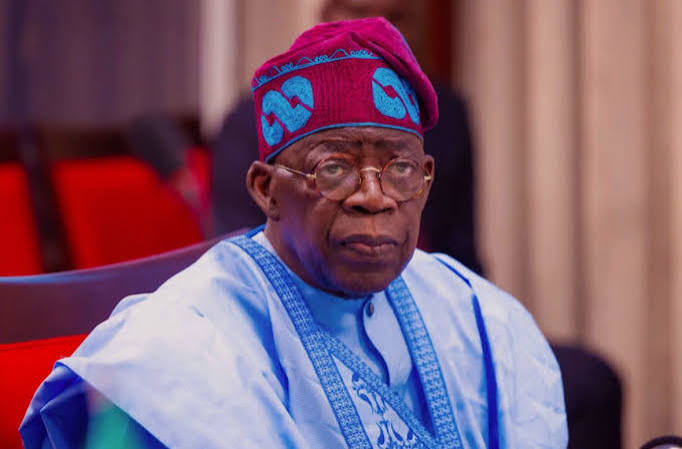
In a statement posted on X yesterday, Special Assistant to the President on Social Media, Dada Olusegun, described the figures as the product of “Opposition’s propaganda machines.”
He said the claim that 16 past Nigerian leaders borrowed a combined ?46 trillion over 63 years, while Tinubu borrowed ?120 trillion in three years, does not reflect the full picture.
“Opposition’s propaganda machines claim that in 63 years, 16 past Nigerian leaders borrowed ?46 trillion combined, while President Tinubu borrowed ?120 trillion in just 3 years and still removed the fuel subsidy.
“But in reality, the ?46 trillion figure from late 2022 hid ?22.7 trillion in Central Bank ‘Ways and Means’ overdrafts that weren’t officially put on the books until May 2023,” Olusegun stated.
He added that earlier calculations converted foreign debt using an artificial exchange rate of ?448 to $1, when the street value was over ?700.
“When the exchange rate was unified in June 2023, the exact same dollar debt instantly looked ?13.4 trillion larger on paper overnight without a single new dollar being borrowed.”
In actual dollar terms, he said, Nigeria’s public debt rose from $113.4 billion in June 2023 to $120.9 billion by June 2026 — an increase of only $7.5 billion.
On the fuel subsidy, Olusegun noted that its removal had boosted monthly Federation Account Allocation Committee funds shared to states and local governments from ?656 billion in April 2023 to ?2.4 trillion by September 2026.
The claims being rebutted originated from a viral social media graphic that compared cumulative borrowing under previous administrations with the Tinubu government’s record and highlighted the subsidy removal.
Fact-checkers have described the graphic as misleading because the ?46 trillion figure represented outstanding debt at the end of 2022 rather than total borrowing by 16 leaders over 63 years, and because it did not adequately account for exchange-rate effects or the formal recognition of previously off-book obligations.
Nigeria’s total public debt stood at approximately ?87.38 trillion (about $113.4 billion) in June 2023, shortly after Tinubu took office.
By June 2026 it had risen to about ?166.79 trillion ($120.93 billion), according to Debt Management Office figures.
A large part of the naira increase stemmed from the 2023 naira float and the securitisation of Ways and Means advances inherited from the previous administration.
The latest rebuttal comes after Tinubu asked the Senate to approve the implementation of a $7.7bn external borrowing plan to part-finance the 2026 budget deficit.
The request, which translates to about N10.79tn at the budget exchange rate of N1,400 to the dollar, was conveyed in a letter read by the President of the Senate, Godswill Akpabio, during Wednesday’s plenary.
The request replaced an earlier approval for $20.52bn and €1.045bn borrowings that the President had asked the Senate and the House of Representatives for a week earlier.
However, opposition parties, including the Nigeria Democratic Congress, criticized the request, citing concerns about the country’s rising debt burden and its implications for future generations.
-

 Politics3 days ago
LG CITY BOY COORDINATOR HAILS WIKE’S SUPPORT FOR ONYESOH, TINUBU
-
Politics3 days ago
DIRI INAUGURATES APC CAMPAIGN COUNCIL, SETS MILLION VOTES TARGET FOR TINUBU
-

 Politics3 days ago
NDC Candidate Urges Oborevwori To Probe Asaba Political Violence
-

 News3 days ago
Army Recovers X Account After Hack Attempt
-
 Business3 days ago
Nigeria Loses N17tr Yearly To Abandoned Projects
-
Politics3 days ago
2027: Oborevwori Tasks Media On Fair, Accurate Reporting
-
Politics3 days ago
2027: AKPABIO ENVISAGES TINUBU’S VICTORY IN SOUTH SOUTH REGION
-
Politics3 days ago
Asaba Political Violence: Police Confirm One Dead, Delta Govt Urges Probe