
Oil & Energy
PHED Decries Picketing Of Its Offices

The management of the Port Harcourt Electricity Distribution Plc., has expressed surprise and disappointment over the picketing of its offices across the franchise area by the leadership of the National Union of Electricity Employees, NUEE, early this morning.
PHED in a press statement signed by the Manager, Corporate Communication, John Onyi said “the picketing has disrupted the activities of PHED in Akwa Ibom, Cross River, Bayelsa and Rivers states in distributing power supply to its customers thereby leading to grounding of economic activities in the states.”
The statement added that; “the avoidable action of the Union is becoming one too many for a service provider with the mandate of the Nigerian Electricity Regulatory Commission to distribute power supply in its franchise area seamlessly.”
According to the statement, the Union had through press interviews and pamphlets in circulation adduced the following reasons for embarking on the picketing;
“Refusal of Management to sign Condition of Service and Procedural Agreement, refusal to remit already deducted check-off dues, insensitivity to workers welfare and obnoxious policy of restructuring and repositioning,” the PHED Management denied the accusations by NUEE and stated that the leadership of Dr. Henry Ajagbawa had made commitments towards addressing the issue of Condition of Service. The statement disclosed that, “after painstaking corrections/input from both parties, it was agreed for signing on the 23rd May 2020. The stage was set for the signing but NUEE did not turn up but Senior Staff Association of Electricity and Allied Companies did and today SSAEC has a copy of the signed copy. PHED is still wondering why NUEE did not come for the signing.”
“On the 1st June 2020, another meeting was fixed at their instance and as a responsive organisation, PHED obliged them and that was the last time we heard from the Union until today.
“The Union check- off dues has been up – to- date in terms of remittance except two months in 2019 that are having reconciliation issue with the bank”.
“We are aghast on the claim by the Union that PHED is insensitive to the welfare of the workers when salaries of the workers have been up – to – date. Not only that PHED gave permanent appointment to over 60 DISOs who were formerly outsourced with mouth watering salary. Recently, the management recruited 355 graduates from different fields to fortify the existing workforce and in all this, nobody has been sacked.It is also noteworthy to mention that under Dr.Ajagbawa,salaries are not paid later than 30th of every month,a rare occurrence prior to this time.”
The PHED management also denied being aware of the de-listing of NUEE members, noting that membership of NUEE or SSAEC was voluntary, adding that PHED was labour friendly and its doors are always open to dialogue with the Unions.
Taneh Beemene



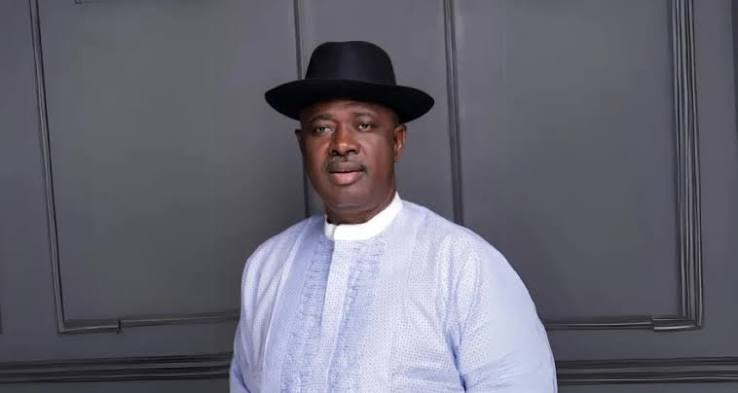
Lokpobiri said the country has substantial hydrocarbon potential that remains untapped, stressing that sustained investment in exploration is necessary to discover new resources and maintain production in the coming years.
He spoke recently at the opening of the 44th Annual International Conference and Exhibition of the Nigerian Association of Petroleum Explorationists in Lagos, where he urged oil and gas operators to intensify drilling campaigns, strengthen indigenous technical capacity and invest in new discoveries.
According to the minister, Nigeria can significantly expand its reserves through deliberate exploration programmes, particularly in deepwater areas with considerable untapped potential.
Lokpobiri disclosed that the number of active drilling rigs had increased from about 10 when he assumed office in August 2023 to more than 50 currently, while oil production had risen from about one million barrels per day, including condensates, to more than 1.8 million barrels daily.
When we came into office, active rigs were about 10. Today, from what I heard, active rigs in the country are over 50. They are drilling. There are continuous drilling campaigns going on by different operators in the industry. If you don’t drill today, there will be nothing to unlock tomorrow,” he stated.
The minister said the increased drilling activities are laying the foundation for future production, adding that exploration undertaken today would determine the country’s ability to sustain oil and gas output in the coming years.
“The foundation we are laying is to ensure that we take steps towards achieving sustainable production of oil and gas in the country,” he mentioned.
Lokpobiri called for greater investment in frontier exploration, noting that the Petroleum Industry Act had provided a dedicated fund for the purpose.
He expressed confidence that sustained exploration could significantly expand Nigeria’s reserves and unlock additional hydrocarbon resources.
He said, “We need to do a lot of frontier exploration. That is why the PIA itself has set aside a fund for frontier exploration. If we do that, I believe that in the next few years, we will come back here with profound results. I believe our reserves, in my opinion, should more than double. Our deepwater space has a lot more potential than what you and I can imagine.”
However, the minister cautioned against equating the size of the country’s reserves with economic prosperity, citing Venezuela’s more than 300 billion barrels of oil reserves as an example of how enormous resource endowments do not automatically translate into wealth.
He stressed that reserves will only deliver economic value when the resources are developed, produced and sold in the market.
“Reserve figures have no value unless we truly take appropriate steps to unlock these barrels and get them to the market. That is the only way we can get value,” he said.
Lokpobiri also highlighted the importance of the petroleum industry to Nigeria’s foreign exchange position, disclosing that about 85 per cent of the country’s foreign reserves, estimated at $56bn, came from the oil and gas sector.
In her keynote address, the Special Adviser to the President on Energy, Olu Verheijen, said Nigeria must ensure that increased oil and gas production translated into stronger industrial capacity, employment opportunities and improved economic conditions for citizens.
She cited the Ima gas field, where a discovery made more than 50 years ago only recently reached a final investment decision, as an example of how unfavourable investment conditions could delay the development of valuable resources.
-
News3 days ago
RSG Reaffirms Commitment To STEM Education, Technological Advancement
-
Business3 days ago
‘NUJ, NPA’s Partnership Would Boost Port Producrivity, Economic Growth’
-
 News3 days ago
IGP Warns Police Officers Against Partisanship …Directs Regular Engagement With Journalists
-
Business3 days ago
Fire Threat Interrupts Asaba Air Peace Flight
-
 News3 days ago
Customs To Deploy AI, Scanners Against Snuggling
-
Business3 days ago
Fish Production Deficit, A Major Investment Opportunity – Minister
-
 Politics3 days ago
2027: INEC Begins Deployment Of Non-Sensitive Materials
-
Sports3 days ago
CAF Awards 2026 Gets A New Date