
Politics
Delta Lawmakers Attend Capacity Building Workshop

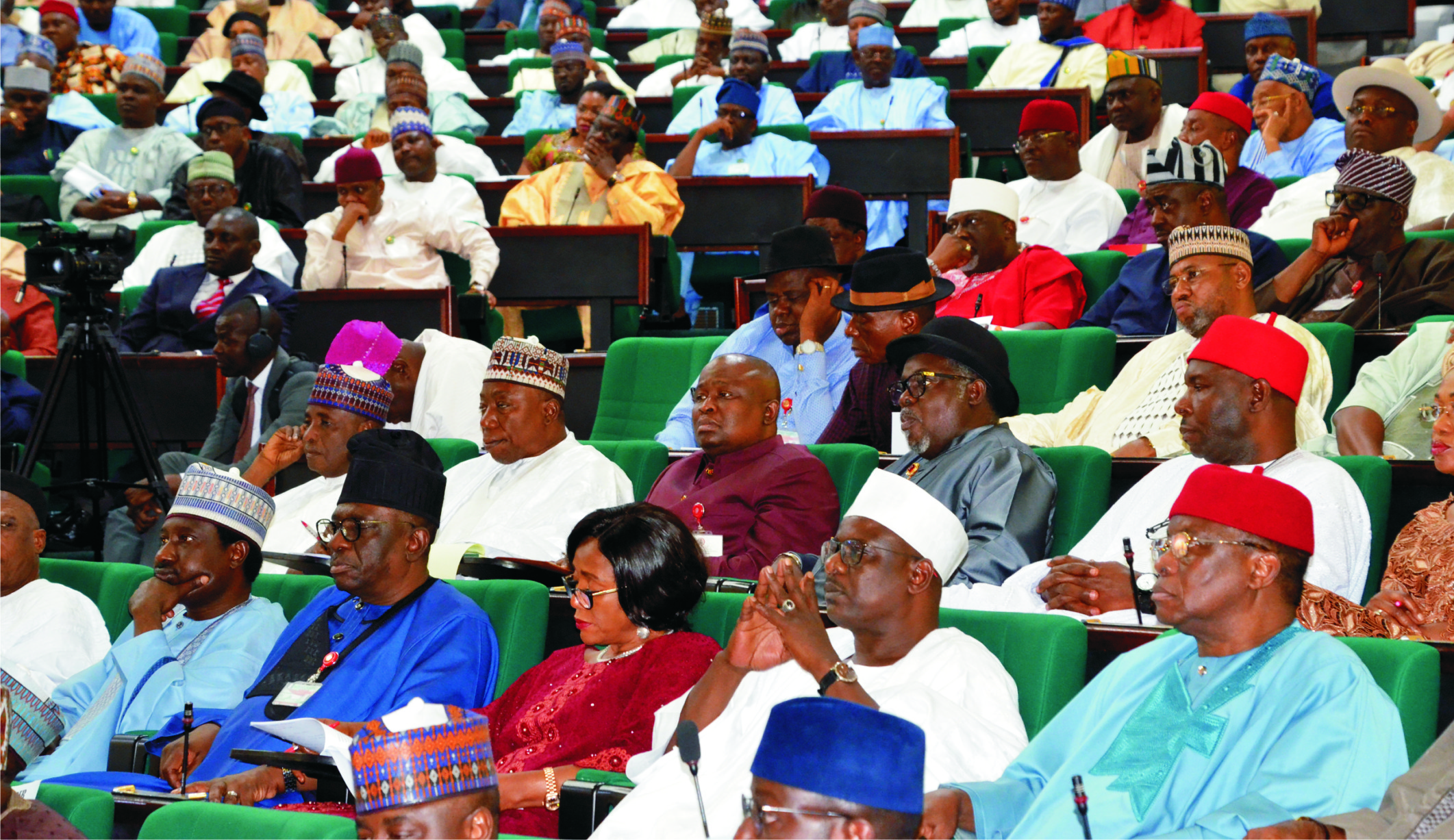
A two-day capacity building workshop for members and selected key management staff of the Delta State House of Assembly has opened in Asaba with a call on lawmakers and participants to avail themselves of the opportunity to enhance their work.
The Speaker, Chief Sheriff Oborevwori, in a keynote address at the opening ceremony of the workshop, said the importance of training and re-training could not be overemphasised as legislators.
Oborevwori recalled that as members-elect, the House had in 2019, had the privilege to be engaged by Konrad Adenauer Stiftung Foundation, the organisers of the workshop, where a request for more engagements was made.
While saying that the workshop was a follow up to that request as well as another made during a seminar with Speakers of State Houses of Assembly in Abuja, he noted that the gains from that encounter impacted positively in the legislative works of the State House of Assembly.
He said he was very confident that at the end of the workshop members would have gained lessons that will greatly help to advance their legislative duties.
The Speaker explained that from the topics available in the two-day workshop there was no doubt that they would be very impactful, saying that members of the seventh Assembly would ever remain grateful to the foundation for taking them through such incisive orientation.
The Director-General, National Institute for Legislative and Democratic Studies, Prof. Abubakar Sulaiman, commended the purposeful leadership of Governor Ifeanyi Okowa, saying that the on-going developments in the state confirm the pro-active character of the State House of Assembly.
Sulaiman stressed that there was an increasing need to strengthen the capacity of the legislature at the sub-national level in order to hold the executive to improve transparency and accountability in governance.
The Director-General appreciated the commitment of the Speaker, Chief Sheriff Oborevwori towards strengthening the institutional capacity of the State House of Assembly in achieving his vision for a robust Assembly.
The Resident Representative of Konrad-Adenauer-Stiftung Foundation, Dr Vladimir Kreck, said the mandate of the foundation was to promote Democratic good governance as well as foster good relations between the Federal Republic of Germany and its host countries.
Kreck said the foundation believes that the State Houses of Assembly in Nigeria should play a more decisive role in governing their states, hence the reason it has been supporting democratic governance at the state level.
He explained that the foundation would continue to partner with relevant stakeholders, including the National Institute for Legislative and Democratic Studies to elevate its services to a new quality.
Several topics are expected to be addressed at the workshop, including Legislative Agenda and Benchmarking the State Houses of Assembly, Overview of Legislative Practice and Procedures, Committees in the Legislature, Essence, Power of Oversight and Limitations in Budget Tracking, and Financial Autonomy of State Houses of Assembly and Local Government Councils in Budget Management Process.
Others include Management Models of Parliaments and State Houses of Assembly Commission, Civil Society Organization and Public Engagement in the legislative process, Legislative Code of Conduct and Ethics as well as How to improve the Conduct of Members and enforce high ethical standards in the state Houses of Assembly.



The commission announced the extension in a statement issued on Saturday and signed by the National Commissioner and Chairman of its Information and Voter Education Committee, Mohammed Haruna.
According to INEC, the decision followed appeals by political parties for additional time to complete the submission process through the dedicated online portal.
“The submission window, which according to the revised Timetable and Schedule of Activities for the General Election was originally scheduled to close on Saturday, 8th August, 2026, has been extended to Tuesday, 11th August, 2026,” the commission said.
In a a related development, INEC announced the suspension of PVC collection in Osun State ahead of the August 15 governorship election.
The commission said voters who applied for replacement of lost, damaged or defaced Permanent Voter Cards would have until midnight on Sunday, August 9, to print downloadable copies of their cards.
The electoral body explained that the deadline was necessary to enable it compile data on downloaded PVCs and produce final statistics on the total number of cards collected ahead of the election.
INEC said PVC collection in Osun commenced at the Registration Area level from July 22 to 28, 2026, but was extended to July 31 following complaints about large crowds and difficulties experienced by voters at collection centres.
The exercise subsequently moved to the local government level and ran from August 1 to 7.
The commission also disclosed that replacement downloadable PVCs had been made available to voters in Odo-Otin and Ife Central Local Government Areas following the theft of cards during attacks on the two collection centres.
It stressed that the stolen cards could not be used to vote.
INEC reassured Osun residents of its preparedness for the August 15 governorship election.
“The commission reiterates that the stolen cards cannot be used to vote.
“INEC reassures the people of Osun State of its readiness to conduct a free, fair, credible and inclusive governorship election on 15th August, 2026,” the statement said.
The commission said the deadline, initially set for Saturday, 8 August, has been extended to Tuesday, 11 August 2026, following appeals from political parties for more time.
INEC also announced that the window for voters who applied to replace lost, damaged or defaced PVCs to download their replacement cards will close at midnight on Sunday, 9 August.
The move is to enable the commission compile final PVC collection figures ahead of the 15 August Osun governorship election.
INEC said replacement downloadable PVCs have also been provided to affected voters in Odo-Otin and Ife Central Local Government Areas after hoodlums carted away cards from two collection centres, stressing that the stolen cards cannot be used to vote.
The commission reaffirmed its readiness to conduct a free, fair, credible and inclusive election in Osun State.
Gov. Kefas made the remarks over the weekend at the Federal Medical Centre (FMC), Jalingo, during the flag-off of the second phase of the Renewed Hope Medical Outreach in Taraba State, organised as part of activities marking Prof. Yilwatda’s 58th birthday.
The governor commended Prof. Yilwatda for choosing to mark his birthday by providing medical care to people in need.
“What Professor Nentawe did is a powerful demonstration of what leadership should be,” Gov. Kefas said.
He assured that his administration would continue to support initiatives that complement government efforts to improve healthcare delivery and the wellbeing of residents.
Speaking at the event, Prof. Yilwatda called on Nigerian leaders to embrace the culture of giving and use their positions to touch the lives of the less privileged.
He said his decision to celebrate his 58th birthday in Taraba State was deliberate and informed by the needs of underserved communities, particularly people who face difficulties accessing healthcare because of distance and financial constraints.
According to him, the intervention followed a needs assessment and was extended across the three senatorial districts of the state.
He said the exercise commenced on August 3 at Takum General Hospital and covered the Federal University Teaching Hospital, Wukari; First Referral Hospital, Sunkani, Ardo-Kola Local Government Area; General Hospital, Bali; General Hospital, Gembu; and FMC Jalingo.
Prof. Yilwatda said the intervention provided medical services to thousands of beneficiaries, including people who required surgical procedures.
He said sustainable national development could only be achieved when strong institutions placed Nigerians at the centre of development.
“Leadership is about service,” he said, urging political and public leaders to make giving back to society an important part of their responsibilities.
He reaffirmed his commitment to serving Nigeria and its people, saying his personal vision was to make every day of his life useful to humanity.
“Every day that I live, the vision is: let it be useful to humanity,” he said.
The Taraba State Commissioner for Health, Dr. Bordiya Buma, commended the initiative, saying it was consistent with the Renewed Hope agenda and efforts to strengthen healthcare delivery in the state.
Dr Buma said the second phase followed the successful completion of the first phase, which was conducted simultaneously in six local government areas, with two LGAs selected from each of the three senatorial districts.
According to him, more than 10,000 patients were attended to during the first phase, including people with medical and surgical conditions.
He disclosed that 327 general surgeries, 71 eye surgeries and 575 dental procedures were carried out during the exercise.
The commissioner expressed appreciation to President Bola Tinubu for the Renewed Hope Medical Outreach and thanked Prof. Yilwatda for supporting the initiative and choosing Taraba State as a beneficiary.
The Minister of Health and Social Welfare, Prof. Muhammad Ali Pate, also commended Prof. Yilwatda for choosing Taraba State to mark his 58th birthday through a medical outreach.
Prof. Pate said making healthcare the centrepiece of the birthday celebration was significant because health affects everyone.
-

 News2 days ago
RSG Targets Nine Million Residents in Mosquito Net Distribution Campaign
-

 Oil & Energy2 days ago
Aiyedatiwa Signs New Electricity Bill
-

 Oil & Energy2 days ago
NLNG Commissions Research And Innovation Centre In RSU
-

 Maritime2 days ago
Marine Minister Commends President Tinubu On NPERA Bill Assent
-

 News2 days ago
KenPoly Holds Eight Convocations, August 29
-

 News2 days ago
RSG Begins Another Phase of Projects Commissioning Today
-

 News2 days ago
RMAFC Completes Revenue Sharing Review, Proposes New Pay
-

 Maritime2 days ago
NAGAFF Petitions IGP Over Alleged Maritime Police Harassment