
Featured
Nigeria’ll Die If We All Keep Quiet, Mailafia Alerts …As‘ISWAP Attacks Lake Chad, Kills 14 Villagers’ …Troops Kill 25 Bandits, Arrest 155 Others, DHQ Claims …Increase Defence Budget, Sack Service Chiefs, Group Tells Buhari

The former Deputy Governor of the Central Bank of Nigeria (CBN), Dr. Obadiah Mailafia, has said if everyone keeps quiet about the current poor security situation in the country, especially the killings in Southern Kaduna, the country would die soon.
Mailafia, a development economist, and the African Democratic Congress (ADC), presidential candidate in the 2019 election, said this in an interview with newsmen.
He noted that he was not a radical, but a seeker of peace, adding that peace was impossible without justice.
Mailafia had been the guest of the Department Of State Services (DSS), following his claim in another interview that a state governor was a commander of the marauding Boko Haram terrorists.
In the interview, Mailafia said: “The fact that I am outraged by all the killings and genocide doesn’t make me a radical. If we all keep quiet, Nigeria will die. Is that what we want?
“Radicals are people who carry guns and go into the forest and start killing people. I have never used violence in my life, never encouraged anyone to use violence in my life. Even my name, Mailafia, means a man of peace, and there can never be peace without justice.
“These killings going on constitute an existential threat. I don’t know why for the life of me, that people tolerate the killings and think it is okay.
“And that when we speak and tell people about the reality of what we are facing now, they are more concerned about the sources, more concerned about political correctness; they have absolutely no concern about the holy martyrs that are being slaughtered.
“Why can’t we face the reality of the people being killed — the children, elderly, women, the youth being killed on a daily basis? That is my focus. Any other thing, to me, is diversionary. People have questioned my sources. They have questioned my political correctness.
“Why can’t they face the truth that our country is dying, innocent people are being killed, children are being slaughtered like little lambs, and women are being raped and then killed? Is this a normal country?
“Where is the outrage? Why do people accept this profound evil, this curse on this land? I reject it with the very fibre of my soul. So, I will never tone down, I will only tone down when the killings stop.
“No religion, no culture and civilisation tolerate the killing of innocent people. To say that the killing is abhorrent, the genocide is abhorrent, is a very simple maxim of universal morality.
“All I am asking is: stop the killings please,” Mailafia pleaded.
He also, recently, resigned from the National Institute for Policy and Strategic Studies (NIPSS), Kuru, Plateau State.
Meanwhile, Jihadists have killed 14 people on a Cameroonian island on Lake Chad near the border with Nigeria after their town decided to block food supplies to the insurgents, security sources said, yesterday.
Fighters from the so-called Islamic State West Africa Province (ISWAP) landed on the island of Bulgaram aboard speedboats from an enclave on the Nigerian side late Tuesday, the sources said.
“They came around 6:30 pm (1830 GMT) while people were preparing for evening prayers and shot dead 14 community leaders,” a security source added.
Some of the victims were shot in their homes while others were killed in the mosque where they had gone to pray, said another source, who gave a similar toll.
The assault was launched after the town, a major logistical route for ISWAP jihadists on the Nigerian side of the lake, decided to cut off food supplies for the jihadists.
In recent days, local chiefs had invoked the Koran at a town hall meeting and placed a curse on any resident allowing supplies to the jihadists.
The insurgents viewed the decision as a betrayal and a show of support for the local authorities.
The past week has seen several Nigerian air raids on ISWAP strongholds that have inflicted heavy casualties, according to military and local sources.
“The terrorists believe the blockade is part of the ongoing military operation aimed at starving them while they are under bombardment,” a source added.
The Lake Chad area is a vast marshy area shared by Nigeria, Niger, Cameroon and Chad.
Western parts of the lake have become havens for Nigerian jihadists, whose 10-year-old campaign has claimed tens of thousands of lives.
However, troops of Operation Hadarin Daji have intercepted firearms heading for Zamfara State, and recovered 11 locally-made rifles and 150 cartridges hidden in different parts of a Toyota Corolla car with registration number, Dal 41 MT.
Five occupants of the vehicle were arrested by the security operatives, who found that the weapons were being taken to Kofar Dinya in Bukkuyum Local Government Area of the state.
The operatives had also killed no fewer than 25 bandits and arrested over 150 others terrorising the North-West region.
Disclosing this in Abuja, yesterday at the weekly briefing on the ongoing security operations across the country, the Coordinator, Defence Media Operations, Maj-Gen John Enenche, said the troops equally recovered two AK-47 rifles and magazines at Zurmi in Zurmi LGA of Zamfara State.
Enenche, who said that the feat was recorded in August, added that the military also within the period recovered a large cache of arms and ammunition while over 1,000 livestock were recovered in the zone.
According to him, troops of Operation HADARIN DAJI have continued to record significant successes against the armed bandits in the North-West Zone of the country.
“For the month of August, troops have continued to exhibit continued resilience in the fight against armed banditry, cattle rustling and other sundry crimes in the zone.
“In one of the feats recorded, troops of operation SAHEL SANITY deployed at Daki Takwas on August 20, intercepted a Toyota Corolla car with Registration Number: DAL 41 MT.
“After a diligent search of the vehicle, troops discovered 11 locally made rifles and 150 live cartridges concealed in different parts of the vehicle,” he said.
According to him, preliminary investigation reveals that the dangerous cargo was heading to Kofar Dinya in Bukkuyum Local Government Area (LGA) of Zamfara State, while five men were arrested in connection with the illegal firearms.
He said that a repentant bandit leader named Bornon Kejo willingly surrendered to troops and submitted two AK-47 Rifles and two AK 47 Rifle magazines at Zurmi in Zurmi LGA of Zamfara State.
Enenche, who said that efforts were ongoing to recover more weapons, encouraged other criminals to surrender and embrace peace.
“Troops on August 23, conducted a well-coordinated intelligence-based operation leading to the raid of an illegal mining site located along Gadan Zaima – Zuru road in Bukuyyum LGA which also serves as bandits’ hideout.
“During the operation, 150 suspects were arrested and arms and ammunition were recovered,” he said.
Enenche said investigations revealed that aside from sabotaging the nation’s economy, banditry was being financed through illegal mining activities.
“Similarly, the troops on fighting patrol reportedly encountered three bandits on motorcycles around Maigalma village in Anka LGA of Zamfara State while attempting to attack innocent residents.
“During the encounter, one of the bandits was neutralized while others escaped. Troops recovered one AK-47 rifle, one AK-47 rifle magazine loaded with five rounds of 7.62mm ammunition and two motorcycles from the fleeing bandits.
“This is in addition to the neutralization of not fewer than 20 armed bandits within the month of August in Katsina, Zamfara and Sokoto States,” he said.
He said that the troop also intercepted seven trucks loaded with cattle suspected to have been rustled along Jibia – Katsina road and Gusau – Zaria road respectively between August 19 and August 20.
He said that the recovered cattle and suspects were handed over to the Katsina State Police Command and Zamfara State Association of Rustled Animals for further action.
“Within the period, a total of 155 bandits were arrested, no fewer than 25 armed bandits killed and over 1,000 livestock were recovered in this zone of the country.
“These successes recorded within the period are evidence of the troop’s resolve, doggedness and determination to end the security challenges in the North-West zone.
“Presently, farming and economic activities have picked up in the zone. The general public is hereby encouraged to provide timely and actionable intelligence that will assist the troops in the operation,” he said.
He said that the military high command commended all the gallant troops of the armed forces and personnel of other security agencies for the feat recorded in the various operations across the country.
“Troops are further encouraged to remain determined and to sustain the tempo in curtailing the activities of terrorists, armed bandits and other criminals.
“The High Command of the Armed Forces also reassures the general public of its unwavering commitment to securing the country for all human activities to strive.
“Members of the general public are, as always, enjoined to continue providing timely information on the activities of criminals in their various localities to the nearest military and other security agencies location for prompt and effective action,” he said.
Similarly, a group of Yoruba professionals under the aegis of Oduduwa League of Professionals (OLOP) has joined many others to drum support for the removal of service chiefs from their positions, saying that their continued stay was not adding value to the nation’s security management.
The group, which appealed to President Muhammadu Buhari, to listen to the voice of reason by relieving the security chiefs of their offices, said such action coupled with increment in defence budget, were the only ways to go for Nigeria’s security situation to regain its glorious place in history.
The position of Oduduwa League of Professionals came just few days after a group in the ruling All Progressives Congress, the APC Consolidation Group (ACG), asked the president to do away with the service chiefs following the worsening insecurity in the country.
The Oduduwa League of Professionals, in a statement signed by its National Coordinator, Prof Wale Odunsi, advised Buhari to try different hands in the security architecture, saying that such action could not only bring back the high morale but also zeal and vigour in addition to career development in the military.
But the group said sending the service chiefs packing from their offices without an increment in the nation’s defence budget could also not get the country out of the woods, as according to it, robust budget funding, which would lead to the military having necessary tools to stand taller than their adversaries, was imminent.
Odunsi, in the statement, urged the president not to look at the service chiefs as indispensable, saying that there were more efficient and tactically trained officers in the military with valour to confront the adversaries headlong and end the nation’s over a decade-long insecurity, especially the insurgency and terrorism in the North.
“We, the people of Oduduwa League of Professionals (OLOP) wish to appeal to President Muhammadu Buhari to, as a matter of urgent national importance, sack the current crop of service chiefs over the state of insecurity in our country. Their sack will no doubt be in our national interest, given that they seem to be now bereft of ideas on how to contend the security problems bedevilling our dear country,” it said in the statement.
The group reminded the president that: “We are joining our voices this time with that of so many Nigerians who have been calling for the immediate sack of the service chiefs.
“This call became imperative due to the lingering insecurity in the country that has claimed more than 102 of our members across the country besides the carrier stagnation in the Armed Forces of Nigeria” which it noted, “is not healthy anywhere in the world.
“Mr President, we know you as a good and listening man, but we really don’t know why you have continued to keep these service chiefs who are obviously bereft of new ideas on how to contend the worsening insecurity in the country,” it lamented.
According to OLOP, “The position of majority of Nigerians was reflected in the recent resolution of the National Assembly where members unanimously resolved that you relieve the security chiefs of their positions to pave ways for not only fresh hands but also fresh ideas in our security management strategies.














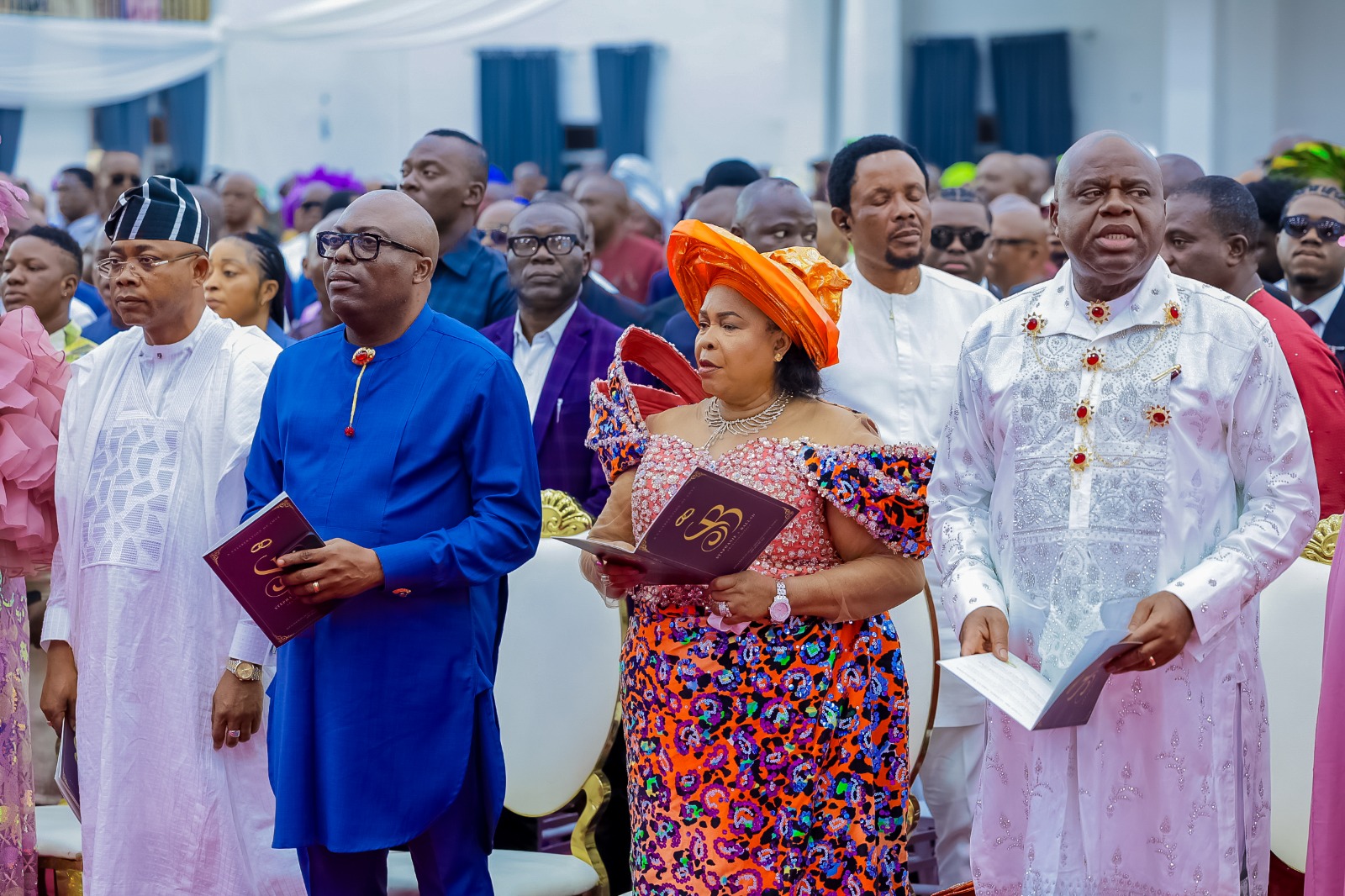
Rivers State, Sir Siminalayi Fubara, has assured members of the National Youth Service Corps (NYSC) of his administration’s commitment to supporting and strengthening the scheme in the State.
Fubara gave the assurance last Friday at the NYSC permanent orientation camp, Nonwa-Gbam, Tai Local Government Area in the State, during the swearing-in ceremony of 2026 Batch B Stream II orientation course.
Represented by the Permanent Secretary, Cabinet Bureau, Office of the Secretary to the State Government, Dr. Promise Oguzie, the governor said the State Government would remain intentional in providing the necessary support to improve the NYSC scheme and enhance the experiences of corps members deployed to the state.
He charged the corps members to be role models and quality nation-builders in their service to the good people of Rivers State in particular, and Nigeria at large.
“I charge you to be exemplary, dedicated and committed in all you do. Take full advantage of all the camp programmes and activities to enrich yourselves”, he said.
In his welcome address, the State Coordinator of NYSC in Rivers State, Mr. Moses Oleghe, urged corps members to see their deployment to Rivers State as a “veritable opportunity to make meaningful contribution to the growth of the State in particular and Nigeria at large.”
He further charged them to serve with all sense of “integrity, discipline, and the fear of God, especially when they will be engaged as INEC ad-hoc staff that will conduct the 2027 general elections.”
A total of 3,584 corps members composed of 1,421 males and 2,163 females were sworn in by the Chief Judge of Rivers State, who was represented by Justice Godspower Aguma.

Governor of Rivers State, Sir Siminalayi Fubara, says Nigeria needs God-fearing leaders for the nation to move in the right direction and make meaningful progress.
The Governor stated this yesterday when he received in audience, the World President of the Seventh Day Adventist Church, Pastor Erton Kohler; his wife, Andriene Marques Kohler; daughter Mariana Marques Kohler and a retinue of ministers of the church at Government House, Port Harcourt.
Fubara who hailed the Seventh Day Adventist Church for its contributions to education and the grooming of future leaders in Nigeria, expressed delight that the Church had over the years, been investing in education at various levels and currently runs two universities in the country.
He commended the church for not only using its institutions to spread the gospel of Christianity but to groom future leaders for the country.
According to him, religion should not be just about defending one’s faith, but also making meaningful impact on the lives of the people.
He said that by floating these educational institutions, the church has demonstrated capacity to support Nigeria in the task of producing not only educated people but a breed of God-fearing leaders.
“Our country is where it is today because we lack the fear of God. If you have the fear of God, there should be a limit to what you can do because you understand the supremacy of God. But when God is not in your equation, you’ll go beyond the line and that is what has brought us to where we are today.
“So, I feel very happy that you are contributing to the development of our future leaders in this country. We need the right people being in the right place; prepared properly with good minds; that is what we need, not just in Nigeria but round the whole world.,” he said.
Governor Fubara further observed that the absence of God-fearing people in high places to take the right decisions that could impact positively on the society, has also given rise to other problems such as social inequality, poverty, corruption and criminality. According to him, Nigeria needs a system where the average parent could afford quality education for their children and a guarantee that upon graduation, the average child will have the capacity to compete favourably with anybody, anywhere in the world.
“If we have a situation where the little money that you’re being paid as wage can also afford you quality healthcare and after working at least for 15-20 years, you have a roof over your head, tell me why you should be involved in any kind of crime? At that point, you’ll feel secured and this attitude of insecurity about the future that leads to all the social vices we have today won’t be there,” he said.
Governor Fubara expressed appreciation to the delegation for the visit and for their prayers for Rivers State, assuring them of his continued support for their programmes in the state.
Leader of the delegation and World President of the Seventh Day Adventist Church, Pastor Erton Kohler said he was in Nigeria for a special conference of the church during which thousands of the church’s ministers will be undergoing an empowerment programme to further equip them for the task of herding their flocks and serving the society.
He expressed gratitude to the Governor for the warm reception accorded his entourage, saying the memory of the visit will linger in his mind for a lifetime.
Kohler disclosed that the Church has over twenty -four million (24,000,000) members and more than 182,000 places of worship, spread across 212 countries of the world.

The Rivers State House of Assembly has approved the 2026–2028 Medium Term Expenditure Framework (MTEF) submitted by Governor Siminalayi Fubara.
This reaffirms the lawmakers’ commitment to enacting laws and taking legislative actions geared towards the overall development of the State.
The Assembly gave the approval during its Second Legislative Sitting of the Fourth Session held last Friday.
Speaking on the MTEF document during plenary, the House Speaker, Rt. Hon. Martin Amaewhule, noted that by the provision of Section 10(1)(b) of the Rivers State Fiscal Responsibility Law No. 8 of 2010, the MTEF ought to have been laid before the House in September 2025.
Amaewhule explained that traditionally, the document is expected to be presented four months before the commencement of the next financial year and immediately after the expiration of every three-year fiscal cycle.
He, however, stated that in the interest of the State and its people, the House considered it necessary to deliberate on the document, describing it as a precursor to the 2026 Budget Estimates.
The Speaker expressed concern that the year had already progressed significantly before the presentation of the framework.
During deliberations on the document, members examined the assumptions and projections contained in the MTEF and observed that strict adherence to the outlined fiscal parameters would ultimately serve the interest of Rivers people.
The lawmakers maintained that effective implementation of the framework would promote prudent financial management and enhance developmental planning across the State.
Following the debate and positive consideration by members, the Speaker put the question to the House and members voted overwhelmingly in support of the approval of the MTEF.
Meanwhile, during the same sitting last Friday, the House also received a petition from the Chairman of Obio/Akpor Local Government Council, Dr. Gift Worlu.
The petition was presented by the member representing Obio/Akpor Constituency II, Hon. Emilia Amadi.
According to the petition, concerns were raised over an imminent security breach, threats to lives, destruction of property and alleged forceful takeover of property by some lawless persons within parts of the Local Government Area.
Presenting the petition before the House, Hon. Amadi appealed to the lawmakers to revisit the matter and take necessary steps aimed at safeguarding lives and property in the affected communities.
The House is expected to further deliberate on the petition and consider measures to address the concerns raised in order to sustain peace and security in the area.
King Onunwor
-

 News2 days ago
RSG Targets Nine Million Residents in Mosquito Net Distribution Campaign
-

 Oil & Energy2 days ago
Aiyedatiwa Signs New Electricity Bill
-

 Maritime2 days ago
Marine Minister Commends President Tinubu On NPERA Bill Assent
-

 Oil & Energy2 days ago
NLNG Commissions Research And Innovation Centre In RSU
-

 News2 days ago
KenPoly Holds Eight Convocations, August 29
-

 News2 days ago
RSG Begins Another Phase of Projects Commissioning Today
-

 News2 days ago
RMAFC Completes Revenue Sharing Review, Proposes New Pay
-

 Maritime2 days ago
NAGAFF Petitions IGP Over Alleged Maritime Police Harassment