
Oil & Energy
India Is Becoming the World’s Refining Swing Producer

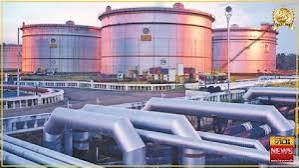
For years, the world’s swing oil producer has been Saudi Arabia. Need more crude? Riyadh opens the taps. Too much oil? Riyadh closes them. But while everyone has been watching who controls crude production, another swing producer has quietly been taking shape—one that deals in diesel, jet fuel, and gasoline instead of crude oil.
It’s India, and they’re taking charge.
When Middle Eastern refineries were damaged during the Iran/US war, when Russian diesel exports collapsed under the weight of Ukrainian drone strikes, and when Europe found itself scrambling for replacement barrels yet again, Indian refiners did a little carpe diem and began sending more cargoes to whoever was paying the highest premium.
Sounds just like a swing supplier.
India is on track to export about 1.4 million barrels per day of refined products in July, according to Kpler. That’s roughly 50% more than in May and the highest monthly export volume since September. Those barrels aren’t headed to a single destination, either. They’re headed to the highest bidder—i.e., wherever the shortage is.
Two months ago, more than 80% of India’s diesel exports went to Africa. Europe got none. This is because Europe had largely shut the door on fuels refined from Russian crude. Africa, meanwhile, suddenly needed replacement supplies after the Hormuz crisis scrambled Middle Eastern trade flows. Indian cargoes simply changed direction.
Related: TotalEnergies Sees Stronger Q2 Profit as Refining and Oil Trading Surge
Unlike many refining hubs, India doesn’t depend on a single source of crude. Russian oil now accounts for more than half of India’s imports this month, according to Kpler, but refiners also buy from Iraq, Saudi Arabia, the UAE, the United States, West Africa, and Latin America. If one supplier becomes a problem, India buys from somebody else. Indian refineries don’t particularly care where the barrel came from as long as they can make money turning it into something more valuable.
And right now, refined products are certainly valuable, because the real tightness in today’s oil market is with refined products.
For starters, Russia’s refining system has been hammered for months by Ukrainian drone strikes, forcing Moscow to restrict exports of diesel, gasoline, and jet fuel. And several Middle Eastern refineries are still operating below normal rates after months of war. Diesel inventories in Europe remain exceptionally tight. Jet fuel isn’t exactly plentiful, either.
India happens to be one of the few places adding refining capacity instead of losing it.
The International Energy Agency expects India’s refining capacity to grow another 15% by 2030. Investment in refining has climbed by an average of 23% over the past five years.
India imports nearly 90% of its crude oil. For most countries, that sounds like an energy security problem. But India turned it into a business model. Buy crude from whoever is offering the best economics. Turn it into higher-value products. Export those products wherever margins are strongest.
It’s a strategy that looks even smarter when the global fuel market starts breaking apart. The government understands that, too.
This week, New Delhi nearly doubled export duties on diesel and jet fuel while lowering the levy on gasoline exports. If diesel and jet fuel supplies tighten further, the government wants more of those barrels available at home before they leave for overseas buyers.
That’s the balancing act that comes with becoming a refining powerhouse. Export enough to capitalize on global shortages. Keep enough to avoid creating one yourself.
Saudi Arabia still decides who gets more crude. But India is increasingly deciding who gets more diesel, jet fuel, and gasoline. When the world suddenly needs another cargo of diesel, jet fuel, or gasoline, there’s a good chance that cargo leaves an Indian refinery. And as refining capacity keeps growing while other regions struggle with aging plants, war damage and underinvestment, India’s role in balancing the global fuel market is likely to grow right alongside it.
By Julianne Geiger


Continue Reading
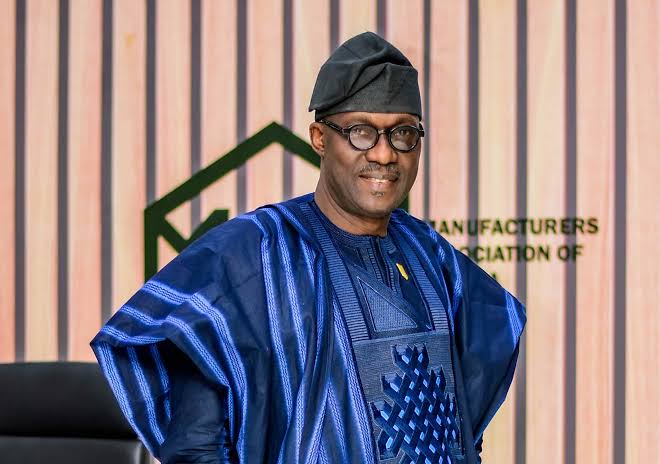
The inability of local refineries to secure enough Nigerian crude oil is threatening the country’s push for energy security and lower fuel costs, and setting off warning bells from manufacturers and business leaders, ARINZE NWAFOR reports
The Manufacturers Association of Nigeria has expressed concern over the inability of local refineries to access sufficient crude oil from within the country, warning that the situation is forcing Nigerian refiners to compete with international buyers for the nation’s crude and undermining the benefits of domestic refining.
The Director-General of MAN, Segun Ajayi-Kadir, made the remarks while reacting to reports that the Dangote Petroleum Refinery had purchased two cargoes of crude oil from the United Arab Emirates amid persistent domestic supply constraints.
Ajayi-Kadir described the development as evidence that domestic refiners were not getting adequate and reliable supplies of Nigerian crude, saying the situation was detrimental to the country’s industrialisation drive.
“That is obvious. The Dangote refinery’s decision to import crude oil from the United Arab Emirates amplifies the long-standing claims by domestic refiners that they are not receiving an adequate and reliable supply of local.
“The inability of our local refineries to access sufficient feedstock from Nigeria is distressing. For far too long, Nigerian crude refineries have had to compete with international buyers for our own (Nigerian) crude, often at international market prices plus additional logistics costs. This situation is not only economically inefficient, but it also erodes the advantage of local refining, which is to reduce import dependence, conserve foreign exchange, and create value addition within the country”, Ajayi-Kadir said.
The MAN DG urged the Federal Government to overhaul the domestic crude supply framework to ensure Nigerian refineries receive priority access to locally produced crude.
“This situation highlights the urgent need for a more structured and transparent domestic crude oil supply framework that prioritises local refineries. Therefore, MAN calls on the Federal Government, through the NNPCL and the NUPRC, to urgently ensure that a sufficient and consistent share of Nigeria’s crude production is allocated for domestic refining on fair commercial terms, particularly during this period of supply disruptions.
“At the same time, no effort should be spared in intensifying crude production. We should strengthen pipeline security, improve terminal reliability, and implement policies that effectively balance domestic refining needs with export commitments,” he said.
He stressed that Nigeria’s status as one of Africa’s largest crude oil producers should translate into stronger domestic value addition rather than dependence on imported feedstock.
“It is very concerning that a country as richly endowed with crude oil as Nigeria still finds itself in a situation where domestic refineries have to source crude from abroad to sustain their operations. Ultimately, the measure of success is not how much crude Nigeria produces, but how much value the country creates from that crude through domestic refining and how it speaks to our energy self-sufficiency. That is where the true economic benefits of our oil wealth lie,” Ajayi-Kadir added.
However, Ajayi-Kadir affirmed that sourcing crude from the UAE should be seen as a commercial decision rather than a diplomatic milestone.
“It could contribute positively to the broader commercial relationship between Nigeria and the UAE, but it should primarily be viewed as a commercial transaction rather than a diplomatic milestone. Refineries source crude based on technical specifications, availability, pricing, logistics and commercial terms,” he said.
Stakeholders push reforms to sustain Nigeria’s economic gains
According to MAN’s DG, while refiners should retain the flexibility to source crude oil internationally, Nigeria should prioritise strengthening its domestic supply to lower production costs, conserve foreign exchange, and improve energy security.
“Our priority should therefore be to strengthen the domestic crude supply framework, ensuring that local refiners have reliable and sufficient access to Nigerian crude. We therefore reiterate the call on the Federal Government and the relevant agencies to urgently reform the crude oil allocation to ensure that local refineries receive priority access to a commercially viable portion of Nigeria’s crude production,” Ajayi-Kadir said.
It was earlier reported that the President of the Lagos Chamber of Commerce and Industry, Leye Kupoluyi, described Dangote refinery’s decision to import crude from the UAE as a commercial rather than patriotic decision.
Kupoluyi said the refinery was expected to source crude based on pricing, quality, availability and commercial considerations.
“It’s very straightforward. It’s a business. When you are running your business, you always look at opportunities. Opportunity drives business. We should look at how much the UAE suppliers are selling to Dangote. If the refinery has seen a better deal somewhere, we cannot say because of patriotism it must buy from Nigeria,” Kupoluyi said.
He added that refiners should remain free to source crude from any market provided such transactions align with Nigeria’s national interest, noting that the government should protect national interest while allowing businesses to make commercially sound decisions.
Report said the Chief Executive Officer of the Centre for the Promotion of Private Enterprise, Dr Muda Yusuf, described Dangote refinery’s crude imports from the UAE as a business decision driven by domestic supply constraints rather than diplomacy.
“This is a business decision, and the Dangote refinery is very big. The NNPC cannot meet Dangote’s demands in terms of crude allocation, so it has to source crude from elsewhere that is commercially competitive. If the quality standard is good and the price is good, why not? It is purely a business decision; it is not a diplomatic thing,” Yusuf said.
He added that increased trade could further strengthen Nigeria-UAE economic relations, especially after both countries signed a trade protocol.
Yusuf also said the development highlighted the long-standing challenge of inadequate domestic crude supply to local refiners.
“Local crude has accounted for only about 30 per cent of Dangote Refinery’s feedstock from the beginning because domestic availability is not meeting demand. There are joint venture arrangements, previous forward sales and commercial terms that make it necessary to buy elsewhere. If the terms offered locally are not favourable, the refinery has to source crude abroad.
“It should be part of the business model of any refinery to source crude locally or internationally. There are countries with some of the world’s biggest refineries that do not produce crude at all. What matters is that the economics make sense. This is business, not politics or diplomacy”, Yusuf said
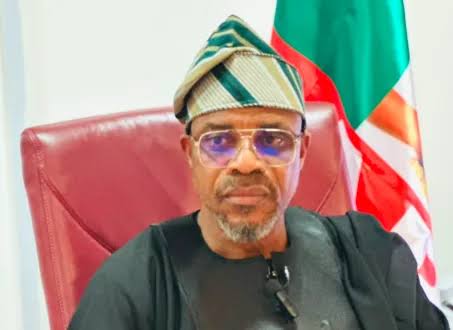
The Vice Chairman of the Senate Committee on Petroleum Resources (Upstream), Senator Allwell Onyesoh, has criticised the Nigerian National Petroleum Company Limited for repeatedly failing to honour invitations from the National Assembly, describing the action as a setback to legislative oversight and the fight against crude oil theft.
Onyesoh made the remark while speaking with journalists shortly after a meeting of the Senate committee investigating crude oil theft and considering amendments to Nigeria’s petroleum laws to strengthen the legal and regulatory framework governing the oil and gas sector.
The Rivers East senator had earlier staged a walkout from the committee meeting in protest over what he described as the recurring absence of the NNPCL’s top management at critical legislative engagements.
He said the corporation’s repeated failure to appear before the committee undermined transparency, weakened legislative oversight and reflected a disregard for democratic institutions.
According to him, the committee was merely carrying out its constitutional responsibility by seeking facts, records and explanations from the state-owned oil companies.
“We are not contractors. We are simply asking questions. Give us facts. Give us records. We want to study them. That is our constitutional responsibility,” he said.
Onyesoh maintained that the National Assembly has a constitutional duty to scrutinise the activities of government agencies, particularly one responsible for managing Nigeria’s oil resources.
He also rejected the corporation’s repeated explanation that its officials were unavailable due to official engagements abroad.
“They keep writing letters saying they are travelling to Congo, travelling here and there, just to dodge simple things. Was the GCEO appointed to keep travelling or to work?
“Is Nigeria’s problem outside the country or here in Nigeria? How is it possible that the GCEO, his deputy, directors and the entire management are all travelling at the same time? That is not acceptable,” he said.
The lawmaker argued that the corporation’s continued refusal to appear before the Senate only deepened public suspicion about its willingness to submit to parliamentary scrutiny.
“If you are serving the people of Nigeria, first and foremost, you must obey the laws of the land. The highest law-making body in the country invites you, and consistently, you are too big to appear. Who told you that?” he queried.
He insisted that no public institution was above legislative oversight and dismissed suggestions that the NNPCL was answerable only to the Presidency.
Onyesoh also cautioned against linking the corporation’s conduct to President Bola Tinubu, saying the President had consistently shown respect for the legislature.
“I know, Mr President. That is not the President I know. He will not tell any agency to ignore the National Assembly. We all work with Mr President. Whenever issues arise, he engages the legislature with respect,” he said.
The senator disclosed that he would formally engage the Senate leadership over what he described as the corporation’s repeated disregard for parliamentary invitations.
He also lamented the continued underdevelopment of oil-producing communities despite the enormous wealth generated from petroleum resources.
Recalling the history of Umuechem in Etche Local Government Area of Rivers State, one of Nigeria’s earliest oil-producing communities after Oloibiri, Onyesoh said many host communities still lacked basic infrastructure, employment opportunities and meaningful participation in the petroleum industry.
He questioned why employment opportunities, training programmes and other benefits in the oil sector rarely reached people from the communities where crude oil is produced.
The senator also called on the Petroleum Technology Development Fund to publish records showing how many indigenes of Rivers State and other oil-producing communities had benefited from its scholarship and capacity development programmes.
He reaffirmed his commitment to demanding greater accountability, transparency and equitable treatment for oil-producing communities, insisting that the wealth derived from their land should translate into meaningful development and opportunities.
The committee also considered proposed amendments to Nigeria’s petroleum laws, particularly outdated provisions relating to penalties and regulatory enforcement, as part of efforts to strengthen the sector, curb crude oil theft, improve regulatory efficiency and boost crude oil production.

The Petroleum Products Retail Owners Association of Nigeria (PETROAN), Rivers State Branch, has elected a 12 – member executive to steer the affairs of the association for the next four years.
The executive, elected during the Annual General Meeting (AGM) of the association, at it’s secretariat in Port Harcourt, and sworn in immediately after the election, was mandated to, among other things, tackle the adulteration of petroleum products as well as address irregularities in meter readings across the state.
The newly elected executive include, Pastor Ezekiel I. Eletuo as Chairman, Kanu Addeson C. as Vice Chairman , Dr. Ejike Jonathan Nnbuihe as Secretary, Fidelis A.Inaku as Treasurer and Lady C. N. Ekejiuba as Financial Secretary.
Others are Anaenye Anthony as Publicity Secretary, Arc. Kingsley O. Anyino as Organising Secretary, Nze Peter Ezenwa as Chief Whip, and Sunny Williams as Auditor.
Other members of the executive included Chidiebere Ronel Akwara as Welfare Officer, Ibe Chimaobi C. as Legal Adviser, and Emetoh Chizoba as Assistant Secretary.
Inaugurating the new leadership, PETROAN Zonal Chairman, High Chief Sunny G. Nkpe, charged the team to build on the achievements of the outgoing executive.
He urged them to collaborate with stakeholders in the petroleum sector to ensure industry stability and address issues of multiple taxation.
Nkpe who emphasized the need for transparency, accountability, and an open-door policy in administering the union, insisted these principles remained crucial in advancing the association’s objectives and improving members’ welfare.
The zonal chairman also commended the outgoing executive for their accomplishments during their tenure and for conducting a smooth transition process.
He further described their efforts as instrumental in strengthening the union’s standing in the state.
In his acceptance speech, the new Chairman, Pastor Ezekiel I. Eletuo, thanked members for their confidence and pledged to improve on the foundations laid by the previous administration.
He promised his leadership would be guided by transparency, accountability, fairness, unity, and integrity.
Eletuo called on all members to support the new executive in its efforts to elevate the association.
Also speaking, the immediate past Chairman, of the association, Sir Chilam Francis Dimkpa, expressed appreciation to members for their support during his administration and stressed the need for them to extend the same cooperation to the new leadership.
Dimkpa highlighted key achievements of his tenure to include capacity building for members, increased union visibility through media advocacy, and the establishment of stronger ties with stakeholders, corporate organisations, and individuals.
He also acknowledged the support of the state government, the Police, the Department of State Services (DSS) and the Nigeria Security and Civil Defence Corps (NSCDC).
Stakeholders present at the event also delivered their goodwill messages.
Highlights of the event included administration of oath of office to the new executive and the presentation of certificates of return by the zonal chairman. .
By: Amadi Akujobi
-

 News1 day ago
Family Seeks Police Help As Woman Goes Missing After Fleeing Female Circumcision Threat
-
 News1 day ago
Nigeria Hosts World Public Relations Forum Sept …As Experts Seek Inclusion Of PR In Decision Making
-

 News1 day ago
Uphold Principles Of Dev, Rivers SSG Charges Tertiary Institutions
-

 News1 day ago
Tinubu, Fubara Condole Amaechi Over Mother’s Death
-

 News2 days ago
Spain Are World Champions ….. End Argentina, Messi’s Dreams
-

 News1 day ago
Rivers NUJ Seeks Recruitment Into State Media Houses …Urges Govt To Reposition Public Service
-

 News1 day ago
Badejo-Okusanya Emerges 33rd NBA President …Says We’ll Build NBA Where Lawyers Live Better
-

 News1 day ago
Minimum Wage Review: We’re Battle Ready For Major National Struggle -NLC