
Women
COVID-19: Women Front And Centre

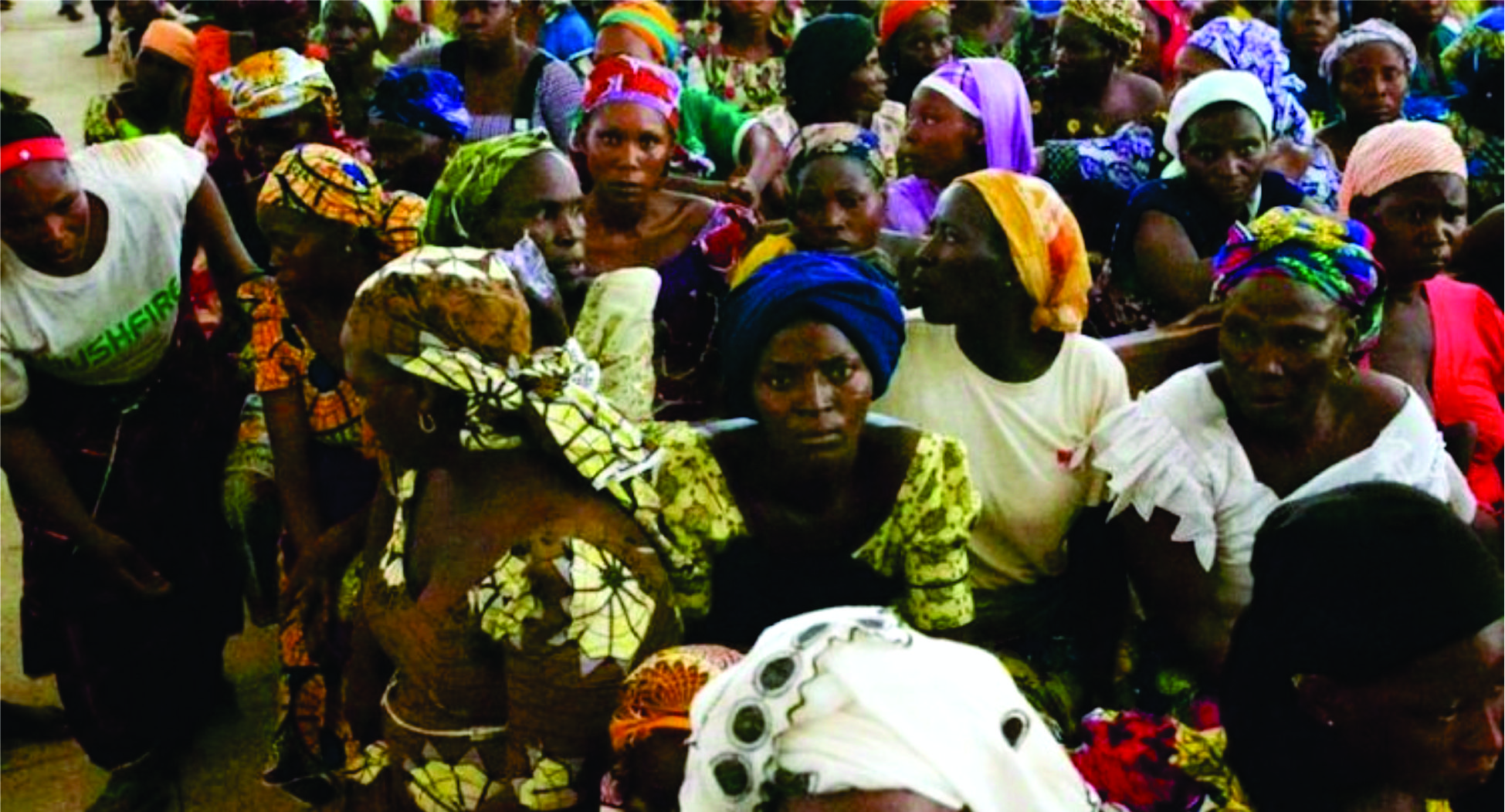
One thing is clear about the COVID-19 pandemic, as stock markets tumble, schools and universities close, people stockpile supplies and home becomes a different and crowded space: this is not just a health issue. It is a profound shock to our societies and economies, exposing the deficiencies of public and private arrangements that currently function only if women play multiple and underpaid roles.
With children out of school, mothers at home may still work, but many have also become teachers and caregivers, with consequences for those previously employed in those roles. For the 8.5 million women migrant domestic workers, often on insecure contracts, income loss also affects their dependents back at home. As schools close in more countries, the number of mothers facing this across the world rises and the consequences accumulate.
By the middle of March there were 207,855 confirmed cases in 166 countries, areas or territories. Without data that is disaggregated by sex, however, these numbers give us only part of the story of the impact on women and men. We need far more sex-disaggregated data to tell us how the situation is evolving, including on differing rates of infection, differential economic impacts, differential care burden, and incidence of domestic violence and sexual abuse.
Even without this, experience from previous major epidemics points us to specific strengths and vulnerabilities that we can look out for and be proactive to safeguard. Where governments or businesses put income protection in place, this can ease these dilemmas, sustain incomes and avoid driving households into poverty. This response must also include those in the informal economy, where most women who work outside home make their livelihood. Such social protection is best directed specifically to women.
The 2014-16 Ebola outbreak in the West African countries provide essential, gendered public health and socioeconomic lessons. Women in those outbreaks were exposed to both health and economic risks, as they are again now, in ways intrinsically connected with their roles in the community and responsibilities as caregivers within the home and family.
For example, both Ebola and Zika infections are potentially catastrophic for pregnant women. Yet during both previous outbreaks, access to family planning services were very limited, and pregnant and lactating women were excluded from vaccination against the viruses. This underlines the importance of sustained maternal health services to avoid a resurgence of birth-related deaths, and equal access for women to the development and use of all medical products including vaccines once produced.
This is a moment for governments to recognize both the enormity of the contribution women make and the precarity of so many. This includes a focus on sectors where women are over-represented and underpaid, such as daily wage earners, small business owners, those working in cleaning, caring, cashiering and catering sectors and in the informal economy.
Globally, women make up 70 per cent of frontline workers in the health and social sector, like nurses, midwives, cleaners and laundry workers. We need mitigation strategies that specifically target both the health and economic impacts of the COVID-19 outbreak on women and that support and build women’s resilience, as we saw in Liberia and elsewhere. And to make those responses as well designed as possible, women should be fully engaged in their creation, be priority recipients of aid, and partners in building the longer-term solutions.
We are learning more every day from the arc of the pandemic in China. We have been working closely there with country leadership as part of the UN collective response. Joint campaigns have reached 1 billion people, with communications that raise awareness through public health information, combat stigma and discrimination, reflect women’s specific needs, promote women’s leadership and contributions and develop recovery plans that link equality, health and the economy.
All of us engaged in this effort, whether public or private sector, need to take a coordinated, people-centred approach to rapidly building health system capacity in both developed and developing countries, making a conscious effort to put women front and centre. For example, creating better access to appropriate personal protective equipment for home-based caregivers, and removing obstacles to their work, by promoting flexible working arrangements, and ensuring supplies of menstrual hygiene products. These needs are even more important for areas under lockdown or quarantine. So too are considerations of gender-based violence that are exacerbated by these conditions, but may not receive the attention they need, in the drive to respond to the pandemic.
Violence against women is already an epidemic in all societies, without exception. Every day, on average, 137 women are killed by a member of their own family. We also know that levels of domestic violence and sexual exploitation spike when households are placed under the increased strains that come from security, health and money worries, and cramped and confined living conditions. We see this frequently among displaced populations in crowded refugee camps; and reported domestic violence has tripled recently in some countries practising social distancing.
COVID-19 provides us with an opportunity for radical, positive action to redress long-standing inequalities in multiple areas of women’s lives. There is scope for not just endurance, but recovery and growth. I ask governments and all other service providers including the private sector to take this opportunity to plan their response to COVID-19 as they have never done before, and fully take a gender perspective into account, proactively building gender expertise into response teams and embedding gender dimensions within response plans. For example, include surge funding for women’s shelters so they can provide for women who need to escape violent relationships, and aim economic support and bail outs specifically at retail sectors, hospitality and small businesses where women are predominantly employed on precarious contracts, if any, and are most vulnerable to forced cost-saving.


Women
Hearty Cheers To Nigeria’s Flamingos …Kudos To All Nigerian Women Who Chose To Excel In Male Turfs

For ages, football and soccer pitch in Nigeria were literally identified as areas specifically meant for the menfolk, in line with the societal expectation that physical dominance belongs exclusively to men. Our pitches and the likes were formerly mapped out as men’s domain!
As years rolled by, a new generation of daughters arose. The barriers were broken. Our women and girls graced the pitches and took solid grounds. Not, just to watch and not just to participate, but to conquer.
Nigeria’s female national football teams have consistently flown the country’s flag high, serving as absolute power houses on the African continent and earning immense global respect.
The year 2026 will forever be etched in gold. In Nigeria, and African football history as the year Nigeria’s U-17 women’s national team, the Flamingos took over the male turf, rewrote the global script at the FIFA U-17 Women’s World Cup in Morocco, emerging the first African female Team to conquer the World and bring home the World Cup.
The journey through the seven matches were clearly tough and rough but the Nigerian teenage Queens defied all odds , faced the global big hooves , beat them in their games and made Africa; Nigeria proud . They broke all barriers and won their six matches. They conquered football behemoths like Brazil in the semi-finals with a stellar 3-1 victory, and stood face-to-face with multi-time global champions, Japan in the grand finale in Rabat. When the final whistle blew, sealing a tense 2-1 victory over Japan, the Flamingos achieved the unthinkable: they became the first African nation in history (male or female) to lift the FIFA U-17 World Cup trophy. .
I hail the Midfielder, Oluebube Umejiaku , who ignited the pitch and tamed the world former bests, clinching the prestigious ” FIFA Golden Ball as “ “Player of the Tournament.” Under the tactical brilliance of Head Coach Akeem Busari, the young Nigerian girls stood firm and displayed “what they got”
They did not just win; they dismantled barriers. After an initial setback, they surged forward with six consecutive victories.
As the African Queens landed home amidst thunderous ovations, the Presidency and the Senate took turns to celebrate the Young World Conquerors. Tuesday, the Senate, following the prayers of a Motion on the Flamingos glorious outing sponsored by Distinguished Senator Abdul Ningi applauded the U-17 World best. The World record attained by the players gave room for off politics deliberations in the Red Chamber as all Senators united in commendations over this national feat. The lawmakers took turns to eulogise the female players and splashed the team with cash sum of one hundred million naira.
Senate President Godwill Akpabio, speaking on behalf of his colleagues said, “I want to commend the Flamingos, the U-17 youth team of Nigeria, for defeating major countries such as Brazil and Japan to win the Under-17 World Cup for Africa for the first time and for Nigeria.”
He also appealed to the Federal Government and corporate Nigeria to adequately reward the players and invest in the foundational development of women’s sports. The lawmakers also commended the National Sports Commission (NSC) under Mallam Shehu Dikko for his good work which yielded the world trophy to Nigeria.
Wednesday, the Senate, President and his colleagues continued the shower of praises as they hosted the Flamingos in the National Assembly.
Same day, the team was hosted at the Presidential Villa by the First Lady, Senator Oluremi Tinubu. The players at the Villa received gifts of One hundred million Naira each from President Bola Ahmed Tinubu .
From the women’s world, the victory of the Flamingos speaks volumes. It is women breaking boundaries, venturing into male – dominated terrains not just to be seen but to excel not minding systemic hurdles.
Looking back, it is already established that soccer, the field of men had expanded. No longer a male preserve but a shared terrain where Nigeria’s female teams shake the world.
Before now, the Super Falcons (Senior Women’s National Team; undisputed Queens of Africa, dominated the Women’s Africa Cup of Nations (WAFCON) with multiple continental titles and historic triumphs. They qualified for every single edition of the FIFA Women’s World Cup since its inception in 1991. The Super Falcons maintained Continental Dominance and Rankings.
The Falconets, Nigeria’s U-20 Women’s National Team in turn carved their names in gold over the years as they consistently terrified traditional superpowers at the FIFA U-20 Women’s World Cup. They have a history of reaching deep into the tournament, famously securing runners-up position (Silver medals) at the FIFA U-20 Women’s World Cup on multiple occasions, fiercely challenging powerhouses like Germany and the USA. Maintaining African Supremacy, they routinely swept the African qualifiers, proving to be the ultimate conveyor belt of talent feeding straight into the senior Super Falcons squad.
Cheers to all Nigerian Women! Our Teams are the best!
Nneka Amaechi-Nnadi
-
News4 days ago
RSG Reaffirms Commitment To STEM Education, Technological Advancement
-
Business4 days ago
‘NUJ, NPA’s Partnership Would Boost Port Producrivity, Economic Growth’
-

 News4 days ago
IGP Warns Police Officers Against Partisanship …Directs Regular Engagement With Journalists
-

 Oil & Energy1 day ago
FG To Double Oil, Gas Reserves, Moves To Intensified fresh Exploration
-
Business4 days ago
Fire Threat Interrupts Asaba Air Peace Flight
-
 News4 days ago
Customs To Deploy AI, Scanners Against Snuggling
-
Business4 days ago
Fish Production Deficit, A Major Investment Opportunity – Minister
-
Sports4 days ago
CAF Awards 2026 Gets A New Date