
Oil & Energy
Pricing, Infrastructure Imbalance ,Worsening Nigeria’s CNG Investments Deficit –NIPCO


Inappropriate pricing, infrastructure shortages and absence of a regulatory agency are partly responsible for investment deficit in Nigeria’s Compressed Natural Gas (CNG) industry.
Managing Director, NIPCO Gas limited, Sanjay Teotia, who declared this during a media tour of some of NIPCO’s facilities in parts of Benin City, the Edo State capital, noted that the development of CNG, which is also being used to fuel vehicles for profitability and environmental friendliness is also being hampered by lack of accessibility to land.
A statement by the Assistant General Manager, NIPCO Plc, Mr Lawal Taofeek, quoted Teotia as expressing regret that with the enormous gas reserves in the country, the potentials in the sector have not been fully utilised to the benefit of the people.
Nigeria, Teotia said, would continue to miss the gains of the deposit of such gas reserves if the challenges are not resolved. “He, however, lauded the federal government’s National Gas Expansion Programme Committee, which was recently inaugurated by the Minister of State for Petroleum Resources, Chief Timpre Silva, and chaired by Mohammed Ibrahim to steer the gas sector for optimal performance is a welcome development.”
The setting up of the committee, the Nipco Gas Ltd MD said, was very apt and a clear indication of the genuine resolve of the present administration’s resolve to tackle challenges that bedevil the sector and to pave the way for better utilisation of the nation’s massive gas resources in the overall interest of stakeholders.
According to him, the company, which got its license to operate in 2007, has seven gas stations in Benin alone, with other stations in Lagos and Delta States, adding that NIPCO has laid 51km gas pipeline in Benin to distribute CNG to the seven stations in the city.



Excluding Oman, their oil exports reached 18.4 million bpd in October, although shipments remained 26 per cent below prewar levels. Crude oil exports alone totaled 15 million bpd, equivalent to 82 per cent of their volume before the conflict.
Despite the prospect of excess supply, the IEA continues to identify two major sources of uncertainty: depleted onshore inventories and the security of maritime transport.
Its latest projections indicate that the recovery in global oil supplies has outpaced its earlier expectations. The market now faces the prospect of a surplus before the end of 2026, although low inventories on land and risks to shipping routes remain unresolved.
-
News5 days ago
Bayelsa Boat Mishap: Tinubu Donates N250m As Death Toll Hits 29
-
News5 days ago
Odu Pays Tribute To Late Chinwah, Describes Him As Courageous, Selfless Academic
-
 Maritime4 days ago
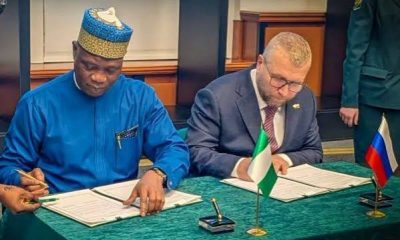
Nigeria, Russia Customs Sign MOU To Trade Facilitations
-

 Sports4 days ago
World marathon champion gets three-year doping ban
-

 Maritime4 days ago
South-South Governors Urges To Shake Off Collective Lethargic To Embrace Blue Economy
-

 Maritime4 days ago
Oyetola Woos Investors With Nigeria’s Seabed Resources, Marine Biotechnology
-

 Business4 days ago
Moniepoint MfB transaction volume hits 1trn daily — CEO
-

 Sports4 days ago
RSG PLEDGES TO PARTNER SWAN FOR SPORTS PROMOTION, DEVELOPMENT