
Featured
Police Brutality And The Rest Of Us

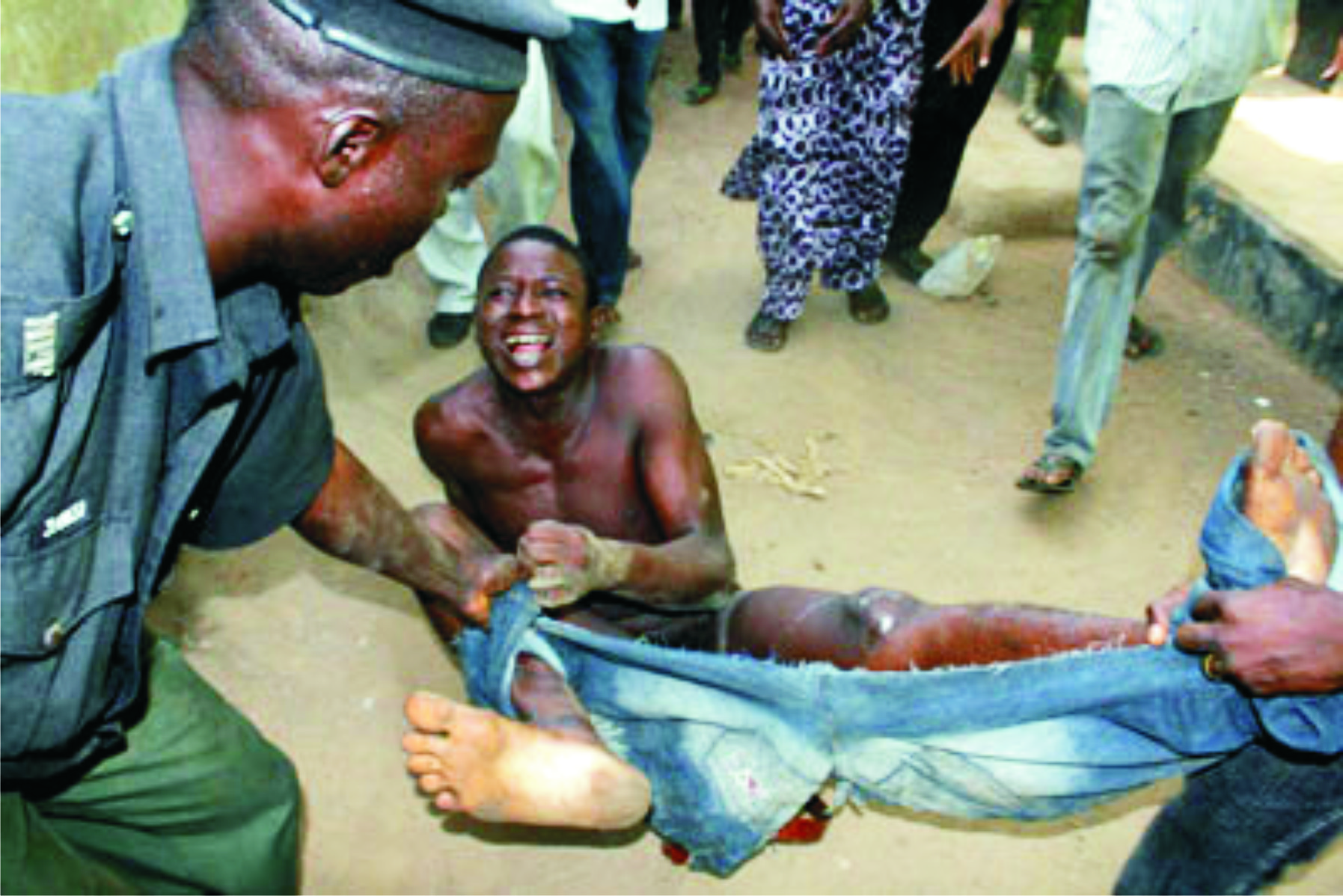
On December 23 last year, Chima Ikwunado, an automobile mechanic based in Port Harcourt, Rivers State, died in the custody of the Nigerian Police few days after he was apprehended by the police who whisked him away alongside four other colleagues after they reportedly failed to meet “bribe” demanded from them. Chima was allegedly killed by some policemen, after undergoing “severe torture in their custody”.
Victor Ogbonna, one of the victims arrested alongside the deceased, said “They tortured Chima, broke his legs and Chima died in pain. They (police) hung Chima in the air for two hours and went on patrol, only to return afterwards to lose him. By then, he merely fell down like a cocoyam, already dead,” “So, they took him inside their vehicle and drove off. Chima died on December 23, according to what the boys told me.”
The case of Chima is one out of the avalanche of incidents of torture and ill-treatment of suspects held in the custody of the police. Victims and witnesses have disclosed at several fora that the forms of torture and other ill-treatment committed by the police included the tying of arms and legs tightly behind the body, suspension by hands and legs from the ceiling or a pole, repeated and severe beatings with metal or wooden objects (including planks of wood, iron bars, and cable wire), resting of concrete blocks on the arms and back while suspended, spraying of tear gas on the face and eyes, rape of and other sexual violence against female detainees, use of pliers or electric shocks on the penis, shooting on the foot or leg, stoning, death threats, slapping and kicking with hands and boots and denial of food and water.
A 23-three year-old man who was arrested by the police in Enugu described his mal-treatment to Human Rights Watch thus: “They handcuffed me and tied me with my hands behind my knees, a wooden rod behind my knees, and hung me from hooks on the wall, like goal posts. Then, they started beating me. They got a broomstick hair [bristle] and inserted it into my penis until there was blood coming out. Then, they put tear gas powder in a cloth and tied it round my eyes. They said they were going to shoot me unless I admitted I was the robber. This went on for four hours.”
In another account, a 36-year-old trader who was detained at the Kano police headquarters told researchers: “Our arms were tied with handcuffs. One at a time we were hung by a chain from the ceiling fan hook. I was the first. They started beating me with a yam pounder, saying I should confess for the robbery. I didn’t know what they were talking about. I was beaten, beaten, beaten. They beat my knees, the soles of my feet, my back and my joints. This went on for 25 minutes. I was beaten too much. I shit and piss while I was hanging. Then, I became unconscious.”
One factor is clear, The Police disregard for due process of law, which fuels the abuse of power, is characteristic to all the cases. Amongst the main concerns are deliberate practice of not informing suspects of the reasons for their arrest, lack of legal representation, prolonged pre-trial detention and acceptance by Magistrates and Judges of confessions that were extracted under torture.
Impunity among men of the Nigerian Police is one of the biggest single obstacles to the reduction of torture and other serious abuses by the police in Nigeria. Deeply engrained societal attitudes that accept police torture and other abuses as legitimate tools to combat crime help sustain this impunity. For many Nigerians who have experienced decades of oppression and brutality by military rulers, the use of violence by the institutions of the state is often accepted, even seen as normal.
Even when they know the police action is wrong, indeed illegal, the victims seem utterly powerless to seek redress. The fact that in all but a handful of cases, there was no accountability for violations committed by the individual police officer, no doubt embolden the perpetrators and has perpetuated the culture of violence in the Nigerian Police Force. Also, victims of police torture who attempt to attain accountability face numerous obstacles.
Official channels for registering complaints, such as the Police Complaints Bureau and the National Human Rights Commission, are acutely under-resourced and lack political support. In addition, the failure to carry out legally required inquests and autopsies on suspects who died in custody further impedes accountability. In the unlikely event that a legal case is brought against an officer, obstruction or lack of co-operation from the police and connivance with the lower cadres of the judiciary ensure that prosecution is rare.
National efforts to reform the police have, to date, been largely symbolic and consistently failed to prioritise human rights issues, including torture. An ambitious new program, launched by the Inspector General of Police, which offered some hope that more comprehensive and meaningful reform is at last being considered has not yielded the desired result.
A review of the Police Act will certainly be a welcome opportunity to bring the laws governing the police into line with international standards, particularly the inclusion of a code of conduct that specifically prohibits the use of torture. However, whether the police leadership can rise to the challenge and contest the many vested interests opposing change – both from inside the police force and in the wider environment – squarely lies with President Muhammadu Buhari.
The international community, in particular the British and United States governments, both of whom have since 1999 invested millions of dollars into developing the Nigerian Police Force, must also take a stronger stance to pressure the Nigerian government to bring about an end to the torture of detainees, address impunity for police abuses and bring about genuine reforms.
Both governments have repeatedly assured human rights propagators that they are voicing concerns about human rights issues with the Nigerian authorities. However, this approach has proven to be largely ineffective as police abuses, including routine torture, persist.
Therefore, the British and the U.S. governments should at the very least condition continue the financial assistance, equipment and training they provide to the Nigerian police. Also, the British and U.S. governments should come forth to publicly denounce torture and killings by the Nigerian Police Force.
Amieyeofori Ibim














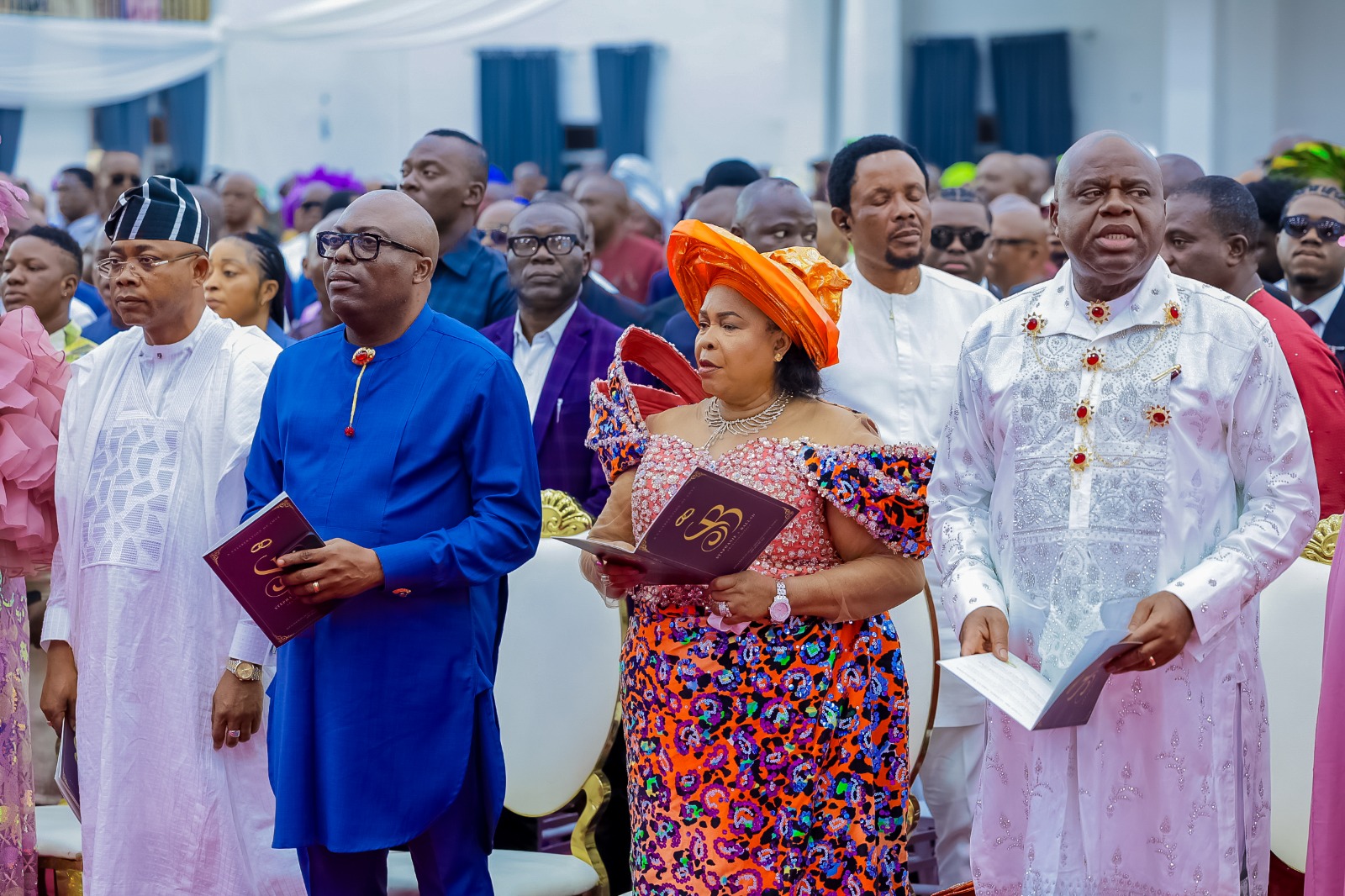
Rivers State, Sir Siminalayi Fubara, has assured members of the National Youth Service Corps (NYSC) of his administration’s commitment to supporting and strengthening the scheme in the State.
Fubara gave the assurance last Friday at the NYSC permanent orientation camp, Nonwa-Gbam, Tai Local Government Area in the State, during the swearing-in ceremony of 2026 Batch B Stream II orientation course.
Represented by the Permanent Secretary, Cabinet Bureau, Office of the Secretary to the State Government, Dr. Promise Oguzie, the governor said the State Government would remain intentional in providing the necessary support to improve the NYSC scheme and enhance the experiences of corps members deployed to the state.
He charged the corps members to be role models and quality nation-builders in their service to the good people of Rivers State in particular, and Nigeria at large.
“I charge you to be exemplary, dedicated and committed in all you do. Take full advantage of all the camp programmes and activities to enrich yourselves”, he said.
In his welcome address, the State Coordinator of NYSC in Rivers State, Mr. Moses Oleghe, urged corps members to see their deployment to Rivers State as a “veritable opportunity to make meaningful contribution to the growth of the State in particular and Nigeria at large.”
He further charged them to serve with all sense of “integrity, discipline, and the fear of God, especially when they will be engaged as INEC ad-hoc staff that will conduct the 2027 general elections.”
A total of 3,584 corps members composed of 1,421 males and 2,163 females were sworn in by the Chief Judge of Rivers State, who was represented by Justice Godspower Aguma.

Governor of Rivers State, Sir Siminalayi Fubara, says Nigeria needs God-fearing leaders for the nation to move in the right direction and make meaningful progress.
The Governor stated this yesterday when he received in audience, the World President of the Seventh Day Adventist Church, Pastor Erton Kohler; his wife, Andriene Marques Kohler; daughter Mariana Marques Kohler and a retinue of ministers of the church at Government House, Port Harcourt.
Fubara who hailed the Seventh Day Adventist Church for its contributions to education and the grooming of future leaders in Nigeria, expressed delight that the Church had over the years, been investing in education at various levels and currently runs two universities in the country.
He commended the church for not only using its institutions to spread the gospel of Christianity but to groom future leaders for the country.
According to him, religion should not be just about defending one’s faith, but also making meaningful impact on the lives of the people.
He said that by floating these educational institutions, the church has demonstrated capacity to support Nigeria in the task of producing not only educated people but a breed of God-fearing leaders.
“Our country is where it is today because we lack the fear of God. If you have the fear of God, there should be a limit to what you can do because you understand the supremacy of God. But when God is not in your equation, you’ll go beyond the line and that is what has brought us to where we are today.
“So, I feel very happy that you are contributing to the development of our future leaders in this country. We need the right people being in the right place; prepared properly with good minds; that is what we need, not just in Nigeria but round the whole world.,” he said.
Governor Fubara further observed that the absence of God-fearing people in high places to take the right decisions that could impact positively on the society, has also given rise to other problems such as social inequality, poverty, corruption and criminality. According to him, Nigeria needs a system where the average parent could afford quality education for their children and a guarantee that upon graduation, the average child will have the capacity to compete favourably with anybody, anywhere in the world.
“If we have a situation where the little money that you’re being paid as wage can also afford you quality healthcare and after working at least for 15-20 years, you have a roof over your head, tell me why you should be involved in any kind of crime? At that point, you’ll feel secured and this attitude of insecurity about the future that leads to all the social vices we have today won’t be there,” he said.
Governor Fubara expressed appreciation to the delegation for the visit and for their prayers for Rivers State, assuring them of his continued support for their programmes in the state.
Leader of the delegation and World President of the Seventh Day Adventist Church, Pastor Erton Kohler said he was in Nigeria for a special conference of the church during which thousands of the church’s ministers will be undergoing an empowerment programme to further equip them for the task of herding their flocks and serving the society.
He expressed gratitude to the Governor for the warm reception accorded his entourage, saying the memory of the visit will linger in his mind for a lifetime.
Kohler disclosed that the Church has over twenty -four million (24,000,000) members and more than 182,000 places of worship, spread across 212 countries of the world.

The Rivers State House of Assembly has approved the 2026–2028 Medium Term Expenditure Framework (MTEF) submitted by Governor Siminalayi Fubara.
This reaffirms the lawmakers’ commitment to enacting laws and taking legislative actions geared towards the overall development of the State.
The Assembly gave the approval during its Second Legislative Sitting of the Fourth Session held last Friday.
Speaking on the MTEF document during plenary, the House Speaker, Rt. Hon. Martin Amaewhule, noted that by the provision of Section 10(1)(b) of the Rivers State Fiscal Responsibility Law No. 8 of 2010, the MTEF ought to have been laid before the House in September 2025.
Amaewhule explained that traditionally, the document is expected to be presented four months before the commencement of the next financial year and immediately after the expiration of every three-year fiscal cycle.
He, however, stated that in the interest of the State and its people, the House considered it necessary to deliberate on the document, describing it as a precursor to the 2026 Budget Estimates.
The Speaker expressed concern that the year had already progressed significantly before the presentation of the framework.
During deliberations on the document, members examined the assumptions and projections contained in the MTEF and observed that strict adherence to the outlined fiscal parameters would ultimately serve the interest of Rivers people.
The lawmakers maintained that effective implementation of the framework would promote prudent financial management and enhance developmental planning across the State.
Following the debate and positive consideration by members, the Speaker put the question to the House and members voted overwhelmingly in support of the approval of the MTEF.
Meanwhile, during the same sitting last Friday, the House also received a petition from the Chairman of Obio/Akpor Local Government Council, Dr. Gift Worlu.
The petition was presented by the member representing Obio/Akpor Constituency II, Hon. Emilia Amadi.
According to the petition, concerns were raised over an imminent security breach, threats to lives, destruction of property and alleged forceful takeover of property by some lawless persons within parts of the Local Government Area.
Presenting the petition before the House, Hon. Amadi appealed to the lawmakers to revisit the matter and take necessary steps aimed at safeguarding lives and property in the affected communities.
The House is expected to further deliberate on the petition and consider measures to address the concerns raised in order to sustain peace and security in the area.
King Onunwor
-

 News2 days ago
RSG Targets Nine Million Residents in Mosquito Net Distribution Campaign
-

 Oil & Energy2 days ago
Aiyedatiwa Signs New Electricity Bill
-

 Oil & Energy2 days ago
NLNG Commissions Research And Innovation Centre In RSU
-

 Maritime2 days ago
Marine Minister Commends President Tinubu On NPERA Bill Assent
-

 News2 days ago
KenPoly Holds Eight Convocations, August 29
-

 News2 days ago
RSG Begins Another Phase of Projects Commissioning Today
-

 News2 days ago
RMAFC Completes Revenue Sharing Review, Proposes New Pay
-

 Maritime2 days ago
NAGAFF Petitions IGP Over Alleged Maritime Police Harassment