
Politics
Imo Lawmakers’ Defection Fuelled By Corruption – Okupe

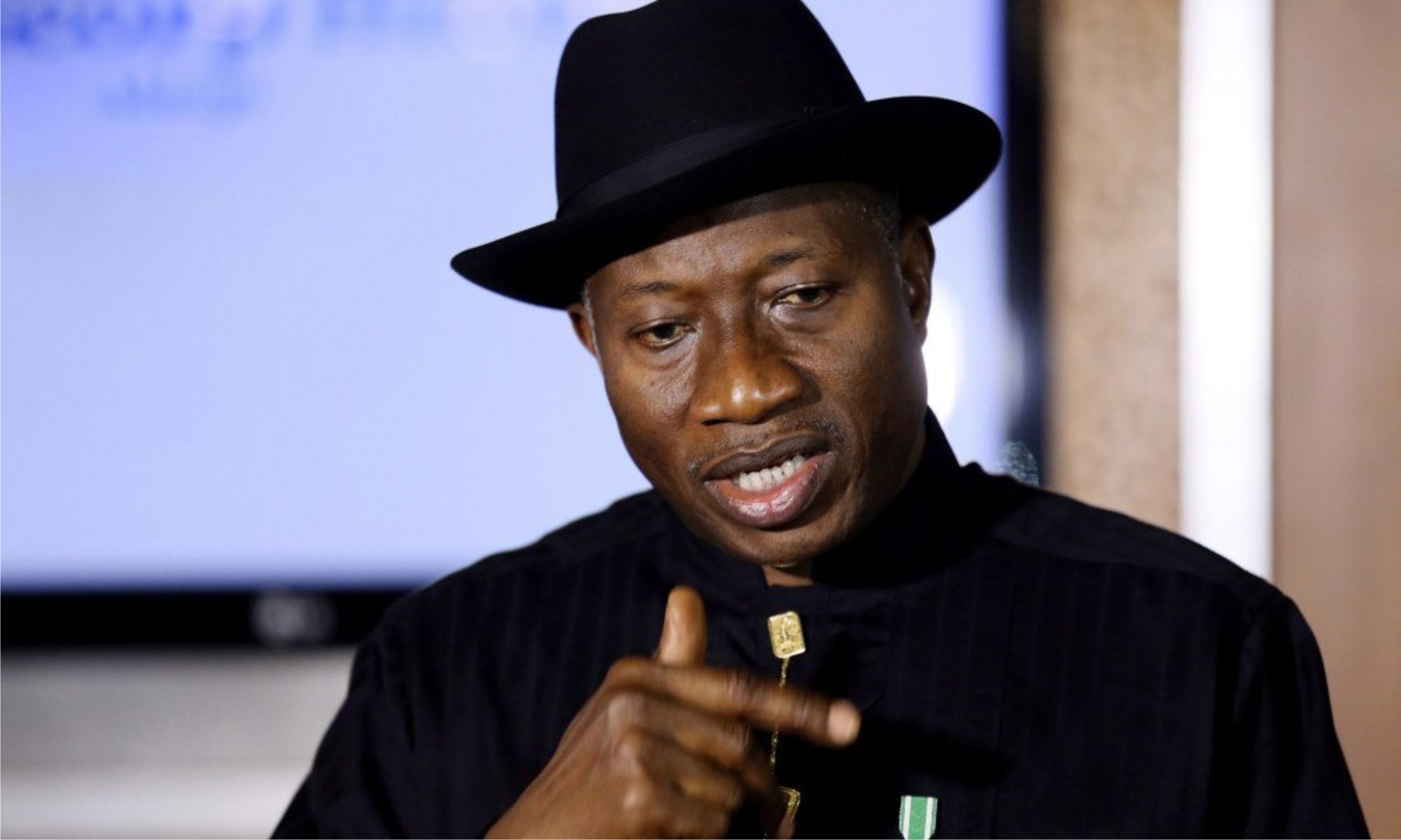
An ex-aide to former President Goodluck Jonathan, Doyin Okupe, has backed President Muhammadu Buhari’s views on corruption in Nigeria but frowned at his approach in tackling the menace.
Okupe noted that corruption was the reason for the recent defection of the Peoples Democratic Party lawmakers to the All Progressives Congress, following the Supreme Court judgment that sacked the PDP government in Imo State.
Recall that the Speaker of Imo State House of Assembly, Rt. Hon. Chiji Collins, alongside seven other members from the PDP, had defected to the APC.
He also noted that what happened in Imo will likely happen in majority of the states of the federation, adding that churches and mosques are not left out in the issue of corruption.
The politician who shared his views on Facebook, said he was not surprised at the gale of defections of PDP lawmakers in Imo to the APC.
He said, in truth, those defectors were never members of the PDP, adding that they were only politicians who contested and won their elections on the platform of the PDP.
The ex-presidential aide pointed out that the reality of Nigeria’s political situation is that only “very few real politicians remain in the political space.”
He said that people shop around for political platforms which will sell party tickets to them to be elected into political offices from where, as businessmen and women, according to him, “they can do their trade and make huge returns.”
Okupe said, “All parties in Nigeria without exception are actively engaged in this new business. It also involves all levels of competition. “
He also insisted that perpetrators in the act range from presidential candidates to councilors, adding that it also involves the majority of the electorates, electoral and security officials, describing the situation as “a national craze.”
Okupe, a former Special Assistant to ex-President Olusegun Obasanjo on Media and Publicity, “It is endemic, it is pervasive and it is generally accepted across the board as normal, though, like the issue of policemen collecting tolls from commercial drivers, we all pretend it does not exist.
“Buhari was right on corruption, but wrong in the execution of the war against it. Transparency international was also right about our falling rating of corruption perception index.
“Those who accuse others of corruption in Nigeria, are themselves corruption personified. Those who pursue corrupt people are themselves corrupt. The citizens who clap when corrupt officials are nabbed are themselves embroiled in corrupt activities.
“They bribe their ways to get all things done. They also receive bribes before they can do anything for anybody. They collect huge sums of money before they can vote for any candidate. They care less often, about who wins.
“People or electorates in every state collect N6B N7B N10B from gubernatorial candidates before giving’ massive’ support and victory is to the highest bidder.
“We are all liars, pretenders, and hypocrites. We have accepted money as the common social denominator. Even our religious institutions are not spared. Church leaders received bribes to promote church workers or post pastors to lucrative churches.
“Mosques are not different. We are not at the end yet but very close to it. Our politics like every other facet of our collective social endeavors have been completely destroyed.
“We all need to come together on a nonpartisan, nonethnic and nonreligious basis. Humbly accept where we truly are, and collectively take a bold decision to draw the line, retrace our steps and rearrange the operating machinery of this country. Kenya did it a few years ago and they are better for it.
“Rwanda also did a similar thing and today it’s all a different story. How many more of our people need to continue in this perilous state because we are all deeply entrenched in activities that benefit us individually but collectively destroy our country, its manifest destiny and the future of its children.”
Okupe cried out that Nigeria is going down as a nation, adding that, although we have not hit the bottom yet, “we are close. We can collectively avert the impending national catastrophe and calamity.”
However, he said that the problems facing the country cannot be solved, “by scapegoating, hate, unforgiveness, clannishness, dishonesty, injustice, insincerity, unreasonable partisanship and lack of leadership commitment.”



The Independent National Electoral Commission (INEC) has extended the deadline for political parties to submit the list of candidates for the 2027 governorship and state Houses of Assembly elections from Saturday, August 8, to Tuesday, August 11, 2026.
The commission announced the extension in a statement issued on Saturday and signed by the National Commissioner and Chairman of its Information and Voter Education Committee, Mohammed Haruna.
According to INEC, the decision followed appeals by political parties for additional time to complete the submission process through the dedicated online portal.
“The submission window, which according to the revised Timetable and Schedule of Activities for the General Election was originally scheduled to close on Saturday, 8th August, 2026, has been extended to Tuesday, 11th August, 2026,” the commission said.
In a a related development, INEC announced the suspension of PVC collection in Osun State ahead of the August 15 governorship election.
The commission said voters who applied for replacement of lost, damaged or defaced Permanent Voter Cards would have until midnight on Sunday, August 9, to print downloadable copies of their cards.
The electoral body explained that the deadline was necessary to enable it compile data on downloaded PVCs and produce final statistics on the total number of cards collected ahead of the election.
INEC said PVC collection in Osun commenced at the Registration Area level from July 22 to 28, 2026, but was extended to July 31 following complaints about large crowds and difficulties experienced by voters at collection centres.
The exercise subsequently moved to the local government level and ran from August 1 to 7.
The commission also disclosed that replacement downloadable PVCs had been made available to voters in Odo-Otin and Ife Central Local Government Areas following the theft of cards during attacks on the two collection centres.
It stressed that the stolen cards could not be used to vote.
INEC reassured Osun residents of its preparedness for the August 15 governorship election.
“The commission reiterates that the stolen cards cannot be used to vote.
“INEC reassures the people of Osun State of its readiness to conduct a free, fair, credible and inclusive governorship election on 15th August, 2026,” the statement said.
The commission said the deadline, initially set for Saturday, 8 August, has been extended to Tuesday, 11 August 2026, following appeals from political parties for more time.
INEC also announced that the window for voters who applied to replace lost, damaged or defaced PVCs to download their replacement cards will close at midnight on Sunday, 9 August.
The move is to enable the commission compile final PVC collection figures ahead of the 15 August Osun governorship election.
INEC said replacement downloadable PVCs have also been provided to affected voters in Odo-Otin and Ife Central Local Government Areas after hoodlums carted away cards from two collection centres, stressing that the stolen cards cannot be used to vote.
The commission reaffirmed its readiness to conduct a free, fair, credible and inclusive election in Osun State.
Gov. Kefas made the remarks over the weekend at the Federal Medical Centre (FMC), Jalingo, during the flag-off of the second phase of the Renewed Hope Medical Outreach in Taraba State, organised as part of activities marking Prof. Yilwatda’s 58th birthday.
The governor commended Prof. Yilwatda for choosing to mark his birthday by providing medical care to people in need.
“What Professor Nentawe did is a powerful demonstration of what leadership should be,” Gov. Kefas said.
He assured that his administration would continue to support initiatives that complement government efforts to improve healthcare delivery and the wellbeing of residents.
Speaking at the event, Prof. Yilwatda called on Nigerian leaders to embrace the culture of giving and use their positions to touch the lives of the less privileged.
He said his decision to celebrate his 58th birthday in Taraba State was deliberate and informed by the needs of underserved communities, particularly people who face difficulties accessing healthcare because of distance and financial constraints.
According to him, the intervention followed a needs assessment and was extended across the three senatorial districts of the state.
He said the exercise commenced on August 3 at Takum General Hospital and covered the Federal University Teaching Hospital, Wukari; First Referral Hospital, Sunkani, Ardo-Kola Local Government Area; General Hospital, Bali; General Hospital, Gembu; and FMC Jalingo.
Prof. Yilwatda said the intervention provided medical services to thousands of beneficiaries, including people who required surgical procedures.
He said sustainable national development could only be achieved when strong institutions placed Nigerians at the centre of development.
“Leadership is about service,” he said, urging political and public leaders to make giving back to society an important part of their responsibilities.
He reaffirmed his commitment to serving Nigeria and its people, saying his personal vision was to make every day of his life useful to humanity.
“Every day that I live, the vision is: let it be useful to humanity,” he said.
The Taraba State Commissioner for Health, Dr. Bordiya Buma, commended the initiative, saying it was consistent with the Renewed Hope agenda and efforts to strengthen healthcare delivery in the state.
Dr Buma said the second phase followed the successful completion of the first phase, which was conducted simultaneously in six local government areas, with two LGAs selected from each of the three senatorial districts.
According to him, more than 10,000 patients were attended to during the first phase, including people with medical and surgical conditions.
He disclosed that 327 general surgeries, 71 eye surgeries and 575 dental procedures were carried out during the exercise.
The commissioner expressed appreciation to President Bola Tinubu for the Renewed Hope Medical Outreach and thanked Prof. Yilwatda for supporting the initiative and choosing Taraba State as a beneficiary.
The Minister of Health and Social Welfare, Prof. Muhammad Ali Pate, also commended Prof. Yilwatda for choosing Taraba State to mark his 58th birthday through a medical outreach.
Prof. Pate said making healthcare the centrepiece of the birthday celebration was significant because health affects everyone.
-

 News2 days ago
RSG Targets Nine Million Residents in Mosquito Net Distribution Campaign
-

 Oil & Energy2 days ago
Aiyedatiwa Signs New Electricity Bill
-

 Maritime2 days ago
Marine Minister Commends President Tinubu On NPERA Bill Assent
-

 Oil & Energy2 days ago
NLNG Commissions Research And Innovation Centre In RSU
-

 News2 days ago
KenPoly Holds Eight Convocations, August 29
-

 News2 days ago
RSG Begins Another Phase of Projects Commissioning Today
-

 News2 days ago
RMAFC Completes Revenue Sharing Review, Proposes New Pay
-

 Maritime2 days ago
NAGAFF Petitions IGP Over Alleged Maritime Police Harassment