
News
Cultism As A Misnomer

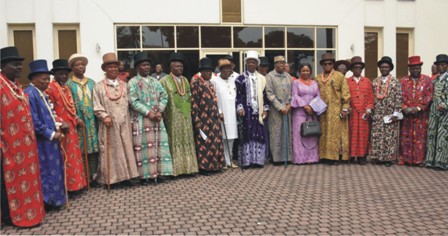
A news report in The Tide (Wed. 30/10/2019) that “158 Cultists Surrendered Arms in Emohua”, makes it needful to throw some light into the cult phenomenon. It is in the religious angle that the cult phenomenon rightly belongs, representing break-away extremist, radical, resistant groups which can resort to terrorism to defend their beliefs and methods. Leaders of such break-away groups often claim to have some calling or illumination directing them to veer into unusual practices and beliefs. Cultism relates to epistemology.
In Nigeria currently, there are many such break-away sects who claim to have some unusual powers for healing, exorcism, miracles and wonders. Through serious investigations, one finds that there is an element of sublimation whereby the generative power is diverted away from sex and procreation into psychism. There are such groups like the Illuminati, the case of Rev. Jim Jones who led his followers into mass suicide in Guyana; Emmanuel Swedenborg (1688-1772) who went into exploration of the psychic world, etc.
The case of Joan of Arc (1412-31) was a combination of altered state of consciousness (ASC) and anamnesis. Anamnesis is the recall of experiences of thousands of years ago, which can also come about through regressive hypnosis. Some people get fascinated with these claims and the exploration of the psychic world. Many who step too far into such project often lose their mind. Regression into insanity or witch-craft is an open invitation.
Really worrisome aspects of cultism come from secret activities of the security community and faddishness of fans of great celebrities in music, sports, films and other charismatic heroes. Despite the coming and going of chief executives in governments, national security outfits constitute a cult of cryptocrats of which only the topmost hierarchy are the patrons. Through research and experiments, series of brain-control techniques and mechanisms have emerged, through which means anyone can become a zombie.
Without going into how the cryptocracy works, let it suffice to say that secret service operatives world-wide enjoy a wide immunity and anonymity, making it possible for them to reach anyone and do anything but get away with it. What is cult if not secrecy, invincibility and mysteriousness!
From the angle of faddishness, youths can easily be influenced and carried away by charismatic stars and celebrities. Groups of fans soon turn into clubs, misnamed cults, whereby passions and fashions grow into attitudinal change, with some attendant change in mindset and life-style. The possibility of such groups of impressionable youths having a god-father, with cash and other largesse to dispense, can provide wide channels of expression.
There are various international groups fishing around for youths to entice for various purposes, including the possibility of injecting “occult blood” into them through various electronic means. Some of Nigerian youths, in and outside universities, as well as various political office holders, are not quite themselves. There are many factors responsible for behavioural aberrations among Nigerian youths.
From the angle of criminal fraternity, cultism develops because of devotion and deep commitment to what the patrons and barons present as the ideal. Because oath-taking is involved for the purposes of secrecy and protection, minions hired for covert activities are afraid to pull-out when they know more of what they are into. Fields of criminal operations include drug peddling, arms trade, smuggling, oil theft, terrorism including kidnapping for ransom, etc.
What we call cultism is the enthronement of gangsterism as a system of governance, whereby hustlers for political power engage and use groups of youths as vanguards and support team at grassroots levels. With money, arms and oath-taking, coupled with some fetish rituals, devotion, commitment, secrecy and solidarity develop among the footsoldier, misnamed cultists.
Recruitment and brain-washing of some youths became common during the Nigerian Civil War, whereby local youths, out of fear and the desire for protection, served groups of soldiers in some unethical errands. Even now, there is a belief in some quarters that force, gangsterism and arms-twisting are essential means to drive the society. Existence of various contending interest groups, coupled with mass docility, resulted in the creation, arming and buying of various groups of gangsters, misnamed as cult groups.
It is an interesting and instructive field of journalistic research to understand the antics and operational mechanism of cultism in Nigeria. For the younger ones who would fear to die, there is a limit they can go. Cultism has more to do with devotional commitment to some religious ideals, and for some people, these would include use of terrorism and gangsterism to achieve some goals. Thus, where the end justifies the means, no harm is done.
Perhaps, the features of belief, devotion, commitment, secrecy and solidarity account for the use of the term “Cult” for all kinds of extremism. Thus, cultism as a belief system would include all groups of terrorists and gangsters in the domains of religion, politics, crimes, etc, who see the justice of their methods in the end result of their activities. This idea cannot sell in a sane and democratic society.
The use of unconventional drugs, weeds, brute force, secrecy and chicanery to get results through the abuse of the human mind and free will, cannot be described as right or ethical. Various studies in the ways that power has been abused in human history reveal quite shocking strategies, ranging from abuses of the human mind and body, to the abuse of the Name of God. In the political front, alliances and cabals have used power for personal and group benefits, at the expense of the masses. From the angle of symbolism, cult is defined as the use of mask to carryout tasks and for ceremonial purposes. Include Yahoo boys and their mothers.



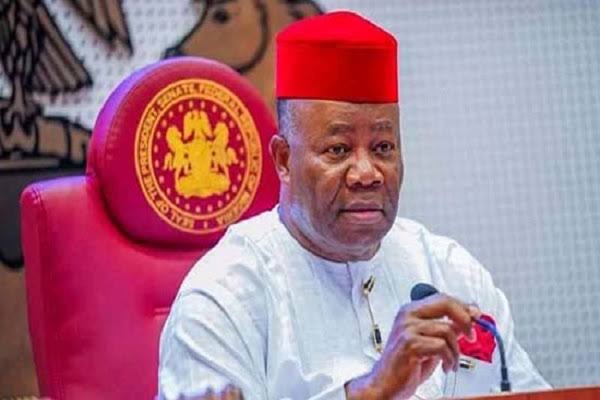
The Federal Government has debunked viral claims that the National Universities Commission (NUC) identified about 100 fake professors and uncovered 2,000 universities in the country, saying the commission neither made such declarations nor authenticated the lists circulating on social media.
The Federal Ministry of Education said the claims were false and misleading, explaining that the allegation about fake professors was a distorted version of a 2019 media report on the NUC’s verification of the directory of full professors in Nigerian universities.
According to the Minister of Education, Dr Maruf Tunji Alausa, in a statement issued on Saturday by the ministry’s Director of Press and Public Relations, Boriowo Folasade, the NUC had never declared the existence of 2,000 fake universities.
Alausa added that the NUC did not publish, endorse, or authenticate the purported list of individuals being described online as fake professors.
The NUC has never declared the existence of 2,000 fake universities in Nigeria or published, endorsed, or authenticated the purported list of individuals circulating online as fake professors,” he said.
The minister explained that the allegation concerning fake professors was a distorted version of a media report published on December 3, 2019, concerning an exercise by the NUC to verify the directory of full professors in Nigerian universities.
He said the original report did not contain the names currently being circulated online, stressing that the commission had since disowned the purported list.
According to the minister, the recycling of the claims was particularly concerning because of their potential to mislead the public and damage the reputation of the country’s higher education system.
“The ministry expresses concern over the persistent recycling of these false claims, which are calculated to undermine public confidence in Nigerian universities and discredit ongoing efforts to strengthen the education sector, particularly the university system,” the statement read.
He urged members of the public, media organisations, and social media users to disregard the reports and avoid circulating unverified information about universities and academic qualifications.
Alausa also advised Nigerians to verify information concerning recognised universities and academic standards through the NUC’s official channels.
Vice President of the Nigeria Union of Journalists (NUJ), Zone F, Comrade Opaka Dokubo, has called for the establishment of a League of Veteran Journalists in Rivers State.
Opaka made the call while speaking at a Candle Night of Tributes organised by the NUJ, Rivers State Council, for a late veteran journalist and publisher, Mr. Eddie Williams, at Ernest Ikoli Press Center, last Thursday.
Dokubo said the body, when established, would be saddled with the responsibility of championing the welfare of aged and retired journalists.
He said, “Williams was a man of many parts, and he was truly a ‘general’ in the field,” recalling that the late veteran was fearless and used his pen as an activist to leave a legacy for younger reporters to emulate.
In his tributes, former Director with the Rivers State Broadcasting Corporation (Radio Rivers) and ace broadcaster, Bon Woke, described Williams as a trailblazer.
“In my native language, there is what we call ‘Ochamabo’- Williams was a pathfinder in journalism. He was a role model and exhibited great passion for the profession,” he said.
Woke noted that Williams used his pen and reportage to develop Rivers State.
Chairman of the Federated Correspondents Chapel where Williams belonged during his early days with The Guardian and Compass newspapers, Amaechi Okonkwo, described the late journalist as an accomplished reporter.
Okonkwo said Williams would be missed for his wealth of knowledge and prayed God to console his family.
On his part, former Commissioner for Information and Communications in the State, Pastor Paulinus Nsirim, who delivered the homily, said Williams’ death created a huge vacuum in NUJ and the journalism profession, and urged younger journalists to reflect on his legacy to improve on the profession.
Nsirim, who spoke on the topic, ‘The Folly Without Eternity in View,’ cited the Book of Luke, 12 v 16-21, and emphasized the need for everyone to think about life in the hereafter.
He urged those alive to strive to live aright and leave lasting legacy that aligns with God’s will.
“We should live a life of faith and go after those things that have eternal value,” Nsirim maintained.
Former Chairman of Independent Publishers Association and publisher of National Network newspaper Rev. Canon Jerry Needam submitted that Williams have lived his part, and urged journalists to always look out and support one another.
Rev. Needam emphasized that Williams death should serve as a wake up call for all journalists to be their brothers keeper, and prayed God to console and strengthen the family to bear the loss.
The tribute witnessed special songs, prayers for the Williams family and candle light procession, as State Chairman of the NUJ, Comrade Paul Bazia thanked everyone for attending and honouring the veteran journalist whose burial is fixed for next Tuesday at his family home town on 17th November, 2026.
By: Kevin Nengia
The Rivers State Police Command has arrested two suspected cultists over the alleged murder of a motorcycle rider, whose remains were recovered from a forest at Mbiama, in Ahoada West Local Government Area of the State.
The suspects, Abubakar Sani, 24, and Yusuf Magaji, 20, both natives of Kano State, were arrested by operatives of the Violent Crime Response Unit (VCRU), Emohua, following intelligence reports.
The Police Public Relations Officer, ASP Blessing Agabe Kaborlo, disclosed this in a statement in Port Harcourt, recently.
The statement explained that the arrest followed reports of two men dismantling a suspected stolen motorcycle at Choba Motor Park.
According to the statement, operatives, acting on credible intelligence, moved to the park on October 22, 2026, at about 1pm, where they arrested the two suspects.
Preliminary investigations, according to the statement, linked the suspects to the alleged murder of Sani Musa, a motorcycle rider from Zago Town, Kafin Hausa Local Government Area of Jigawa State.
The suspects allegedly lured Musa into a forest in Mbiama, Ahoada West, where they stabbed him to death, concealed his remains in the bush and fled with his motorcycle.
The police said the suspects allegedly confessed to the crime during interrogation, disclosing that they planned to transport the stolen motorcycle to Kano State through a waybill.
The statement added that the suspects subsequently led operatives to the forest, where the remains of the deceased were recovered.
The victim’s family was contacted, while arrangements were made to release the remains for burial in accordance with Islamic rites and customs, as requested by the family.
The statement added that the State Commissioner of Police, Olugbenga Adepoju, has ordered an investigation to establish the circumstances surrounding the murder, identify possible accomplices and ensure that all those involved are brought to justice.
The Command reiterated its commitment to combating cultism, murder and other violent crimes in the State, while urging residents to provide credible information to assist police operations.
By; King Onunwor, Goodness Emelue & Fruitful Wodi
-
Business3 days ago
BSG Partiner American Coy To Invest $100m In Gas Processing
-

 Oil & Energy3 days ago
FG To Double Oil, Gas Reserves, Moves To Intensified fresh Exploration
-
Business3 days ago
Seme Customs Intercepts Live Pacific Ridley Sea Turtle
-
Sports3 days ago
Fernandes Turns Down Man Utd Offer
-
Business3 days ago
159m small businesses registered on database in three years – SMEDAN boss
-
Sports2 days ago
Rivers To Host National Table Tennis Championship
-
Maritime3 days ago
Nimasa,China MSA Sign Bilateral Maritime Agreement
-

 Sports3 days ago
Kenyans Win PH International Marathon, Cart Home $10,000