Politics
Lawmaker Urges Ikpeazu To Stop Multiple Taxes
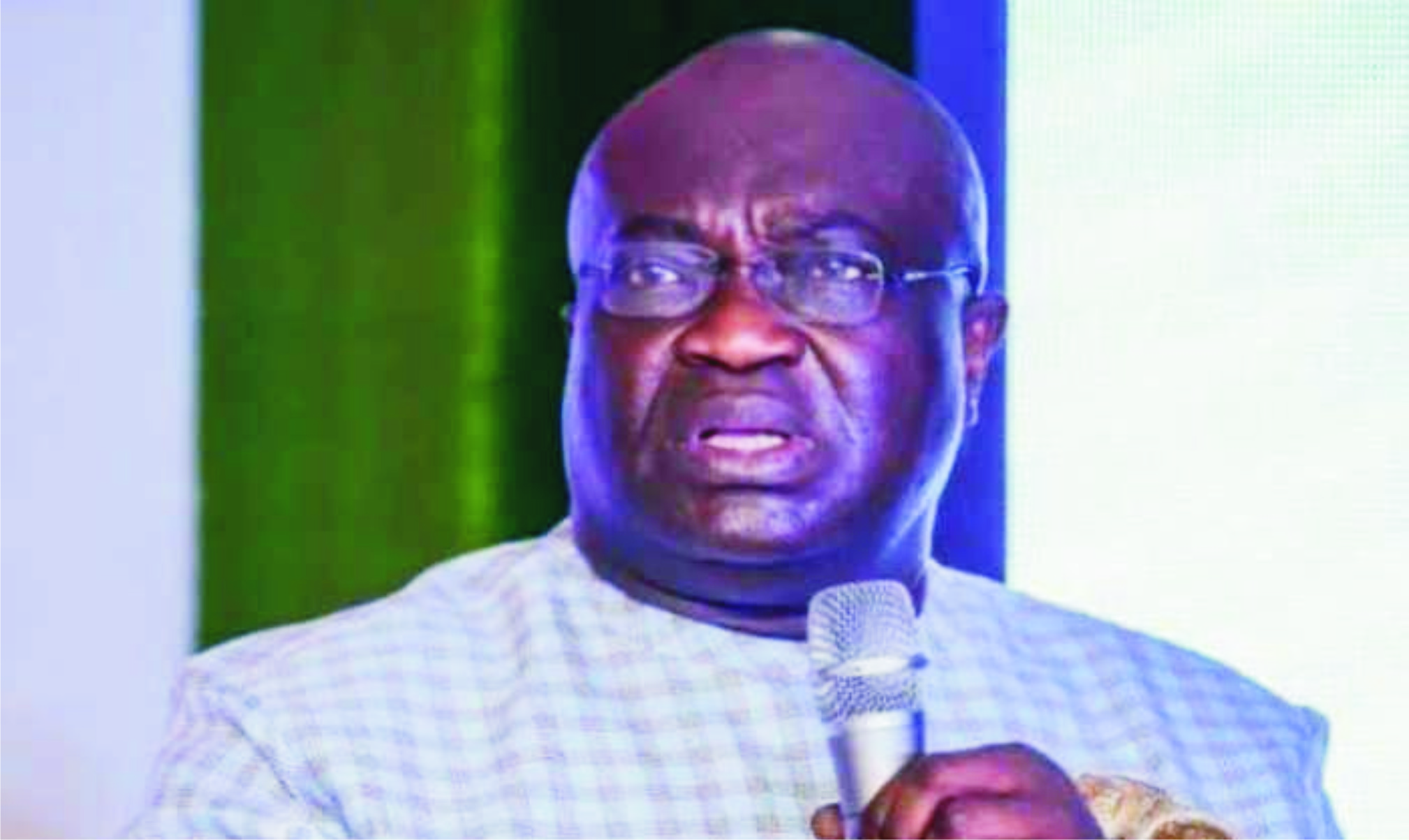
The Deputy Minority Leader of Abia State House of Assembly, Mr Chijioke Chukwu, has advised the state government to address the problem of multiple taxation of small scale businesses in the state.
Chukwu, who spoke to the perss in Umuahia on Tuesday, decried the extortion of small scale traders by touts in the guise of revenue collection in the state.
The lawmaker representing Bende North state constituency and member of the All Progressive Congress (APC), said that such problem would not allow small scale enterprises to thrive.
He said that there were many avenues of financial leakages in the state that needed to be blocked.
Chukwu said, “The major challenge is that those that are in the tax net are either under taxed or evade tax because of their contacts with ‘powers that be’.
“I am advocating tax exemptions for those small scale traders whose annual turnovers are very insignificant so that they will be able to grow their businesses.
“We need to do proper enumeration of the number of small scale factories in Aba and make a projection of their annual revenue. Those of them that are running on very small turnover should be exempted.
“We need to bring those that are evading tax into the proper tax net and we should not burden the small scale businesses with multiple taxes because it is killing their ingenuity and creativity.”
According to him, Abia is among the state that cannot survive without Federal allocation because it does not have big companies that can generate revenues to run the government.
“We have not taken advantage of our God-given gifts. God has given us arable land and solid minerals.
“Are we exploiting them optimally? Are we taking advantage of our comparative advantage in palm and cocoa productions?’’ he queried.
He said that Aba as the commercial nerve centre of the state must be gotten right first in order to boost the internally generated revenue of the state.
He commended Gov. Okezie Ikpeazu for his efforts in repositioning the state and urged all to join hands with him in moving the state forward.

Politics
Jigawa PDP Rejects Lamido’s Suspension, Wants Immediate Reversal
The state chairman of the party, Dr Babandi Gumel, disclosed this in a statement signed and made available to journalists on Saturday.
According to the statement, the Jigawa PDP received news of Alhaji Lamido’s suspension with “profound shock and disappointment”.
The statement added that the suspension, which was reportedly based on allegations that Alhaji Lamido attended meetings capable of undermining party unity, amounts to an affront to justice, internal democracy and the reconciliation efforts recently championed by the PDP leadership.
The party stressed that the exercise of legal and constitutional rights within the party should not be interpreted as an act of disunity. It recalled that Alhaji Lamido approached the court after he was allegedly denied the opportunity to purchase a nomination form to contest the position of National Chairman of the PDP.
The statement further noted that the Federal High Court in Abuja, presided over by Justice Peter Lifu, ruled in Alhaji Lamido’s favour by restraining the PDP from proceeding with its national convention until his right to contest was determined.
The Jigawa PDP argued that the suspension appeared to be a punitive action against Alhaji Lamido for seeking judicial redress over an issue on which the court had already found merit.
The party also faulted the decision of the BoT for contradicting recent public statements by its chairman, Senator Adolphus Wabara, who had emphasised reconciliation within the party, admitted past mistakes and appealed to aggrieved members to return fully to the PDP fold.
However, it maintained that suspending a founding member who sought justice through legal means runs contrary to the spirit of reconciliation and healing publicly advocated by the party leadership.
The chairman said the suspension was premature and prejudicial, as the matter remains before the courts. He also described Alhaji Lamido as one of the few founding fathers of the PDP who has remained loyal to the party without defecting, warning that punishing such loyalty sends a negative signal to other committed members.
The party further argued that the action undermines party unity at a time when the PDP requires cohesion to effectively challenge the ruling All Progressives Congress (APC). It also insisted that there is no provision in the PDP constitution that allows for the suspension of a “life member”.
The party called on the BoT to immediately and unconditionally withdraw the suspension of Alhaji Lamido.
It also demanded that the BoT publicly affirm the right of all party members to aspire to leadership positions in line with the party’s constitution and the laws of the country, without fear of victimisation.
It further urged the BoT to retrace its steps, align its actions with its reconciliation agenda, and tender an apology to Alhaji Lamido.
The Jigawa PDP reaffirmed its commitment to a united, democratic and law-abiding Party.
Politics
Alleged Tax Law Changes Risk Eroding Public Trust — CISLAC
In a statement signed by its Executive Director, Comrade Auwal Musa Rafsanjani, CISLAC warned that if proven, such actions would amount to a serious breach of constitutional order, legislative integrity, and public trust.
The organisation noted that Nigeria’s law-making process is clearly defined by the Constitution, stressing that any alteration of a bill after parliamentary passage undermines democratic governance and the principle of separation of powers.
CISLAC further emphasised that taxation has direct implications for citizens, businesses, sub-national governments, and the overall economy. It stated that uncertainty or a lack of transparency in tax legislation could erode investor confidence and raise concerns about accountability and the possible abuse of executive power.
The organisation described the situation as particularly troubling given the rare inclusive, and thorough public consultation that shaped the law’s final provisions prior to its passage.
“This process brought together taxpayers, civil society groups, professional organisations, the private sector, labour unions, local governments, and technical experts, ensuring that diverse viewpoints were considered and carefully balanced.
“Any unilateral changes to these agreed-upon provisions, made outside the established legislative process and without renewed public engagement, not only breach public trust but also violate the fundamental tax principle of representation, which holds that citizens must have a meaningful voice in shaping the laws that govern how they are taxed. Such actions undermine democratic accountability, weaken the legitimacy of the tax system, and risk eroding public confidence”, it noted.
CISLAC expressed particular concern that uncertainty surrounding the authenticity of the tax law, coming at a time when a new tax regime is expected to take effect, could exacerbate the economic hardship already faced by many Nigerians.
It observed that citizens are contending with rising living costs, inflationary pressures, declining purchasing power, and reduced access to basic services, warning that implementing a disputed tax framework under such conditions, risks deepening inequality, discouraging compliance, and fuelling public resentment.
The organisation stressed that tax reforms must be anchored in clarity, legality, fairness, and social sensitivity, cautioning that any tax system introduced without full transparency, adequate public communication, and legislative certainty undermines voluntary compliance and weakens the social contract between the state and its citizens.
As part of its recommendations, CISLAC called on the Presidency to urgently publish the exact version of the tax law assented to, alongside the authenticated copy passed by the National Assembly, to allow for public and institutional verification.
It also urged the leadership of the National Assembly to promptly exercise its oversight powers to determine whether the assented law reflects the will of the legislature, including a review of the enrolled bill process.
The organisation maintained that any discrepancy discovered should be treated as unconstitutional and addressed through lawful means, such as the re-transmission of the correct bill or judicial interpretation where necessary. It further called for an independent review of the process by relevant institutions, including the Office of the Attorney-General of the Federation and, where required, the judiciary, to establish the facts and assign responsibility.
CISLAC noted that the controversy highlights the urgent need to strengthen safeguards at the legislative and executive interface. It recommended measures such as digital tracking of bills, public access to enrolled legislation, and more transparent assent procedures.
CISLAC emphasised that the issue is not about partisan politics but about safeguarding the integrity of Nigeria’s democratic institutions. It warned that allowing any arm of government to unilaterally alter laws passed by another sets a dangerous precedent and weakens constitutional democracy.
The organisation urged all parties involved to act with restraint, openness, and fidelity to the Constitution, noting that Nigerians deserve laws that reflect due process, the public interest, and the collective decisions of their elected representatives.
CISLAC added that it will continue to monitor developments and engage relevant stakeholders to promote accountability, transparency, and the rule of law in Nigeria’s governance processes.