
News
Sex-For-Grades: ABU Sacks 15 Staff …HURIWA Gives Recipe On Lecturers’ Misconduct


The management of the Ahmadu Bello University (ABU), Zaria in Kaduna State, have terminated the employment of 15 staff.
The management also demoted one academic staff on account of conducts bordering on corruption and sexual harassment.
The university, however, did not disclose the names of the sacked officers
Commending the university, the Federal Competition and Consumer Protection Commission (FCCPC) said in a statement signed by Babatunde Irukera, that the decision was apt and timely.
The statement read: “The Federal Competition & Consumer Protection Commission (FCCPC) welcomes the bold and decisive action of Ahmadu Bello University (ABU) authorities terminating the employment of 15 staff and demotion of one academic staff on account of conducts bordering on corruption and sexual harassment.
“The commission notes that this strong disciplinary action followed investigations that established unsolicited and unwelcome sexual advances and behaviour toward members of the school community, illegal allocation of, and alteration of grades, and extortion of students.
“These types of conduct materially affect the entire community, diminish scholarship and negatively skew academic outcomes in a manner that violates the rights of targets of the behaviour and victimises others who are invariably indirect victims.
“The inappropriate behaviour undermines the quality and validity of education and questions the credibility of educational outcomes.
“The commission is further encouraged by ABU’s commitment to a broader and continuing investigation of others within the community.
“In addition, the commission commends ABU for this robust and far-reaching effort and the confidence it restores and promotes in our institutions, systems and processes.
“A transparent, fair and just educational community is vital for all members of the community, especially students, and the commission is keen to ensure that students, as consumers, are afforded the necessary protections, and our campuses are safe and secure always.
“The commission urges educational institutions to pursue aggressive and open initiatives to ensure harassment, corruption and other vices are eradicated from educational systems.”
However, a civil rights group, Human Rights Writers Association of Nigeria (HURIWA), has called on the Academic Staff Union of Universities (ASUU), and the National Association of Nigerian Students (NANA) to tackle the incidence of ‘sexual violations’ of admission seekers and students.
HURIWA said that while reacting to a viral video of a lecturer with the University of Lagos, demanding for sex from a female candidate seeking admission.
The lecturer, Boniface Igbeneghu, is a former sub-dean of Faculty of Art and head pastor of local Foursquare Gospel Church.
His advances were captured in a 13-minute video by BBC Africa.
Reacting to the development, the group, while condemning the university authorities for failing to rein the rampaging group of bullies in the guise of lecturers who have continued to rape female students in exchange for grades and admission, added that sexual harassment of females and males in schools have reached an epidemic dimension demanding comprehensive national panacea.
It, however, proposed the introduction of legislation to stipulate the chemical castration of rapists convicted for violating the dignity of children.
The group said that the proposal for the new law has been sent to the Federal Attorney General and Minister of Justice, Abubakar Malami; Minister of Women Affairs, Mrs. Pauline Tallen; Senate President, Dr Ahmed Lawan; and Speaker of the House of Representatives, Hon Femi Gbajabiamila.
“In Nigeria, rape is unlawful carnal knowledge of a female by a male. It could be non-consensual sex with an adult female or carnal knowledge of a female child or minor. On the other hand, chemical castration is the use of anaphrodisiac drugs to lower sexual drive. It does not involve removing a person’s testicles like surgical castration but only the use of drugs delivered by injection to render the testicles irrelevant”, the group said.
According to the American Journal of Criminal Law, 1990, chemical castration “reduces the production and effects of testosterone, thus diminishing the compulsive sexual fantasy. Formerly inconsistent and commanding urges can be voluntarily controlled”, HURIWA noted.
“Chemical castration is legal in eight states of USA although not all states make the treatment mandatory. In 1996, California became the first US state to legalize it by requiring mandatory treatment for repeat sex offenders but discretionary injections for first time offenders. Florida and Texas followed suit but in the latter state, the offender must be at least 21 years of age. In Iowa, chemical castration is allowed in all cases of serious sex offences. In Louisiana, judges can sentence convicted rapists to chemical castration. The State of Alabama law passed in 2019 requires, as a condition of parole, that convicted sex offender of a child under the age of 13 undergo the treatment which will continue until a court rules otherwise.
“In Canada, the courts cannot order offenders to undergo chemical castration – they can only impose psychiatric treatment, which can include the use of anti-libido medication. In 2006, the Canadian Court of Appeal ruled it constitutional for the National Parole Board to require that recidivist sex offenders, if found to be long-term offenders, be chemically castrated as conditions of release”, HURIWA said.
HURIWA added that there was need to put in place sustainable regime of legal frameworks to confront the hydra headed monster of sexual harassment of female students and admission seekers by lecturers.
Similarly, the First Lady, Mrs Aisha Buhari, called for urgent action to address sexual harassment against students.
The first lady made the call during the exclusive screening of the BBC Africa Eye ‘Sex for Grades’ documentary, last Monday night in Lagos.
It would be recalled that Senior Lecturer, Dr Boniface Igbenegbu of the Faculty of Art, University of Lagos, Akoka, was recently caught on camera making sexual demands from a student seeking admission into the institution.
Also, Prof. Richard Akindele of Obafemi Awolowo University, Ile-Ife, was sentenced to six months imprisonment for same offence of ‘sex-for-marks’ scandal in 2018.
Aisha lamented that the issue of sexual harassment against women was not unique to universities, but has become prevalent in the society, including religious settings.
Represented by a lawyer, Mrs Aisha Rimi, Mrs Buhari condemned sexual harassment against students, saying it was unacceptable as the nation’s educational system had suffered many setbacks that had hindered its development.
“This simply has to change. It is no longer enough to sweep allegations under the carpet or force victims to withdraw their allegations, victimise or stigmatise them,” she said.
She stressed that there are laws to protect victims of sexual harassment and abuse, but such laws cannot operate except victims speak out to get justice.
The first lady advised women that their dignity and self respect should outweigh whatever challenge they face, stating her support to ensure a sexual abuse-free society for women.
She commended the BBC team for their hard work, bravery and tenacity to expose the ills facing students in the country’s tertiary institutions.
Meanwhile, the Academic Staff Union of Universities (ASUU) has called for thorough investigation and appropriate sanction for lecturers indicted in the alleged “Sex-for-Grades” scandal in order to sanitise the university system.
The University of Lagos (UNILAG) Branch Chairman of ASUU, Dr Dele Ashiru, said, yesterday, in Lagos, that the union was against all forms of unethical practices, including sexual harassment.
Ashiru was reacting to a viral British Broadcasting Corporation (BBC) investigative video which showed some lecturers of Universities of Lagos and Ghana sexually harassing female students.
“As a union, we are against all unethical practices among colleagues, including sexual harassment and even abuse.
“The development is very disturbing and unfortunate. We have appealed to colleagues to understand that as lecturers, we stand in ‘loco parentis’ (in the place of a parent) to these students and must not be perceived in any way of not being protective.
“We condemn this act of shame in its entirety and want the matter to be thoroughly investigated and appropriate sanction carried out on all those found culpable,” the ASUU chairman noted.
On his part, Professor of English, also in UNILAG, Chimdi Maduagwu, said there was need for a social re-orientation of the lecturers and others.
According to him, it is about social scrutiny, urging for enforcement of self discipline, especially among the academic staff.
“There must be a way to look into and touch these things and water them down.
“Some of us tend to be wielding so much powers in the positions we find ourselves that we loose control even when there is absolutely need to draw the lines.
“An average lecturer could be so powerful that he sees himself as having all the powers to fail or award grades at his whims and caprices.
“I believe that quality assurance can take adequate charge of some of these ugly trends,” he said.
In reaction to the scandal, the University of Lagos had since issued a statement, suspending one of the lecturers indicted in the saga.
The UNILAG Spokesperson, Mrs Taiwo Oloyede, said in the statement: “The University of Lagos management has suspended Dr Boniface Igbeneghu of the Department of European Languages and Integrated Studies, Faculty of Arts.
“He was caught in a sting operation by the BBC titled: ‘Sex-for-Grades’. The trending video chronicled cases of sexual harassment of female students by some lecturers in some West African universities, including of Lagos.
“Management at its emergency meeting of October 7, suspended Igbeneghu from work immediately and barred him from the university academic areas while the suspension subsists unless invited by panel constituted by the institution to investigate the matter.
“In addition, the management has ordered the shutdown of the Staff Club ‘Cold Room’ mentioned in the documentary for further investigations. The so-called Cold Room is a Functions Room, that may have been abused because this is a deviation from the purpose for which it was created (meetings, seminars and events,” the statement read.
It stated that the university was embarrassed by the development, and therefore, dissociates itself totally from the acts and any other inappropriate behaviour of staff with female students and vice versa.
“As a reputable institution and one of the foremost universities in Nigeria and sub-Sahara Africa, we are highly embarrassed by these allegations and we will do all that is necessary to ensure that this menace is checked and flushed from our institution.
“We have zero tolerance for such unwholesome behaviour and we will continue to work hard to protect the interests of all our students,” it stated.


News
Rivers DPOs Receive Awards For Outstanding Performance In Crime Prevention …As Students, Media Group Honour CSP Worgu, CSP Yusuf


Two Divisional Police Officers (DPOs) in Rivers State have been honoured by separate groups for their contributions to security, crime prevention and improved community-police relations in their respective areas of responsibility.
The beneficiaries are the DPO of Afam Police Division, CSP Endurance Worgu and his counterpart at Oyigbo Police Division, CSP Bello Yusuf.
CSP Worgu was honoured by a group of students under the aegis of Rivers State Graduate Students Associations for what they described as his commitment and outstanding performance in the discharge of his duties.
The students, led by Chidi John Enyie, Esq. said CSP Worgu was selected based on his track record and status as one of the longest-serving young DPOs of Rivers State origin.
According to the group, CSP Worgu has made significant contributions to the protection of lives and property in the area since assuming office following the #EndSARS period.
The students said they were particularly impressed by the improvement in community-police relations under his leadership, noting that professionalism had remained a key feature of his service.
Enyie represented by Comrade Briggs Soku, said the students community was pleased to identify with a Rivers indigene who had distinguished himself in the police force.
He said the students considered it necessary to encourage and celebrate CSP Worgu because of his achievements as a young Rivers man excelling in a profession that many people from the state were often reluctant to join.
Receiving the award at his office in Afam, CSP Worgu expressed gratitude to God and the students for finding him worthy of the honour.
The DPO said the recognition had boosted his morale and encouraged him to sustain his efforts towards maintaining peace and security in the area.
He said he least expected the honour, particularly because it came from the students, adding that the recognition would further motivate him to serve the people better.
CSP Worgu assured residents of Afam that the police would sustain the existing peace in the area.
He appealed to members of the public to support the police by providing credible and timely information, stressing that useful information from residents would make the job of security personnel easier.
Meanwhile, the Ikwerre/Etche Media Association has also honoured the DPO of Oyigbo Police Division, CSP Bello Yusuf, for his efforts in tackling criminal activities in the area.
The media group presented the award following the swift tracking and arrest of five suspected kidnappers who had allegedly terrorised residents of the Kom-Kom axis and other parts of Oyigbo.
The group commended CSP Bello for what it described as his determined efforts to restore confidence and security in the affected communities, particularly Kom-Kom and Obeama.
According to the group, the arrest of the suspects demonstrated the DPO’s commitment to tackling criminality and safeguarding residents.
The media association said residents had received the development with relief, noting that the police action had sent a strong message to criminal elements operating in the area.
Responding, CSP Yusuf appreciated the group for the recognition and reaffirmed that there would be no room for criminality in Oyigbo.
He also commended the media for its role in disseminating credible information to the public, saying the media had remained supportive of the police in the fight against crime.
CSP Yusuf warned criminal elements operating in Oyigbo to leave the area or be prepared to face the full weight of the law.
He assured residents that the police would continue to pursue criminals and work to dismantle their hideouts, regardless of where they might be operating.
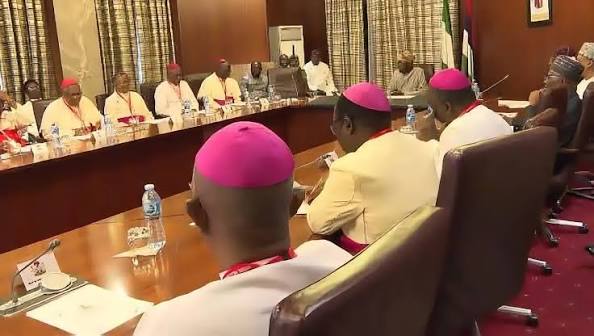
The 5000 Achievers Christian Forum and Colleges of Bishops, Archbishops and Apostles, a Christian interdenominational organisation, has endorsed President Bola Ahmed Tinubu and all candidates of the All Progressives Congress (APC) in Rivers State for the 2027 general elections.
International President of the forum, Archbishop Lucky Aroh, disclosed this during the ordination and consecration of three new Bishops, as well as an award ceremony held in Port Harcourt.
Aroh said the performance of the APC-led Federal Government had endeared the party to the organisation, prompting the forum to declare its support for President Tinubu and other APC candidates in Rivers State.
He said the forum would support all APC candidates in the state during the 2027 elections and urged Nigerians to vote for the party.
Aroh, who is also the General Overseer of Caring Peoples Church, Port Harcourt, charged the newly consecrated Bishops to see their new positions as a great responsibility and dedicate themselves to the advancement of the kingdom of God.
He cautioned them against conduct capable of bringing their offices into disrepute, stressing that their activities would be closely watched by members of the public.
“As Bishops, the eyes of the public are on your activities. You must therefore conduct yourselves in a manner worthy of your calling,” he said.
Also speaking, the International Coordinator of the forum, Bishop Saint Robinson, urged the newly consecrated Bishops to work diligently towards winning souls for the kingdom of God.
Robinson, who was the guest speaker at the event, stressed that the activities of Bishops must at all times be guided by godly principles.
He also called on members of the church to support and cooperate with the newly consecrated Bishops in the discharge of their responsibilities.
The Secretary of the College, Apostle Elizabeth Ayadi Abaye, said the organisation was established to advance the kingdom of God and promote spiritual development.
According to her, the forum has organised several crusades, conferences, prayer meetings, ordinations, consecrations, enthronements, empowerment programmes and other spiritual development activities across the country as part of efforts to win souls for Christ.
Abaye said the organisation has members across the world and disclosed that more programmes had been scheduled to promote the spiritual development and wellbeing of humanity.
The three Bishops consecrated at the ceremony were Prince Alban Chike, Testimony Omenihu Shedrach and Prince Ifemena.
Among those honoured at the event were the Chairman of the Community Development Committee (CDC), Abali Community, Port Harcourt City Local Government Area, Manuchimso Prince Lemmy Wopara, and Clifford Oko Jaja, Coordinator of the 5,000 House-to-House for President Tinubu.
By: John Bibor
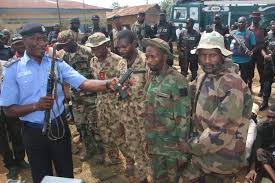
The Rivers State Police Command has arrested a 49-year-old suspected fake soldier, Andrew Atausi, and several other suspects in connection with various criminal activities, including kidnapping, armed robbery, cultism, one-chance robbery and the alleged murder of police officers.
The State Commissioner of Police, CP Olugbenga Adepoju, disclosed this in Port Harcourt, recently during a press briefing at the Command Headquarters, where he said the arrests formed part of the operational achievements recorded by the Command between June and August 2026.
Adepoju said Atausi was arrested on August 10 by police operatives along Ada George, Port Harcourt, while dressed in military uniform and driving a Toyota Hilux painted in Army colours.
The Commissioner said investigation revealed that Atausi was not a member of the Armed Forces, adding that he was suspected to be a serial car snatcher, with three suspected stolen vehicles recovered from him.
He said the recovered vehicles included three Toyota Hilux vehicles without registration numbers and a Toyota Corona Premio with registration number BNY 380 ES, noting that the chassis and engine numbers of the vehicles had allegedly been tampered with.
Adepoju added that an axe and military accoutrements were also recovered from Atausi, as investigation continued into the circumstances surrounding the vehicles and other items recovered from him.
On the June 29 attack on police officers at Aluu Division, the Commissioner said three members of the gang allegedly responsible for the incident had been arrested by operatives of the Violent Crime Response Unit, VCRU-AKU.
The suspects, identified as Maduabuchi Emeka, 34, alleged gang leader; Doctor Chinedu Owhor, 42, and Kamachi Joe, 28, alleged armourer, reportedly led operatives to their hideout at Omagwa where two AK-47 rifles stolen during the attack were recovered.
Adepoju recalled that two police officers were killed during the Aluu attack, while others were wounded and one officer had his leg amputated, stressing that efforts were ongoing to apprehend the fourth suspect.
On kidnapping, the Commissioner said five members of a suspected kidnapping syndicate were arrested in Oyigbo Local Government Area, adding that they allegedly confessed to operations in Kom-Kom, Railway, Obeama and Afam communities.
He said two other suspects from the same network, Anele Ogbogu, 35, alleged to be the gang’s armourer, and Kenneth Eke, 38, were arrested on July 27, with one AK-47 rifle and one SMG rifle recovered.
The Commissioner further disclosed the arrest of suspects in connection with alleged firearm offences, armed robbery, cultism and one-chance robbery, with firearms, ammunition and other exhibits recovered during the operations.
Adepoju assured residents that the Command would sustain intelligence-led, proactive and community-oriented policing in collaboration with other security agencies, while urging members of the public to continue providing credible information that would assist the police in combating crime across Rivers State.
By; King Onunwor
-

 News2 days ago
RSG Targets Nine Million Residents in Mosquito Net Distribution Campaign
-

 Oil & Energy2 days ago
Aiyedatiwa Signs New Electricity Bill
-

 Oil & Energy2 days ago
NLNG Commissions Research And Innovation Centre In RSU
-

 Maritime2 days ago
Marine Minister Commends President Tinubu On NPERA Bill Assent
-

 News2 days ago
KenPoly Holds Eight Convocations, August 29
-

 News2 days ago
RSG Begins Another Phase of Projects Commissioning Today
-

 News2 days ago
RMAFC Completes Revenue Sharing Review, Proposes New Pay
-

 Maritime2 days ago
NAGAFF Petitions IGP Over Alleged Maritime Police Harassment