Business
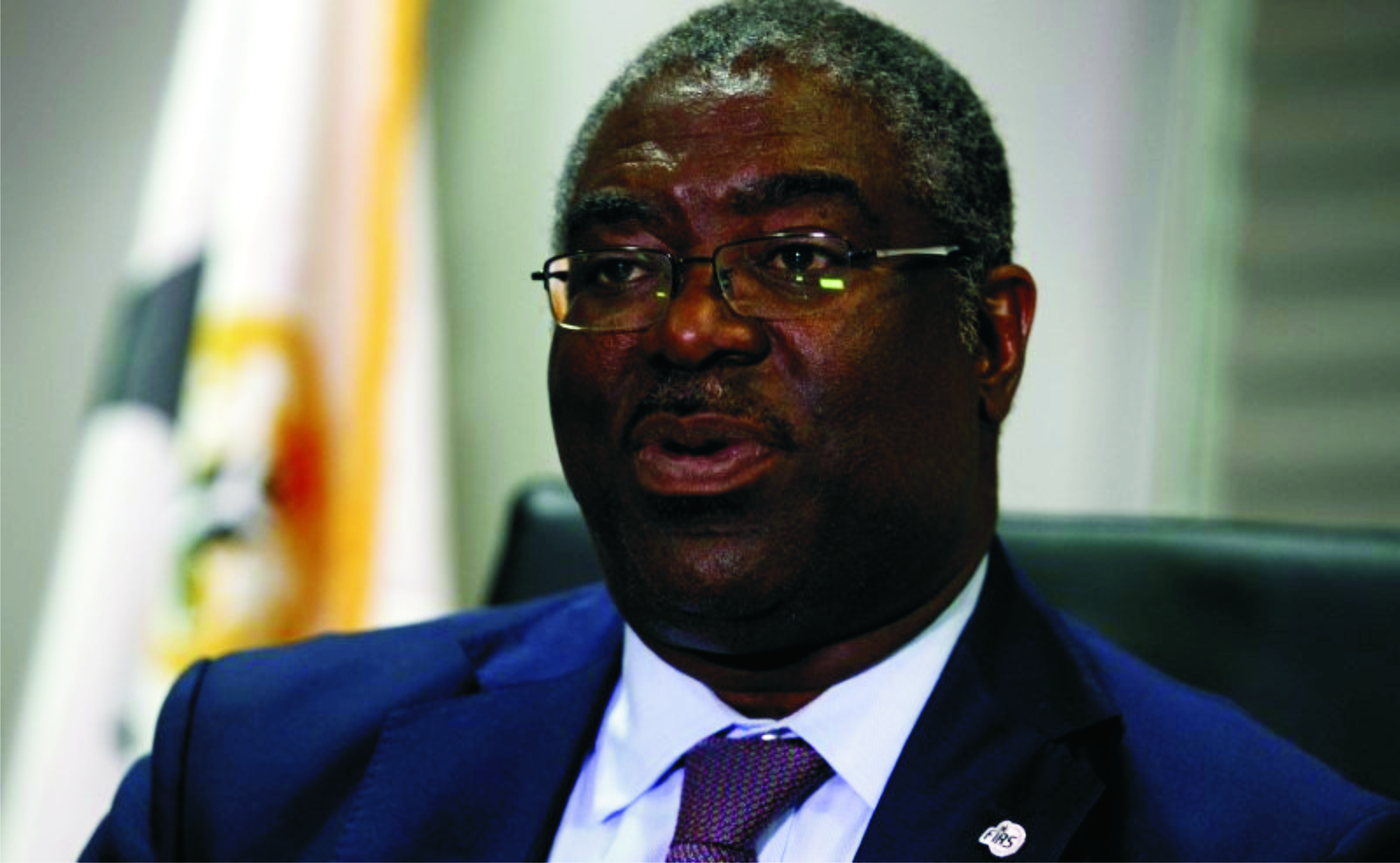
FIRS Gets N8.5trn Revenue Target For 2020
The Federal Government has set a tax collection target of N8.5 trillion for the Federal Inland Revenue Service (FIRS) in the 2020 fiscal period.
This target is contained in the Fiscal Strategy Paper of the Federal Government which had already been approved by the National Assembly.
The amount represents a drop of N300 billion when compared to the N8.8 trillion target for the service in the 2019 fiscal period.
The Chief of Staff to President Muhammadu Buhari, Abba Kyari, had, in a letter dated August 8, 2019, which he personally signed, asked the FIRS chairman, Babatunde Fowler, to explain reasons for ‘significant’ variances in budgeted collections and actual collections of tax in 2015, 2016, 2017 and 2018, when the actual amount collected as tax fell below the budgeted target.
Fowler had, in his response, blamed the drop in the price of crude oil and recession for the shortfall recorded in actual tax collections from 2015 to 2018.
The FIRS chairman noted that within the period, the price of crude oil fell from an average of $113.72, $110.98 and $100.40 per barrel in 2012, 2013 and 2014 to $52.65, $43.80 and $54.08 per barrel in 2015, 2016 and 2017, respectively.
He also blamed the variance on a reduction in crude oil production from 2.31mbpd, 2.18mbpd and 2.20mbpd in 2012, 2013 and 2014 to 2.12mbpd, 1.81mbpd and 1.88mbpd in 2015, 2016 and 2017, respectively.

Business
Association Seeks Intervention to Save Domestic Airlines
Business
CBN Reforms Impact Consumers As Dollar Card Spending Limits Rise
“Payment of tuition fees for undergraduate/postgraduate studies shall be subject to a maximum limit of $25,000.00 per semester,” the Manual states.
The expansion of international card limits also reflects growing confidence among lenders that foreign exchange liquidity has improved enough to support retail dollar transactions.
Speaking recently at the BusinessDay 14th Annual CEO Forum in Lagos, CBN Olayemi Cardoso, governor of the CBN said buying and selling activities now increasingly determine outcomes in the foreign exchange market, unlike in the past when market participants relied heavily on routine Central Bank interventions.
According to Cardoso, Nigeria’s net foreign exchange reserves have risen from just over $3 billion at the start of the reform programme to more than $40 billion, while gross reserves have climbed to about $52 billion, providing stronger confidence for investors and enabling the Central Bank to reserve interventions for periods of market stress rather than day-to-day liquidity management.
The restoration and expansion of international naira card spending limits are increasingly being seen as one of the clearest signs that the benefits of the CBN’s foreign exchange reforms are beginning to reach households, students and businesses making legitimate cross-border payments.
Business
WEC: FG Inaugurates Governing Board … As Nigeria Rejoins Council
The Secretary-General and Chief Executive Officer, WEC, Dr Angela Wilkinson, disclosed this in a statement, last Thursday.
“Nigeria’s participation comes at a pivotal time as the country seeks to expand energy access, strengthen energy security, accelerate gas development and mobilise the capital required for industrialisation and sustainable economic growth.
“WEC Nigeria will convene leaders from across the energy ecosystem, apply the WEC’s globally recognised Energy Trilemma framework to Nigeria’s unique context, and promote evidence-based dialogue, practical collaboration and informed policymaking.
“It will also ensure that Nigerian and broader African perspectives contribute meaningfully to global energy conversations,” she said.
Wilkinson expressed confidence that Nigeria would play a significant leadership role at the World Energy Congress scheduled for Riyadh in April 2027 and beyond.
The statement also quoted the Chairman of WEC Nigeria, Isa, as describing the country’s participation as an opportunity to deepen national and African leadership within the global energy community through practical solutions tailored to regional development priorities.
He said the platform would promote collaboration across sectors and attract sustainable investments into Nigeria’s energy sector.
The Chief Executive Officer of WEC Nigeria, Wunti, was quoted in the statement as saying that the council would connect leadership, evidence and investment to build a secure, affordable and sustainable energy system.
“This system will be capable of driving economic growth and shared prosperity.”
According to him, the platform will also connect Nigerian institutions and businesses with international knowledge, technology, partnerships and investment opportunities through the World Energy Council’s global network.
Recall that WEC, founded in 1923, is the world’s oldest independent and impartial community of energy leaders and practitioners, advancing informed, collaborative and practical action across the global energy system.
-
Editorial5 days agoThat Oshiomhole’s Call On FG’s Road Projects
-
Education5 days ago
Environmental Education Remains Critical Tool To Address Environmental Challenges Says Experts
-
City Crime5 days agoTinubu Appoints Ex-Tide Staff Registrar Of Chartered Chemists
-
Education5 days ago
UNIPORT VC Receives Probe Report on Student Union Crisis
-
Sports5 days agoRivers-born Chess Player Clinches Third Position At World Amateur Rapid Chess Championship
-
News5 days ago
RIFF 2026: RIFF Takes Film Tourism To Bonny Island
-
Oil & Energy5 days ago
NCDMB, BOI Unveil $100m Nigerian Content Equity Fund …Set To Invest $5m In Oil Firms
-
Business5 days ago
PTDF Committed To Tinubu’s Development Plan – CEO