Connect with us

Business

90m Nigerians Live In Extreme Poverty -FG

Published

on

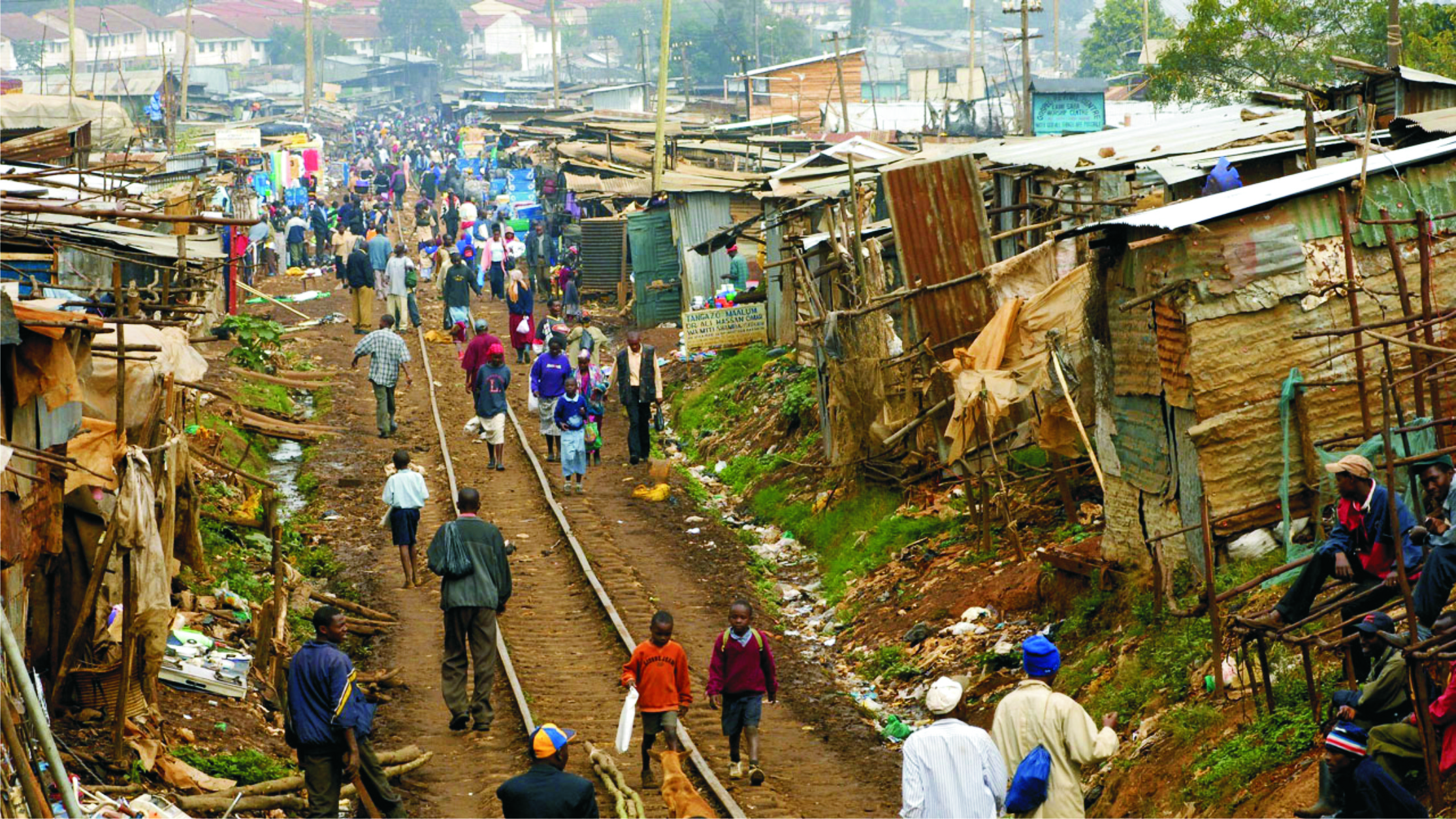
Of the estimated 200 million citizens in Nigeria, the Federal Government says 90 millions are currently living in extreme poverty.
The Minister of Humanitarian Affairs, Disaster Management and Social Development, Ms Sadiya Farouq, disclosed this while presenting the 2020 budget estimates of N44.21 billion for approval by the House Committee on Internally Displaced Persons and Refugees chaired by Mohammed Jega on Monday.
She, however, expressed the resolve of the Federal Government to lift 90 million Nigerians currently living in poverty across the country.
The minister said that the ministry was tasked with the responsibility of addressing some of the underlying causes, drivers and consequences of humanitarian crises and underdevelopment.
Farouq said this included the relatively high level of poverty of nearly half (90 million) of the country’s 198 million population.
The minister assured that the new ministry would strengthen the coordination of humanitarian and disaster management efforts by government and other stakeholders.
A breakdown of the proposed 2020 budget for National Commission for Refugees, Migrants and Internally Displaced Persons include N474,306,285 for personnel, N165 million for resettlement of IDPs in the North East and Bakkasi returnees in the 2020 budget proposal.
Others are N15 million for 1,000 IDPs enrolment into NHIS; N105 million for renovation/rent of 21,000,000 per state; N60 million Back to School fees; N105 million for drilling of boreholes; N184 million for securing land for relocation and reintegration of IDPs in FCT and Nasarawa State and N110 million for 2,200 families as return assistance to North East, among others.
Speaking at the occasion, the chairman of the committee assured that the budget would impact positively on all Nigerians.
“We are therefore poised for a collaborative action with the executive arm of government to ensure that we design a performing budget that will meet the expectations of the teeming populace,” he said.


Continue Reading

Business

FG Begins South-West Tour To Promote New Cooperative Bank

Published

on

The Federal Government has launched the South-West zonal engagement and ministerial advocacy tour on the Cooperative Bank of Nigeria share capital mobilisation, sensitisation and cooperative sector digitalisation.
 Reports say the initiative was launched through the Federal Ministry of Agriculture and Food Security.
According to reports, the advocacy tour, organised by the ministry’s Federal Department of Cooperatives, began on Monday in Lagos.
Speaking at the event, the Minister of State for Agriculture and Food Security and Supervising Minister of Cooperative Affairs, Dr Aliyu Abdullahi, said the initiative was part of President Bola Ahmed Tinubu’s Renewed Hope Agenda.
Abdullahi described the exercise as a strategic effort to reposition the cooperative sector as a key driver of inclusive economic growth, financial inclusion, enterprise development, food security and national prosperity.
“Today represents a defining moment in our collective determination to reposition the cooperative sector as a major driver of inclusive economic growth, financial inclusion, enterprise development, food security and national prosperity,” he said.
The minister noted  the modern cooperative movement in Nigeria originated in the South-West following the 1934 Strickland Report, which led to the enactment of the Cooperative Societies Ordinance of 1935.
According to him, the decision to commence the sensitisation and share capital mobilisation tour in the region is symbolic, as it marks a return to the roots of cooperative development in the country.
Abdullahi said the advocacy tour was a direct outcome of resolutions reached at the 8th Regular Meeting of the National Council on Cooperative Affairs held in Abuja in March 2026.
He said the council approved the Renewed Hope Cooperative Reform and Revamp Programme, a comprehensive framework designed to strengthen the cooperative sector and align it with the administration’s goal of building a one-trillion-dollar economy.
“The reform programme focuses on seven strategic pillars, including governance reforms, cooperative financing and the establishment of the Cooperative Bank of Nigeria, digitalisation, capacity building, value chain development, inclusion of youths, women and persons with disabilities, and strategic partnerships,” he said.
He said the establishment of the Cooperative Bank of Nigeria and the digitalisation of the cooperative sector were the two major transformational initiatives under the programme.
“The Cooperative Bank of Nigeria is aimed at rebuilding a strong cooperative financial system capable of supporting cooperators, farmers, artisans, traders, SMEs, youths, women and persons with disabilities with accessible and affordable financial services,” he said.
Abdullahi emphasised that the proposed bank would be government-enabled but not government-funded.
“Government is not establishing the bank as an owner, nor will it rely on Treasury Single Account funds.
“The role of government through the FMAFS is to provide policy support, stakeholder coordination, regulatory facilitation and an enabling environment under the Renewed Hope Cooperative Reform and Revamp Programme,” he said.
Also speaking, the Lagos State Commissioner for Commerce, Cooperatives, Trade and Investment, Mrs Folashade Ambrose-Medebem, reaffirmed the state government’s commitment to cooperative sector transformation.
She described cooperatives as critical tools for promoting inclusive growth, grassroots productivity, food security, financial inclusion and community wealth creation.
Ambrose-Medebem said Lagos State would continue to support reforms and collaborate with stakeholders to ensure the successful implementation of the Renewed Hope Cooperative Reform and Revamp Programme (2025–2030).
“Together, let us build a cooperative ecosystem that is modern, transparent, digitally enabled, financially inclusive and globally competitive.
“Let us build cooperatives that not only mobilise savings, but also mobilise prosperity,” she said.
Continue Reading

Business

Customs Impound N2.35bn Cocaine, 15 Trailers of Rice

Published

on

The Nigeria Customs Service (NCS), Federal Operations Unit (FOU) Zone ‘A’, Ikeja, has impound Cocaine Substance valued at ?2.35 billion alongside 15 trailer-loads of foreign rice and a wide range of contraband across the South-West.
This was disclosed to Newsmen during a press briefing in Lagos by Controller of the Unit, Comptroller Gambo Aliyu,
Aliyu revealed that the seizures were made over an eight-week period, underscoring intensified enforcement efforts.
According to him, operatives foiled 473 smuggling attempts within the period, leading to the confiscation of 8,794 bags of 50kg foreign rice, 22 used vehicles, 328 bales of used clothing, and 31,705 litres of Premium Motor Spirit (PMS).
He said other seized items include a Mercedes-Benz vehicle and various food products such as poultry, vegetable oil, spaghetti, and sugar.
Aliyu clarified that the rice displayed at the briefing represented cumulative interceptions made at different locations and times across the zone.
“All the rice you see here are accumulative of seizures carried out at different places, at different times, and through different interdictions,”
Beyond the economic implications, the Comptroller emphasized the social cost of drug trafficking, warning that narcotics continue to destroy families and fuel criminal activities.
“It may surprise you to know that many homes are broken due to drugs.
” Our mandate is to cut off the supply chain, and that is exactly what we are doing,”.
Similarly Customs operatives at the Gbaji outpost intercepted a 71 year-old suspect along the Lagos-Abidjan corridor with 6.35kg of cocaine concealed in a Toyota Highlander.
The drugs, comprising both powdered and crystalline forms, were valued at ?2.35 billion.
Under a special enforcement drive, codenamed “Operation Hawk,” the unit also seized 3,340 parcels of synthetic cannabis, popularly known as “Ghanaian loud,” weighing 1,540kg.
 The substances, along with three suspects, have been handed over to the National Drug Law Enforcement Agency (NDLEA) for further investigation and prosecution.
In a related operation, officers intercepted four cylinders of mercury hidden in a vehicle along the same corridor. Aliyu described the substance as hazardous and subject to international regulation.
Overall, the Duty Paid Value (DPV) of the seizures stands at approximately ?5.5 billion, reflecting the scale of enforcement activities.
 Additionally, the unit recovered ?97.7 million through Demand Notices issued on under-declared consignments.
Aliyu reaffirmed the Service’s commitment to deploying modern technology—including geospatial intelligence, drone surveillance, and real-time tracking—to strengthen border security and clamp down on smuggling networks.
CHINEDU WOSU
Continue Reading

Business

Dangote,  Nicolai Tangen To Partner In strategic sectors

Published

on

Chief Executive Officer of Norges Bank Investment Management, Nicolai Tangen ( manager of the world’s largest sovereign wealth fund) has expressed interest in partnering with Dangote Group to expand investments across Africa, particularly in strategic sectors such as power, energy, renewable energy, agriculture, fertiliser and cement.
This was made known during a meeting of Chief Executive of Dangote Group, Aliko Dangote  with Nicolai Tangen, the manager of Norwegian investment institution (with assets estimated at about $1.9 trillion) .
Also present at the meeting were Svein Tore Holsether, Chief Executive Officer of Yara International, and Terje Pilskog, Chief Executive Officer of Scatec, a global renewable energy company.
The engagement reflects growing international investor confidence in Africa’s industrial and infrastructure potential, as well as the increasing role of indigenous conglomerates such as Dangote Group in driving large-scale economic transformation across the continent.
Industry observers say the proposed collaboration could create significant opportunities for investments in critical sectors linked to energy transition, food security, industrialisation and infrastructure development.
The Norwegian sovereign wealth fund, regarded as one of the world’s leading institutional investors, has in recent years increased its focus on emerging markets, with Africa seen as a major frontier for long-term investment and value creation.
Analysts believe a partnership between Norges Bank Investment Management and Dangote Group could unlock substantial capital flows into infrastructure and industrial projects across Africa, helping to accelerate economic growth and regional integration.
Nkpemenyie Mcdominic, Lagos
Continue Reading

Trending