
News
25,794 Nigerians Killed In Buhari’s First Term -Report …As Gunmen Kill 13 In Taraba, Three In Kaduna …Soldier, Three Others Killed In Plateau …UN, Taraba Women Condemn, Protest Killings

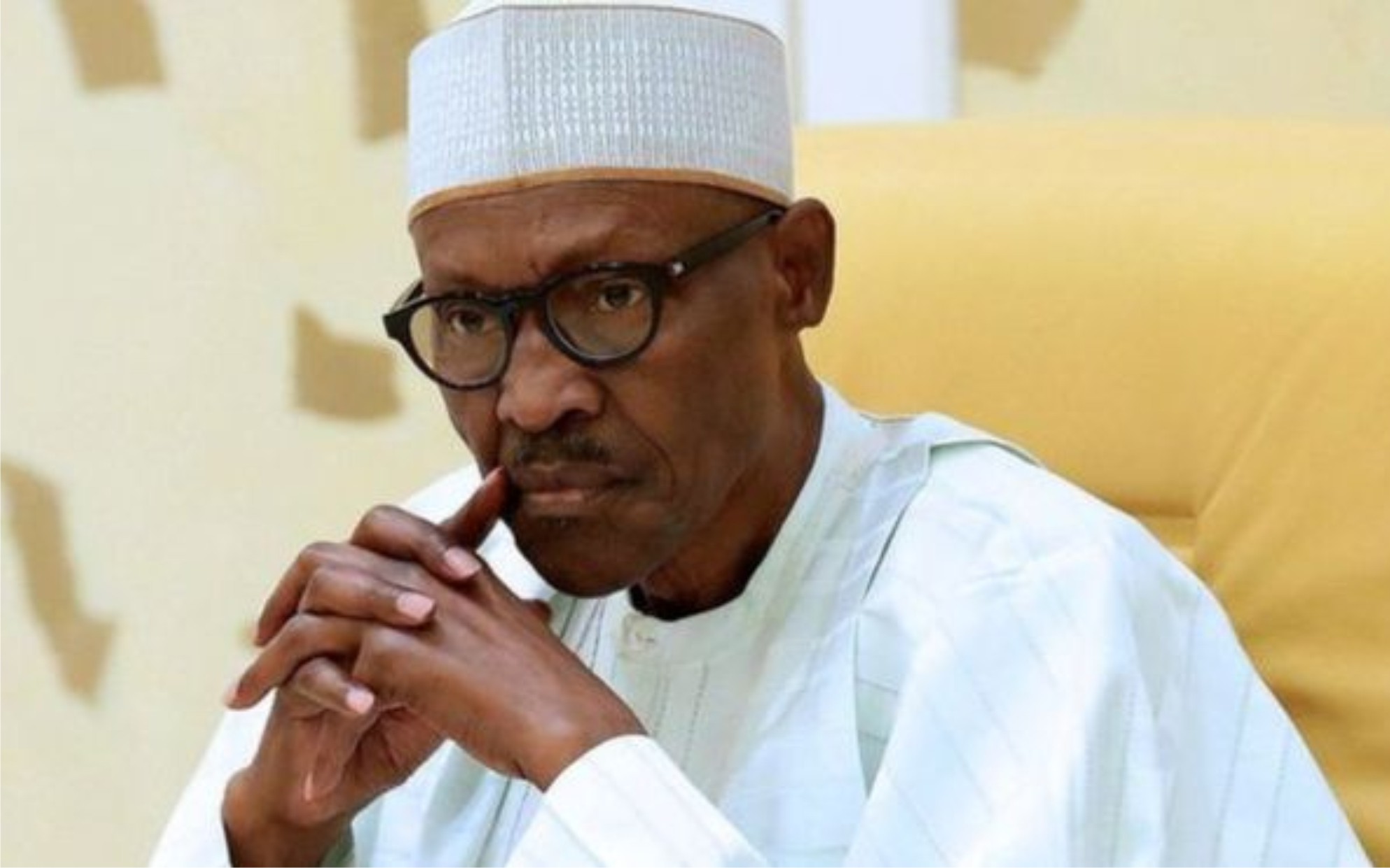
No fewer than 25, 794 Nigerians may have died in violent crises in the first four years of President Muhammadu Buhari.
The figure was released by the Nigeria Security Tracker, a project run by the Council on Foreign Relations, a nonprofit think tank specialising in United States foreign policy and international affairs.
The number represents those killed by different insurgent groups and Boko Haram in northern Nigeria, herdsmen, and people who died due to extra-judicial activities of the military.
From June 2015 to May 2019, when the President had his first tenure, our correspondent observed that Borno suffered the highest casualties recording 9,303 deaths. The state was followed by Zamfara (1,963) and Adamawa (1,529).
Others captured in the map are Kaduna (1,488), Plateau (771), Taraba (649), Benue (1,642), Niger (252) Rivers (730), Cross River (467), Ogun (301), among others.
Graphical illustration revealed that the highest casualties were recorded in July 2015 (1,299) and January 2019 (1,077).
Within the four years’ timeline, members of the Boko Haram sect were responsible for 5,598 deaths, while sectarian violence, including the herdsmen-farmers crisis, led to 4,917 deaths.
State actors alone, including the military, were said to have killed 4,068 people.
During the tenure of former President Goodluck Jonathan (June 2011 to May 2015), a total of 34,884 people were reportedly killed across the country.
The highest record of casualties was in March 2014, when 3,456 Nigerians were killed.
Boko Haram and the military were jointly responsible for 12,765 deaths.
The Council on Foreign Relations, while explaining the methodology behind the data, said it relied on media reports.
The report said, “The Nigeria Security Tracker tracks violence that is both causal and symptomatic of Nigeria’s political instability and citizen alienation. The data are based on weekly surveys of Nigerian and international media.
“The data start with May 29, 2011, the date of Goodluck Jonathan’s inauguration as president. It was an event that highlighted the increasing bifurcation of the country on regional and religious lines. The NST is updated weekly.
“Relying on press reports of violence presents methodological limitations. There is a dearth of accurate reporting across certain regions, death tolls are imprecise, and accounts of incidents vary. There is the potential for political manipulation of media. Given these limitations, the NST makes every effort to collect information from multiple sources. Nevertheless, NST statistics should be viewed as indicative rather than definitive.”
Also, four people including a soldier were confirmed dead yesterday following a fresh attack in Riyom Council Area of Plateau State by gunmen suspected to be Fulani herdsmen.
Our correspondent gathered yesterday that the attack on the remote Kagboro community took place around 12 pm on Monday and lasted for several hours which accounted for the high level of destruction in the community.
Villagers said that over 300 herdsmen invaded the village, shooting indiscriminately and burning houses including a government-owned clinic in the community after they overpowered men of the vigilante group who tried to resist them.
Meanwhile, at least, 13 people are said to have been killed and houses burnt in two separate attacks in Ardo Kola and Donga local government areas of Taraba State.
Our correspondent gathered that six people were killed in Janibanibu in Ardo Kola LGA near Jalingo when armed herdsmen invaded the village at about 6pm on Monday while seven were killed in an ambush at the border between Wukari and Donga LGAs.
The Parish Priest of St. John the Baptist Pastoral Area, Janibanibu, Rev. Fr. Cyriacus Kamai, told newsmen that seven people were killed in the village by suspected Fulani herdsmen.
“I am in Janibanibu village now, we have recovered six bodies, and we are making efforts to give them mass burial with the support of the soldiers who are with us in the village.
It would be recalled that Kona women, yesterday, staged a massive protest against the continued attacks on their communities and killings of their people by armed herdsmen.
The women took the protest walk from Kona village to Jalingo, the city centre.
Similarly, suspected Boko Haram jihadists have overrun a military base and looted a nearby town in Borno State, security sources and residents said, yesterday, the latest of such attack in the restive region.
The raids came a day after 30 people were killed last Sunday in a triple suicide bombing in the region that also bore the hallmarks of Boko Haram.
Boko Haram’s decade-long campaign of violence has killed 27,000 people and displaced about two million in Nigeria.
Late last Monday assailants, arriving on nine armoured trucks, stormed into the military base outside Gajiram village, 80 kilometres (50 miles) north of the Borno State capital, Maiduguri.
They were suspected to be from IS-affiliated Boko Haram faction known as the Islamic State West Africa Province (ISWAP).
“They dislodged troops from the base after a fight,” a security source said.
“We don’t know the extent of damage and looting in the base. An assessment is being carried out”.
It was not immediately clear if there were any casualties.
Residents said the Islamists drove into the town after sacking the base and looted shops, shooting into the air.
Their presence forced residents to flee into the bush while others shut themselves in their homes.
“The gunmen drove into the town around 6pm (1700GMT) after overpowering soldiers in the base,” Gajiram resident Mele Butari said.
“They stayed for almost five hours. They broke into the shops and looted food supplies and provisions,” he said.
“They didn’t hurt anyone and they made no attempt to attack people who fled into the bush or hid indoors”.
Soldiers were seen returning to the town from the bush, yesterday morning.
Traffic on the main road through Gajiram was suspended as soldiers assessed the damage in the base, said residents who returned to the town.
Gajiram lies on the highway linking Maiduguri and the garrison town of Monguno, 55 kilometres away.
Gajiram and the nearby base have been repeatedly attacked by the insurgents.
In June, last year, ISWAP raided the same base, killing nine soldiers.
ISWAP has targeted dozens of military bases since last year, killing scores of soldiers.
Last week, several troops were killed in an ISWAP attack on a remote base in Kareto village, near the border with Niger, according to military sources.
Last Sunday’s suicide bombings occurred in Konduga, 38 kilometres from Maiduguri.
The attacks appeared to be the work of a Boko Haram faction loyal to long-time leader, Abubakar Shekau.
Boko Haram violence has spilled over into neighbouring Niger, Chad and Cameroon, prompting formation of a regional military coalition to defeat the jihadist group.
Also, Reverend Father Isaac Agabi, who was abducted last Sunday by gunmen suspected to be herdsmen, has regained his freedom.
Agabi, who is the priest in charge of Holy Name Catholic Church, Ikpeshi, in Akoko-Edo Local Government Area of Edo State, was kidnapped along Auchi-Igarra road at about 5.00 pm, while on his way back to the parish.
It was gathered that he ran away from his abductors in the early hours of yesterday.
The Director of Communication, Catholic Diocese of Auchi-Igarra, Fr. Peter Egielewa, confirmed Agabi’s escape to newsmen in Benin.
Egielewa also confirmed that no ransom was paid to secure the release of the victim from his abductors.
He disclosed that Agabi escaped from the kidnappers when they slept off in the night.
“No ransom was paid. He actually escaped in the night when the kidnappers were asleep. He came out of the bush and was able to come home, no ransom was paid”, said.
The Edo Police spokesman, DSP Chidi Nwabuzor, could not be reached for comment, as calls made to his mobile phone were not answered.
However, leaders of the kidnappers who abducted Agabi have been allegedly nabbed by youths of Ikpeshi, in Akoko-Edo.
Similarly, six persons were said to have been killed in an attack launched by suspected herdsmen Monday night on Janibanibu community under Ardo Kola local government area in Taraba state.
This came as hundreds of Kona women yesterday took to the streets to draw attention to the continuous killings of their husbands and children.
The aggrieved women who were dressed in black to mourn the deceased decried the encroachment of their ancestral homes by armed marauders.
They also demanded the release of their youths who they claimed were arrested by security operatives. The procession which started from Kona terminated at Nukkai, a suburb of Jalingo.
However, our correspondent observed that KasuwanBera, a popular market in the metropolis was a shadow of itself, as most traders who live in the sacked villages have deserted it.
Security operatives were also seen around ATC, KasuwanBera among others maintaining law and order. The assault which raised tension and led to the imposition of 14 hours curfew late Monday night by the state government.


News
Rivers DPOs Receive Awards For Outstanding Performance In Crime Prevention …As Students, Media Group Honour CSP Worgu, CSP Yusuf


Two Divisional Police Officers (DPOs) in Rivers State have been honoured by separate groups for their contributions to security, crime prevention and improved community-police relations in their respective areas of responsibility.
The beneficiaries are the DPO of Afam Police Division, CSP Endurance Worgu and his counterpart at Oyigbo Police Division, CSP Bello Yusuf.
CSP Worgu was honoured by a group of students under the aegis of Rivers State Graduate Students Associations for what they described as his commitment and outstanding performance in the discharge of his duties.
The students, led by Chidi John Enyie, Esq. said CSP Worgu was selected based on his track record and status as one of the longest-serving young DPOs of Rivers State origin.
According to the group, CSP Worgu has made significant contributions to the protection of lives and property in the area since assuming office following the #EndSARS period.
The students said they were particularly impressed by the improvement in community-police relations under his leadership, noting that professionalism had remained a key feature of his service.
Enyie represented by Comrade Briggs Soku, said the students community was pleased to identify with a Rivers indigene who had distinguished himself in the police force.
He said the students considered it necessary to encourage and celebrate CSP Worgu because of his achievements as a young Rivers man excelling in a profession that many people from the state were often reluctant to join.
Receiving the award at his office in Afam, CSP Worgu expressed gratitude to God and the students for finding him worthy of the honour.
The DPO said the recognition had boosted his morale and encouraged him to sustain his efforts towards maintaining peace and security in the area.
He said he least expected the honour, particularly because it came from the students, adding that the recognition would further motivate him to serve the people better.
CSP Worgu assured residents of Afam that the police would sustain the existing peace in the area.
He appealed to members of the public to support the police by providing credible and timely information, stressing that useful information from residents would make the job of security personnel easier.
Meanwhile, the Ikwerre/Etche Media Association has also honoured the DPO of Oyigbo Police Division, CSP Bello Yusuf, for his efforts in tackling criminal activities in the area.
The media group presented the award following the swift tracking and arrest of five suspected kidnappers who had allegedly terrorised residents of the Kom-Kom axis and other parts of Oyigbo.
The group commended CSP Bello for what it described as his determined efforts to restore confidence and security in the affected communities, particularly Kom-Kom and Obeama.
According to the group, the arrest of the suspects demonstrated the DPO’s commitment to tackling criminality and safeguarding residents.
The media association said residents had received the development with relief, noting that the police action had sent a strong message to criminal elements operating in the area.
Responding, CSP Yusuf appreciated the group for the recognition and reaffirmed that there would be no room for criminality in Oyigbo.
He also commended the media for its role in disseminating credible information to the public, saying the media had remained supportive of the police in the fight against crime.
CSP Yusuf warned criminal elements operating in Oyigbo to leave the area or be prepared to face the full weight of the law.
He assured residents that the police would continue to pursue criminals and work to dismantle their hideouts, regardless of where they might be operating.

The 5000 Achievers Christian Forum and Colleges of Bishops, Archbishops and Apostles, a Christian interdenominational organisation, has endorsed President Bola Ahmed Tinubu and all candidates of the All Progressives Congress (APC) in Rivers State for the 2027 general elections.
International President of the forum, Archbishop Lucky Aroh, disclosed this during the ordination and consecration of three new Bishops, as well as an award ceremony held in Port Harcourt.
Aroh said the performance of the APC-led Federal Government had endeared the party to the organisation, prompting the forum to declare its support for President Tinubu and other APC candidates in Rivers State.
He said the forum would support all APC candidates in the state during the 2027 elections and urged Nigerians to vote for the party.
Aroh, who is also the General Overseer of Caring Peoples Church, Port Harcourt, charged the newly consecrated Bishops to see their new positions as a great responsibility and dedicate themselves to the advancement of the kingdom of God.
He cautioned them against conduct capable of bringing their offices into disrepute, stressing that their activities would be closely watched by members of the public.
“As Bishops, the eyes of the public are on your activities. You must therefore conduct yourselves in a manner worthy of your calling,” he said.
Also speaking, the International Coordinator of the forum, Bishop Saint Robinson, urged the newly consecrated Bishops to work diligently towards winning souls for the kingdom of God.
Robinson, who was the guest speaker at the event, stressed that the activities of Bishops must at all times be guided by godly principles.
He also called on members of the church to support and cooperate with the newly consecrated Bishops in the discharge of their responsibilities.
The Secretary of the College, Apostle Elizabeth Ayadi Abaye, said the organisation was established to advance the kingdom of God and promote spiritual development.
According to her, the forum has organised several crusades, conferences, prayer meetings, ordinations, consecrations, enthronements, empowerment programmes and other spiritual development activities across the country as part of efforts to win souls for Christ.
Abaye said the organisation has members across the world and disclosed that more programmes had been scheduled to promote the spiritual development and wellbeing of humanity.
The three Bishops consecrated at the ceremony were Prince Alban Chike, Testimony Omenihu Shedrach and Prince Ifemena.
Among those honoured at the event were the Chairman of the Community Development Committee (CDC), Abali Community, Port Harcourt City Local Government Area, Manuchimso Prince Lemmy Wopara, and Clifford Oko Jaja, Coordinator of the 5,000 House-to-House for President Tinubu.
By: John Bibor
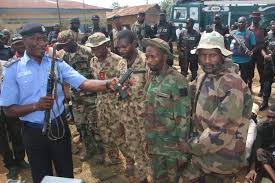
The Rivers State Police Command has arrested a 49-year-old suspected fake soldier, Andrew Atausi, and several other suspects in connection with various criminal activities, including kidnapping, armed robbery, cultism, one-chance robbery and the alleged murder of police officers.
The State Commissioner of Police, CP Olugbenga Adepoju, disclosed this in Port Harcourt, recently during a press briefing at the Command Headquarters, where he said the arrests formed part of the operational achievements recorded by the Command between June and August 2026.
Adepoju said Atausi was arrested on August 10 by police operatives along Ada George, Port Harcourt, while dressed in military uniform and driving a Toyota Hilux painted in Army colours.
The Commissioner said investigation revealed that Atausi was not a member of the Armed Forces, adding that he was suspected to be a serial car snatcher, with three suspected stolen vehicles recovered from him.
He said the recovered vehicles included three Toyota Hilux vehicles without registration numbers and a Toyota Corona Premio with registration number BNY 380 ES, noting that the chassis and engine numbers of the vehicles had allegedly been tampered with.
Adepoju added that an axe and military accoutrements were also recovered from Atausi, as investigation continued into the circumstances surrounding the vehicles and other items recovered from him.
On the June 29 attack on police officers at Aluu Division, the Commissioner said three members of the gang allegedly responsible for the incident had been arrested by operatives of the Violent Crime Response Unit, VCRU-AKU.
The suspects, identified as Maduabuchi Emeka, 34, alleged gang leader; Doctor Chinedu Owhor, 42, and Kamachi Joe, 28, alleged armourer, reportedly led operatives to their hideout at Omagwa where two AK-47 rifles stolen during the attack were recovered.
Adepoju recalled that two police officers were killed during the Aluu attack, while others were wounded and one officer had his leg amputated, stressing that efforts were ongoing to apprehend the fourth suspect.
On kidnapping, the Commissioner said five members of a suspected kidnapping syndicate were arrested in Oyigbo Local Government Area, adding that they allegedly confessed to operations in Kom-Kom, Railway, Obeama and Afam communities.
He said two other suspects from the same network, Anele Ogbogu, 35, alleged to be the gang’s armourer, and Kenneth Eke, 38, were arrested on July 27, with one AK-47 rifle and one SMG rifle recovered.
The Commissioner further disclosed the arrest of suspects in connection with alleged firearm offences, armed robbery, cultism and one-chance robbery, with firearms, ammunition and other exhibits recovered during the operations.
Adepoju assured residents that the Command would sustain intelligence-led, proactive and community-oriented policing in collaboration with other security agencies, while urging members of the public to continue providing credible information that would assist the police in combating crime across Rivers State.
By; King Onunwor
-

 News2 days ago
RSG Targets Nine Million Residents in Mosquito Net Distribution Campaign
-

 Oil & Energy2 days ago
Aiyedatiwa Signs New Electricity Bill
-

 Oil & Energy2 days ago
NLNG Commissions Research And Innovation Centre In RSU
-

 Maritime2 days ago
Marine Minister Commends President Tinubu On NPERA Bill Assent
-

 News2 days ago
KenPoly Holds Eight Convocations, August 29
-

 News2 days ago
RSG Begins Another Phase of Projects Commissioning Today
-

 News2 days ago
RMAFC Completes Revenue Sharing Review, Proposes New Pay
-

 Maritime2 days ago
NAGAFF Petitions IGP Over Alleged Maritime Police Harassment