
Featured
Tribunal: Atiku, PDP Dismiss INEC’s Denials …Demand Access To Server


The Peoples Democratic Party (PDP) and its candidate in the February 23 presidential election, Alhaji Atiku Abubakar, have filed a fresh application for access to information contained in the Smart Card Readers and “central server”, which it said the Independent National Electoral Commission (INEC) used for the conduct of the disputed election.
They filed the application before the Presidential Election Petitions Tribunal, where their petition challenging President Muhammadu Buhari and his All Progressives Congress’ victory at the poll is pending.
The petitioners, through their lead counsel, Dr. Livy Uzoukwu (SAN), made the request in their application filed before the tribunal, despite INEC’s insistence that the results of the election were manually collated and never transmitted electronically.
Uzochukwu, in a chat with newsmen at the weekend, confirmed that the application was filed on May 9, adding that the respondents – INEC, Buhari and APC – had yet to file their replies to it.
INEC had declared that Buhari and APC won the February 23 election with 15,191,847 votes to defeat his closest rival, Atiku who polled 11,262,978 votes.
But Atiku and the PDP, in their petition filed on March 18 to challenge the outcome of the poll, stated that “from the data” they obtained from INEC’s server, “the true, actual and correct results” showed that they polled a total of 18,356,732 votes to defeat Buhari whom they said scored 16,741,430 votes.
By calculation, Atiku and PDP claimed to have defeated Buhari by 1,615,302 votes.
However, in its reply filed on April 10 to counter the petition, INEC urged the tribunal to dismiss the petition, insisting that the petitioners’ claims were false.
It said, through its lead counsel, Yunus Usman (SAN), that it collated the results of the election manually and never transmitted them electronically.
It added kept no server where results transmitted electronically could have been stored as alleged by the petitioners.
However, the petitioners, in their fresh application, maintained that INEC kept “central servers” in which “information was recorded and stored in database packets relating to accreditation of voters and transmission of results from the presidential election”.
They sought to be permitted to inspect the said servers and the card readers used for the conduct of the poll, examine and analyse the information obtained from them.
They also prayed for the tribunal’s permission to be allowed to file a report of their inspection, examination and analysis of the content of the facilities.
Their written address filed in support of the application read in part, “This motion is brought pursuant to Section 151 (1) and (2) of the Electoral Act, 2010 (as amended), Section 71 of the Electoral Act, 2010 (as amended), Paragraphs 18 (7) (e), 41 (5) and (6), 47 (2) & 54 of the First Schedule to Electoral Act, 2010, (as amended), Section 6 (6) (b) Constitution of the Federal Republic of Nigeria 1999 (as amended) and under the Inherent Jurisdiction of this Honourable Court.
“The motion prays for the following orders as expressed on the face of the motion paper, namely: ‘An order allowing access or a court-supervised access and inspection by the Petitioners, in the presence of the 2nd and 3rd respondents (Buhari and APC) if they so desire, of the 1st respondent’s (INEC’s) central servers wherein information was recorded and stored in database packets relating to accreditation of voters and transmission of results from the Presidential election, the subject-matter of this petition.”



The Rivers State Government says it has commenced the necessary processes for implementing the new wage structure for members of the Academic Staff Union of Polytechnics (ASUP), urging the union to suspend its ongoing industrial action and return to the classrooms.
The government gave the assurance during a meeting with the leadership of ASUP in Rivers State, led by the Secretary to the State Government (SSG), Dr Dagogo Wokoma, alongside the Commissioner for Education, Dr Peter Nwagor, and the Permanent Secretary of the Ministry of Education, Dr Mina Ikuru.
The meeting focused on issues surrounding the ongoing strike and the implementation of the new wage structure for academic staff in the state’s polytechnics.
At the meeting, the government reaffirmed its commitment to addressing the concerns raised by the union, disclosing that the necessary administrative and financial processes for implementing the new wage structure were already underway.
While acknowledging the grievances of the union, the government appealed to its leadership to reconsider its position and call off the strike in the interest of students, parents and the overall development of the state’s education sector.
It stressed that sustained engagement and constructive dialogue remained the most effective means of resolving outstanding issues, assuring ASUP that the government was committed to fulfilling its obligations and maintaining a harmonious working relationship with academic staff.
The SSG urged members of the union to resume academic activities while discussions and implementation processes continued to prevent further disruption to the academic calendar.
“The Rivers State Government urges ASUP members to return to the classrooms while discussions and necessary implementation processes continue, to prevent further disruption to the academic calendar,” Wokoma said.
He reaffirmed Governor Siminalayi Fubara’s commitment to workers’ welfare and the provision of a conducive environment for quality education across the state.
“Governor Siminalayi Fubara remains committed to the welfare of workers and the provision of a conducive environment for quality education across the state,” he added.
The ASUP delegation included Bariakwaadro Bere, Chairman of ASUP, Kenule Beeson Saro-Wiwa Polytechnic Bori Chapter; Destiny Obinna, Chairman of ASUP, Rivers State College of Health Science and Management; and Ezekiel Tamu-nodiepriye, Chairman of ASUP, Captain Elechi Amadi Polytechnic, Port Harcourt.
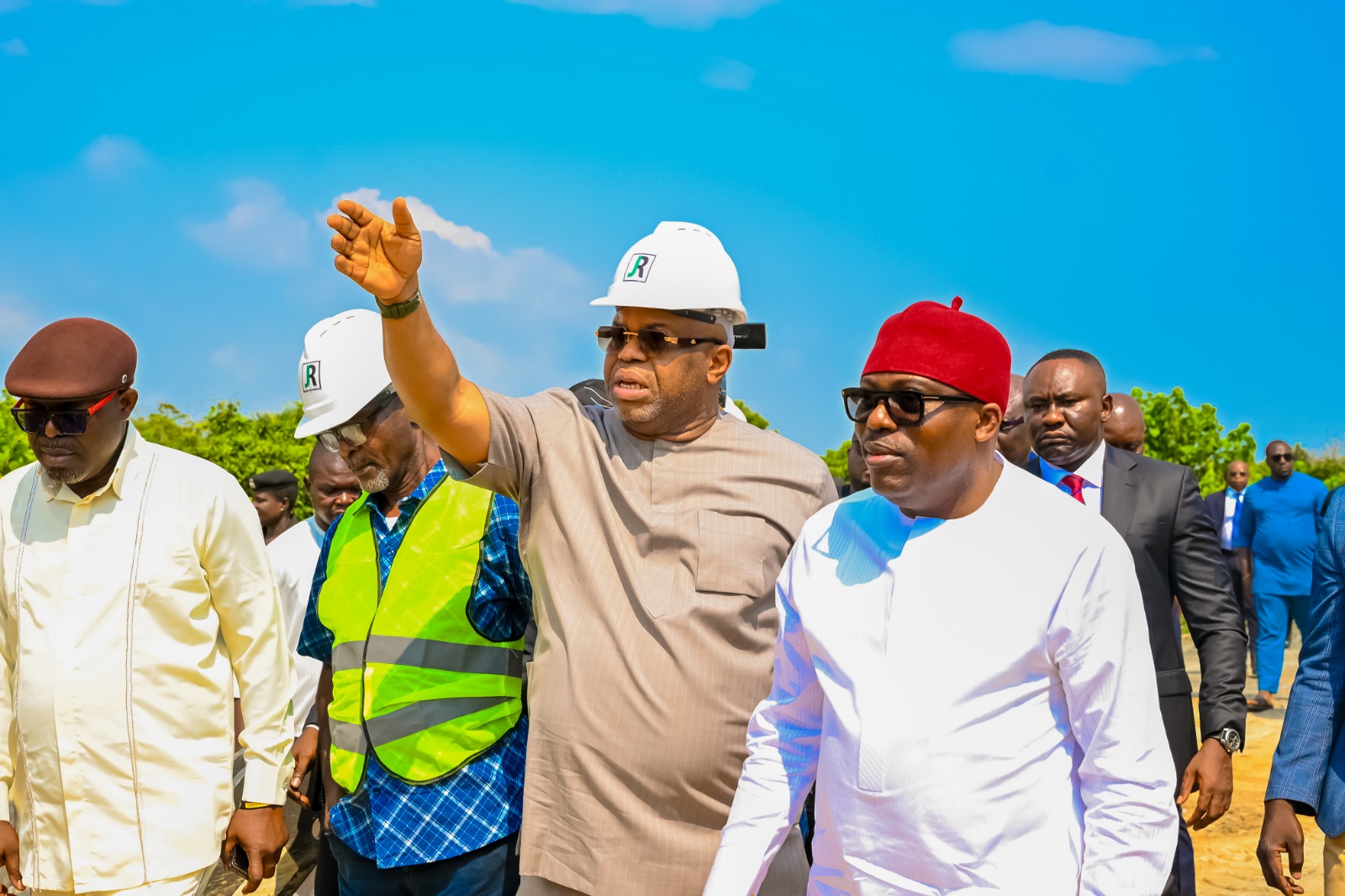
Governor of Rivers State, Sir Siminalayi Fubara, has expressed satisfaction with the level of work ongoing at the Ngo-Atlantic Oyorokoto Beach Road, beckoning on prospective investors to take advantage of the tourism potential in the project, located in Andoni Local Government Area of the state.
Governor Fubara, who inspected the project yesterday, assured that the access road to the beach will be asphalted before December and ahead of the next Tourists Beach Party.
Addressing journalists at the end of the inspection, Governor Fubara said he was on ground to see for himself the extent of work done, recalling that his administration had created the official road to the beach before the State of Emergency, after which the project witnessed some delays.
He said that since the end of the emergency rule the State Government has been meeting its own obligations to the contractors to ensure it fulfilled its promise to the people to transform the area into a tourist centre.
“We’ve been following up and meeting our own side of the obligation to ensure that one of the promises that we made to our people that day — that we want to make this place a tourist centre — comes to reality. And that is one of the main reasons we came here to see what is happening and the extent of the job that has been done,” he said.
According to Governor Fubara, the inspection tour was an opportunity to assess first-hand the progress made so far on the project.
On the beach side, the Governor said the work done was largely satisfactory, with only the asphalting of the road remaining. He gave assurance that it would be completed before December or before the next Tourists Beach Party.
He also disclosed that the other side of the road leading to the fishing ports had been inspected, with only a little culvert of about a hundred metres to the fishing centre left to be completed.
Governor Fubara said his assessment showed that the extent of work done was far better than what was previously on ground, urging investors to have no fear investing in Rivers State.
Chinese President, Xi Jinping, U.S. President, Donald Trump, and Russian President, Vladimir Putin, have made a historic commitment to strengthen global peace, reduce nuclear risks and promote strategic stability.
The world leaders made the commitment following their first-ever trilateral summit held in Shenzhen, China, yesterday.
The landmark meeting culminated in the adoption of a joint declaration, signalling renewed diplomatic engagement among three major global powers and permanent members of the United Nations Security Council.
The declaration outlined commitments to international security, United Nations reform, energy stability and dialogue on nuclear risk reduction.
Addressing the summit, Xi described the gathering as a groundbreaking diplomatic development, stressing that positive interaction among major powers was indispensable to international peace.
He recalled ?????????the historical cooperation among China, Russia and the United States during World War II, when they fought together against fascism.
“More than 80 years ago, China, Russia and the United States, the key anti-fascist forces in the world, fought shoulder to shoulder and achieved great victories, winning peace and tranquility for the world.
“History is the best textbook; we must remember history, and learn from it to shape the future,” the Chinese President said.
Xi warned that major-power rivalry could destabilise the international system, arguing that cooperation, rather than confrontation, was essential to humanity’s shared future.
He proposed four principles for managing relations among major powers: mutual respect, peaceful coexistence, win-win cooperation, and dialogue and consultation.
On mutual respect, Xi urged the three countries to respect sovereignty, territorial integrity, political systems, development choices and legitimate national interests.
He also called for greater sensitivity over contentious issues, warning against interference in domestic affairs and actions that challenge other countries’ red lines.
On peaceful coexistence, Xi maintained that the so-called Thucydides Trap was not inevitable, urging the three powers to reject confrontation and preserve international stability.
He particularly emphasised nuclear disarmament, declaring that nuclear war could never be won and must never be fought.
The joint declaration subsequently reaffirmed this principle, committing the three countries to dialogue on reducing nuclear risks and preventing nuclear proliferation.
The leaders also agreed to pursue reforms of the United Nations to strengthen its capacity to respond effectively to global challenges and advance international peace and security.
On economic cooperation, Xi advocated abandoning Cold War thinking, strengthening trade and combining the three countries’ respective advantages in resources, manufacturing and consumption.
He identified energy security as another important area for cooperation, proposing stronger coordination to maintain stable energy supplies and uninterrupted global industrial and supply chains.
The joint declaration reflected this priority, with the three countries planning to increase refined petroleum production and supply while reaffirming the importance of stable energy flows.
Another significant outcome was their common position on the authority and jurisdiction of international institutions, particularly the International Criminal Court.
The declaration stressed state consent and immunity for government officials, cautioning that the ICC and similar institutions must not abuse their jurisdiction.
On dialogue, Xi urged regular high-level engagements, open communication channels and crisis-prevention mechanisms to minimise misunderstandings and prevent disagreements from escalating.
He also called on the three countries to encourage parties involved in international conflicts to pursue negotiations and resolve disputes through political and diplomatic channels.
However, the declaration did not announce a specific agreement on ending the Russia-Ukraine war or the Iran conflict, despite their prominence in international security discussions.
Putin described the trilateral format as useful and substantive, while Xi characterised the discussions as positive, constructive and fruitful.
Trump also welcomed the opportunity, expressing optimism that cooperation among the three powers could help reduce nuclear weapons and prevent their use.
Although the summit produced no sweeping breakthrough on outstanding geopolitical disputes, its significance lies in establishing an unprecedented platform for direct engagement among three influential powers.
For the international community, the challenge now is translating the Shenzhen commitments into sustained diplomatic cooperation, practical nuclear-risk reduction and tangible progress towards global peace.
That although the historic summit offers an important diplomatic opening, its ultimate legacy will depend on Washington, Moscow and Beijing’s willingness to turn their declarations into action.
-
News3 days ago
Parents Protest Scholarship Scheme Suspension At PAMO Varsity
-
 News3 days ago
US Hails Nigerian Military For Rescuing 125 Kidnap Victims
-
Business3 days ago
Reps Raise Alarm Over N2trn Agricultural Loan Diversion
-
 Featured3 days ago
Presidents Xi, Trump, Putin Commit To Global Stability, Denuclearisation
-
Politics3 days ago
ADC Faults INEC’s Alleged Limited Capacity To Upload Election Result On IREV
-
Politics3 days ago
Tinubu Expands 2027 Campaign Tour To 19 States
-
Politics3 days ago
Rivers INEC Set To Begin PVCs Distribution Amidst Residents’ Complaints
-
Business3 days ago
Ibom Airlines Hits 52 Percent Of N147.03billion Financial Year, -FAAN