
Politics
The Unfinished Arab Spring

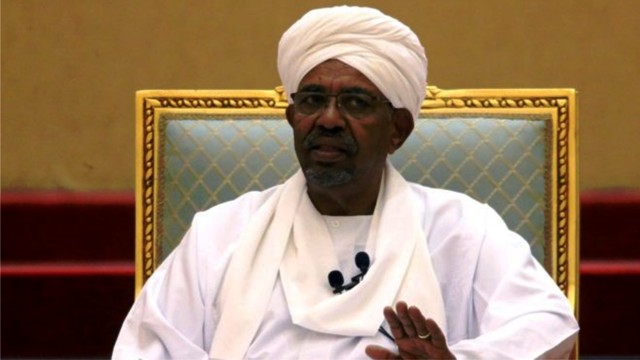
In 2011 when the popular uprising began in Egypt, Tunisia and Syria known as the “Arab Spring, most analysts thought it would spread throughout the Arab World but surprisingly it did not.
While it brought about changes in Tunisia and Egypt, that of Syria later snowballed into a civil war which terrorists such as ISIS capitalised on to create mayhem and mass killings.
However, nine years after, other Arab sit-tight dictators in Algeria and Sudan have had a taste of what a popular uprising looks like. Both Presidents, Abdulaziz Bourtoflika and Omar Al-Bashir were removed from office following months of protests without gunshots. All what was required were chants, strike actions and street demonstrations against injustice, corruption and an end to dictatorship. In essence, what the people wanted were changes in their economic situation and the restoration of democracy.
In Algeria, Abdulaziz Bouteflika who had already had a stroke and is wheel-chair bound refused every entreaty to step down due to his ill-health and inability to tackle the high unemployment issue affecting the country. To make matters even worse, despite his health condition and at the age of 82, he still wanted to contest for a fifth term in office after ruling the country for 20 years.
Though he is out of office, the protesters are still unrelenting and are calling for the removal from office, the old guard that has been ruling the country since its independence in 1962.
Likewise in Sudan, the protesters are also calling for the removal of all military presence in the proposed transition process. These calls are not without some merit as the aftermath of the Egyptian revolution has shown them that if proper safeguards are not put in place, Sudan or Algeria will end up in the hands of another military dictator who will hijack the revolution to perpetuate himself in power.
In most revolutions, those who topple and kill their opponents are likely to turn against their allies and people with equal vengeance. That’s why the protesters are saying that though some elements in the military were motivated by them to remove the former presidents from office they should handover the transition process to civilians to manage. Despite pleas so far, the protests are still ongoing.
Although the new political change is exciting, but its long term success depends on consistency and perseverance. This is because once there is any lapse in the coordination of the change made so far, the surviving elements in the status quo will re-strategise not only to survive but think of ways to use the system to either infiltrate the opposition movement and utilize the opportunities thus created to perpetuate themselves in power by removing their military toga and don civilian clothes to contest for the presidency as was done in Egypt.
One unique feature in the Sudanses uprising was that for the first time in the country’s history, Muslims had to invite the Christian minority population to join them and work as a team to fight for the restoration of freedom and true democracy.
Already because of the mounting pressure the military in both countries are in a dilemma. While in Algeria the head of the military Gaed Sala said they are looking for options to end the imbroglio as soon as possible, in Sudan all entreaties by the ruling military council to placate the opposition have been rebuffed.
In essence what this means is that there is high level of suspicion by leaders of the uprising that if they relent in their demands they might end up being fed the Egyptian menu… where those who led the uprising ended up behind bars.
What are the lessons that can be learnt from this second phase of the Arab awakening, especially in Africa as Sit-tight dictatorship seems to be on the wane?
Gadaffi is gone, likewise Robert Mugabe, Yahaya Jammeh is no more in office, the remaining presidents who for the last 20 to 30 years have been in power should start thinking of an exist route as to receive a soft landing. Meanwhile, Omar Albashir is now in a maximum prison in Sudan never to enjoy the trappings of power again. Maybe if he reflects over his mistakes, he will realize that his actions to cling on to power would eventually be fruitless as the momentum of the protest which started in December 2018 had no alternative than for him to relinquish power when the situation would have given him the opportunity to negotiate his exit with honour.
Maybe he thought he was a better politician than Hosni Mubarak of Egypt.
One thing every African leader should begin to understand is that they should never take the people they rule for granted and overstay their terms in office. African leaders must as a matter of fact; especially for their own sake avoid being that to be disgraced at their old age, showed respect the constitution of their countries; respect the rule of law and learn to know when to quit office when the ovation is at a high crescendo.
A look at years past saw how presidents who were held in high esteem ended.
Laurent Gbagbo, Blaise compoare, Samuel Doe, Yahaya Jammeh, Mobutu Sese Seko, Idi Amin, Jean Bedel Bakassa, Kwarue Nkrumah, said Barre and Hastings kamuzu Banda. They all ended in disgrace or exile.
Hopeful the level of maturity shown by the protesters in Algeria and Sudan is an indication that popular protests don’t have to be bloody for a change of government as lot does not really, need gunships, civil war or killings. Once a people expresses their feelings as to have a change of government let both the government and the opposition sit down and negotiate on how to move the nation forward. No one individual has the monopoly of wisdom in ruling a country. This is because after being in power for over 20 or 30 years with no tangible development what than can a man in his 80’s offer in a modern society where youth now form the majority of the population.
Though every society has its own unique feature, one common denominator is that people need an infuse of new thoughts, technology and ways of doing things that are in tandem with modern realities. So the days of jackboot democracy are over. The people now have the destiny in their own hands and should not relent in their demand for a true democracy where the freedom to choose who rules is determined by the voters card and not the wishes of a cabal or one man sitting on a throne.
Tonye Ikiroma-Owiye



The Independent National Electoral Commission (INEC) has extended the deadline for political parties to submit the list of candidates for the 2027 governorship and state Houses of Assembly elections from Saturday, August 8, to Tuesday, August 11, 2026.
The commission announced the extension in a statement issued on Saturday and signed by the National Commissioner and Chairman of its Information and Voter Education Committee, Mohammed Haruna.
According to INEC, the decision followed appeals by political parties for additional time to complete the submission process through the dedicated online portal.
“The submission window, which according to the revised Timetable and Schedule of Activities for the General Election was originally scheduled to close on Saturday, 8th August, 2026, has been extended to Tuesday, 11th August, 2026,” the commission said.
In a a related development, INEC announced the suspension of PVC collection in Osun State ahead of the August 15 governorship election.
The commission said voters who applied for replacement of lost, damaged or defaced Permanent Voter Cards would have until midnight on Sunday, August 9, to print downloadable copies of their cards.
The electoral body explained that the deadline was necessary to enable it compile data on downloaded PVCs and produce final statistics on the total number of cards collected ahead of the election.
INEC said PVC collection in Osun commenced at the Registration Area level from July 22 to 28, 2026, but was extended to July 31 following complaints about large crowds and difficulties experienced by voters at collection centres.
The exercise subsequently moved to the local government level and ran from August 1 to 7.
The commission also disclosed that replacement downloadable PVCs had been made available to voters in Odo-Otin and Ife Central Local Government Areas following the theft of cards during attacks on the two collection centres.
It stressed that the stolen cards could not be used to vote.
INEC reassured Osun residents of its preparedness for the August 15 governorship election.
“The commission reiterates that the stolen cards cannot be used to vote.
“INEC reassures the people of Osun State of its readiness to conduct a free, fair, credible and inclusive governorship election on 15th August, 2026,” the statement said.
The commission said the deadline, initially set for Saturday, 8 August, has been extended to Tuesday, 11 August 2026, following appeals from political parties for more time.
INEC also announced that the window for voters who applied to replace lost, damaged or defaced PVCs to download their replacement cards will close at midnight on Sunday, 9 August.
The move is to enable the commission compile final PVC collection figures ahead of the 15 August Osun governorship election.
INEC said replacement downloadable PVCs have also been provided to affected voters in Odo-Otin and Ife Central Local Government Areas after hoodlums carted away cards from two collection centres, stressing that the stolen cards cannot be used to vote.
The commission reaffirmed its readiness to conduct a free, fair, credible and inclusive election in Osun State.
Gov. Kefas made the remarks over the weekend at the Federal Medical Centre (FMC), Jalingo, during the flag-off of the second phase of the Renewed Hope Medical Outreach in Taraba State, organised as part of activities marking Prof. Yilwatda’s 58th birthday.
The governor commended Prof. Yilwatda for choosing to mark his birthday by providing medical care to people in need.
“What Professor Nentawe did is a powerful demonstration of what leadership should be,” Gov. Kefas said.
He assured that his administration would continue to support initiatives that complement government efforts to improve healthcare delivery and the wellbeing of residents.
Speaking at the event, Prof. Yilwatda called on Nigerian leaders to embrace the culture of giving and use their positions to touch the lives of the less privileged.
He said his decision to celebrate his 58th birthday in Taraba State was deliberate and informed by the needs of underserved communities, particularly people who face difficulties accessing healthcare because of distance and financial constraints.
According to him, the intervention followed a needs assessment and was extended across the three senatorial districts of the state.
He said the exercise commenced on August 3 at Takum General Hospital and covered the Federal University Teaching Hospital, Wukari; First Referral Hospital, Sunkani, Ardo-Kola Local Government Area; General Hospital, Bali; General Hospital, Gembu; and FMC Jalingo.
Prof. Yilwatda said the intervention provided medical services to thousands of beneficiaries, including people who required surgical procedures.
He said sustainable national development could only be achieved when strong institutions placed Nigerians at the centre of development.
“Leadership is about service,” he said, urging political and public leaders to make giving back to society an important part of their responsibilities.
He reaffirmed his commitment to serving Nigeria and its people, saying his personal vision was to make every day of his life useful to humanity.
“Every day that I live, the vision is: let it be useful to humanity,” he said.
The Taraba State Commissioner for Health, Dr. Bordiya Buma, commended the initiative, saying it was consistent with the Renewed Hope agenda and efforts to strengthen healthcare delivery in the state.
Dr Buma said the second phase followed the successful completion of the first phase, which was conducted simultaneously in six local government areas, with two LGAs selected from each of the three senatorial districts.
According to him, more than 10,000 patients were attended to during the first phase, including people with medical and surgical conditions.
He disclosed that 327 general surgeries, 71 eye surgeries and 575 dental procedures were carried out during the exercise.
The commissioner expressed appreciation to President Bola Tinubu for the Renewed Hope Medical Outreach and thanked Prof. Yilwatda for supporting the initiative and choosing Taraba State as a beneficiary.
The Minister of Health and Social Welfare, Prof. Muhammad Ali Pate, also commended Prof. Yilwatda for choosing Taraba State to mark his 58th birthday through a medical outreach.
Prof. Pate said making healthcare the centrepiece of the birthday celebration was significant because health affects everyone.
-

 News2 days ago
RSG Targets Nine Million Residents in Mosquito Net Distribution Campaign
-

 Oil & Energy2 days ago
Aiyedatiwa Signs New Electricity Bill
-

 Maritime2 days ago
Marine Minister Commends President Tinubu On NPERA Bill Assent
-

 Oil & Energy2 days ago
NLNG Commissions Research And Innovation Centre In RSU
-

 News2 days ago
KenPoly Holds Eight Convocations, August 29
-

 News2 days ago
RMAFC Completes Revenue Sharing Review, Proposes New Pay
-

 News2 days ago
RSG Begins Another Phase of Projects Commissioning Today
-

 Maritime2 days ago
NAGAFF Petitions IGP Over Alleged Maritime Police Harassment