
News
Nigeria’s Economy Slipping, World Bank Warns …Dementia Rises By 400% In Nigeria -Report

The World Bank has warned that the Nigerian economy has been slipping since 1995, and this continued till 2018.
The bank, in its latest report, yesterday, on the regional economy titled, ‘Africa’s Pulse’, released the taxonomy of growth performance in sub-Saharan Africa, which focused on the macroeconomic and financial features that led to growth resilience on the continent.
According to the bank, the taxonomy is used to help identify the factors that are correlated with success or failure in economic growth performance in sub-Saharan Africa, with emphasis on macroeconomic and financial variables.
The analysis, it said, involved a series of macroeconomic variables for 44 sub-Saharan African countries from 1995 to 2018.
The key elements that determined the positions of each of the 44 sub-Saharan economies in the taxonomy, the World Bank said, included the level of income per capita of the countries; structural transformation, as captured by sectoral value-added share and sectoral employment share; and capital flows.
Others are level and composition of public sector indebtedness, as captured by the general government gross debt and its currency composition, and the outstanding external public debt.
The last of the indicators has to do with governance vis-a-vis government effectiveness, regulatory quality, control of corruption, voice and accountability, political stability, and absence of violence and rule of law.
According to the World Bank, the taxonomy compares the average annual GDP growth rates during 1995–2008 and 2015–2018 against predetermined thresholds.
It also categorised growth performance into five groups: falling behind, slipping, stuck in the middle, improved, and established. The five groups were further reclassified into three groups: Top tercile, middle tercile and bottom tercile.
The Bretton Wood Institution said, “If a country’s economic performance declined from 1995–2008 to 2015–18, the country is categorised in the bottom tercile, which includes ‘falling behind’ and ‘slipping.’ If a country’s growth rate remained invariant over time, between 3.5 and 5.4 per cent in both periods, it is categorised in the middle tercile (or stuck in the middle). If a country’s economic performance improved from 1995–2008 to 2015–18, with the growth of more than 5.4 per cent per year, the country is categorised in the top tercile, which includes the ‘improved’ and ‘established’ groups.”
Based on the above classification, the Nigerian economy was categorised alongside 18 other sub-Saharan African economies as slipping having recorded declined economic performance between 1995 and 2018.
The World Bank said, “The bottom tercile consists of 19 countries: Angola, Burundi, Botswana, the Republic of Congo, the Comoros , Gabon, Equatorial Guinea, Liberia, Lesotho, Mauritania, Malawi, Namibia, Nigeria, Sierra Leone, Eswatini, Chad, South Africa, Zambia, and Zimbabwe. These countries did not show any progress in their economic performance from 1995–2008 to 2015–18. For instance, their median economic growth rate decelerated, from 5.4 per cent per year in 1995–2008 to 1.2 per cent per year in 2015–18.”
The bottom performing economies, according to the World Bank, produce almost 60 per cent of the region’s total GDP, emphasising that the three largest countries in the region—Nigeria, South Africa, and Angola—and many commodity exporters are in this group.
Burkina Faso, Côte d’Ivoire, Ethiopia, Ghana, Guinea, Guinea-Bissau, Kenya, Mali, Rwanda, Senegal, and Tanzania made the top tercile.
The middle tercile countries are Benin, the Central African Republic, Cameroon, the Democratic Republic of Congo, Cabo Verde, The Gambia, Madagascar, Mozambique, Mauritius, Niger, Sudan, Sao Tomé and Príncipe, Togo, and Uganda.
The World Bank also cut its growth forecast for sub-Saharan Africa this year to 2.8 per cent from an initial 3.3 per cent.
The commodity price slump of 2015 cut short a decade of rapid growth for the region, and the bank said growth would take longer to recover as a decline in industrial production and a trade dispute between China and the United States take their toll.
The bank’s 2019 forecast means economic growth will lag population growth for the fourth year in a row and it will remain stuck below three per cent, which it slipped to in 2015.
“The slower-than-expected overall growth reflects ongoing global uncertainty, but increasingly comes from domestic macroeconomic instability including poorly managed debt, inflation and deficits,” the bank said.
The Bretton Wood Institution equally cut Nigeria’s growth forecast by 0.1 per cent.
It said, “Growth in Nigeria is projected to rise from 1.9 per cent in 2018 to 2.1 per cent in 2019 (0.1 percentage point lower than last October’s forecast).
“This modest expansion reflects stagnant oil production, as regulatory uncertainty limits investment in the oil sector, while non-oil economic activity is held back by high inflation, policy distortions, and infrastructure constraints.
“Growth is projected to rise slightly to 2.2 per cent in 2020 and reach 2.4 per cent in 2021, as improving financing conditions help boost investment.
“In Nigeria, although the manufacturing and non-manufacturing PMIs remained above the neutral 50-point mark—which denotes expansion—they fell further in February, due to weaker rises in output and new sales orders across firms.
“Household consumption in Nigeria has remained subdued, while multiple exchange rates, foreign exchange restrictions, low private sector credit growth, and infrastructure constraints have continued to weigh on private investment.”
The Chief Economist for Africa at the bank, Albert Zeufack, said the region could boost annual growth by about nearly two percentage points if it harnessed Information Technology more effectively.
“This is a game-changer for Africa,” he added.
However, the spokesperson for the Central Bank of Nigeria, Mr Isaac Okorafor, said the CBN under the current governor, Mr Godwin Emefiele, had shown so much ingenuity in managing the economy.
“You know the crisis that we have faced in the past three years. The bank has shown ingenuity in managing the situation and ensuring that everything is stable.”
Meanwhile, the Minister of Finance, Mrs Zainab Ahmed and the Governor, Central Bank of Nigeria, Mr Godwin Emefiele, have joined other economic experts from around the world to discuss issues affecting global economy in Washington DC, US.
The discussions are scheduled to hold between April 9 and April 14, under the auspices of the World Bank Group and the International Monetary Fund in Washington DC.
The 2019 Spring Meetings of the IMF and the World Bank is expected to bring together central bank governors, ministers of finance, parliamentarians, private sector executives, representatives from civil society organisations and the academia.
The experts will discuss issues of global concern, including the world economic outlook, poverty eradication, economic development and aid effectiveness.
The meeting will also feature seminars, regional briefings, press conferences and many other events with focus on global economy, international development and the world’s financial system.
Nigeria attends the meeting each year because of the quantum of investments and technical support it receives from both the IMF and the World Bank.
Although Nigeria currently has zero loans with the IMF, it enjoys technical support from the organisation.
The World Bank Group, on the other hand, is helping to fight poverty and improve living standards in the country through 33 Core Knowledge Product Reports and 29 ongoing National and Regional projects.
Meanwhile, Nigeria is still struggling with recent reports that ranked the country 6th among miserable people in the world, the country has again, scored another negative point with regards to its already battered health indices.
The country has again broken another unenviable record with the number of dementia cases growing by 400 per cent.
It would be recalled that dementia is a brain disorder that affects communication and performance of daily activities.
It is an umbrella term for a set of symptoms, including impaired thinking and memory, and often associated with the cognitive decline of ageing.
In Nigeria, sadly, little or no attention is given to mental health disorders.
Dementia victims are labelled witches or mentally derailed.
The level of awareness on mental health issues is poor and fraught with lots of misconceptions.
The culture of stigma and discrimination fuels access to care as mental disorders are linked to supernatural causes, including witchcraft, demonic possession, and even punishment from gods or ancestors.
In this part of the world, in most cases, these patients are abandoned to their fate.
Currently, over seven million Nigerians suffer from depression, according to the World Health Organisation (WHO) 2015 estimates.
The same report estimates that West Africa has about 4.8 million people with anxiety disorders.
These scary statistics may not be unconnected with the fact that Nigerians are becoming more stressed due to economic hardship and other stressful life events.
Nigeria is rated among top 10 countries that are over depressed and ranks among countries with the highest number of drug addicts, depression and dementia, among others.
Statistics by WHO show that an estimated 47.5 million people have dementia and there are 7.7 million new cases every year.
Developing countries like Nigeria account for 57.7 percent of the problem.
According to the Federal Ministry of Health, about 20-30 per cent of Nigerians suffer from mental illness.
The Permanent Secretary of the Ministry of Health, Abdulaziz Abdullahi, had at a Mental Health Action Committee and Stakeholders’ Workshop in Abuja disclosed that with a population of about 200 million, Nigeria had a high rate of mental illness.
This implies that Nigeria has about 60 million persons with mental illnesses.
However, as Nigeria battles with the mental disorders challenge with no policy on mental health in place, a study by the Journal of Global Health Reports published by the University of Edinburgh has revealed that dementia, a clinical syndrome caused by neuro-degeneration, has increased astronomically in Nigeria over the last two decades.
It is estimated that about 47.5 million people are living with dementia globally, with over two-thirds residing in Low and Middle-Income Countries (LMICs), including Africa, where there is very limited access to social protection, and relevant care, services and support.
This first national comprehensive study also revealed that several communities in Nigeria still link dementia to a normal process of ageing, with many patients stigmatised and abandoned in the belief that their condition is beyond any medical intervention.
Thus, many of those affected delay seeking medical care and endure poor outcomes.
However, the situation is exacerbated by poor mental health service access which partly results in high out-of-pocket expenses that few can afford.
It has been estimated that the number of dementia cases increased by over 400 per cent over a 20-year period, from 63,500 in 1995 to 318, 000 in 2015 among persons aged 60 years.
Prevalence was highest in North-Central; followed by North-West and South-West while the prevalence was also higher in urban settings compared to rural settings.
Alzheimer’s disease, one of the subtypes of dementia, had the highest prevalence while other dementia subtypes had prevalence rates less of than 1 per cent In the views of the Lead Researcher, the Centre for Global Health Research, University of Edinburgh, Dr. Davies Adeloye some of the factors responsible for the prevalence of this disease include genetic, cultural, and nutritional variation in the country.
He urged the government to provide comprehensive care and support institutions for people living with dementia as this was currently lacking in the country.
Adeloye advocated for a bill broadly focused on protecting the rights of individuals with mental disorders and setting standards for mental health practice in the country.
It is, therefore, important for policymakers to direct efforts at ensuring adequate infrastructure, personnel, training and research that focus on dementia, among other important mental health needs, in Nigeria.
Adeloye, who noted that 318,000 persons were affected as at 2015 regretted said to prevent the disorder there is need for Nigerians to maintain a healthy lifestyle by eating a healthy, balanced diet, maintaining a healthy weight, exercising regularly, keeping alcohol to a minimum level, stopping smoking and keeping blood pressure at a healthy level.
Reacting to the findings, a Clinical Psychologist, Lagos University Teaching Hospital, Dr Juliet Ottoh, who also described dementia as a general term for a massive decline in mental ability said when is severe, it can interfere with an individual’s life activity.
She said lack of mentally stimulating activities, not exercising and not eating healthy and balanced food could predispose an individual to dementia.
Ottoh urged Nigerians to quit smoking and embrace regular medical check-up for early detection and treatment.
“There are many different mental disorders, with different presentations. They are generally characterised by a combination of abnormal thoughts, perceptions, emotions, behaviour and relationships with others.
“Mental disorders include Depression, bipolar affective disorder, schizophrenia and other psychoses, dementia, intellectual disabilities and developmental disorders, including autism. Stigma is a big problem in Nigeria. It prevents people from seeking treatment; nobody wants to be seen entering a psychiatric hospital,” she counselled.


News
Rivers DPOs Receive Awards For Outstanding Performance In Crime Prevention …As Students, Media Group Honour CSP Worgu, CSP Yusuf


Two Divisional Police Officers (DPOs) in Rivers State have been honoured by separate groups for their contributions to security, crime prevention and improved community-police relations in their respective areas of responsibility.
The beneficiaries are the DPO of Afam Police Division, CSP Endurance Worgu and his counterpart at Oyigbo Police Division, CSP Bello Yusuf.
CSP Worgu was honoured by a group of students under the aegis of Rivers State Graduate Students Associations for what they described as his commitment and outstanding performance in the discharge of his duties.
The students, led by Chidi John Enyie, Esq. said CSP Worgu was selected based on his track record and status as one of the longest-serving young DPOs of Rivers State origin.
According to the group, CSP Worgu has made significant contributions to the protection of lives and property in the area since assuming office following the #EndSARS period.
The students said they were particularly impressed by the improvement in community-police relations under his leadership, noting that professionalism had remained a key feature of his service.
Enyie represented by Comrade Briggs Soku, said the students community was pleased to identify with a Rivers indigene who had distinguished himself in the police force.
He said the students considered it necessary to encourage and celebrate CSP Worgu because of his achievements as a young Rivers man excelling in a profession that many people from the state were often reluctant to join.
Receiving the award at his office in Afam, CSP Worgu expressed gratitude to God and the students for finding him worthy of the honour.
The DPO said the recognition had boosted his morale and encouraged him to sustain his efforts towards maintaining peace and security in the area.
He said he least expected the honour, particularly because it came from the students, adding that the recognition would further motivate him to serve the people better.
CSP Worgu assured residents of Afam that the police would sustain the existing peace in the area.
He appealed to members of the public to support the police by providing credible and timely information, stressing that useful information from residents would make the job of security personnel easier.
Meanwhile, the Ikwerre/Etche Media Association has also honoured the DPO of Oyigbo Police Division, CSP Bello Yusuf, for his efforts in tackling criminal activities in the area.
The media group presented the award following the swift tracking and arrest of five suspected kidnappers who had allegedly terrorised residents of the Kom-Kom axis and other parts of Oyigbo.
The group commended CSP Bello for what it described as his determined efforts to restore confidence and security in the affected communities, particularly Kom-Kom and Obeama.
According to the group, the arrest of the suspects demonstrated the DPO’s commitment to tackling criminality and safeguarding residents.
The media association said residents had received the development with relief, noting that the police action had sent a strong message to criminal elements operating in the area.
Responding, CSP Yusuf appreciated the group for the recognition and reaffirmed that there would be no room for criminality in Oyigbo.
He also commended the media for its role in disseminating credible information to the public, saying the media had remained supportive of the police in the fight against crime.
CSP Yusuf warned criminal elements operating in Oyigbo to leave the area or be prepared to face the full weight of the law.
He assured residents that the police would continue to pursue criminals and work to dismantle their hideouts, regardless of where they might be operating.
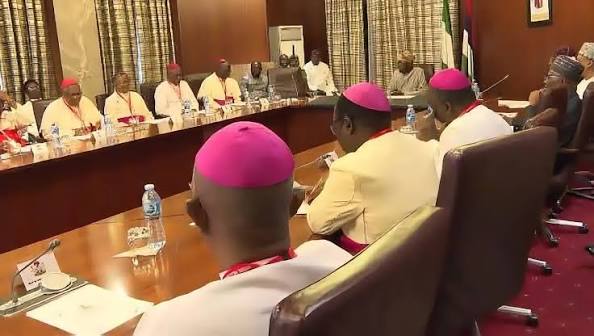
The 5000 Achievers Christian Forum and Colleges of Bishops, Archbishops and Apostles, a Christian interdenominational organisation, has endorsed President Bola Ahmed Tinubu and all candidates of the All Progressives Congress (APC) in Rivers State for the 2027 general elections.
International President of the forum, Archbishop Lucky Aroh, disclosed this during the ordination and consecration of three new Bishops, as well as an award ceremony held in Port Harcourt.
Aroh said the performance of the APC-led Federal Government had endeared the party to the organisation, prompting the forum to declare its support for President Tinubu and other APC candidates in Rivers State.
He said the forum would support all APC candidates in the state during the 2027 elections and urged Nigerians to vote for the party.
Aroh, who is also the General Overseer of Caring Peoples Church, Port Harcourt, charged the newly consecrated Bishops to see their new positions as a great responsibility and dedicate themselves to the advancement of the kingdom of God.
He cautioned them against conduct capable of bringing their offices into disrepute, stressing that their activities would be closely watched by members of the public.
“As Bishops, the eyes of the public are on your activities. You must therefore conduct yourselves in a manner worthy of your calling,” he said.
Also speaking, the International Coordinator of the forum, Bishop Saint Robinson, urged the newly consecrated Bishops to work diligently towards winning souls for the kingdom of God.
Robinson, who was the guest speaker at the event, stressed that the activities of Bishops must at all times be guided by godly principles.
He also called on members of the church to support and cooperate with the newly consecrated Bishops in the discharge of their responsibilities.
The Secretary of the College, Apostle Elizabeth Ayadi Abaye, said the organisation was established to advance the kingdom of God and promote spiritual development.
According to her, the forum has organised several crusades, conferences, prayer meetings, ordinations, consecrations, enthronements, empowerment programmes and other spiritual development activities across the country as part of efforts to win souls for Christ.
Abaye said the organisation has members across the world and disclosed that more programmes had been scheduled to promote the spiritual development and wellbeing of humanity.
The three Bishops consecrated at the ceremony were Prince Alban Chike, Testimony Omenihu Shedrach and Prince Ifemena.
Among those honoured at the event were the Chairman of the Community Development Committee (CDC), Abali Community, Port Harcourt City Local Government Area, Manuchimso Prince Lemmy Wopara, and Clifford Oko Jaja, Coordinator of the 5,000 House-to-House for President Tinubu.
By: John Bibor
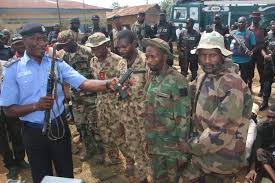
The Rivers State Police Command has arrested a 49-year-old suspected fake soldier, Andrew Atausi, and several other suspects in connection with various criminal activities, including kidnapping, armed robbery, cultism, one-chance robbery and the alleged murder of police officers.
The State Commissioner of Police, CP Olugbenga Adepoju, disclosed this in Port Harcourt, recently during a press briefing at the Command Headquarters, where he said the arrests formed part of the operational achievements recorded by the Command between June and August 2026.
Adepoju said Atausi was arrested on August 10 by police operatives along Ada George, Port Harcourt, while dressed in military uniform and driving a Toyota Hilux painted in Army colours.
The Commissioner said investigation revealed that Atausi was not a member of the Armed Forces, adding that he was suspected to be a serial car snatcher, with three suspected stolen vehicles recovered from him.
He said the recovered vehicles included three Toyota Hilux vehicles without registration numbers and a Toyota Corona Premio with registration number BNY 380 ES, noting that the chassis and engine numbers of the vehicles had allegedly been tampered with.
Adepoju added that an axe and military accoutrements were also recovered from Atausi, as investigation continued into the circumstances surrounding the vehicles and other items recovered from him.
On the June 29 attack on police officers at Aluu Division, the Commissioner said three members of the gang allegedly responsible for the incident had been arrested by operatives of the Violent Crime Response Unit, VCRU-AKU.
The suspects, identified as Maduabuchi Emeka, 34, alleged gang leader; Doctor Chinedu Owhor, 42, and Kamachi Joe, 28, alleged armourer, reportedly led operatives to their hideout at Omagwa where two AK-47 rifles stolen during the attack were recovered.
Adepoju recalled that two police officers were killed during the Aluu attack, while others were wounded and one officer had his leg amputated, stressing that efforts were ongoing to apprehend the fourth suspect.
On kidnapping, the Commissioner said five members of a suspected kidnapping syndicate were arrested in Oyigbo Local Government Area, adding that they allegedly confessed to operations in Kom-Kom, Railway, Obeama and Afam communities.
He said two other suspects from the same network, Anele Ogbogu, 35, alleged to be the gang’s armourer, and Kenneth Eke, 38, were arrested on July 27, with one AK-47 rifle and one SMG rifle recovered.
The Commissioner further disclosed the arrest of suspects in connection with alleged firearm offences, armed robbery, cultism and one-chance robbery, with firearms, ammunition and other exhibits recovered during the operations.
Adepoju assured residents that the Command would sustain intelligence-led, proactive and community-oriented policing in collaboration with other security agencies, while urging members of the public to continue providing credible information that would assist the police in combating crime across Rivers State.
By; King Onunwor
-

 News3 days ago
RSG Targets Nine Million Residents in Mosquito Net Distribution Campaign
-

 Oil & Energy3 days ago
Aiyedatiwa Signs New Electricity Bill
-

 Maritime3 days ago
Marine Minister Commends President Tinubu On NPERA Bill Assent
-

 Oil & Energy3 days ago
NLNG Commissions Research And Innovation Centre In RSU
-

 News3 days ago
KenPoly Holds Eight Convocations, August 29
-

 News3 days ago
RSG Begins Another Phase of Projects Commissioning Today
-

 News3 days ago
RMAFC Completes Revenue Sharing Review, Proposes New Pay
-

 Maritime3 days ago
NAGAFF Petitions IGP Over Alleged Maritime Police Harassment