
Women
Removing Pressure On Kids …Roles Of Parents, Guardians

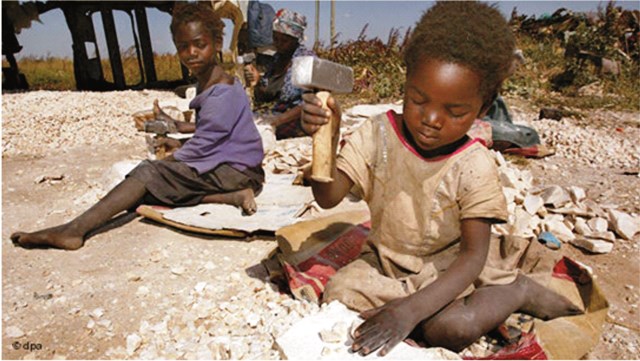
In a clime like ours, where many people are ignorant of the Child’s Rights Act and children’s opinions are not sought for, even while deciding issues concerning them, everybody thinks childhood is simply a care-free era.
Although many children may not initiate a conversation on what bothers them, they surely do go through one form of pressure or the other. Things like school demands, their social life and coping with house chores, in no mean measure, most times create pressures that can be quite overwhelming for them.
Unique Amadi, a senior secondary student of St Scholarstica Secondary School in Port Harcourt explains that she wakes up 4.00 am on week days to prepare for school, closes at 3pm and resumes preparatory classes for her senior WAEC immediately and closes at 6.30pm. She arrives home about 8.00pm and is faced with plates to wash in addition to her school’s assignments that she must submit the next day.
Unique is also an active member of the youth department of her church, a chorister in that regard. Unique is just one among millions of children who go through similar experiences on daily basis, some even play the role of bread winners in the home due to unfavourable economic conditions.
In the face of these demands, the onus lies on the poor little child to deliver on every side; be it at the home front, the school or the church, and he is expected to prove himself a faithful steward.
Sometimes, some parents seem not to know what to do to assist their children cope with these pressures but they surely do want them to reach out and help them cope with their troubles. Even though it may be practically impossible to avert pressures on children, you can, as a parent help them develop healthy ways to cope with pressures.
Resorting to using the child as a money-making venture for the family has exposed most of them to the vagaries of the harsh and ugly sides of life as many live daily hunted by the dangers incurred in the process of trying to cushion the effects of the harsh economy on their families.
Of course, the current economic downturn in Nigeria, and around the world, has refocused attention on the process through which families assist themselves. The harsh economic realities have pushed many parents, the original family bread winners out of their jobs, leaving their tables for days without food.
Worst still, many of the parents, guardians and other households lack entrepreneurial skills to fall back on in such a situation. This situation has not only created great pressure on the children and teens in homes, it has put upon them, the burden of lending support towards the family’s upkeep to avoid eventual collapse.
Most students on their own volition decide to help provide for their parents, siblings and themselves if they have the grace to do so.
Visits to grassroot communities in Rivers State in particular, and Nigeria at large, revealed that many teens who would have actually preferred to be in schools studying or be in school uniforms and be found in school environments having fun with teachers and fellow pupils or students, colleagues, are rather hawking goods on the streets and high ways while some serving as baby-sitters in various homes.
The reason is simply to help their families earn income with which to make ends meet. These school drop outs, are most times used as sacrificial lambs for others to be in school or to provide food on the table. Many no doubt, are economically viable and therefore responsible for their family’s financial stability.
It is a pitiable situation, as it is obvious that many of these teens are neither frustrated, unstable, uninterested in school nor are they guilty of any academic or behavioural misconduct. “They surely do want to be in school, but their families may need their financial help to make ends meet” says Molly Scott, co-author of Dropping Out and Clocking In: A Portrait of Teens who leave School early and work.
Scott was quick to point out that in some cases, children hand over their pay cheques to parents, while others notice a need in their families and decide to pay for utilities, groceries, school supplies and clothes for themselves and siblings. There also abound cases where youth essentially support themselves within their families or move out on their own.
For the ones who cannot work and school, it is indeed a matter of trading their future to address their family’s financial problems. On yearly basis, the oldest children are found stopping their education to help out with family financial situation. These students never get a chance to go back to school.
However, must children trade their future for their family’s good? Ofcourse, this cycle can be stopped. Similar economic hardship was witnessed sometimes in the 70’s and 80’s, there was provision for evening schools where children who worked in the day had the privilege to school in the evening and vice versa.
Again, one pressure staring the child in the face as he/she grows up, is that brought on him/her by peers; friends and course mates. A child once stopped attending maths class simply because his friend advised him against doing so. They rather chose to be going out for lunch during maths period.
As children grow up, they are faced with some challenging decisions of which some don’t actually have a clear right or wrong answer and others involve serious moral questions. Even adults sometimes are faced with this kind of challenge-where friends influence their action.
It is important to learn to say ‘No’ to offers from peers when they are not useful, this the parents must let them know.
Use an excuse for not wanting to accept such offer and proffer an alternative instead, most importantly, avoid the people who pressure you. This is so because, by mere spending time with you, you learn from them and they also learn from you. It is quite human to listen to and learn.
“It may be quite tough to be the only one who says “No” to peer pressure, but you can do it. Paying attention to your own feelings and beliefs about what is right and wrong can help you know the right thing to do.
Inner strength and confidence can help you stand firm, walk away and resist doing something when you know better” so said Dr D’Arcy Lyness.
Sylvia ThankGod-Amadi


Not just in mobilisation as before but right there on the ballot papers . Rivers women this time , more than ever are determined to shake the space .
Through the creeks of Opobo, the bustling markets of Mile One in Port Harcourt, and the political wards stretching from Ogoni to Ahoada, Rivers women sought flags for political posts across the parties.
The story is that for the forthcoming January and February 2027 general elections, the women are undeniable the engine room of political mobilisation across the Treasure Base of the Nation.
Filling every campaign arena coordinating ward-to-ward voter drives, and sustaining the grassroots coalitions that determine who occupies Government House and the legislative chambers but their numerical strength still couldn’t translate to equivalent number of tickets granted them .The Final list of the Independent National Electoral Commission (INEC) unveiled , a familiar paradox. While women constitute the backbone of Rivers State’s electorate and party structures, their names on the actual ballot paper remain hard-won exceptions rather than the rule.
Against the backdrop of complex political realignments—most notably the reconciliatory Rainbow Coalition uniting allies of Governor Siminalayi Fubara and Federal Capital Territory Minister Nyesom Wike behind President Bola Tinubu’s re-election bid, a select group of determined women has stepped forward to claim space on the 2027 ballots.
In the female squad; the faces defining women’s quest for power in Rivers State in 2027 parades a lone female governorship contender challenging 18 men to seasoned labour leaders, lawyers, and grassroots strategists vying for legislative seats, The lone woman in the Brick House Race, to succeed Governor Siminalayi Fubarra among 19 governorship hopefuls, is West Ivy standard-bearer of the African Action Congress (AAC).
At 47, West Ivy is no stranger to the rough-and-tumble of Rivers politics. A lawyer holding multiple academic and legal credentials (including an LL.B, BL, and LL.M), she previously ran as the AAC’s deputy governorship candidate during the 2023 general elections.
West Ivy has anchored her 2027 campaign on ideological consistency and independence from political godfathers.
“I did not switch parties or sides. I kept faith with you, and I am back to lead,” she declared on the campaign trail, framing her candidacy around peace, job creation, and human dignity. Crucially, she has placed gender inclusion at the heart of her governance blueprint, pledging to reserve at least 35 percent of executive cabinet positions for women alongside signing a 13-point Citizens’ Charter. Running alongside her as deputy is Eletuo Ezekiel Ijendu, At the Deputy Governorship corridor, six women appear on the ballot as deputy governorship candidates across diverse party platforms:
Davies Joy Jebba Ikubogh ; and Running mate to Chibuzor Israel Rain on the Accord (A) ticket.
John-Woke Geraldine ; Running mate to Idoniboye-Obu Omangima of the All Progressives Grand Alliance (APGA).
Badom Zaavalo ; Running mate to Whyte Churchill Dagogo of the Allied Peoples Movement (APM).
Jumbo Jessica Robert ; Running mate to Labour Party (LP) candidate Boms Chima Ernest.
Ehuwa Pirinye Kabaka an accountant paired with Peoples Democratic Party (PDP) flag bearer Samuel Soni Ejekwu.
Membere Ibigbeye Deborah ; Running mate to Peoples Redemption Party (PRP) candidate Kieghe Nature Dumale.
The presence of women on the deputy tickets of legacy parties like the PDP and major opposition platforms like the Labour Party reflects an enduring tradition in Rivers politics following in the footsteps of amiable Dr. Ipalibo Harry Banigo, who broke the glass ceiling in 2015 as the state’s first female deputy governor.
Then the Law makers Zone ; battles for the Red Chamber: Women in the Senate Races: . In Rivers State, seven women are contesting across the three senatorial districts, bringing varied backgrounds in labour activism, law, business, and community organising to the January 16 National Assembly polls: Rivers East Senatorial District:Two women are vying to represent the state’s most populous senatorial zone. Leading the charge is Beatrice Itubo. of the Labour Party (LP). A veteran trade unionist and former chairperson of the Rivers State chapter of the Nigeria Labour Congress (NLC), Itubo was the Labour Party’s governorship candidate in 2023.
She is joined on the Rivers East ballot by Wokekoro Beauty Dike Chinonso of the Action Peoples Party (APP).
Rivers South-East Senatorial District: Lessi Naasi Susan flies the flag for the Social Democratic Party (SDP), carrying the banner for female representation in the Ogoni and Opobo/Nkoro axis.
Rivers West Senatorial District This riverine and upland district features the highest concentration of female senatorial contenders in the state, with four women on the ballot: *Ololube Charity Chizhim of the Action Alliance (AA), Abusi Tammy C. of the Action Democratic Party (ADP), Opoli Aneni Inyamoyio* of the Democratic Leadership Alliance (DLA), and *Sokari George Georgina* of the New Nigeria Peoples Party (NNPP).
Yet, the Rivers West race is also defined by the loud absence of Incumbent Senator *Distinguished Senator Ipalibo Harry Banigo, the former deputy governor who won the seat in 2023, and currently Chairs the Health Committee of the Senate . She couldn’t scale through at the primaries of the All Progressives Congress (APC) .
Her exit from the major-party ticket speaks loud of the vulnerablity of even high-ranking, experienced female politicians even with their huge grassroots popularity.
The House of Representatives and State Assembly Contests
In the lower chamber of the National Assembly and the Rivers State House of Assembly INEC’s final list( for the House of Representatives,) has women such as *Victor Igeh Happiness* (contesting the Abua-Odual/Ahoada East Federal Constituency on the Action Alliance platform), alongside candidates under the ADC, NDC, SDP, ZLP, and APM banners, are pushing to break male dominance in federal constituencies.
At the state legislative level —scheduled for February 6, 2027—women across local government areas from Tai to Abua/Odual women had many battles and are still battling internal party intrigues and post-primary litigation. It’s common seeing some female aspirants who clinched party tickets loose their victories immediately in court contests with male contenders Behind the faces on the Ballot are Mobilisers shaping the outcome. Let’s talk about them !
In Rivers State, electoral outcomes are frequently decided by powerful women-led mobilisation networks operating inside the major coalitions.
As the Rivers Rainbow Coalition bridging the political structures of Governor Fubara and Minister Wike under the APC and PDP umbrellas— women leaders have been central to translating high-level political truces into ward-level votes:
Hon. Tonye Briggs-Oniyide, a former two-term Commissioner for Culture and Tourism and Rivers State Coordinator of the Renewed Hope Initiative, has played a pivotal role in linking federal women-empowerment interventions with grassroots political mobilisation.
Barr. Onyii Ile; State Coordinator of the Simplified Grassroots Ladies (SGL), commands one of the most visible female political networks in the state, rallying women across the 23 local government areas behind Governor Fubara’s political alignments.
Prof. Adaeze Chidinma Oreh former Commissioner for Health, continues to bridge public health advocacy and community engagement, resonating strongly with female voters and professional networks.
Amb. Dr. Ruth Davies Ibiamu; Chairperson of the Rivers State chapter of the Nigeria League of Women Voters (NILOWV), leads non-partisan civic education, pushing for peaceful polls and encouraging women to vote beyond material inducements.
Rivers Women in Politics still have lots of hurdles to pull off.
Rivers state with all her dynamic, politically astute women still see men occupy over 90 percent of the top slots on the 2027 ballot.
Women folk; Rivers Women there’s every need to discuss the following barriers : The Patronage and Godfather System,, Prohibitive Campaign High Costs ,Political Volatility and Intimidation: Looking Ahead to January and February 2027 ballots our Women flag bearers have a dual burden. They are competing to win seats in a fiercely contested political environment, while simultaneously keeping the door open for the next generation of female leaders.
I believe through West Ivy’s bold solo run for Government House, Beatrice Itubo’s labour-backed push for the Senate, and the six women standing a heartbeat away from the governorship as running mates, Rivers women are fast going beyond mobilisation figures, aso – ebi wearers or mere spectators in Politics .True democratic representation in Rivers State will remain incomplete until the women who deliver the votes are equally entrusted with the power to govern.
Nneka Amaechi-Nnadi
Women
Hearty Cheers To Nigeria’s Flamingos …Kudos To All Nigerian Women Who Chose To Excel In Male Turfs

As years rolled by, a new generation of daughters arose. The barriers were broken. Our women and girls graced the pitches and took solid grounds. Not, just to watch and not just to participate, but to conquer.
Nigeria’s female national football teams have consistently flown the country’s flag high, serving as absolute power houses on the African continent and earning immense global respect.
The year 2026 will forever be etched in gold. In Nigeria, and African football history as the year Nigeria’s U-17 women’s national team, the Flamingos took over the male turf, rewrote the global script at the FIFA U-17 Women’s World Cup in Morocco, emerging the first African female Team to conquer the World and bring home the World Cup.
The journey through the seven matches were clearly tough and rough but the Nigerian teenage Queens defied all odds , faced the global big hooves , beat them in their games and made Africa; Nigeria proud . They broke all barriers and won their six matches. They conquered football behemoths like Brazil in the semi-finals with a stellar 3-1 victory, and stood face-to-face with multi-time global champions, Japan in the grand finale in Rabat. When the final whistle blew, sealing a tense 2-1 victory over Japan, the Flamingos achieved the unthinkable: they became the first African nation in history (male or female) to lift the FIFA U-17 World Cup trophy. .
I hail the Midfielder, Oluebube Umejiaku , who ignited the pitch and tamed the world former bests, clinching the prestigious ” FIFA Golden Ball as “ “Player of the Tournament.” Under the tactical brilliance of Head Coach Akeem Busari, the young Nigerian girls stood firm and displayed “what they got”
They did not just win; they dismantled barriers. After an initial setback, they surged forward with six consecutive victories.
As the African Queens landed home amidst thunderous ovations, the Presidency and the Senate took turns to celebrate the Young World Conquerors. Tuesday, the Senate, following the prayers of a Motion on the Flamingos glorious outing sponsored by Distinguished Senator Abdul Ningi applauded the U-17 World best. The World record attained by the players gave room for off politics deliberations in the Red Chamber as all Senators united in commendations over this national feat. The lawmakers took turns to eulogise the female players and splashed the team with cash sum of one hundred million naira.
Senate President Godwill Akpabio, speaking on behalf of his colleagues said, “I want to commend the Flamingos, the U-17 youth team of Nigeria, for defeating major countries such as Brazil and Japan to win the Under-17 World Cup for Africa for the first time and for Nigeria.”
He also appealed to the Federal Government and corporate Nigeria to adequately reward the players and invest in the foundational development of women’s sports. The lawmakers also commended the National Sports Commission (NSC) under Mallam Shehu Dikko for his good work which yielded the world trophy to Nigeria.
Wednesday, the Senate, President and his colleagues continued the shower of praises as they hosted the Flamingos in the National Assembly.
Same day, the team was hosted at the Presidential Villa by the First Lady, Senator Oluremi Tinubu. The players at the Villa received gifts of One hundred million Naira each from President Bola Ahmed Tinubu .
From the women’s world, the victory of the Flamingos speaks volumes. It is women breaking boundaries, venturing into male – dominated terrains not just to be seen but to excel not minding systemic hurdles.
Looking back, it is already established that soccer, the field of men had expanded. No longer a male preserve but a shared terrain where Nigeria’s female teams shake the world.
Before now, the Super Falcons (Senior Women’s National Team; undisputed Queens of Africa, dominated the Women’s Africa Cup of Nations (WAFCON) with multiple continental titles and historic triumphs. They qualified for every single edition of the FIFA Women’s World Cup since its inception in 1991. The Super Falcons maintained Continental Dominance and Rankings.
The Falconets, Nigeria’s U-20 Women’s National Team in turn carved their names in gold over the years as they consistently terrified traditional superpowers at the FIFA U-20 Women’s World Cup. They have a history of reaching deep into the tournament, famously securing runners-up position (Silver medals) at the FIFA U-20 Women’s World Cup on multiple occasions, fiercely challenging powerhouses like Germany and the USA. Maintaining African Supremacy, they routinely swept the African qualifiers, proving to be the ultimate conveyor belt of talent feeding straight into the senior Super Falcons squad.
Cheers to all Nigerian Women! Our Teams are the best!
Nneka Amaechi-Nnadi
-
News3 days ago
Bayelsa Boat Mishap: Tinubu Donates N250m As Death Toll Hits 29
-
News3 days ago
Odu Pays Tribute To Late Chinwah, Describes Him As Courageous, Selfless Academic
-
 Maritime3 days ago
Nigeria, Russia Customs Sign MOU To Trade Facilitations
-

 Sports3 days ago
World marathon champion gets three-year doping ban
-
 Maritime3 days ago
South-South Governors Urges To Shake Off Collective Lethargic To Embrace Blue Economy
-
 Maritime3 days ago
Oyetola Woos Investors With Nigeria’s Seabed Resources, Marine Biotechnology
-

 Business3 days ago
Moniepoint MfB transaction volume hits 1trn daily — CEO
-

 Oil & Energy3 days ago
Global Oil Market May Witness Supply Surplus Before The End Of 2026 …… Report