
News
Zamfara Banditry Claims 3,000 Lives, Gulps N17bn -Govt


The ongoing banditry in Zamfara State has claimed over 3,000 lives with the State Government spending some N17 billion in the past seven years on fighting the problem.
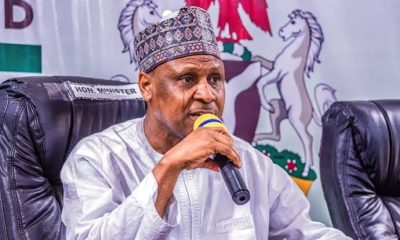
The Secretary to the Government of Zamfara State, Prof. Abdullahi Shinkafi, made the disclosure yesterday in Gusau at a town hall meeting organised by the Nigerian Bar Association (NBA).
The meeting was called to find a lasting solution to the worsening insecurity in the state. According to Shinkafi, the banditry has resulted to the death of over 3,000 people, destruction of over 2,000 homes, burning of over 500 cars and kidnapping of over 500 people for ransom.
He said that the money was spent from 2011 to date, to procure vehicles for security agencies, pay allowances to security operatives, provide accommodation for soldiers of the 232 Battalion and other logistics. “When you hear N17 billion, it sounds huge but when you break it down to the various components in tackling insecurity, you will see that it is not even enough.
“In 2011, we provided 457 vehicles for security agencies, in 2012, we provided 2,250 vehicles, in 2014, 77 vehicles and 50 vehicles each in 2015, 2016, 2017 and 2018. “We also have to give funds to those affected by these attacks to at least help them in some way.”
According to Shinkafi, the state has been sitting on a time bomb for long, and there is need for citizens, the state and Federal Government to be more concerned and find ways to stop the bomb from exploding.
He recalled that the crisis which started as a minor clash between herders and farmers had been taken over by armed bandits, who had carried out about 40 attacks.
Calling on parents in the state to take proper care of their children, the SSG implored men not to marry more than one wife where it was clear they didn’t have the means.
“When as parents you do not attend to your children, the bandits hijack them and recruit them to work for them and as a man, you don’t have to marry four wives if you know you don’t have the means.”
He attributed the banditry to shortage of manpower in the state, stressing the need for more indigenes to show interest in joining the security services to protect the state.
The National President of the NBA, Mr Abubakar Mahmoud (SAN), wondered why the Federal Government would allow the state to spend so much of its funds on security.
He argued that the sum would have been used to build infrastructure and grow the state’s economy, adding that security operations should be funded by the Federal Government and not the states. He, however, noted the need for the Zamfara Government to show leadership in the fight against insecurity.
According to him, providing funds without being present to monitor how the funds are spent cannot not yield the desired results. Mahmoud said the visit by the NBA was not political but a move, aimed at promoting peace, resolving the conflict and upholding the Nigerian Constitution. He assured that the association would dialogue with Gov. Abdulaziz Yari on various allegations against him, particularly that he was never present in the state to attend to state matters.
Some of the participants, who spoke at the meeting, accused Yari of running the administration in absentia and called on the Federal Government to declare a state of emergency in the state. Sen. Saidu Dansadau, a former senator said that management of security was capital-intensive and that the leadership must be on ground to monitor how such money was spent.
Dansadau also argued that the only solution to the crisis in Zamfara was to declare a state of emergency in the state.
“For Zamfara to be peaceful again, a state of emergency must be declared.
It is no longer an issue of getting adequate arms and ammunition or security personnel.” For Mr Aliyu Gusau, the Director of Public Prosecutions in the Federal Ministry of Justice, the issue was that the people of the state no longer trusted the government.
“The communities are more loyal to the bandits because promises and assurances given by the government are never fulfilled.”
He also blamed lawyers in the state for being too quick to defend and secure bail for arrested bandits and attributed this to the failure of justice delivery in the state. Other speakers also identified poverty, unemployment, corruption, ignorance, ethnic and religious sentiment as some of the factors fuelling insecurity in the state.



The Rivers State Command of the Federal Road Safety Corps (FRSC) says it has deployed 189 officers, 316 marshals and 470 Special Marshals to critical corridors in the state with a view to checking road accidents in the ember months.
The FRSC Sector Commander, Francis Ajatta, who disclosed this recently, said his office has also deployed 10 patrol vehicles and a towing van to monitor vehicular activities on the road.
He listed the crash prone areas to include the East-West Road and the Aba-Port Harcourt Expressway among roads to be monitored.
Ajatta also said his men would be deployed to traffic flash points across the city to ensure traffic flow during the period.
The Corps Commander listed the traffic flash points as Mbiama market, Oyigbo Market, Rumuokoro bridge, Eliozu bridge and Eleme Trailer park.
Other flash points include Rumuola bridge, Ben Jack junction, Fruit Garden market junction, Waterlines bridge and junction as well as Obiri Ikwerre bridge.
“Our men will be on the road beyond normal closing time. We will be at motor parks by 5am with megaphone,” he said.
Ajatta warned that the corps would arrest and prosecute traffic offenders, adding that collaboration with the Army, Navy, Police, NEMA and the Ministry of Health has been strengthened for prompt rescue.
He also warned drivers, passengers and pedestrians to avoid overloading, overspeeding and mixed-loading, noting that the practice has become a major killer on highways.
“Overloading and mixed-loading is a dangerous trend to avoid. If your vehicle is meant for five, don’t carry eight. If a crash occurs with overloaded vehicle, fatality will double. You are sitting on a death trap,” he warned.
The Sector Commander also urged commercial drivers to install functional speed limiting device or risk impoundment, saying over-speeding, drunk-driving and night driving will not be tolerated.
“Stop mixed-loading of humans, animals and goods. Ensure your vehicles meet minimum safety standards.
“There is an alarm that triggers once you exceed 80km/h. Some devices will cut fuel supply. If you don’t have it, we will stop you,” he said.
Ajatta also advised passengers against encouraging overloading, stressing that the situation where women will want to carry two children on their laps in the vehicle will no longer be tolerated.
“That woman that God has blessed with four kids wants to carry two on her lap in one seat. That seat for four now carries seven going to village, don’t allow it. Your life is involved,” he said.
He urged passengers to speak up, report reckless driving and always wear seatbelts.
The Corps Commander also cautioned pedestrians, bike riders and cyclists whom he described as vulnerable road users, to be extra careful, avoid walking on expressways and use pedestrian bridges.
Samuel Christopher, Virine Stephen, Emelue Goodness & Samuel Otuogbai

The Nigeria Customs Service has unveiled plans to strengthen intelligence-driven enforcement through the deployment of artificial intelligence, advanced scanners and electronic cargo tracking systems to tackle smuggling, internal corruption and other emerging security threats.
The Comptroller-General of Customs, Bashir Adeniyi, said the service must move beyond conventional enforcement methods and embrace technology, stronger inter-agency collaboration and professional policing to address increasingly sophisticated criminal networks.
Adeniyi also warned that customs officers must be held accountable for their actions, insisting that the exercise of police powers must be guided by the law, restraint and respect for human rights.
He stated this yesterday at the inaugural Customs Police Summit 2026, organised by the Customs Police Unit in Abuja, where he outlined measures to reposition the unit for more effective internal discipline and border enforcement.
He said criminal networks were becoming increasingly sophisticated, exploiting legitimate trade routes to move firearms and their components, narcotics, counterfeit medicines, protected wildlife and illicit funds, often through digital channels.
“I stand before you in two capacities: as Comptroller-General of Customs and as Chairperson of the WCO Council. From both positions, one truth is clear. Customs must facilitate legitimate trade and stop illicit trade and it can do neither without a disciplined and trusted police unit to uphold its own standards.
“Our history teaches three lessons. First, charity begins at home. Before we demand integrity from traders and the public, we must show it ourselves. Second, authority requires restraint. The NCS Act 2023 gives us police powers, but every search, arrest and detention must rest on lawful grounds and withstand public and judicial scrutiny. Third, enforcement in isolation fails. Coordinated initiatives such as the One-Stop Shop have shown that enforcement and facilitation work best together.
“Criminal networks have grown more sophisticated. They use the same routes as legitimate traders to move firearm components, narcotics, fake medicines, protected wildlife and illicit funds, often through digital channels.
“Our answer must be smarter, not harder. WCO instruments such as the SAFE Framework, the Authorised Economic Operator programme, advance rulings, the Time Release Study and the Revised Kyoto Convention reward compliance and free officers to focus on real risk. They also reduce the room for abuse and corruption,” he said.
The Customs chief stressed that technology would play a central role in improving intelligence gathering, investigations and operational efficiency.
He identified the service’s B’Odogwu digital platform, which integrates declarations, valuation and risk management processes, as well as the INTERPOL Data Centre at the Customs Headquarters, as important tools for strengthening intelligence-led operations.
However, he cautioned against allowing technology to replace human judgment and established legal procedures.
“Algorithms may flag risks, but only officers acting within the law can exercise enforcement powers, with audit trails, data protection and human oversight at every step,” Adeniyi said.
He also called for a review of some of the Customs Police Unit’s original responsibilities introduced in 2019, particularly the monitoring of containers in transit.
According to him, technological developments have provided better ways of tracking cargo movements, making it necessary for the unit to reassess its traditional operational responsibilities and identify areas where modern systems could improve efficiency.
Adeniyi said the Customs Police Unit must also strengthen internal accountability, noting that the service could not demand integrity from traders and members of the public without demonstrating the same standards among its personnel.
He recalled that customs administration in Nigeria dated back to 1891, while preventive enforcement arrangements were established in 1945.
The Customs Police Unit was inaugurated in July 2019 to investigate erring personnel, prevent crime and ensure compliance with established regulations.
He maintained that the founding principle of the unit remained that no officer was above the law.
“The NCS Act 2023 gives us police powers, but every search, arrest and detention must rest on lawful grounds and withstand public and judicial scrutiny,” he said.
The Comptroller-General outlined three strategic pillars for strengthening the unit: consolidation, collaboration and innovation.
He explained that consolidation would involve establishing clear procedures for arrests, detention and investigations, improving case-file management and ensuring continuous professional development.
On collaboration, he called for stronger partnerships with the Nigeria Police Force, Armed Forces, National Drug Law Enforcement Agency, National Agency for Food and Drug Administration and Control, Department of State Services, Independent Corrupt Practices and Other Related Offences Commission, Economic and Financial Crimes Commission and other relevant agencies.
He said no single institution could effectively defeat illicit trade without sustained cooperation and intelligence sharing.
Adeniyi urged participants to develop a comprehensive Customs Police doctrine anchored on the Nigeria Customs Service Act 2023 and the Revised Arusha Declaration.
Earlier, the Deputy Comptroller-General of Customs and Provost Marshal, TS Sanusi, stressed the need for professional standards, transparency, ethical conduct and anti-corruption measures.
Also speaking, the Assistant Comptroller-General of Customs, Shuaibu, said the unit remained critical to national security, internal discipline and the protection of the service’s institutional reputation.
He called for stronger internal controls, impartial investigations and consistent enforcement of disciplinary standards.
The summit is expected to produce recommendations on joint operations, intelligence sharing, responsible use of artificial intelligence, evidence management and specialised training for Customs Police personnel.
The Rivers State Government has inaugurated a Joint State Committee on Tree Planting as part of efforts to promote environmental sustainability, urban beautification and climate resilience across the State.
The committee was inaugurated by the State Commissioner for Physical Planning and Urban Development, Sir Amairigha Edward Hart, at the ministry’s office in Port Harcourt last Tuesday.
The initiative, according to a press release issued by the Press Secretary to the Commissioner, Dr. Boma Waribor, is expected to strengthen the state government’s drive towards creating a healthier environment through coordinated tree planting programmes.
Waribor said the committee comprises representatives of the Centre for Climate Change and Development Studies, Rivers State University, and the Ministry of Physical Planning and Urban Development.
He explained that the inauguration marked a significant step in the government’s determination to encourage environmental protection, improve the aesthetic outlook of urban centres and promote climate-conscious development across Rivers State.
Speaking during the inauguration, the commissioner expressed delight at the calibre of personalities who accepted to serve on the committee, appreciating their willingness to identify with the vision and programmes of Governor Siminalayi Fubara.
The commissioner, according to the statement, emphasised that beyond accepting the responsibility, members must demonstrate commitment and ensure that their activities produce tangible results capable of making the government proud.
He charged the committee to facilitate and coordinate a collaborative tree planting initiative, while promoting a culture of environmental sustainability among residents and communities across the State.
The commissioner further underscored the importance of collective participation in environmental management, noting that the success of the initiative would depend largely on the dedication and effective contributions of the committee members.
Responding on behalf of other members, the Chairman of the committee, Professor Sodienye Abere, assured the commissioner that the committee would discharge its responsibilities diligently and deliver on the mandate entrusted to it.
Abere pledged that members would not betray the confidence reposed in them, assuring that they would work collectively towards achieving visible and sustainable outcomes in the state’s environmental management efforts.
The committee comprises Prof. Sodienye Abere as Chairman, Prof. Patrick Chinemerem, Prof. Hilkiah Igoni, Prof. S. Ngah, Prof. K.O. Okpara, Dr. W.S. Simbi-Willington, Dr. V. Ojadi, Dr. Juliet U. Ekennia, Dr. G. Ogboeli and Dr. Mrs. Sandra Obomanu.
Others members are Mrs. Soibitein Duke-Harry, TPL Stella Enyadike, Mrs. Iyalla O.N. Ereforokuma and Mrs. Daminabo Samuel as members, while TPL Ikpe Leyira Felicia serves as Secretary.
The government expressed confidence in the committee’s ability to advance its environmental sustainability agenda, urging members to translate their assignment into meaningful actions that will promote a greener, healthier and more environmentally resilient Rivers State.
King Onunwor
-

 Politics4 days ago
LG CITY BOY COORDINATOR HAILS WIKE’S SUPPORT FOR ONYESOH, TINUBU
-
Politics4 days ago
DIRI INAUGURATES APC CAMPAIGN COUNCIL, SETS MILLION VOTES TARGET FOR TINUBU
-

 Politics4 days ago
NDC Candidate Urges Oborevwori To Probe Asaba Political Violence
-

 News4 days ago
Army Recovers X Account After Hack Attempt
-
Politics4 days ago
2027: Oborevwori Tasks Media On Fair, Accurate Reporting
-
Politics4 days ago
2027: AKPABIO ENVISAGES TINUBU’S VICTORY IN SOUTH SOUTH REGION
-
 Business4 days ago
Nigeria Loses N17tr Yearly To Abandoned Projects
-
Politics4 days ago
Asaba Political Violence: Police Confirm One Dead, Delta Govt Urges Probe