
Nation
Why We Want Buhari Out, Galadima, Others Explain …Widespread Killings Show Leadership Failure -Tambuwal

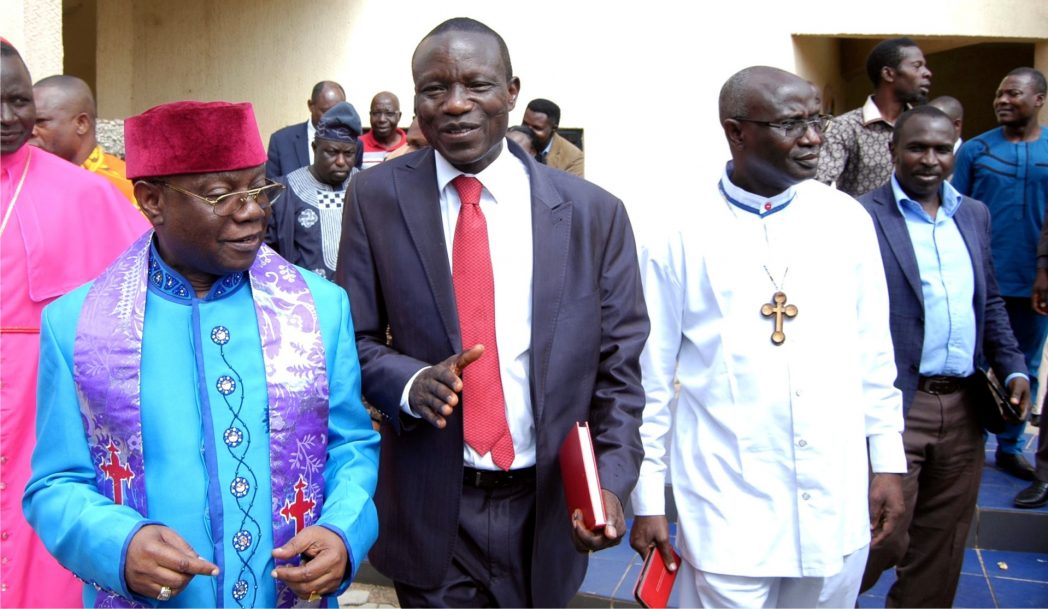
The chieftains of the Coalition of United Political Parties (CUPP) have continued to advance reasons for coming together to fight “a common enemy” in the 2019 general elections.
Last Monday, a coalition of 39 political parties converged in Abuja to sign a memorandum of understanding that would see them field a joint Presidential Candidate in 2019 to confront the All Progressives Congress (APC) likely candidate, President Muhammadu Buhari.
For National Chairman of the Reformed All Progressives Congress (R-APC), Alhaji Buba Galadima, Buhari’s inability to make a positive difference in the lives of Nigerians three years after taking over the reins of government, informed the decision of his group to join the CUPP in its bid to form a government of national unity.
Galadima, a long-time associate of the President is not only worried by what he called the lack of vision for a nation struggling to catch up with the rest of the world but also by what he personally “knows” about the retired Army General.
According to Galadima, he has access to what perhaps not many Nigerians know about their President.
All these, according to him, make the re-election of Buhari and the continuation of the APC administration a disservice to the nation beyond 2019.
He said, “He (Buhari) is a military general, but we know him and you know that I know him. If I were him and if I were his advisers, I would advise him not to attempt to contest. I have my reasons. If what I know, if what I have access to and I know; I assure you that General Buhari not only will lose the election but will lose his deposit.”
“The R-APC boss is equally not happy that a government that got elected on the strength of its anti-corruption credentials would in his words, be thinking of offering carrots to willing pawns ahead of the polls, in a bid to brighten its chances”, he said.
“They are thinking of setting aside public money which they accused others of using during elections for this purpose, warning that alternatively they might use the big stick because you know a desperate person can do anything.”
He can kill if he has power, he can arrest and detain but whichever one they choose, we are prepared to lay down our lives to save our nation.”
On his part, Barrister Godson Okoye of the United Democratic Party (UDP), the need to secure freedom for Nigerians is the sole reason to align forces with other parties to rescue Nigerians from the grip of the APC-led government of President Buhari.
“Rescue Nigeria is a task that must be done. We are in a serious project and the project is to guarantee freedom of choice,” said Okoye, who added that “until the rights of the people are guaranteed, there will be no end to the crises and bloodletting in the country.”
Taking a slightly different position was Chief Peter Ameh, national chairman of the Progressive People’s Alliance (PPA).
Ameh said in all development indices, the nation has never witnessed more perilous times like in the past three years, stating that the only thing left for good-spirited Nigerians to do, was to speak up and ‘dare the lion in his den.’
Meanwhile, the Sokoto State Governor, Dr. Aminu Tambuwal has attributed the recurring killings in most parts of the country to the failure of leadership, lamenting that the harvests of deaths were not what Nigerians voted form in 2015.
Canvassing a comprehensive overhaul of the nation’s security architecture, which he said was not working, Tambuwal noted that “the growing spate of mindless shedding of innocent blood, especially of policemen and other security personnel on their lawful duty posts, has brought a new dimension to the reprehensible state of insecurity in the country”.
He commiserated with families of citizens, who lost their lives in the killings.
In a statement, the governor said with the killing of security agents on their duty posts, “the question from every law-abiding citizen today is: ‘Who will protect us, when even those constitutionally charged with the responsibility of protecting our lives and property have, themselves, become vulnerable targets of criminals’? Where shall we run to for protection, when the institutions of state put in place to protect us are being progressively dismantled by opportunistic criminality and the trained personnel are also on the run?”
His words: “Last May, three policemen were shot dead in Sokoto State by kidnappers, who abducted a Syrian national they were escorting. A few days later, four police officers were ambushed and killed in Benue State.
“Last week seven policemen were reportedly gunned down in cold blood in Abuja, and their arms and ammunition were taken, by unknown persons. This is happening amidst repeatedly reported cases of attacks on police stations and other security facilities in various parts of the country…
“It bears repeating for me to state here that Nigeria’s security architecture and the strategies currently adopted and deployed for national security, if any, need a comprehensive overhaul. It is not working. The needless waste of life everywhere, both those of trained security personnel and ordinary citizens, is a drain on the nation’s resources and an unacceptable diminution of our valuable human capital.
“Every policeman or military personnel is someone’s father, mother, brother, sister, uncle, aunt or friend. The number and frequency of deaths are undermining our humanity, making us less sensitive to the gravity of the situation we are in today and also creating a new generation of Nigerians, who may get accustomed to inhuman acts as the norm.
“The worst part of all this is that these deaths are avoidable and the killings preventable. It boils down, at the end of the day, to the failure of leadership. Nigeria cannot progress and be part of a 21st Century forward-looking world by creating new batches of mourners every other day. This is not the way to go. That is not what Nigerians voted for in 2015. That is not what will build a virile, united, united, politically stable and economically prosperous African Giant.”



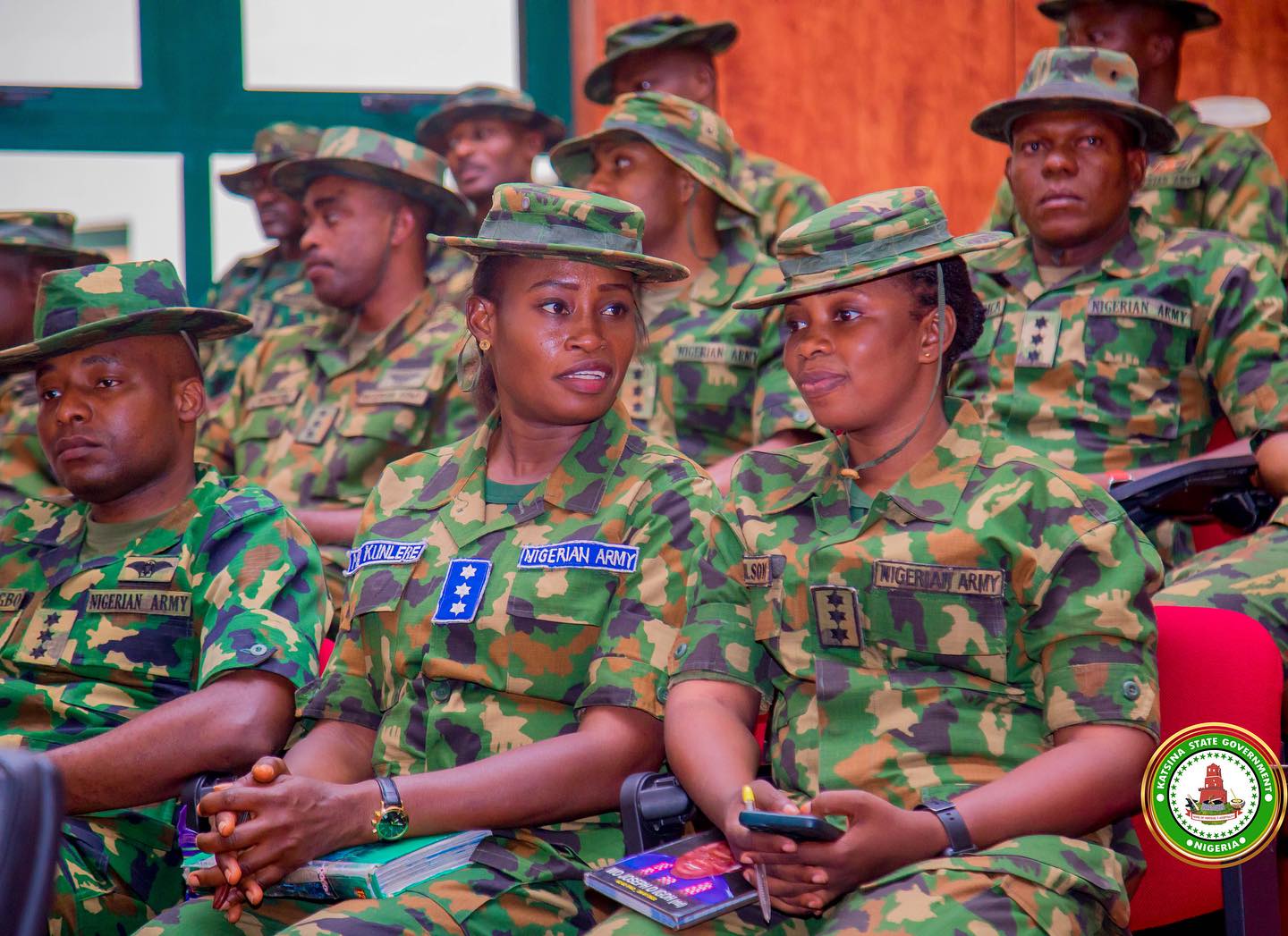
The Nigerian Army has passed out 384 female soldiers of the 90 Regular Recruit Intake (90 RRI) following the successful completion of Exercise SHINING STAR 2026 in Giri, Abuja.
In a post shared on the Nigerian Army’s X handle, yesterday, the Assistant Director, Army Public Relations, Nigerian Army Women Command, Giri, Abuja, Major Nsima Essien, said the passing-out ceremony was held on Wednesday, 28 October 2026, at the Nigerian Army School of Public Relations and Information (NASPRI), Giri, with the Chief of Army Staff (COAS), Lieutenant General W. Shaibu, represented by Major General Umar Gital Yusuf, as the Guest of Honour.
In his address, the Army Chief commended the female personnel for their dedication, resilience, discipline and commitment throughout the training exercise.
He described the successful completion of the exercise as an important milestone in their military careers and reaffirmed the Nigerian Army’s commitment to developing a professional, disciplined and combat-ready force.
He urged the newly trained soldiers to uphold the values of teamwork, courage, loyalty and professionalism, while applying the knowledge and skills acquired during the exercise to their military duties.
Shaibu emphasised the importance of continuous training, physical fitness and operational preparedness in addressing contemporary security challenges before declaring the exercise closed.
Earlier, the Acting Commander of the Nigerian Army Women Command (NAWC), Colonel S. M. Ahmed, welcomed the special guest and other dignitaries to the ceremony.
Ahmed highlighted the significance of Exercise SHINING STAR 2026 in enhancing the physical fitness, military competence, discipline and operational readiness of the female personnel.
He also acknowledged the contributions of the authorities, instructors and other personnel whose efforts ensured the successful conduct of the exercise.
Highlights of the ceremony included obstacle-crossing demonstrations and weapons-handling exercises, during which the female soldiers demonstrated their ability to strip and assemble AK-47 rifles while blindfolded.
The demonstrations showcased the personnel’s physical endurance, confidence, weapons-handling skills and proficiency in basic military tasks.
“A total of 384 female personnel of the 90 RRI participated in the exercise, alongside 14 male personnel from the Headquarters, Directorate of Army Physical Training (HQ DAPT), and 70 male personnel from the 167 Special Forces Battalion, “ Ahmed said.
The ceremony attracted senior military officers from various units and formations, representatives of paramilitary agencies and other invited guests.
Eight male and female personnel who distinguished themselves during the exercise received awards presented by the Acting Commander of NAWC.
The event also featured a vote of thanks delivered by one of the beneficiaries, the presentation of souvenirs and a group photograph to commemorate the successful completion of the exercise.
The exercise forms part of the Nigerian Army’s efforts to strengthen personnel development, improve military competence and enhance operational readiness in response to the country’s evolving security challenges.
As the world marked the 2026 International Day of the Girl Child on Sunday, October 11, 2026, a non-governmental organisation, Stand Up for Women Society (SWS) has intensified its campaign against child marriage, urging schoolgirls to prioritise education, protect their rights and develop skills for a better future.
The organisation joined the global observance of the day under the theme, “International Day of the Girl Child: End Child Marriage and Invest in Girls’ Rights,” with a sensitisation programme at Government Girls Secondary School, Oromenike, D-Line, Port Harcourt, Rivers State.
Led by its Vice Chairperson, Daba Benebo, the group engaged the students in discussions on the dangers of early marriage, teenage pregnancy, sexual abuse and other challenges that threaten the education, safety and development of the girl child.
Speaking during the programme, Benebo urged the students to reject early marriage and remain focused on their studies, stressing that education would empower them to make informed decisions about their lives and future.
She cautioned the girls against allowing anyone to deprive them of their right to education and dignity, advising them to report cases of harassment, abuse and other violations of their rights to the appropriate authorities.
Benebo assured the students that SWS remained available to support them whenever they encountered violations of their rights.
She also encouraged them to maintain discipline and responsible conduct while avoiding behaviours that could expose them to negative influences and jeopardise their future.
Beyond formal education, the SWS vice chairperson urged the students to acquire vocational skills that could provide additional opportunities for economic independence and help them navigate future challenges.
The sensitisation programme, enlivened by singing, dancing and to share their views and experiences on issues affecting the girl child interactive sessions, provided an opportunity for the students to share their views and experiences on issues affecting the girl child.
One of the major issues raised during the discussion was the appropriate age for marriage. While some participants maintained that 18 years was the constitutionally approved age, the discussion highlighted the need to consider not only age but also the maturity, preparedness and responsibilities associated with marriage.
The speaker stressed that marriage required adequate mental and emotional preparation, as well as the capacity to shoulder its responsibilities.
She therefore advised the students to concentrate on acquiring a sound education before considering marriage, noting that education would equip them with the knowledge and skills needed to make responsible decisions and manage family life.
The issue of teenage pregnancy also featured prominently during the question-and-answer session.
In addressing the subject, the speaker explained that pregnancy could occur even at the age of 12, using the example to underscore the vulnerability of young girls to the consequences of early sexual activity.
She advised the students to avoid sexual intercourse and prioritise their education, personal safety and future aspirations.
The discussion also examined the difficulties some girls encounter when living with hostile spouses, relatives or guardians.
Benebo encouraged the students to cultivate patience, humility and diligence, noting that these qualities could help them navigate difficult situations and build a brighter future.
However, she warned that patience and humility should never be interpreted as an obligation to endure violence, abuse or degrading treatment.
She urged girls experiencing hostile or abusive living conditions to seek help from their parents, trusted adults or appropriate support services rather than remain in environments that could expose them to physical or emotional trauma.
“When such happens, please return to your parents and engage in petty trade or learn a skill to support your education rather than stay in a hostile environment,” Benebo stressed.
The programme also underscored the importance of protecting girls from early marriage and other harmful practices that can disrupt their education, compromise their well-being and limit their opportunities in life.
It also reinforced the need for families, schools, communities and relevant organisations to work together to ensure that girls have access to education, vocational training, protection and the support they need to realise their potential.
For SWS, the message was clear: empowering the girl child begins with protecting her rights, investing in her education and equipping her with the confidence and skills to make informed choices about her future.
Stories by Kevin Nengia
The Egberipapa Foundation has unveiled a mass transit scheme aimed at easing transportation difficulties and improving connectivity among communities in the three Kalabari local government areas of Asari-Toru, Degema and Akuku-Toru in Rivers State.
The initiative, established by former Caretaker Committee Chairman of Akuku-Toru Local Government Council, High Chief Sobomabo Jackrich, popularly known as Egberipapa, is designed to make transportation more accessible and affordable for residents across the Kalabari area.
The scheme was launched on Monday, October 12, 2026, and is expected to address longstanding transportation challenges confronting residents, particularly those in riverine and hard-to-reach communities.
Communities expected to benefit from the initiative include Krakrama, Minama, Angulama, Sangama, Omekwe-Tariama and Omekwe-Ama.
The project is expected to ease movement within and beyond the Central Group area, while providing residents with a more convenient means of transportation for their daily activities.
For decades, transportation difficulties have posed significant challenges to several Kalabari communities, making movement between settlements both cumbersome and expensive. These challenges have also affected commercial activities, social interactions and access to essential services.
The introduction of the mass transit scheme is therefore expected to provide relief to residents, strengthen inter-community connections and stimulate economic activities across the benefiting communities.
Beyond improving mobility, the initiative could contribute to community development by facilitating the movement of people and goods, supporting local businesses and enhancing social and economic interactions within the Kalabari area.
As the scheme gets underway, attention will be focused on its implementation, accessibility and sustainability, as well as its capacity to deliver lasting transportation benefits to the target communities.
The initiative represents a potentially significant step towards addressing transportation challenges and promoting grassroots development across the Kalabari Kingdom.
-
Opinion2 days ago
Ancestorial Worship: My Take (1)
-

 News2 days ago
FG Must Address Nigerians’ Concerns On Reforms -Shettima …Warns Against Misuse of AI, Social Media
-

 Featured2 days ago
Tinubu Jets To S’Arabia For Lesser Hajj …Unveils Free Healthcare For Pensioners
-
News2 days ago
Lawmaker Sets Sights On Assembly Return …As Mammoth Crowd Grace Flag Handover Rally
-
Politics2 days ago
My Administration’ll End Political Acrimony In Rivers – Chinda
-
Politics2 days ago
2027: Support Groups Pledge Grassroots Mobilisation For Tinubu, Rainbow Coalition Candidates
-
Niger Delta2 days ago
Police Rescue Woman, 24, From Online Dating Kidnappers … Arrest Five Suspects
-

 Business2 days ago
Wigwe’s Luxury Yacht Goes For N8.74 Billion After Legal Proceedings