
News
‘N179bn Cattle Ranches In States, Threat To Peace’


The Federal Government’s decision to create ranches in some states has triggered serious confusion among the state governments, herdsmen and farmers, investigations have shown.
Our correspondents, who spoke with governments, farmers and herders in the affected states, report that though several states rejected the plan, some were awaiting further details, while the rest embraced the project for political reasons.
The development has also pitched the herdsmen and the farmers associations against each other.
The Federal Government, last week, unveiled the plan, expected to cost N179billion over a 10-year period, to improve livestock production in the country and put an end to herders/farmers crisis.
Adamawa, Benue, Ebonyi, Edo, Kaduna, Nasarawa, Oyo, Plateau, Taraba and Zamfara states would receive interventions in form of ranches in the pilot phase.
In Ebonyi State, Governor David Umahi vowed to resist any attempt to convert land in the state into a cattle ranch by the Federal Government.
Umahi, who was the chairman of the mediation committee on the farmers/herders clashes, said his panel merely recommended that state governments, willing to embrace the project, were free to do so, through the Anchor Borrowers’ Scheme.
He said, “Federal Government has not taken any land from anywhere in the country. No state government has been forced to give any land for ranches. There is no land for ranching in Ebonyi State.”
The Benue State Government and the leadership of Miyetti Allah Cattle Breeders Association of Nigeria (MACBAN) have also disagreed over the issue.
While the state government rejected the planned cattle ranches, the herders group said the state government’s resistance might create more problems.
The Miyetti Allah vowed to continue to oppose the state government’s anti-open grazing law, a situation that would lead to further clashes.
The state Governor, Samuel Ortom, who spoke through his Chief Press Secretary, Mr. Terver Akase, explained that Sections 5 and 8 of the Open Grazing Prohibition and Ranching Establishment Law of the state had already mapped out procedure for acquiring land for ranches.
According to Akase, the Benue State Government has not repealed the existing anti-open grazing law.
He wondered why the same government would begin to donate land for people to establish ranches.
But the National Coordinator of MACBAN, Mr. Garus Gololo, said his group was in full support of the Federal Government’s proposal to establish ranches in 10 states, including Benue.
Gololo said, “If the Federal Government wants to establish ranches, they are free to do so anywhere in the country but there must be schools, veterinary hospitals and other social amenities as well as shelters where the cows can stay.
“Benue State said it had rejected the Federal Government plan; the Miyetti Allah Cattle Breeders Association has also rejected the Benue anti-opening grazing law too.”
The Edo State Government had yet to take any action on the national ranching project as it had not been discussed at the State Executive Council meeting.
The Commissioner for Agriculture and Natural Resources, Monday Osaigbovo, who spoke to one of our correspondents on the telephone, said the state would support the project only “if it is going to be done as it is being done abroad.”
The Edo State chapter of the Peoples Democratic Party (PDP) has, however, advised Governor Godwin Obaseki not to cede any land in the state to the Federal Government to create ranches.
The party’s Chairman in the state, Chief Dan Orbih, said the national livestock transformation plan was a subtle way of dispossessing farmers and other property owners of their land.
He said, “Edo people say no to cattle colony. Edo PDP openly rejects the new national policy on ranching.
“It is an attempt to grab our land. No Edo community to date has agreed to give a portion of its land for the purpose of establishing a cattle colony; we say no to the new national policy by President Muhammadu Buhari.”
The Nasarawa State Governor, Tanko Al-Makura, has approved seven grazing reserves in the Awe, Keana, Doma, Assakio, Konva, Gtata and Kurudu local government areas of the state for the take-off of the programme.
The Taraba State Government and the leadership of MACBAN have expressed their support for the project, stressing that the project would solve the herders/farmers’ clashes.
In separate interviews with one of our correspondents in Jalingo, the Senior Special Assistant to the Governor on Media and Publicity, Mr. Bala Dan Abu, and the North-East Zonal Chairman of MACBAN, Mr. Mafindi Danburam, commended the development.
The governments of Plateau and Adamawa said they had embraced the project.
The Zamfara State Commissioner for Agriculture, Lawal Jangebe, told newsmen that the Federal Government had yet to discuss the project with the state government.
The Oyo State Commissioner for Agriculture, Natural Resources and Rural Development, Oyewole Oyewumi, also said the state would provide land for the project in the northern part of the state and that it could be in lease form or the state contribution to the scheme.


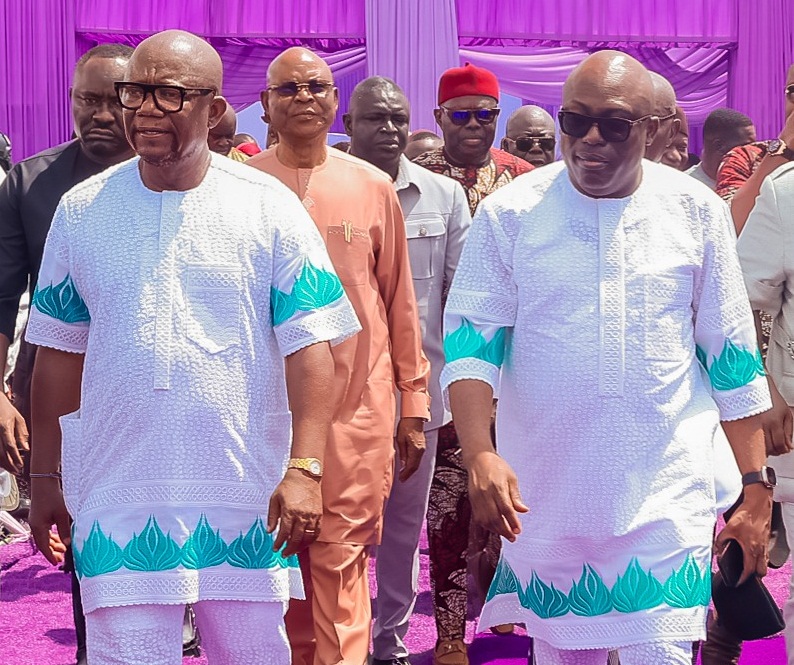
Rivers State Governor, Sir Siminalayi Fubara, has urged people to live righteous and meaningful lives, as the true measure of human existence lies not in the number of years spent on earth, but in the positive legacy left behind for their children.
Fubara gave the advice on Saturday during the funeral service of late Mama Rhoda Jaja (1933–2026), Wari-opu Orubo Aya, mother of Tamunosisi Gogo Jaja, a prominent political chieftain and former Commissioner for Water Resources and Rural Development.
Addressing the congregation at the funeral service held in Opobo Town, Opobo/Nkoro Local Government Area, the governor urged them to live their lives with integrity, so that when they are no more on earth, people will not see their children and stone them for the actions of their parents.
He described the deceased as a foremost midwife, notable and hardworking woman in Opobo, adding that Mama lived a good life worthy of emulation.
According to him, the deceased’s dedication to caring for mothers and delivering babies positively influenced generations who are today contributing to society and honouring her memory.
Fubara who joined the congregation to commiserate with the bereaved family and the Opobo community, wished the deceased a peaceful rest, describing it as “a rest for the second journey with the Lord, a kingdom where there will be no more crying, weeping or hunger, but singing, dancing and praising God Almighty.”
In a sermon delivered at the funeral service, the Bishop of the Diocese of Niger Delta, Right Reverend Emmanuel Oko-Jaja, described death as a transition from earthly existence and the end of human suffering, pain and sorrow, urging Christians to remain steadfast in faith and avoid distractions of worldly pursuits.
Bishop Oko- Jaja reminded the congregation that those who remain faithful to God and live according to His teachings would be worthy of His eternal kingdom.
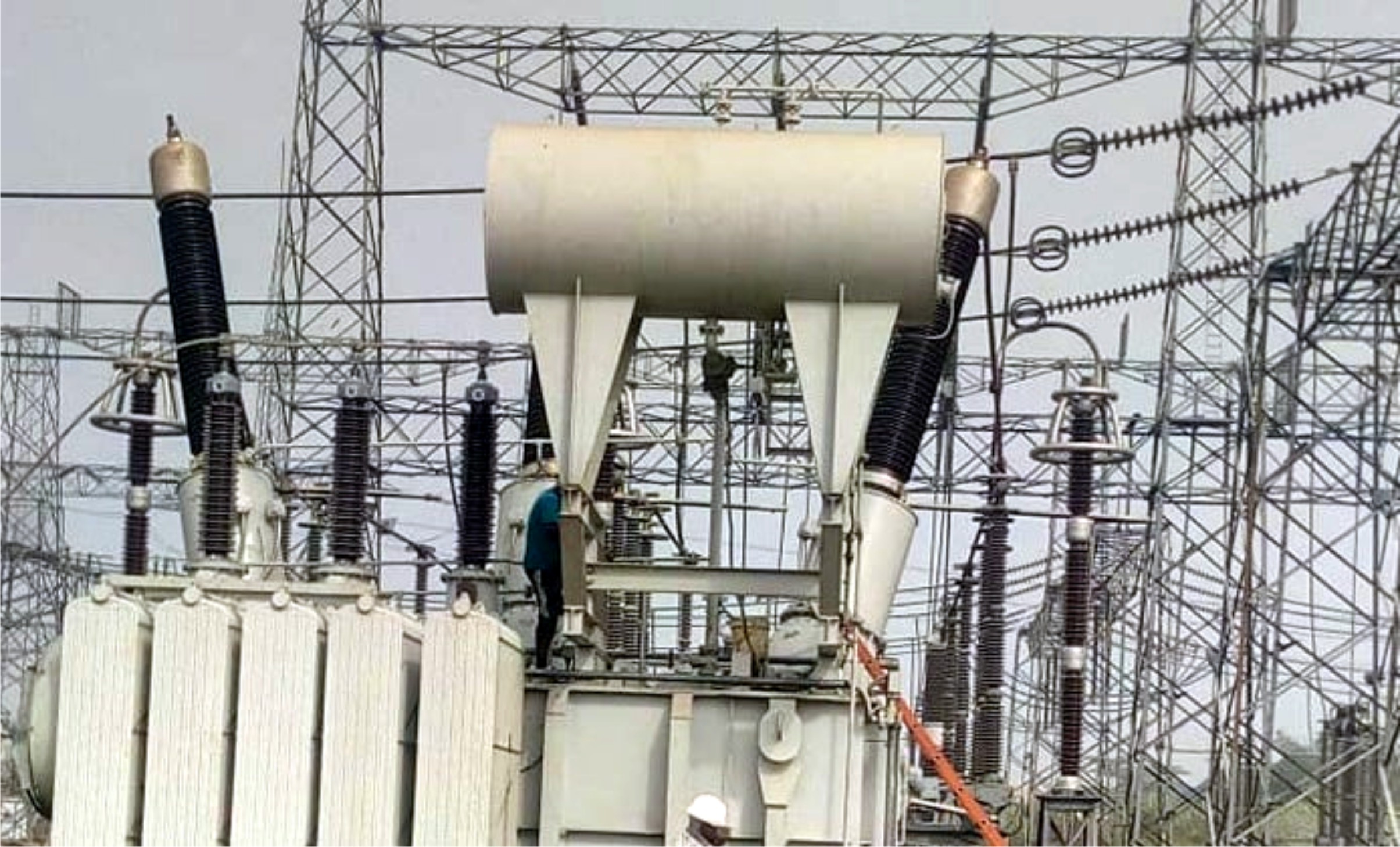
The Federal Government says it has invested more than N10tn in Nigeria’s electricity sector since its privatisation in 2013, but the intervention has yet to deliver the reliable power supply expected from the reform.
The Managing Director of FGN Power Company Limited, Kenny Anuwe, disclosed this yesterday at the sixth annual conference of the Power Correspondents Association of Nigeria, in Abuja.
The conference afforded stakeholders to examine the country’s roadmap to reliable and affordable electricity under the Federal Government’s ambition to grow the economy to $1tn by 2030.
Anuwe said the huge government spending has kept the industry afloat but stressed that public funding alone could not address the country’s electricity challenges, calling for increased private sector participation and alternative financing models to accelerate infrastructure development.
The conference was themed, “$1trn Economy: Nigeria’s Roadmap to Reliable and Affordable Power Supply.”
The disclosure raises fresh questions about the outcome of the 2013 power sector privatisation, which transferred the country’s 11 distribution companies and six generation companies to private investors, while the Federal Government retained ownership of the transmission network.
Despite successive government interventions, electricity supply has remained unstable, with inadequate generation, gas shortages, weak transmission and distribution infrastructure, mounting sector debts and poor investment continuing to undermine the industry.
Anuwe acknowledged that government funding had been significant but insufficient to meet the sector’s ambitions.
“Government has invested over N10tn in the electricity sector since the advent of privatisation. But is it enough? How much money is enough? If government didn’t invest that money, the industry would not be standing today.
“No matter how you look at it, no matter how critical you are about what government’s role is, if government did not put that money in, the industry would not be standing,” he said.
He, however, described the continued dependence on government funding as unsustainable, noting that the Federal Government was responsible for more than 95 per cent of new infrastructure investment in the sector.
“That’s not why we privatised. We have all kinds of excuses why that has happened. And a lot of them are legitimate. But it’s time for us to move from excuses to saying how do we fix it. It does not need the government to do everything. I believe that government cannot do everything,” Anuwe said.
He said the country needed simpler investment structures, predictable regulations, clear institutional responsibilities and commercially viable projects to attract private capital.
According to him, the FGN Power Company is targeting an investment structure that could attract 1bn, with the Africa Finance Corporation expected to match the amount.
He disclosed that the company’s ongoing Presidential Power Initiative projects were expected to deliver additional transmission capacity, with a target of 5,540 megawatts by 2029 and at least 60 per cent improvement in grid reliability.
The projects include a second batch of 12 Siemens substations and special projects involving Omotosho substations, which are expected to cumulatively deliver nearly 3,400MW.
Anuwe said most of the ongoing first-phase transmission substation and line projects were now expected to be completed in the first quarter of 2027, following delays.
He added that the company had secured financing for its pilot phase and was working with international technical and financial partners, including Siemens Energy, China Machinery Engineering Corporation and TBEA.
The Minister of Power, Joseph Tegbe, in his address, said the Federal Government had also developed a four-pronged roadmap to address the sector’s challenges through grid stabilisation, sector liquidity and sustainability, asset optimisation and expansion and enhancement of the national grid.
He said the government had raised N1.23tn under its N3.3tn plan to settle verified legacy debts owed to electricity generation companies.
According to him, more than 2.8 million electricity customers have been metered under the Presidential Metering Initiative, while additional transmission capacity exceeding 15,000 megavolt-amperes had been added to the national grid between 2023 and October 2026.
“Let me inform this gathering that we have developed a four-pronged roadmap to address
the power sector challenges comprehensively. These are Grid Stabilisation, Sector Liquidity
and Sustainability, Asset Optimisation, and Expansion and Enhancement of the grid. Central
to this plan is a corridor approach that prioritises major load centres for reliable, round-
the-clock electricity supply.
“A technical audit has been commissioned to establish a robust diagnostic baseline, identify critical constraints and guide the prioritisation, sequencing and
execution of interventions. The corridor approach gives this roadmap a practical industrial focus.
“In the past two months alone, I have commissioned newly installed substation equipment across Kumbotoso, Dankata, Mashi, Dan-Agundi, Apapa, Ijora, Ikeja, Biliri, Walalambe and other locations, adding over 1,300MVA to Nigeria’s transmission capacity. This has unlocked more power to the respective Distribution Companies for onward distribution to industrial and household customers,” Tegbe said.
He added that the government was adopting a corridor-based approach to improve electricity supply in major economic centres, beginning with the Lagos-Ogun axis and Abuja franchise area, which together account for more than 50 per cent of national electricity demand.
The minister said the proposed 24-hour electricity zones would align generation, transmission and distribution capacity with demand in industrial clusters, subject to technical readiness and commercial viability.
He also identified vandalism as a major threat to electricity infrastructure, disclosing that President Bola Tinubu had approved a coordinated anti-vandalism campaign involving security agencies.
Earlier, the Chairman of PCAN, Obas Esiedesa, said reliable and affordable electricity was indispensable to the country’s ambition of building a $1tn economy by 2030.
He urged stakeholders to move beyond identifying the industry’s problems and focus on practical solutions, particularly investment, infrastructure development and sustainable financing.
News
Fubara: Why We Engage Only Qualified Engineers, Indigenous Contractors On Projects …As Governor Bags NATE Platinum Award, Inducted Into Highest Membership Cadre

Governor of Rivers State, Sir Siminalayi Fubara, has stated that his administration engages indigenous contractors, qualified engineers and technologists in road and housing projects to ensure the delivery of standard and quality projects in the State.
Governor Fubara stated this yesterday while declaring open the 42nd Conference of Technologists in Engineering ( CONFOTECH) and Annual General Meeting of the Nigerian Association of Technologists in Engineering, (NATE), in Port Harcourt.
The conference saw the association conferring its Platinum Award on Governor Siminalayi Fubara and his induction into the highest membership cadre of NATE in recognition of his massive infrastructural development across Rivers State.
Governor Fubara, who was represented by his Chief of Staff, Mr. Sunny Ewule, expressed the readiness of his administration to the continued partnership and support for professional associations in promoting professionalism, building capacity and driving technological advancement.
He thanked the leadership and the entire membership of NATE for finding him worthy of their most prestigious award and honour, the NATE Platinum Award, and the accompanying induction into the highest membership cadre of the association.
“I consider this award not as a personal achievement but as a recognition of the collective effort of my administration and the good people of Rivers State in the area of infrastructure development and the deployment of engineering and technological solutions to advance the socio-economic development of the state, he said.
Governor Fubara noted that the theme of the conference: Safety, Regulation and Enforcement in Engineering: A Panacea to Industrial and Technological Growth in Nigeria, could not be more timely and relevant.
According to Fubara, no meaningful industrial growth can take place without safety, strong regulation, and enforcement, adding that it is for that reason that his administration has continued to insist on standard, quality delivery, and the engagement of qualified engineers, technologists and indigenous contractors in road construction, housing and other major developments across the state.
In his welcome address, the National President of the Nigerian Association of Technologists in Engineering (NATE), Engr. Dominic Udoatan, said the conference underscores a fundamental truth that safety, effective regulation and strict enforcement are indispensable to sustainable industrial and technological growth.
He urged government, regulatory bodies, employers and professional associations to work together to ensure competence, accountability and the protection of lives and property, while expressing the association’s sincere appreciation to Governor Fubara’s administration for its recognition of the importance of infrastructure, technical competence and technological advancement.
-
News3 days ago
RSG Reaffirms Commitment To STEM Education, Technological Advancement
-
Business3 days ago
‘NUJ, NPA’s Partnership Would Boost Port Producrivity, Economic Growth’
-

 News3 days ago
IGP Warns Police Officers Against Partisanship …Directs Regular Engagement With Journalists
-
Business3 days ago
Fire Threat Interrupts Asaba Air Peace Flight
-
 News3 days ago
Customs To Deploy AI, Scanners Against Snuggling
-
Business3 days ago
Fish Production Deficit, A Major Investment Opportunity – Minister
-

 Politics3 days ago
2027: INEC Begins Deployment Of Non-Sensitive Materials
-
Sports3 days ago
CAF Awards 2026 Gets A New Date