
Politics
Ekweremadu Makes Case For More Women In Politics

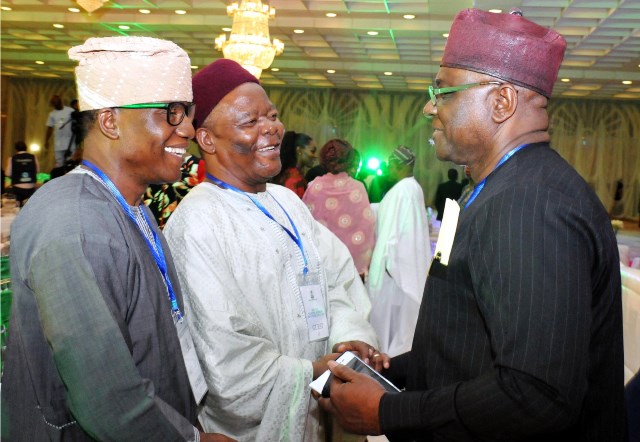
The Deputy President of the Senate, Sen. Ike Ekweremadu, yesterday, called for increase in women participation in governance at all levels, saying it would enhance the country’s rapid development.
Ekweremadu made the call at a workshop on “2019 Elections and Policymaking: Making Women Issues Matter” organised by Policy and Legal Advocacy Centre (PLAC) in Abuja.
He said that women had the capacity and integrity to build a better nation and that Nigeria would only take its rightful place in the comity of nations when women occupied their place in governance.
He said “when a man is educated, an individual has been educated, but when a women is educated, an entire nation has been educated.’’
The deputy senate president said that he believed that when women were politically empowered, the entire generation had been empowered.
He pointed out that women had done well in nearly all spheres of life, including sports, business, academics locally and internationally.
The lawmaker said that women had proven themselves in vocations which were reserved for men such as automobile mechanic and commercial driving.
He said that women have shown high level of integrity and were very passionate, which has made them respond to the call of service across the globe.
According to him, World Bank and International Monetary Fund (IMF) are headed by women.
Ekwremadu, however, lamented that some factors had prevented women from taking their rightfully place in the politics of Nigeria.
He described the situation as ‘a case of a step forward and two backward’, recalling that the last administration had 35 per cent of women in Federal Executive cabinet, but that the story is different now.
Ekweremadu noted that women had been held down by factors ranging from cultural to religious, economic and socio-political with the wrong belief that the role of women was in the kitchen.
He said that women who were courageous enough to aspire for political offices were deemed as ‘over-ambitious’, a situation he referred to as “cultural terrorism.”
He described as “cheap blackmail’’ to refer to women aspiring for political offices as prostitutes, adding that such assumption was untrue.
The legislator urged women not to be deterred by such limitations saying that “he who must be in the kitchen should not be afraid of the smoke.”
He stated that Nigeria was placed at 168 in women representation in national parliament across the world.
He said that Rwanda was first in the world and South Africa, Mozambique and Senegal among the top 20 countries in the rating.
The deputy president of the president said that by the provision of section 42 of the Constitution, discrimination against sex, origin, community or political opinion was prohibited.
He advocated amendment of the section to create special quota for women in line with the 35 per cent affirmative action on women representation.
He suggested that Nigeria should take after Rwanda which amended its constitution to create special quota for women across political bodies.
On June 12, Ekweremadu said it reminded the nation of the great roles played by compatriots to bring the country to democratic rule, adding that there was no better day to discuss issues affecting women representation in politics.
Earlier, Executive Director of PLAC, Mr Clement Nwankwo, had said that it was not helping the nation’s politics that more than 50 per cent of the population had less than 10 per cent representation in politics.
Nwankwo said that based on integrity, intelligence and creativity of the women population, PLAC had decided to expand its scope to include women participation in politics.
He said that PLAC, in collaboration with Ford Foundation, had produced a report to help address the issue, and expressed hope that by the 9th National Assembly, there would be more women lawmakers.
Reviewing the report, Dr Nwachukwu Orji, Resident Electoral Commissioner, Anambra, said that it was surprising that women under-representation in politics was an issue giving the potential in the country.
He said there was a potential of full representation in Nigeria and that the country should not be left behind.
Orji said at the global level, women representation in parliament had doubled over the years and that Nigeria should not be left behind.
He said that 12 countries in Africa had elected more than 30 per cent of women into parliament and that five countries had elected more than 40 per cent.
Orji said that though some measures had been put in place to increase women participation in Nigeria’s politics, there was need to switch from “incremental track to fast-track’’.
The highpoint of the event was the unveiling of the report by the deputy president of the senate.



The Independent National Electoral Commission (INEC) has extended the deadline for political parties to submit the list of candidates for the 2027 governorship and state Houses of Assembly elections from Saturday, August 8, to Tuesday, August 11, 2026.
The commission announced the extension in a statement issued on Saturday and signed by the National Commissioner and Chairman of its Information and Voter Education Committee, Mohammed Haruna.
According to INEC, the decision followed appeals by political parties for additional time to complete the submission process through the dedicated online portal.
“The submission window, which according to the revised Timetable and Schedule of Activities for the General Election was originally scheduled to close on Saturday, 8th August, 2026, has been extended to Tuesday, 11th August, 2026,” the commission said.
In a a related development, INEC announced the suspension of PVC collection in Osun State ahead of the August 15 governorship election.
The commission said voters who applied for replacement of lost, damaged or defaced Permanent Voter Cards would have until midnight on Sunday, August 9, to print downloadable copies of their cards.
The electoral body explained that the deadline was necessary to enable it compile data on downloaded PVCs and produce final statistics on the total number of cards collected ahead of the election.
INEC said PVC collection in Osun commenced at the Registration Area level from July 22 to 28, 2026, but was extended to July 31 following complaints about large crowds and difficulties experienced by voters at collection centres.
The exercise subsequently moved to the local government level and ran from August 1 to 7.
The commission also disclosed that replacement downloadable PVCs had been made available to voters in Odo-Otin and Ife Central Local Government Areas following the theft of cards during attacks on the two collection centres.
It stressed that the stolen cards could not be used to vote.
INEC reassured Osun residents of its preparedness for the August 15 governorship election.
“The commission reiterates that the stolen cards cannot be used to vote.
“INEC reassures the people of Osun State of its readiness to conduct a free, fair, credible and inclusive governorship election on 15th August, 2026,” the statement said.
The commission said the deadline, initially set for Saturday, 8 August, has been extended to Tuesday, 11 August 2026, following appeals from political parties for more time.
INEC also announced that the window for voters who applied to replace lost, damaged or defaced PVCs to download their replacement cards will close at midnight on Sunday, 9 August.
The move is to enable the commission compile final PVC collection figures ahead of the 15 August Osun governorship election.
INEC said replacement downloadable PVCs have also been provided to affected voters in Odo-Otin and Ife Central Local Government Areas after hoodlums carted away cards from two collection centres, stressing that the stolen cards cannot be used to vote.
The commission reaffirmed its readiness to conduct a free, fair, credible and inclusive election in Osun State.
Gov. Kefas made the remarks over the weekend at the Federal Medical Centre (FMC), Jalingo, during the flag-off of the second phase of the Renewed Hope Medical Outreach in Taraba State, organised as part of activities marking Prof. Yilwatda’s 58th birthday.
The governor commended Prof. Yilwatda for choosing to mark his birthday by providing medical care to people in need.
“What Professor Nentawe did is a powerful demonstration of what leadership should be,” Gov. Kefas said.
He assured that his administration would continue to support initiatives that complement government efforts to improve healthcare delivery and the wellbeing of residents.
Speaking at the event, Prof. Yilwatda called on Nigerian leaders to embrace the culture of giving and use their positions to touch the lives of the less privileged.
He said his decision to celebrate his 58th birthday in Taraba State was deliberate and informed by the needs of underserved communities, particularly people who face difficulties accessing healthcare because of distance and financial constraints.
According to him, the intervention followed a needs assessment and was extended across the three senatorial districts of the state.
He said the exercise commenced on August 3 at Takum General Hospital and covered the Federal University Teaching Hospital, Wukari; First Referral Hospital, Sunkani, Ardo-Kola Local Government Area; General Hospital, Bali; General Hospital, Gembu; and FMC Jalingo.
Prof. Yilwatda said the intervention provided medical services to thousands of beneficiaries, including people who required surgical procedures.
He said sustainable national development could only be achieved when strong institutions placed Nigerians at the centre of development.
“Leadership is about service,” he said, urging political and public leaders to make giving back to society an important part of their responsibilities.
He reaffirmed his commitment to serving Nigeria and its people, saying his personal vision was to make every day of his life useful to humanity.
“Every day that I live, the vision is: let it be useful to humanity,” he said.
The Taraba State Commissioner for Health, Dr. Bordiya Buma, commended the initiative, saying it was consistent with the Renewed Hope agenda and efforts to strengthen healthcare delivery in the state.
Dr Buma said the second phase followed the successful completion of the first phase, which was conducted simultaneously in six local government areas, with two LGAs selected from each of the three senatorial districts.
According to him, more than 10,000 patients were attended to during the first phase, including people with medical and surgical conditions.
He disclosed that 327 general surgeries, 71 eye surgeries and 575 dental procedures were carried out during the exercise.
The commissioner expressed appreciation to President Bola Tinubu for the Renewed Hope Medical Outreach and thanked Prof. Yilwatda for supporting the initiative and choosing Taraba State as a beneficiary.
The Minister of Health and Social Welfare, Prof. Muhammad Ali Pate, also commended Prof. Yilwatda for choosing Taraba State to mark his 58th birthday through a medical outreach.
Prof. Pate said making healthcare the centrepiece of the birthday celebration was significant because health affects everyone.
-

 News4 days ago
RSG Targets Nine Million Residents in Mosquito Net Distribution Campaign
-

 Oil & Energy4 days ago
Aiyedatiwa Signs New Electricity Bill
-

 Maritime4 days ago
Marine Minister Commends President Tinubu On NPERA Bill Assent
-

 Oil & Energy4 days ago
NLNG Commissions Research And Innovation Centre In RSU
-

 News4 days ago
KenPoly Holds Eight Convocations, August 29
-

 News4 days ago
RSG Begins Another Phase of Projects Commissioning Today
-

 News4 days ago
RMAFC Completes Revenue Sharing Review, Proposes New Pay
-

 Maritime4 days ago
NAGAFF Petitions IGP Over Alleged Maritime Police Harassment