
Politics
Persistent Flooding Worries Legislators

Penultimate week, the state House of Assembly passed the Rivers State Assembly Service Commission Amendment Bill 2018 to law. The House, as majority of the lawmakers threw their weight behind the proposal to give room for all to aspire to the office.
The speaker of the House, Rt. Hon Ikuinyi-Owaji Ibani said the law seeks to remove any segregating clause, as it allow all qualified persons to aspire, and those in service can also grow within the rules.
Last week, however, after the Peoples Democratic Party (PDP) local government election primaries, the House sat on Thursday.
The issue of flooding and environmental challenges posed by poor urban planning dominated debate on the floor of the House.
The debate over haphazard urban planning and the attendant flooding that trails it stems from a petition sent to the House by Eligbolo Community and residents, who over the years have faced constant flooding that sacks many people from their houses.
Majority Leader of the House, Hon Martins Amaewhule and Hon. Michael Chinda took the lead in the debate over the petition, after chairman of the committee detailed to investigate the matter, Hon. Bariene Deeyah of Khana Constituency I submitted his report.
Hon. Chinda had argued that the flooding was as a result of poor urban planning and building control by the local authorities. He wondered how the authorities would allow people to build on natural canals.
The lawmaker representing Obio/Akpor Constituency II insisted that while the report was detailed there was still some hiccups in the areas where there are no specifications, as to identify properties or houses that are responsible for blocking the free flow of water in the neighbourhood.
Chief Whip of the Assembly and lawmaker for Ogu/Bolo State Constituency, Hon Evans Bipi urged the House to compel on the Bariene led-committee to go back and do a proper report that will be specific. This he believed will help the legislators debate and arrive at a better conclusion.
In his response, Hon Bariene Deeyah observed that the committee did a through job, but rather that some aspects of the report were very technical, since they are in tandem with the law. Deeyah stressed that, “the recommendation of the committee is that the law should be applied”.
Speaker of the House, Rt Hon. Ibani in concluding debate on the matter decried the dangers posed by flooding in most parts of the state.
He said: “It’s my hope that every resolution should be taken seriously because the report touches on the lives of the people and their livehood. The issue of perennial or flash flooding is serious, so it’s a report we must take seriously.
Further debate on the matter was adjourned to the next sitting this week, as the majority leader thanked his colleagues for the debate to give the report speedy attention.



The Socio-Economic Rights and Accountability Project (SERAP) has urged the Independent National Electoral Commission (INEC) to disclose and publish political contribution limits prescribed under the Electoral Act, 2026, ahead of the 2027 general elections.
SERAP made the demand in a statement signed and released by its Deputy Director, Kolawole Oluwadare, addressed to the INEC Chairman, Professor Joash Amupitan, yesterday.
The organisation said the demand was particularly important ahead of the 2027 elections, noting that INEC had already released the Notice of Election and the Timetable and Schedule of Activities for the polls.
The organisation urged INEC “to urgently disclose whether the Commission has exercised its statutory power to prescribe limits on political contributions under section 91 of the Electoral Act, 2026, and, if so, to publish the applicable limits and widely communicate them to political parties, candidates, donors and the Nigerian public.”
SERAP also asked the electoral commission to disclose the systems, personnel and procedures it had put in place to monitor, investigate and enforce compliance with political contribution and campaign expenditure limits during the ongoing preparations for the 2027 elections.
It further urged INEC to disclose its methodology for monitoring political financing, including arrangements for identifying and addressing cash and in-kind contributions, digital and social-media financing, third-party expenditure and donations through intermediaries that could potentially circumvent statutory limits.
SERAP said greater transparency was necessary to ensure that the 2027 elections were conducted on a level playing field and that voters were able to make free and informed political choices.
In the request, the organisation said, “INEC’s constitutional responsibility is not simply to receive financial statements from political parties. The Constitution requires the Commission to examine political-party finances, conduct necessary investigations and report to the National Assembly. Publishing these reports would enable Nigerians to know whether these constitutional and statutory responsibilities have been effectively discharged.
“The increasing monetisation of Nigeria’s elections, alongside the potential misuse of state institutions, poses serious threats to democratic integrity and electoral competition. The information requested would enable citizens to identify excessive, undisclosed or potentially illicit political financing before it can distort electoral competition, rather than only after votes have been cast.”
It said political parties, candidates and their supporters were already mobilising resources, soliciting contributions, organising political activities, purchasing media and digital advertising, holding rallies and incurring campaign-related expenditure.
SERAP, therefore, urged INEC to disclose how it intended to monitor political financing during the campaign period, particularly contributions and expenditure involving cash and in-kind contributions, digital and social-media advertising, political consultants and third-party campaign expenditure.
The organisation also cited Section 91(1) of the Electoral Act, 2026, which provides that: “The Commission shall have power to place limitation on the amount of money or other assets which an individual can contribute to a political party or candidate and to demand such information on the amount donated and source of the funds. Section 91(2) provides sanctions where an individual, candidate or political party exceeds the applicable limit prescribed by INEC. The statutory power given to INEC creates an important safeguard against excessive financial influence over political parties and candidates.”
SERAP urged INEC to clarify whether it had exercised the power and, if so, immediately publish the applicable contribution limits in a prominent and easily accessible location, including on its website.
The organisation also requested the latest detailed statements by political parties on their assets and liabilities, sources of funds and other assets and expenditure submitted to INEC.
It asked the commission to publish the parties’ financial records, including annual statements, audited accounts and election expenditure returns for 2023–2025, as well as its examination and audit reports under Sections 225 and 226 and annual reports submitted to the National Assembly within the same period.
“Nigeria has a persistent problem of political parties failing to disclose campaign contributions. Such non-compliance has been described as systemic, while the absence of clear and effective sanctions for default has weakened INEC’s ability to enforce compliance.
“Nigeria has long faced serious challenges in regulating political finance, including concerns about excessive campaign spending, opaque sources of political funding, weak disclosure and reporting, and limited enforcement of statutory spending and contribution rules”, the organisation added.
INEC Chairman, Prof. Joash Amupitan, disclosed this when he received the Chargé d’Affaires of the Canadian High Commission to Nigeria, Mr David Sproule, and other officials on a courtesy visit to the commission’s headquarters in Abuja.
Prof. Amupitan said the exercise would provide an opportunity for the Commission to conduct a rigorous field test of the Bimodal Voter Accreditation System (BVAS) and other critical electoral equipment ahead of the general elections.
He explained that the mock accreditation was designed to identify and address possible operational and technical challenges before the 2027 polls.
According to him, the Commission is determined to build on the lessons learnt from recent off-cycle elections in strengthening its operational readiness and improving the electoral process.
The INEC chairman said the November exercise would form part of broader measures aimed at ensuring the Commission is adequately prepared to conduct credible, transparent and efficient general elections in 2027.
-
Rivers1 day ago
Philanthropist Cautions Youths Against Ignoble Acts Donates Building To Musician
-
Politics1 day ago
2027: ADC Candidate Tasks INEC On Integrity, Intensifies Consultations
-
 News23 hours ago
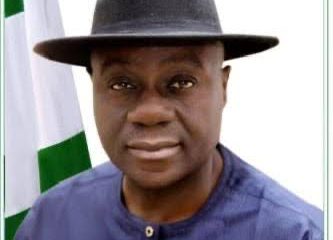
Tinubu Appoints Enitan As New Head Of Federal Civil Service
-
 Politics1 day ago
2027: INEC To Conduct Nationwide Electoral Equipment Test Run In November
-
Sports1 day ago
NSC Celebrates Historic Beach Volleyball Olympic Qualification
-
Sports1 day ago
Arsenal Want Osimhen To Take Pay Cut
-
Sports1 day ago
Nnadozie, Osimhen Lead Highest-Rated Nigerian Players
-
Politics1 day ago
Yari Emerges DG As Tinubu Unveils 2027 Presidential Campaign Council