
Featured
Military Alerted Before Dapchi Abduction -Amnesty Int’l …Report Vindicates Our Position -PDP …CSOs React, As Group Calls For AU’s Investigation

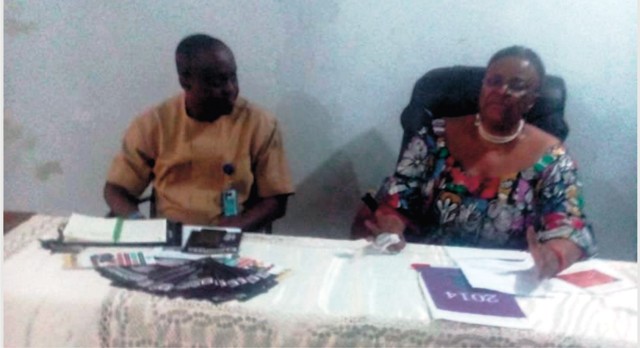
Global human rights watchdog, Amnesty International (AI) has revealed that Nigerian security forces got advance warnings that a convoy of Boko Haram fighters was heading towards Dapchi, a town where 110 schoolgirls were abducted by terrorists on February 19 in an assault similar to the infamous Chibok girls’ abduction of April ,2014.
It claimed that no fewer than five calls were put across to security forces between 2pm and 6:30pm on that fateful day of the abduction of female pupils from Government Girls Science and Technical College, Dapchi, Yobe State.
In a report on the incident released, yesterday, Amnesty International said the first call was made to the Nigerian Army Command in Geidam, 54kilometres from Dapchi, informing them that Boko Haram fighters had been seen at Futchimiram heading to Gumsa, a village about 30km from Dapchi.
The Director, Amnesty International in Nigeria, Osai Ojigho maintained in a statement that the Nigerian authorities have failed in their duty to protect civilians, just as they did in Chibok four years ago.
Amnesty added that documented evidence shows that the military did nothing to stop the insurgents.
“The sighting of an armed convoy at Futchimiram immediately sparked several phone calls to alert authorities. Sources who informed the military commander in Geidam at 2p.m. report that he responded to them by saying he was aware of the situation and was monitoring it.
“At about 3pm, the convoy arrived in Gumsa, where they remained till 5pm. People in Gumsa called Dapchi villagers to warn them that Boko Haram fighters were on their way. One villager who received such a call said he informed a police sergeant who promised to notify the Dapchi Division Police Officer (DPO).
“At about 6:30pm, when residents were heading to the mosque for evening prayers, Boko Haram members entered Dapchi. Witnesses said Boko Haram fighters asked for directions to the military post, the local government office and the girls’ school,” the report said.
Amnesty learnt from an eyewitness that approximately 50 Boko Haram fighters stormed Dapchi in a convoy of nine vehicles with Arabic inscriptions on them. The vehicles included seven Land Cruiser trucks, one Hilux and a Canter truck.
A police source in Dapchi also told the group that on sighting them, police officers fled because they feared that the Boko Haram fighters would overpower them. According to victims and eyewitnesses interviewed by AI, Boko Haram left Gumsa for Dapchi at about 5pm, arriving at about 6:30pm.
“They left Dapchi at about 7:30pm in the direction of Gumsa, where villagers say they arrived at about 9p.m. During the attack, army officials both in Geidam and Damaturu were again alerted. The military only arrived in Dapchi shortly after Boko Haram left. Villagers in Dapchi and Gumsa said a military jet arrived about one hour after Boko Haram left Dapchi,” read the report.
AI lamented that in spite of the several distress calls, the Nigerian military neither took effective measures to stop the abduction nor made serious efforts to rescue the girls after they were taken by Boko Haram fighters.
Amnesty, whose researchers spoke to about 23 people and three security officials, said the Army command in Geidam had told callers they were aware of the situation and were monitoring.
Police in Dapchi promised to tell divisional commanders, while Army commanders in Geidam and Damaturu were also alerted during the attack, it added.
While describing the inaction as, “inexcusable security lapses”, Ojigho said, “Evidence available to Amnesty International suggests that there are insufficient troops deployed in the area, and that an absence of patrols and the failure to respond to warnings and engage with Boko Haram contributed to this tragedy. The government’s failure in this incident must be investigated and the findings made public and it is absolutely crucial that any investigation focuses on the root causes.”
The Dapchi abduction has thrown into doubt repeated government and military claims that Boko Haram is on the brink of defeat, after nearly nine years of fighting and at least 20,000 deaths.
Boko Haram, which has used kidnapping as a weapon of war during the conflict, has not claimed responsibility but it is believed a faction headed by Abu Mus’ab al-Barnawi is behind it.
IS in August 2015 publicly backed Barnawi as the leader of Boko Haram, or Islamic State West Africa Province, over Abubakar Shekau, whose supporters carried out the Chibok abduction.
Analysts have attributed a financial motive to the Dapchi kidnapping given government ransom payments made to Boko Haram to secure the release of some of the captives from Chibok.
Meanwhile, the Coalition of Civil Society Groups against Terrorism in Nigeria has called on international rights organization, Amnesty International, to desist from what it described as its judgmental reports on the security situation in the troubled North-East.
The group, in a statement, yesterday, in Lagos, and jointly signed by its Convener and Registrar, Comrade Odeyemi Oladimeji and Atani John, respectively, described the recent statement credited to the rights group, where it said “Nigerian Security Forces ignored warnings about Boko Haram attack on Dapchi” as totally undeserving and a joke taken too far by Amnesty International, at the expense of Nigeria’s internal security and sovereignty.
Meanwhile, The Peoples Democratic Party (PDP) yesterday said a recent report issued by Amnesty International (AI) report has vindicated its stance that the President Muhammadu Buhari-led presidency and the All Progressives Congress (APC) must be held responsible for the abduction that took place in Dapchi.
Over 100 school girls were abducted by suspected Boko Haram insurgents in Dapchi, Yobe State. They are yet to be rescued by the Nigerian authorities.
The party in a statement yesterday by its National Publicity Secretary, Kola Ologbondiyan, described the revelation by AI that security forces got advance warning of the impending attack but failed to prevent the abduction as “heartrending, distressing and disappointing”.
The report by AI stated that: “The Nigerian authorities have failed in their duty to protect civilians, just as they did in Chibok four years ago. Despite being repeatedly told that Boko Haram fighters were heading to Dapchi, it appears that the police and military did nothing to avert the abduction.”
The PDP said the revelation had further showed the ineptitude of the present government.
“This revelation by the Amnesty International has finally exposed Buhari-led Federal Government and its manifest failures, deceptions and culpability in the circumstances surrounding the unfortunate abduction of our daughters.
Similary, A legal and advocacy rights group, Women and Legal Aid, WELA, yesterday called on the African Committee on Experts on the Rights and Welfare of the Child, ACERWC, to undertake a fact-finding mission to Nigeria to establish the circumstances surrounding the abduction of over 100 schoolgirls in Dapchi Village in Yobe State.
In a letter made available to newsmen yesterday, the group urged the committee, which is a unit of the African Union Commission, to request the Nigerian government to highlight steps taken to ensure the release of the school girls.
The letter, dated March 12, was addressed to Benyam Mezmur, the chairperson of African Committee on Experts on the Rights and Welfare of the Child, ACERWC, African Union Commission.
Over 100 school girls were abducted in Dapchi village in February after the school was invaded by suspected Boko Haram members. The government of Yobe initially announced that the girls had been rescued but it turned out to be a hoax.
WELA yesterday said it wants the AU commission to put pressure on the Nigerian government to secure the release of the girls.
The organisation also described the abduction as a sign of failure of the Nigerian state in protecting Nigerian school children, reminiscent of the 2014 abduction of girls in Chibok community.
“We believe attacks on schools place children at risks of injury or death and affect children’s ability to obtain an education,” the group said.



Rivers State, Sir Siminalayi Fubara, has assured members of the National Youth Service Corps (NYSC) of his administration’s commitment to supporting and strengthening the scheme in the State.
Fubara gave the assurance last Friday at the NYSC permanent orientation camp, Nonwa-Gbam, Tai Local Government Area in the State, during the swearing-in ceremony of 2026 Batch B Stream II orientation course.
Represented by the Permanent Secretary, Cabinet Bureau, Office of the Secretary to the State Government, Dr. Promise Oguzie, the governor said the State Government would remain intentional in providing the necessary support to improve the NYSC scheme and enhance the experiences of corps members deployed to the state.
He charged the corps members to be role models and quality nation-builders in their service to the good people of Rivers State in particular, and Nigeria at large.
“I charge you to be exemplary, dedicated and committed in all you do. Take full advantage of all the camp programmes and activities to enrich yourselves”, he said.
In his welcome address, the State Coordinator of NYSC in Rivers State, Mr. Moses Oleghe, urged corps members to see their deployment to Rivers State as a “veritable opportunity to make meaningful contribution to the growth of the State in particular and Nigeria at large.”
He further charged them to serve with all sense of “integrity, discipline, and the fear of God, especially when they will be engaged as INEC ad-hoc staff that will conduct the 2027 general elections.”
A total of 3,584 corps members composed of 1,421 males and 2,163 females were sworn in by the Chief Judge of Rivers State, who was represented by Justice Godspower Aguma.

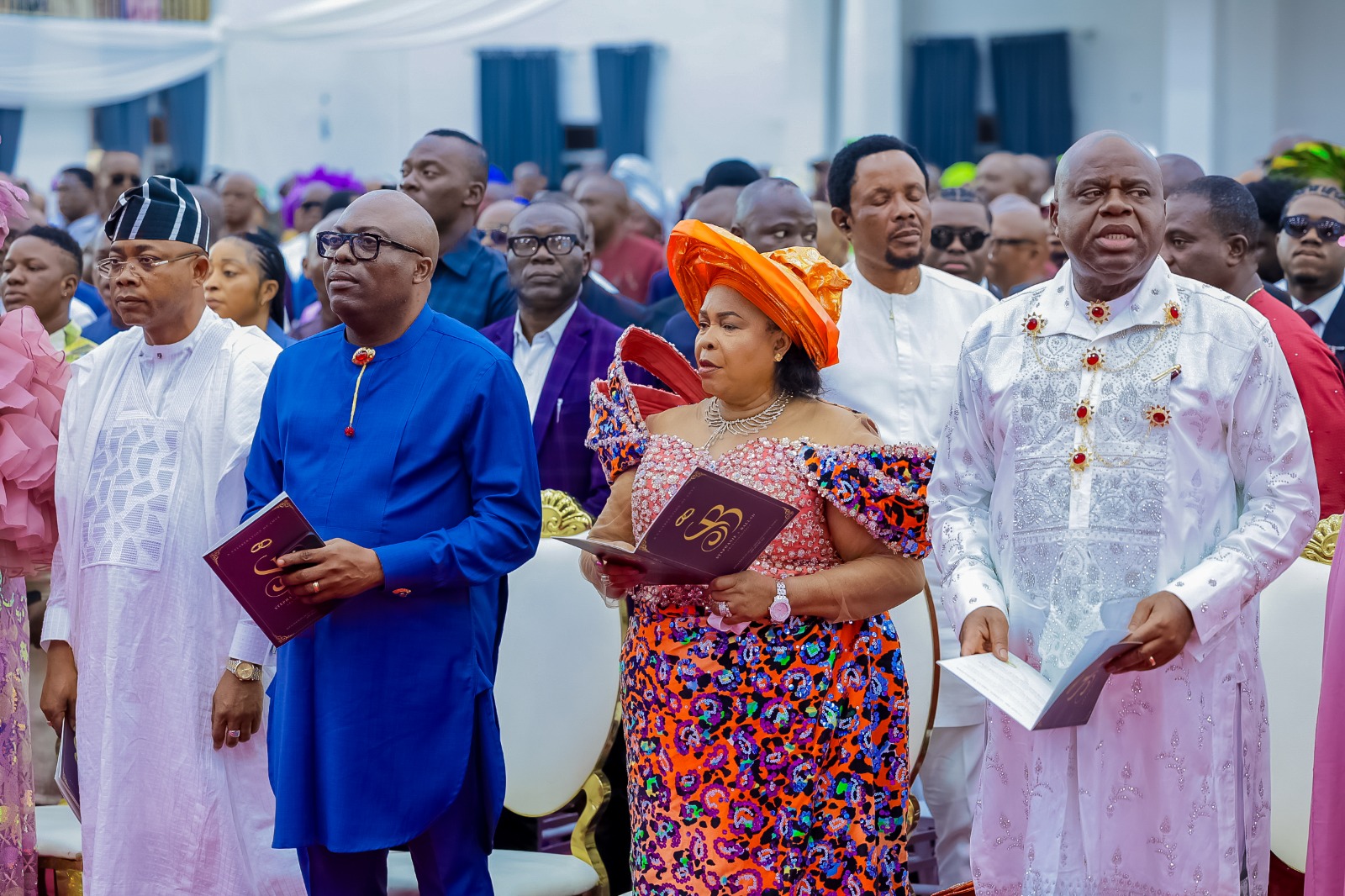
Governor of Rivers State, Sir Siminalayi Fubara, says Nigeria needs God-fearing leaders for the nation to move in the right direction and make meaningful progress.
The Governor stated this yesterday when he received in audience, the World President of the Seventh Day Adventist Church, Pastor Erton Kohler; his wife, Andriene Marques Kohler; daughter Mariana Marques Kohler and a retinue of ministers of the church at Government House, Port Harcourt.
Fubara who hailed the Seventh Day Adventist Church for its contributions to education and the grooming of future leaders in Nigeria, expressed delight that the Church had over the years, been investing in education at various levels and currently runs two universities in the country.
He commended the church for not only using its institutions to spread the gospel of Christianity but to groom future leaders for the country.
According to him, religion should not be just about defending one’s faith, but also making meaningful impact on the lives of the people.
He said that by floating these educational institutions, the church has demonstrated capacity to support Nigeria in the task of producing not only educated people but a breed of God-fearing leaders.
“Our country is where it is today because we lack the fear of God. If you have the fear of God, there should be a limit to what you can do because you understand the supremacy of God. But when God is not in your equation, you’ll go beyond the line and that is what has brought us to where we are today.
“So, I feel very happy that you are contributing to the development of our future leaders in this country. We need the right people being in the right place; prepared properly with good minds; that is what we need, not just in Nigeria but round the whole world.,” he said.
Governor Fubara further observed that the absence of God-fearing people in high places to take the right decisions that could impact positively on the society, has also given rise to other problems such as social inequality, poverty, corruption and criminality. According to him, Nigeria needs a system where the average parent could afford quality education for their children and a guarantee that upon graduation, the average child will have the capacity to compete favourably with anybody, anywhere in the world.
“If we have a situation where the little money that you’re being paid as wage can also afford you quality healthcare and after working at least for 15-20 years, you have a roof over your head, tell me why you should be involved in any kind of crime? At that point, you’ll feel secured and this attitude of insecurity about the future that leads to all the social vices we have today won’t be there,” he said.
Governor Fubara expressed appreciation to the delegation for the visit and for their prayers for Rivers State, assuring them of his continued support for their programmes in the state.
Leader of the delegation and World President of the Seventh Day Adventist Church, Pastor Erton Kohler said he was in Nigeria for a special conference of the church during which thousands of the church’s ministers will be undergoing an empowerment programme to further equip them for the task of herding their flocks and serving the society.
He expressed gratitude to the Governor for the warm reception accorded his entourage, saying the memory of the visit will linger in his mind for a lifetime.
Kohler disclosed that the Church has over twenty -four million (24,000,000) members and more than 182,000 places of worship, spread across 212 countries of the world.

The Rivers State House of Assembly has approved the 2026–2028 Medium Term Expenditure Framework (MTEF) submitted by Governor Siminalayi Fubara.
This reaffirms the lawmakers’ commitment to enacting laws and taking legislative actions geared towards the overall development of the State.
The Assembly gave the approval during its Second Legislative Sitting of the Fourth Session held last Friday.
Speaking on the MTEF document during plenary, the House Speaker, Rt. Hon. Martin Amaewhule, noted that by the provision of Section 10(1)(b) of the Rivers State Fiscal Responsibility Law No. 8 of 2010, the MTEF ought to have been laid before the House in September 2025.
Amaewhule explained that traditionally, the document is expected to be presented four months before the commencement of the next financial year and immediately after the expiration of every three-year fiscal cycle.
He, however, stated that in the interest of the State and its people, the House considered it necessary to deliberate on the document, describing it as a precursor to the 2026 Budget Estimates.
The Speaker expressed concern that the year had already progressed significantly before the presentation of the framework.
During deliberations on the document, members examined the assumptions and projections contained in the MTEF and observed that strict adherence to the outlined fiscal parameters would ultimately serve the interest of Rivers people.
The lawmakers maintained that effective implementation of the framework would promote prudent financial management and enhance developmental planning across the State.
Following the debate and positive consideration by members, the Speaker put the question to the House and members voted overwhelmingly in support of the approval of the MTEF.
Meanwhile, during the same sitting last Friday, the House also received a petition from the Chairman of Obio/Akpor Local Government Council, Dr. Gift Worlu.
The petition was presented by the member representing Obio/Akpor Constituency II, Hon. Emilia Amadi.
According to the petition, concerns were raised over an imminent security breach, threats to lives, destruction of property and alleged forceful takeover of property by some lawless persons within parts of the Local Government Area.
Presenting the petition before the House, Hon. Amadi appealed to the lawmakers to revisit the matter and take necessary steps aimed at safeguarding lives and property in the affected communities.
The House is expected to further deliberate on the petition and consider measures to address the concerns raised in order to sustain peace and security in the area.
King Onunwor
-

 News3 days ago
RSG Targets Nine Million Residents in Mosquito Net Distribution Campaign
-

 Oil & Energy3 days ago
Aiyedatiwa Signs New Electricity Bill
-

 Oil & Energy3 days ago
NLNG Commissions Research And Innovation Centre In RSU
-

 Maritime3 days ago
Marine Minister Commends President Tinubu On NPERA Bill Assent
-

 News3 days ago
KenPoly Holds Eight Convocations, August 29
-

 News3 days ago
RSG Begins Another Phase of Projects Commissioning Today
-

 News3 days ago
RMAFC Completes Revenue Sharing Review, Proposes New Pay
-

 Maritime3 days ago
NAGAFF Petitions IGP Over Alleged Maritime Police Harassment