
Featured
Army Warns Killers In Adamawa, Benue, Taraba …As Death Toll From Plateau Herdsmen Attacks Hits 20

The Nigerian Army has warned all persons perpetrating various crimes against humanity in Adamawa, Benue and Taraba States to desist forthwith or be ready to face the full force of the military.
The Army’s stance signed by its Director, Public Relations, Brigadier General Texas Chukwu was displayed on its Twitter handle, @HQNigerianArmy.
Expressing worry at the wanton arson and killings in the country, especially in the three Northern states, the Army said it had directed its men to activate its rules on engagement in dealing with the crimes which they said were tantamount to arson and murder.
Describing the continued arson and killings in the three states as disturbing and senseless, the military spokesperson said it had mandated its commanders in the concerned areas to implement decisive actions to arrest the menace or face court-martial.
While noting that it was working with other security agencies to stem the tide, the Army avowed that it had resolved to arrest all perpetrators as well as their backers, no matter how highly placed they were.
The Army’s stance read, “The attention of the Nigerian Army has been drawn to the continued disturbing, senseless killings and wanton destruction of properties in Adamawa, Benue and Taraba States.
“Our Rules of Engagement (ROE) is clear on arson & murder, therefore, no such criminal acts would be allowed in any of the aforementioned states.
“We would like to unequivocally reiterate that Army HQs warns the arsonists and the killers to stop or face decisive action by troops.
In view of this, we strongly warn the perpetrators of these crimes to desist forthwith.
“The public are please reminded that when troops are called out for internal security operations, they are not to joke or persuade anyone.
We have warned our commanders on the ground to take decisive actions or face court-martial.
“The Nigerian Army in conjunction with sister services and other security agencies are working assiduously to identify and arrest all those involved regardless of their disposition in the society including government functionaries.”
Meanwhile, the death toll from the attacks on communities in Plateau State has risen to 20, the police have said.
Residents, however, said 25 people have been killed.
Our correspondent reported that the attacks on communities in Bokkos Local Government Area including on the days President Muhammadu Buhari visited the state. The attacks occurred between March 7 and 9.
Residents have blamed herdsmen for the attack.
Our correspondent gathered that victims were murdered in their sleep by gunmen who invaded Laake village in Kwall district of the local government.
The national president of Irigwe Development Association, Honourable Sunday Abdul, who confirmed this to Sunday Tribune in Jos, said the gunmen suspected to be Fulani herdsmen stormed Laake village in a commando-like operation, killing four children were killed in their sleep.
learnt that the incident started last Wednesday when gunmen, in their large numbers invaded both Dafo and Josho villages in the local government, with the attack said to have lasted till Friday.
The attackers, it was learnt, killed 18 people while two others died on their way to the hospital in Jos.
Worse hit villages included Ngakudung, Farunhai, Mhorok, Ganda and Warrem-Hotom.
Also hit were Maidunna and Josho, where Sen. Joshua Dariye (APC/Plateau Central), took relief materials to last week, following an attack on the village in February.
The councillor representing Dafo ward, Hon. Danjuma Mabas, who confirmed the latest number of causalities said, apart from the 20 that were given mass burial on Saturday, there were several others that are still missing, adding that over 50 houses were burnt.
“The attackers,” he said, “swooped on the two villages in their large number ahead of President Mohammadu Buhari’s visit to Plateau State, having got wind of the fact that the security men had been withdrawn to provide security for the president.”
“As of Friday evening, no fewer than 20 people were killed, over 50 houses were burnt while many other people are still missing,” Mabas added.
Another prominent native of Bokkos, Reverend Mamot Daladi Adams, said the withdrawal of security men at the local government paved the way for the gunmen to launch the attack on the affected villages.
He said: “From our findings, the security men on ground in the local government were withdrawn to protect Mr. President, who was on a two-day visit to Plateau State. The rate of attack in the state is highly disturbing; no fewer than five traditional rulers have been killed in this local government in recent times, yet the state government is deceiving the Federal Government that there is peace in the state.”
Some of the villagers, who spoke to newsmen, said that the attackers wore “black uniform” and had sophisticated guns.
“The attackers wore black uniforms and had something that looked liked a scarf on their heads,” one Malo Mafulul, told our correspondent at Ganda village.
Wabas, who confirmed Mafulul’s claims, described the situation as “scary,” saying that more people were still unaccounted for.
Major Umar Adams, the spokesman of Operation Save Haven (OPSH), the security outfit in charge of security in Plateau, confirmed the attacks.
Reacting to the allegation that the redeployment of military men to reinforce security operatives in Jos during the visit of Mr. President caused the killings in both Bokkos and Bassa local governments, the Media Officer of STF, Major Umar Adams said no soldier was redeployed from the two areas to Jos.
According to him, the military men used during the visit of Mr. President were those within Jos metropolis and its environs, adding that when the command got wind of the incident in Bokkos, it reacted promptly and was able to arrest five people in connection with the incident.
The state government also denied the insinuation that security men were withdrawn from both Bokkos and Bassa to reinforce the security men in Jos during the president’s visit.
Yesterday, the state’s police command confirmed the arrest of a herdsman with a military AK 47 rifle.
Terna Tyopev, the command’s spokesman, who confirmed the arrest to the News Agency of Nigeria on Sunday in Jos, gave the rifle’s number as HC2614.
He said that the herdsman, Muhammadu Bimini, was arrested by mobile police officers on March 8, at Daffo.
Mr. Tyopev said that the suspect had been transferred from Bokkos to the state Criminal Investigation Department (CID) in Jos and was already being interrogated.
The police spokesman said that 16 people had been confirmed killed in the multiple attacks on several villages that took place between Wednesday, March 7, and Friday, March 9.
He said that the command had deployed more personnel to restore peace to the troubled areas, and advised the people to remain calm and avoid taking laws into their hands.



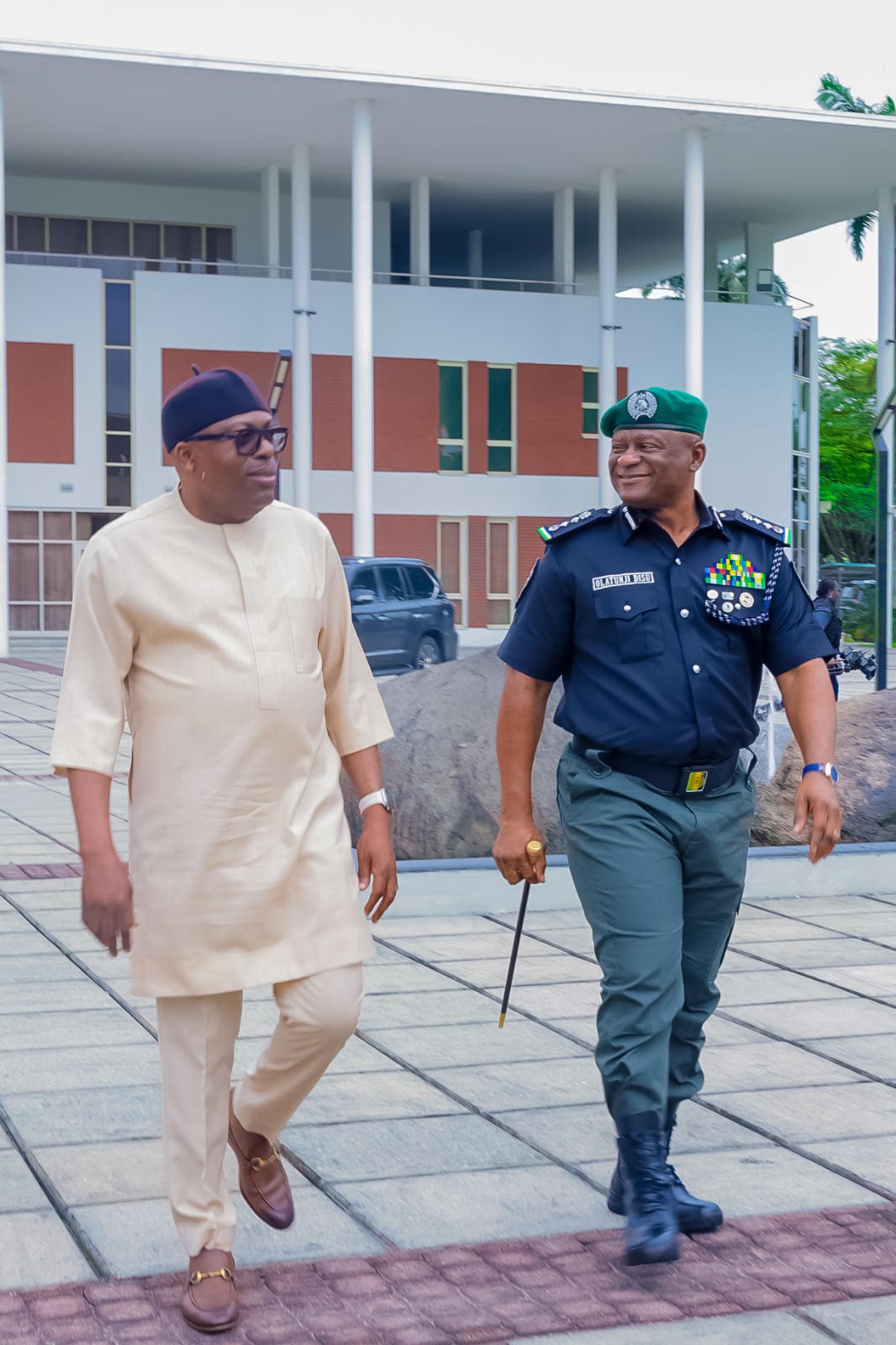
The Rivers State Government has called on stakeholders, community leaders, parents and relevant education authorities to intensify efforts to identify and enrol out-of-school children across Nigeria, stressing that every child deserves access to quality and inclusive education.
Governor Siminalayi Fubara made the call, yesterday, during the regional campaign on engaging community structures to promote the enrolment of out-of-school children and the regional flag-off of the 2026/2027 enrolment drive for southern states, held in Port Harcourt.
Represented by the Secretary to the State Government, Dr Dagogo Wokoma, Governor Fubara reaffirmed that education remains a fundamental pillar of sustainable development and emphasised the need to ensure that no child is left behind because of economic hardship, social background or other barriers to schooling.
He noted that expanding access to education was essential to promoting sustainable development, social inclusion and equal opportunities, enabling children to reach their full potential and contribute meaningfully to society.
The governor urged participating states and communities to translate their commitments into concrete and measurable actions by reaching vulnerable children, strengthening community engagement and encouraging parents and guardians to make their children’s education a priority.
He reiterated the state government’s commitment to initiatives aimed at expanding access to education, particularly for children excluded from formal schooling.
“Rivers State remains committed to supporting initiatives that expand access to inclusive and quality education, particularly for vulnerable children who may have missed the opportunity to attend formal schools,” Fubara stressed.
Also speaking, the Executive Secretary of the Universal Basic Education Commission (UBEC), Aisha Garba, described the growing number of out-of-school children as one of the major challenges confronting the education sector.
She called for a collective and collaborative approach among governments, communities, parents and other stakeholders to address the problem, stressing the need to ensure that no Nigerian child is denied the fundamental right to education.
The programme was organised by the Universal Basic Education Commission in collaboration with the Rivers State Government, as part of efforts to strengthen community participation and promote school enrolment across the southern states for the 2026/2027 academic session.

The Federation Account Allocation Committee (FAAC) has shared the sum of N2.428 trillion among the Federal Government, 36 states government and the 774 Local Government Councils (LGCs) as revenue for the month of September.
The Director, Press and Public Relations, Office of the Accountant-General of the Federation (OAGF), Mr Bawa Mokwa, said this in a statement in Abuja, yesterday.
Mokwa said the allocation was approved by FAAC at its October meeting held in Abuja.
He said the N2.428 trillion distributable revenue comprised of statutory revenue of N1.672 trillion, distributable Value Added Tax (VAT) revenue of N756.587 billion.
Mokwa quoted the FAAC communiqué as saying that total gross revenue of N3.913 trillion was available in the month of September 2026.
He said a total deduction for cost of collection was N131.758 billion while total transfers, refunds and savings of N1.352 trillion.
According to him, a gross statutory revenue of N3.096 trillion was received for the month of September 2026.
“This was higher than the sum of N2.850 trillion received in the preceeding month by N246.384 billion.
“Gross revenue of N816.872 billion was available from the Value Added Tax (VAT) in September 2026.
“This was lower than the N834.843 billion available in the month of August 2026 by N17.972 billion,” he said.
Mokwa explained that the Federal Government received N832.242 billion and the state governments received the sum of N799.872 billion.
He said the LGCs received N560.660 billion, while the sum of N236.049 billion (13% of mineral revenue) was shared to the benefiting state as derivation revenue.
Mokwa said in the N1.672 billion distributable statutory revenue, the Federal Government received N756.583 billion and the State Governments received N383.749 billion.
He said the LGCs received N295.855 billion and the sum of N236.049 billion (13% of mineral revenue) was shared to the benefiting States as derivation revenue.
The director said from the N756.587 billion distributable Value Added Tax (VAT) revenue, the Federal Government received N75.659 billion, the State Governments received N416.123 billion and the LGCs received N264.805 billion.
“In September 2026, Petroleum Profit Tax (PPT), Hydrocarbon Tax (HT), Petroleum Royalties, Import Duty, CET Levies and Excise Duty increased significantly.
“Also, Companies Income Tax (CIT), CGT & SDT, Value Added Tax (VTA), Mineral Royalties, and Gas Flared Penalty, Rental Gas Flared Fee and Misc. Oil Revenue decreased considerably,” he said.
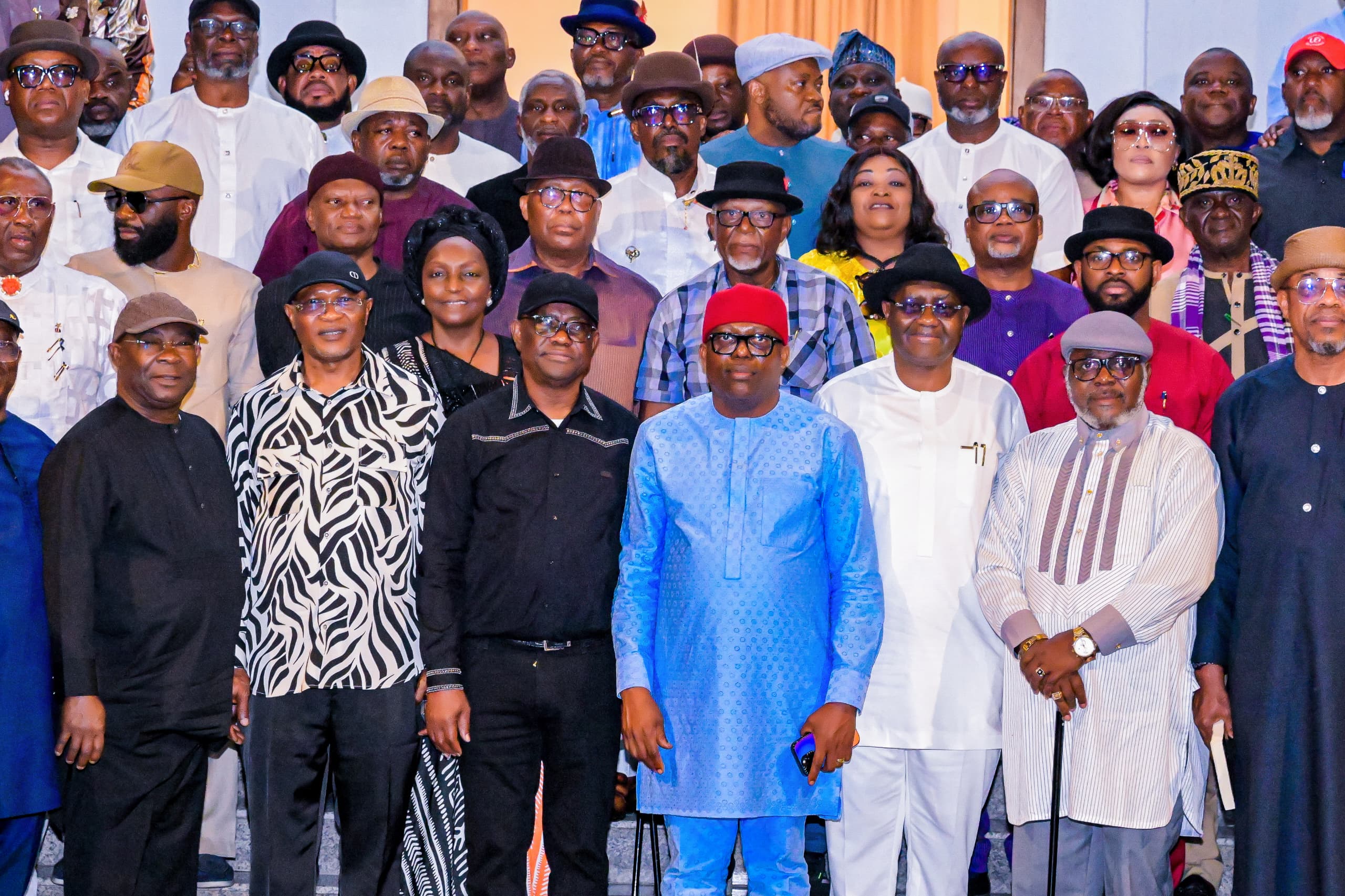
The Nigeria Labour Congress (NLC) has given the Federal Government a two-week ultimatum to reduce the price of petrol, commence renegotiation of the national minimum wage and implement outstanding agreements with workers.
The ultimatum followed a joint meeting of the National Executive Council and Central Working Committee of the NLC held at the Olaitan Oyerinde Hall, Labour House, Abuja.
In a communiqué signed by the NLC President, Joe Ajaero, and made available to newsmen, yesterday, the union said the two-week ultimatum would commence on Friday, October 9, 2026.
It warned that failure by the government to meet its demands would compel the Congress to take further action.
The NLC specifically demanded that the government reduce the price of Premium Motor Spirit to the level it was when the current national minimum wage was signed into law in 2024.
It also demanded the immediate commencement of negotiations for a new minimum wage, implementation of the February 5, 2026, Terms of Settlement reached with the Joint Health Sector Unions and Assembly of Healthcare Professionals, and action on the demands of the Joint Public Sector Negotiating Council.
The Congress further demanded tax relief and immediate wage awards for workers, arguing that the measures were necessary to cushion the impact of rising living costs.
The NLC said, “The current national minimum wage has been rendered worthless by the relentless depreciation of the naira and the astronomical rise in the cost of living.”
It added that workers could no longer meet basic needs, including food, shelter, healthcare, transportation and education, on their current earnings.
The labour body, therefore, demanded that the Federal Government commence renegotiation of the national minimum wage before the end of October.
“NEC-in-session demands that the Federal Government commence the renegotiation of the national minimum wage before the end of this month,” the communiqué stated.
The Congress also linked the erosion of workers’ purchasing power to the high cost of petrol, saying the price of the commodity had continued to drive up transportation costs and the prices of other essential goods.
“The exorbitant pump price of petrol has had a cascading effect on the cost of transportation, food, and other essential goods, further deepening the hardship of workers and the masses,” it said.
The NLC further demanded that the government grant tax relief to workers and immediately introduce wage awards, describing the measures as “the bare minimum required to alleviate the suffering of Nigerian workers and restore a measure of dignity to their lives.”
The latest ultimatum escalates the labour movement’s pressure on the Federal Government after public-sector workers under the Joint National Public Service Negotiating Council embarked on a three-day warning strike earlier in October over rising living costs, petrol prices, wage awards and minimum wage negotiations.
The workers had demanded, among other measures, a reduction in petrol prices and the commencement of negotiations for a new minimum wage.
The NLC had also raised concerns in September over the declining purchasing power of workers, with Ajaero arguing that the N70,000 minimum wage had been overtaken by increases in the cost of food, transportation, housing, education and other essential expenses.
The current minimum wage was approved by President Bola Tinubu in July 2024 after negotiations involving the government, organised labour and the private sector.
Tinubu increased the Federal Government’s offer from N62,000 to N70,000 and agreed that the wage should be reviewed after three years rather than five years.
The NLC’s latest demand comes as the Federal Government announced fresh measures aimed at containing petrol-price pressures.
Yesterday, the Minister of Finance and Coordinating Minister of the Economy, Taiwo Oyedele, said the government was negotiating a ceiling of N1,350 per litre on the ex-gantry or landing cost of petrol, with monthly reviews, as part of measures to reduce price volatility.
The proposed ceiling does not mean petrol would necessarily sell at N1,350 per litre at filling stations.
The government also announced a 30-day discount on petrol dispensed by the Nigerian National Petroleum Company Limited (NNPCL), with priority given to public transporters.
Oyedele said the arrangement was not a return to subsidy but an effort to sell the product at cost.
However, the NLC is seeking a more substantial reduction, insisting that petrol should return to the price level that prevailed when the N70,000 minimum wage was enacted in 2024.
The Congress also called for the implementation of the agreement reached with JOHESU in February, as well as the demands presented by the Joint Public Sector Negotiating Council.
It warned that failure to respond within the two-week period would have consequences.
“Failure of which the NLC will be compelled to take remedial steps as would be directed by the relevant organs,” the communiqué said.
The union consequently directed its affiliates and allies to remain prepared for further action.
“NEC-in-session reaffirms the historical responsibility of the NLC to resist all forms of exploitation and oppression,” it stated, urging its affiliates to remain “on high alert and fully prepared to engage in decisive efforts against all anti-people policies.”
The development also comes amid fresh labour tensions in Abuja, where the FCT Council of the NLC commenced an indefinite strike on Wednesday over disputes with the FCT Administration concerning teachers’ promotion policies.
The council directed workers across public and private establishments to withdraw their services after the expiration of a seven-day ultimatum.
The latest NLC ultimatum puts renewed pressure on the Federal Government to address wage and fuel-price concerns as both sides grapple with disagreements over the implementation of previous labour agreements and measures to cushion the impact of economic reforms.
The NLC said its demands were aimed at protecting workers and the wider population from further deterioration in their standard of living, insisting that Nigerian workers must remain “resolute, organised, and uncompromising” in the struggle for improved living conditions.
-

 News1 hour ago
NDLEA Recovers Tons Of Illicit Drug Consignments In Nine States
-
 News1 hour ago
IGP Proposes 200% Gratuity, Pension For Retired Officers
-
 News1 hour ago
Rivers Community Raises Alarm Over Alleged Security Invasion
-
 News1 hour ago
FG releases N38.93bn to upgrade 166 tertiary institutions
-
 News1 hour ago
Ebola: NCDC Approves N100,000 Weekly Payment For Contacts
-
 News1 hour ago
Rivers CJ Declines NBA’s Request For Court-Free Days For Law Week Celebration
-
 News1 hour ago
2027 Elections: Police Begin Training Of 10,000 Officers
-
 News1 hour ago
Bayelsa debunks Nembe-Brass bridge collapse rumour