
Business
Reps Probe N23bn Disbursement To ASUU

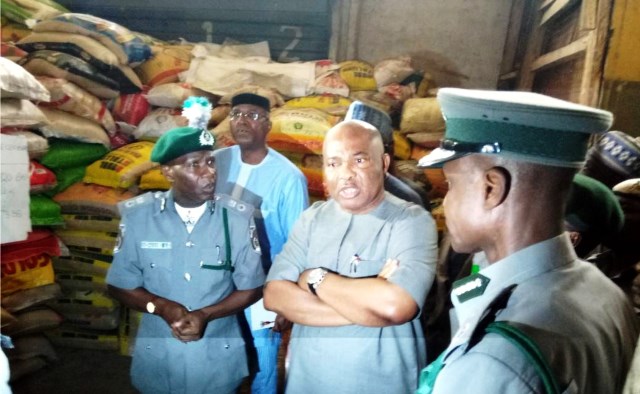
The House of Representatives has commenced investigation into the disbursement of N23 billion released by Federal Government to Academic Staff Union of Universities (ASUU).
Chairman, Committee on Tertiary Education of the House, Rep. Suleiman Aminu, requested for the breakdown of the disbursement.
He said that the ASUU strike also affected the polytechnics and colleges of education.
In his presentation, chairman, Joint Action Committee of the three non-academic unions of universities, Mr Samson Ugwoke, confirmed the release of the N23 billion.
He said that the committee set up to oversee the disbursement of the fund, approved 89 per cent for ASUU and 11 per cent for the non-academic staff unions.
Ugwoke, however, explained that University of Ilorin and University of Nigeria, Nsukka did not benefit, while University of Lagos got the least allocation.
He said that the Minister and Permanent Secretary of Federal Ministry of Education at a meeting held on September 19, 2017 admitted that ASUU hijacked the process of distribution of the fund.
He added that they promised to mop-up money for the three non-academic staff unions, with an appeal to the unions to call off the industrial action.
Earlier, Executive Secretary of National Universities Commission (NUC), Mr Abubakar Rasheed, had argued that most of the demands in 2009 agreement were not implementable as most of the demands were not clear.
According to him, the agreement contained many combustible items that when touched, would explode.
Rasheed added that the “infighting among the four unions will spell doom for the system because students will suffer.”
Reacting to the submissions, Permanent Secretary, Federal Ministry of Education, Mr Sonny Echono, said that payments were made by the Accountant-General to the universities.
According to him, it is just that more of the staff that benefitted belong to ASUU.
“Although the time the N23 billion was released, the Federal Government was addressing ASUU strike, but when the money came, the ministry insisted that other unions should be carried along.”
Echono, however, assured that the next fund that would be released by the government would be basically released to the non-academic staff in the universities.



-

 Niger Delta4 hours ago
Diri Restates Stance On Lagos-Calabar Coastal Highway
-

 Niger Delta4 hours ago
C’River, NUJ Pay Tribute To Late Guardian Editor
-

 News5 hours ago
NDLEA Recovers Tons Of Illicit Drug Consignments In Nine States
-

 Opinion4 hours ago
Checking Voter Apathy In Nigeria’s Electoral Process
-
 Oil & Energy5 hours ago
S&P Global Warns Hormuz Energy Shock Could Become A Global Food Crisis
-

 Oil & Energy5 hours ago
Gas Reserves Hit 215 Trillion Cubic Feet
-

 Rivers4 hours ago
Education Ministry Condemns Female Virginity Testing In CHS, Taabaa
-
 Oil & Energy5 hours ago
NCDMB, Manufacturers Commit To Scale Up Local Oil And Gas Production Components