Connect with us

Environment

Politician Cautions On Environmental Pollution

Published

on

Going by the incessant out-break of contagious diseases in various parts of Nigeria, renowned politician and stakeholder of the Peoples Democratic Party (PDP) Pali -Alabo Maxwell Fubara, has enjoined his constituents to guard against environmental pollution in their respective domains.
Speaking at one-day Sensitisation training and empowerment programme titled: “Community Sanitation Modeling Awareness Campaign” which he sponsored in Opobo Town recently, Fubara noted that all hands must be on deck to ensure that such contagious diseases, such as, Lassa Fever, Ebola virus, Acquired Immune Deficiency Syndrome (AIDS), Cholera, Chicken and Monkey pox among others did not break out in any part of Opobo/Nkoro Local Government Area.
He disclosed that, “we must remain healthy because most of the incidents of flooding and environmental pollution are caused by ignorance and deliberate action by people.
The reason for the training, he stressed “is to educate the people so that we shall all be free from contagious diseases”.
Fubara, a RSU-trained environmentalist further explained that he drew about 250 trainees from the LGA to learn the new model of keeping the environment clean so that they would now go back to their various communities, wards and units to enlighten others about the importance of carrying out good environmental practices at all times.
He, however, urged Opobo/Nkoro residents to eschew anything capable of attracting air and water borne diseases, noting that they should always wash their hands thoroughly and ensure a modern toilet system.
Meanwhile, Pali-Alabo Maxwell Fubara, has used the opportunity of the training to advise trainees and other residents of the LGA to ensure that the area is kept clean always apart from the government-approved days of sanitation in the state, stressing that they should shun the ugly behaviours of disposing garbage indiscriminately, especially traders, school children and even adults, warning that henceforth anyone caught in the habit will be punished accordingly.
He also appealed to health workers in the LGA to live up to their duties, especially, sanitary officials to ensure that drainages and other water channels are kept clear.


Bethel Sam Toby

Continue Reading

Environment

Lagos State  Government Refuted Resumed Monthly Sanitation 

Published

on

The Lagos State Government on Saturday refuted an online media report claiming that the state had resumed the monthly environmental sanitation exercise.
The Commissioner for the Environment and Water Resources, Mr Tokunbo Wahab, said no categorical statement had been made regarding the commencement date of the exercise.
Wahab explained that what he told newsmen after a project inspection tour last Sunday was that engagements with relevant stakeholders were still ongoing.
He said the state government had planned to begin with a sensitisation programme last week, but was constrained by logistics issues.
“The truth is, we were meant to start with a sensitisation programme last week, but we had a logistics issue. We need to find a day that is acceptable to all stakeholders,” he said.
He expressed optimism that the exercise might return very soon, adding that the official date would be communicated by the Governor, Mr. Babajide Sanwo-Olu.
The commissioner urged law-abiding residents to continue their lawful activities without hindrance, assuring them that adequate notice would be given before the exercise was reintroduced.
The monthly environmental sanitation, previously held on the last Saturday of every month between 7.00 a.m. and 10.00 a.m., was suspended in November 2016 following a legal pronouncement restricting movement during the exercise.
However, renewed waste management challenges, including clogged drainage channels and indiscriminate refuse disposal, have sparked calls from residents for its reinstatement.
Continue Reading

Environment

LAWMA Director Says Sweeping Reforms Have Improved Waste Collection 

Published

on

The Managing Director of the Lagos Waste Management Authority (LAWMA), Dr Muyiwa Gbadegesin, says sweeping reforms and infrastructure upgrades have significantly improved waste collection efficiency across the state.
Gbadegesin disclosed this to newdmen last week in Lagos state.
He said LAWMA expanded night cleaning operations and increased street sweeping coverage to 1,000 routes statewide.
He disclosed that 16,000 street sweepers were currently engaged across Lagos, supported by improved logistics and operational systems.
He said LAWMA acquired new equipment three years ago to complement Private Sector Participants (PSP) compactors and rehabilitated old trucks to strengthen fleet capacity.
He added that additional compactor trucks were expected in the coming months.
“Heavy-duty equipment is now deployed to clear legacy illegal dumpsites across communities,” he said.
Gbadegesin said LAWMA strengthened human capacity by expanding its advocacy department and deepening collaboration with Community Development Associations (CDAs) and local councils.
He revealed that each local government now operates a waste management task force, supported by LAWMA integration desks.
On waste-to-wealth initiatives, he disclosed that the Lagos State House of Assembly had ratified a concession agreement with ZoomLion to construct transfer loading stations and material recovery facilities.
The facilities, he said, would enable closure of the Olusosun and Solous landfills and process 4,000 tonnes of waste daily.
He said organic waste, which constitutes about 50 per cent of Lagos waste, would be converted into compost, while plastics would be recycled into waste bins.
Gbadegesin also disclosed plans for a 1,500-tonnes-per-day waste-to-energy plant in partnership with a Dutch firm, Harvest Waste.
He said the project was expected to generate 60 megawatts of electricity to support emerging industrial zones.
He further highlighted a pilot biogas plant at the Epe Food Market, which processes 500kg of organic waste daily to generate electricity for market operations.
He called for stronger media collaboration to enhance public awareness and behavioral change.
“Waste management is not just about equipment; it is about human behaviour, enforcement and strong regulatory systems,” he said.
He urged residents to utilise LAWMA’s toll-free lines and digital platforms to report service gaps instead of resorting to illegal dumping.
Continue Reading

Environment

Ministry Of Environment To Validate A Landmark Policy To Advance Nigeria’s Economy 

Published

on

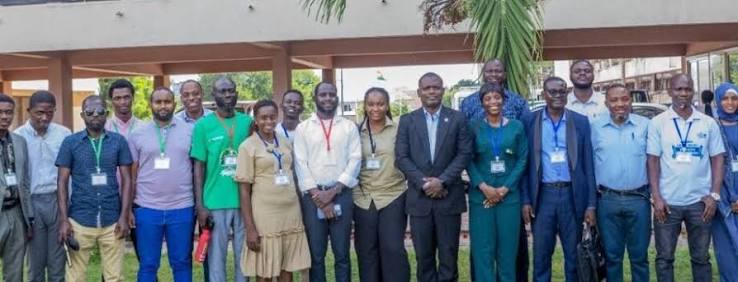
The Federal Ministry of Environment last Thursday convened key stakeholders in Abuja to validate a landmark policy brief aimed at tackling marine litter to advance Nigeria’s transition to a circular economy.
Mrs Falmata Bukar-Kolo, the Deputy Director, Solid Waste Management and Technology Division in the ministry, warned that plastic pollution poses serious risks to aquatic ecosystems and public health.
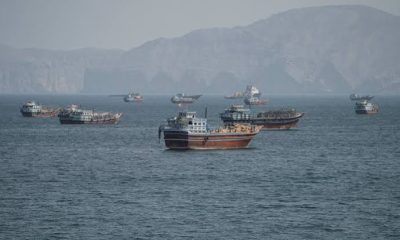
She stated that microplastics have already entered the food chain through fish consumption, while clogged waterways, soil contamination, and greenhouse gas emissions from burning plastics are worsening the environmental crisis.
Bukar-Kolo said that plastics, though widely used, are non-biodegradable and persist in the environment for years.
She called for improved waste management systems, stronger enforcement of environmental regulations, and behavioural change amongst citizens and businesses.
Mr Clem Ugorji, Regional Coordinator of PROTEGO, emphasised on the urgency of action, saying Nigeria’s marine litter crisis carries environmental, economic, and reputational costs.
He expressed optimism that the 2025 to 2040 roadmap endorsed at the workshop would shift the country from prolonged dialogue to concrete implementation.
The  event was organised in collaboration with PROTEGO (Prevention of Marine Litter in the Gulf of Guinea).
Discussions centred on a draft policy input paper titled “Policies, Institutional Set-up and Financing of Marine Litter Prevention in Nigeria,”.
These seeks to present insightful analysis and a set of recommendations to address the structural and financing gaps that have long hindered effective waste management, particularly plastic leakage from inland communities and waterways into the Atlantic Ocean.
The PROTEGO initiative is supported by the German Federal Ministry for the Environment, Nature Conservation, Nuclear Safety and Consumer Protection and led by adelphi, with implementation in Nigeria by WASTE Africa and the Nigeria Climate Innovation Centre (NCIC).
The policy brief is a key delivery for one of the programme’s four impact areas – building capacities of public stakeholders.
Continue Reading

Trending