
News
Omoku Killings: Eze Egi Weeps, Lauds Wike’s Action

Traditional Ruler of Egi Clan, Prof Anele Nwokoma, last Saturday, shed tears as he narrated the incident at Omoku, in which about 17 worshippers were slaughtered during the New Year cross over night church service.
Nwokoma, who was narrating the incident to Egi Council of Traditional Rulers and Chiefs in his palace in Erema, lamented that “five of my subjects were victims of the distasteful act.”
The Egi monarch, who became emotional as he sobbed in the mist of his chiefs, remarked “This incident has dwarfed the efforts of well-meaning citizens of Ogba ethnic nationality who are working towards restoring serenity in the once beautiful land of milk and honey adored by strangers and visitors from all over the country.”
He lamented that innocent blood wasted since the crises began some years ago had taken its toll on the manpower capacity of the area, urging promoters and perpetrators of the act, to stop, as there was a super-human being above taking notes of their actions.
Nwokoma further described the killings as barbaric and senseless, and urged security agencies to redouble their efforts to bring the perpetrators to justice.
He disclosed that five, out of the 17 souls that died were from Egi, and appealed to the bereaved families to take solace in God.
The Egi monarch commended the state Governor, Chief Nyesom Wike for taking a proactive action that had restored normalcy in the area, saying that security should be beefed up to ensure that such incident does not reoccur in future.
He, however, commiserated with the families of the victims, urging them to take solace in God believing that those who committed the heinous crime would one day pay for their crimes.
A minute silence was observed in honour of those who lost their lives in the incident; while prayers were offered for the repose of their souls; sustainable peace in Ogba ethnic nationality, Rivers State and Nigeria.
As part of activities to mark the New Year meeting, the council formally received and adopted the Paramount Ruler, Okporomini Community, Chief Godspower Akiri as a member of Egi Council of Traditional Rulers and Chiefs, with a charge to see the adoption as an opportunity to serve his people.
Responding, Akiri thanked the Eze-Ogba Ukwu-in-Council for the honour, and pledged to use his position to attract peace and development to Okporomini Community.
In a related development, a faith-based organization under the aegis of Potters House Consortium, Cross River State has presented a distinguished award of excellence to the Eze-Egi of Ogbaland, Prof Anele Nwokoma for his contributions to the peace of Egi, Rivers State and Nigeria.
Receiving the award, Nwokoma expressed appreciation for the gesture, and pledged his commitment to do more.
Fyneface Aaron


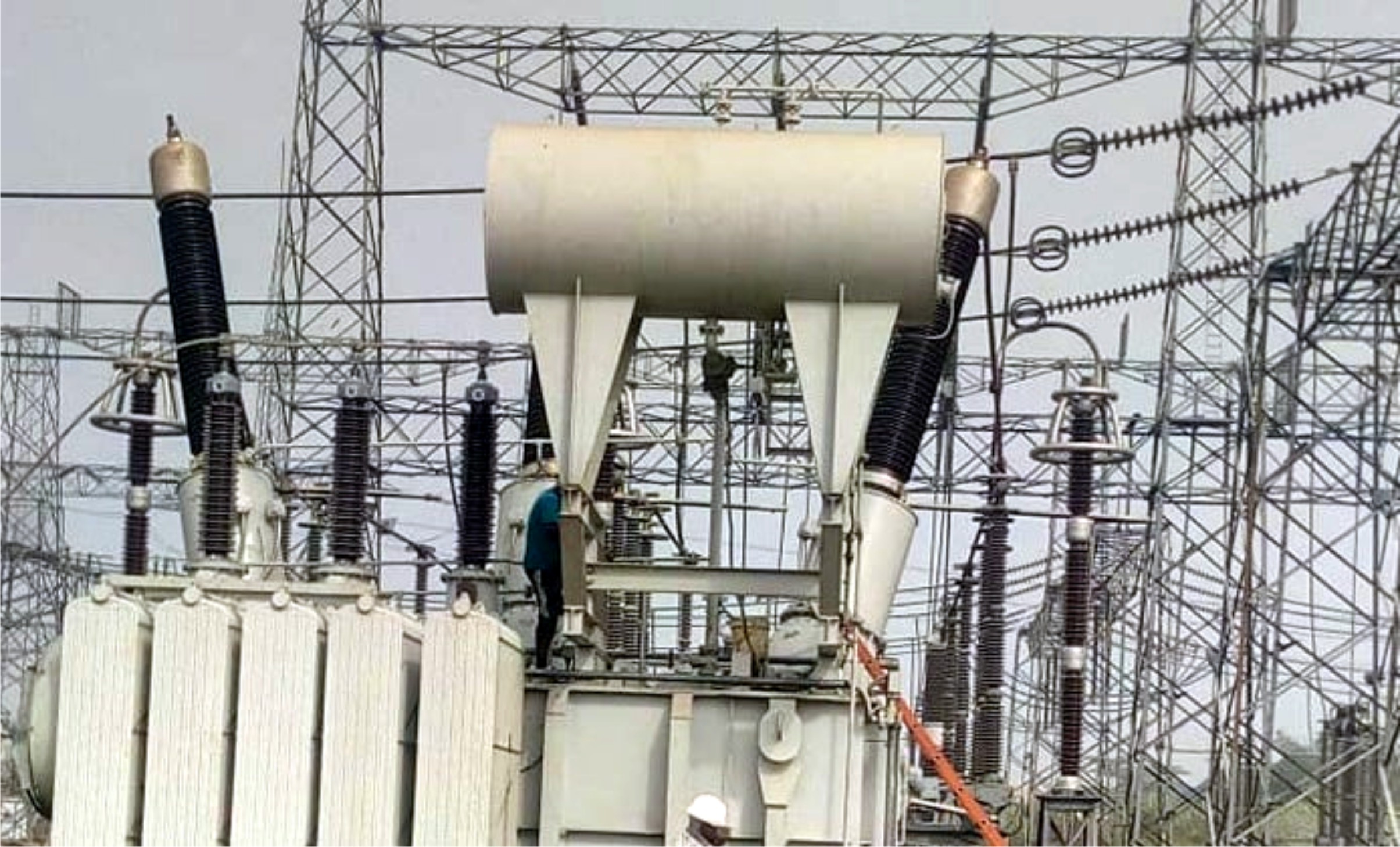
The Federal Government says it has invested more than N10tn in Nigeria’s electricity sector since its privatisation in 2013, but the intervention has yet to deliver the reliable power supply expected from the reform.
The Managing Director of FGN Power Company Limited, Kenny Anuwe, disclosed this yesterday at the sixth annual conference of the Power Correspondents Association of Nigeria, in Abuja.
The conference afforded stakeholders to examine the country’s roadmap to reliable and affordable electricity under the Federal Government’s ambition to grow the economy to $1tn by 2030.
Anuwe said the huge government spending has kept the industry afloat but stressed that public funding alone could not address the country’s electricity challenges, calling for increased private sector participation and alternative financing models to accelerate infrastructure development.
The conference was themed, “$1trn Economy: Nigeria’s Roadmap to Reliable and Affordable Power Supply.”
The disclosure raises fresh questions about the outcome of the 2013 power sector privatisation, which transferred the country’s 11 distribution companies and six generation companies to private investors, while the Federal Government retained ownership of the transmission network.
Despite successive government interventions, electricity supply has remained unstable, with inadequate generation, gas shortages, weak transmission and distribution infrastructure, mounting sector debts and poor investment continuing to undermine the industry.
Anuwe acknowledged that government funding had been significant but insufficient to meet the sector’s ambitions.
“Government has invested over N10tn in the electricity sector since the advent of privatisation. But is it enough? How much money is enough? If government didn’t invest that money, the industry would not be standing today.
“No matter how you look at it, no matter how critical you are about what government’s role is, if government did not put that money in, the industry would not be standing,” he said.
He, however, described the continued dependence on government funding as unsustainable, noting that the Federal Government was responsible for more than 95 per cent of new infrastructure investment in the sector.
“That’s not why we privatised. We have all kinds of excuses why that has happened. And a lot of them are legitimate. But it’s time for us to move from excuses to saying how do we fix it. It does not need the government to do everything. I believe that government cannot do everything,” Anuwe said.
He said the country needed simpler investment structures, predictable regulations, clear institutional responsibilities and commercially viable projects to attract private capital.
According to him, the FGN Power Company is targeting an investment structure that could attract 1bn, with the Africa Finance Corporation expected to match the amount.
He disclosed that the company’s ongoing Presidential Power Initiative projects were expected to deliver additional transmission capacity, with a target of 5,540 megawatts by 2029 and at least 60 per cent improvement in grid reliability.
The projects include a second batch of 12 Siemens substations and special projects involving Omotosho substations, which are expected to cumulatively deliver nearly 3,400MW.
Anuwe said most of the ongoing first-phase transmission substation and line projects were now expected to be completed in the first quarter of 2027, following delays.
He added that the company had secured financing for its pilot phase and was working with international technical and financial partners, including Siemens Energy, China Machinery Engineering Corporation and TBEA.
The Minister of Power, Joseph Tegbe, in his address, said the Federal Government had also developed a four-pronged roadmap to address the sector’s challenges through grid stabilisation, sector liquidity and sustainability, asset optimisation and expansion and enhancement of the national grid.
He said the government had raised N1.23tn under its N3.3tn plan to settle verified legacy debts owed to electricity generation companies.
According to him, more than 2.8 million electricity customers have been metered under the Presidential Metering Initiative, while additional transmission capacity exceeding 15,000 megavolt-amperes had been added to the national grid between 2023 and October 2026.
“Let me inform this gathering that we have developed a four-pronged roadmap to address
the power sector challenges comprehensively. These are Grid Stabilisation, Sector Liquidity
and Sustainability, Asset Optimisation, and Expansion and Enhancement of the grid. Central
to this plan is a corridor approach that prioritises major load centres for reliable, round-
the-clock electricity supply.
“A technical audit has been commissioned to establish a robust diagnostic baseline, identify critical constraints and guide the prioritisation, sequencing and
execution of interventions. The corridor approach gives this roadmap a practical industrial focus.
“In the past two months alone, I have commissioned newly installed substation equipment across Kumbotoso, Dankata, Mashi, Dan-Agundi, Apapa, Ijora, Ikeja, Biliri, Walalambe and other locations, adding over 1,300MVA to Nigeria’s transmission capacity. This has unlocked more power to the respective Distribution Companies for onward distribution to industrial and household customers,” Tegbe said.
He added that the government was adopting a corridor-based approach to improve electricity supply in major economic centres, beginning with the Lagos-Ogun axis and Abuja franchise area, which together account for more than 50 per cent of national electricity demand.
The minister said the proposed 24-hour electricity zones would align generation, transmission and distribution capacity with demand in industrial clusters, subject to technical readiness and commercial viability.
He also identified vandalism as a major threat to electricity infrastructure, disclosing that President Bola Tinubu had approved a coordinated anti-vandalism campaign involving security agencies.
Earlier, the Chairman of PCAN, Obas Esiedesa, said reliable and affordable electricity was indispensable to the country’s ambition of building a $1tn economy by 2030.
He urged stakeholders to move beyond identifying the industry’s problems and focus on practical solutions, particularly investment, infrastructure development and sustainable financing.
News
Fubara: Why We Engage Only Qualified Engineers, Indigenous Contractors On Projects …As Governor Bags NATE Platinum Award, Inducted Into Highest Membership Cadre

Governor of Rivers State, Sir Siminalayi Fubara, has stated that his administration engages indigenous contractors, qualified engineers and technologists in road and housing projects to ensure the delivery of standard and quality projects in the State.
Governor Fubara stated this yesterday while declaring open the 42nd Conference of Technologists in Engineering ( CONFOTECH) and Annual General Meeting of the Nigerian Association of Technologists in Engineering, (NATE), in Port Harcourt.
The conference saw the association conferring its Platinum Award on Governor Siminalayi Fubara and his induction into the highest membership cadre of NATE in recognition of his massive infrastructural development across Rivers State.
Governor Fubara, who was represented by his Chief of Staff, Mr. Sunny Ewule, expressed the readiness of his administration to the continued partnership and support for professional associations in promoting professionalism, building capacity and driving technological advancement.
He thanked the leadership and the entire membership of NATE for finding him worthy of their most prestigious award and honour, the NATE Platinum Award, and the accompanying induction into the highest membership cadre of the association.
“I consider this award not as a personal achievement but as a recognition of the collective effort of my administration and the good people of Rivers State in the area of infrastructure development and the deployment of engineering and technological solutions to advance the socio-economic development of the state, he said.
Governor Fubara noted that the theme of the conference: Safety, Regulation and Enforcement in Engineering: A Panacea to Industrial and Technological Growth in Nigeria, could not be more timely and relevant.
According to Fubara, no meaningful industrial growth can take place without safety, strong regulation, and enforcement, adding that it is for that reason that his administration has continued to insist on standard, quality delivery, and the engagement of qualified engineers, technologists and indigenous contractors in road construction, housing and other major developments across the state.
In his welcome address, the National President of the Nigerian Association of Technologists in Engineering (NATE), Engr. Dominic Udoatan, said the conference underscores a fundamental truth that safety, effective regulation and strict enforcement are indispensable to sustainable industrial and technological growth.
He urged government, regulatory bodies, employers and professional associations to work together to ensure competence, accountability and the protection of lives and property, while expressing the association’s sincere appreciation to Governor Fubara’s administration for its recognition of the importance of infrastructure, technical competence and technological advancement.

The Inspector-General of Police, Olatunji Disu, has warned officers of the Nigeria Police Force against engaging in partisan political activities, insisting that the Force would remain neutral before, during and after the 2027 general elections.
The IGP gave the directive during a strategic meeting with senior police officers, including Deputy Inspectors-General of Police, Assistant Inspectors- General of Police and Commissioners of Police, at the Force Headquarters, Abuja, last Wednesday.
He told the officers across the country to maintain regular interactions with journalists as part of efforts to tackle misinformation and fake news ahead of the elections.
He said sustained engagement with the media would strengthen public communication, promote transparency and help curb the spread of misleading information capable of undermining public confidence in the electoral process.
Disu assured that the Nigeria Police Force would not allow itself to be used by politicians or political parties, saying the Force remains committed to providing a level playing field for all participants in the electoral process.
“We will remain neutral, ensure the safety and security of the electorate before, during and after the election,” he said.
The Police Chief warned that any police officer found participating in partisan politics would face appropriate disciplinary and legal consequences.
On the protection of citizens’ rights, the IGP charged Commissioners of Police to ensure that all reported cases of human rights violations are properly documented, investigated and resolved within a reasonable period.
He also directed police commands and zones across the country to establish accessible and visible Complaints Response Units to enable members of the public report alleged abuses and obtain appropriate redress.
Disu emphasized the need to improve the welfare of police personnel, directing Commissioners of Police to ensure prompt payment of death benefits to families of fallen officers and personally visit such families to demonstrate the Force’s support and solidarity.
He highlighted some of the achievements recorded by the Force but maintained that more efforts were required to address prevailing security challenges, particularly banditry in parts of the country.
He also cautioned Commissioners of Police against travelling outside their respective states without obtaining express approval from his office.
The IGP thanked President Bola Tinubu for his continued support and commitment to strengthening the capacity of the police to combat crime and maintain national security.
King Onunwor
-
News1 day ago
RSG Reaffirms Commitment To STEM Education, Technological Advancement
-
Business1 day ago
‘NUJ, NPA’s Partnership Would Boost Port Producrivity, Economic Growth’
-

 News1 day ago
IGP Warns Police Officers Against Partisanship …Directs Regular Engagement With Journalists
-
Business1 day ago
Fire Threat Interrupts Asaba Air Peace Flight
-
 News1 day ago
Customs To Deploy AI, Scanners Against Snuggling
-
Business1 day ago
Fish Production Deficit, A Major Investment Opportunity – Minister
-
Business1 day ago
NCDMB, NLNG Unveil $9m For Professorial Endowment Research Chairs In Six Varsities
-
Metro1 day ago
Rivers Rekindles Garden City Dream As Tree-Planting Campaign Takes Off